
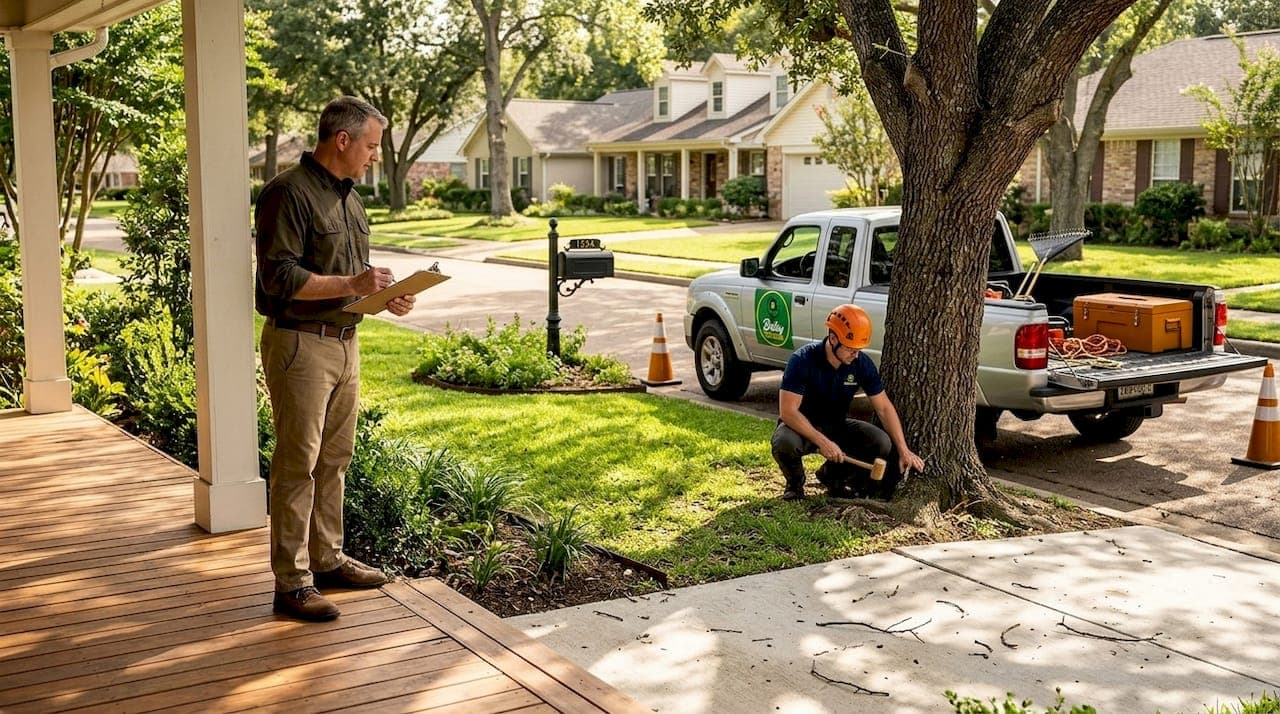
Getting a tree service estimate should be straightforward. But for many Shreveport homeowners and property managers, the process is unclear enough to cause real problems. You might overpay because you accepted the first quote you received. Or you might hire someone whose estimate left out cleanup costs, stump grinding, or permit fees. When you know how to properly request tree service estimate details, compare quotes, and prepare your property information in advance, you stop guessing and start making confident decisions that protect both your property and your budget.
Table of Contents
- Key takeaways
- What to prepare before you request a tree service estimate
- How to request a tree service estimate step by step
- Understanding and comparing tree service estimates
- Common mistakes when requesting tree estimates
- What to do after receiving your estimates
- My take on the estimate process after working with Shreveport property owners
- Get a free estimate from Briley Tree Service
- FAQ
Key takeaways
| Point | Details |
|---|---|
| Prepare before requesting | Gather photos, tree measurements, and access details to get more accurate quotes upfront. |
| Free vs. paid estimates differ | Free estimates are preliminary; paid arborist risk assessments cost $300 to $600 and include formal reports. |
| Written quotes protect you | Itemized, written estimates prevent surprise charges for cleanup, stump removal, and permits. |
| Shreveport permits add costs | Local permit fees range from $25 to $500 per tree and should be factored into your estimate timeline. |
| Compare apples to apples | Always request the same scope of services from every contractor before comparing prices. |
What to prepare before you request a tree service estimate
Most homeowners skip the preparation phase and go straight to calling a company. That mistake almost always produces a vague quote. Contractors price jobs based on what they can see. The more information you provide before the visit, the more accurate and specific your estimate will be.
Start by identifying exactly what services you need. Tree removal, trimming, stump grinding, emergency storm cleanup, and land clearing all price out differently. Knowing what you want before you call saves time and prevents miscommunication.
Here is what to gather before making contact:
- Photos of each tree, including the full trunk, canopy, and any visible damage or dead limbs
- Access point details, including gate widths, driveway clearance, and any overhead wires or structures nearby
- Tree size category, whether the tree is small (under 30 feet), medium (30 to 60 feet), or large (over 60 feet), since tree removal costs range from $200 to over $5,000 based on size and complexity
- Number of trees needing service and their locations on the property
- Permit status, since Shreveport tree removal permits typically require fees between $25 and $500 per tree
Prepare at least five questions before you meet with an estimator. Ask what is included in the price, whether stump grinding is separate, how debris is handled, what permits the company will pull, and whether the price is fixed or subject to change.
Pro Tip: Including site logistics like gate width, nearby structures, and access routes along with your photos significantly improves contractor pricing accuracy before any on-site visit even happens.
How to request a tree service estimate step by step
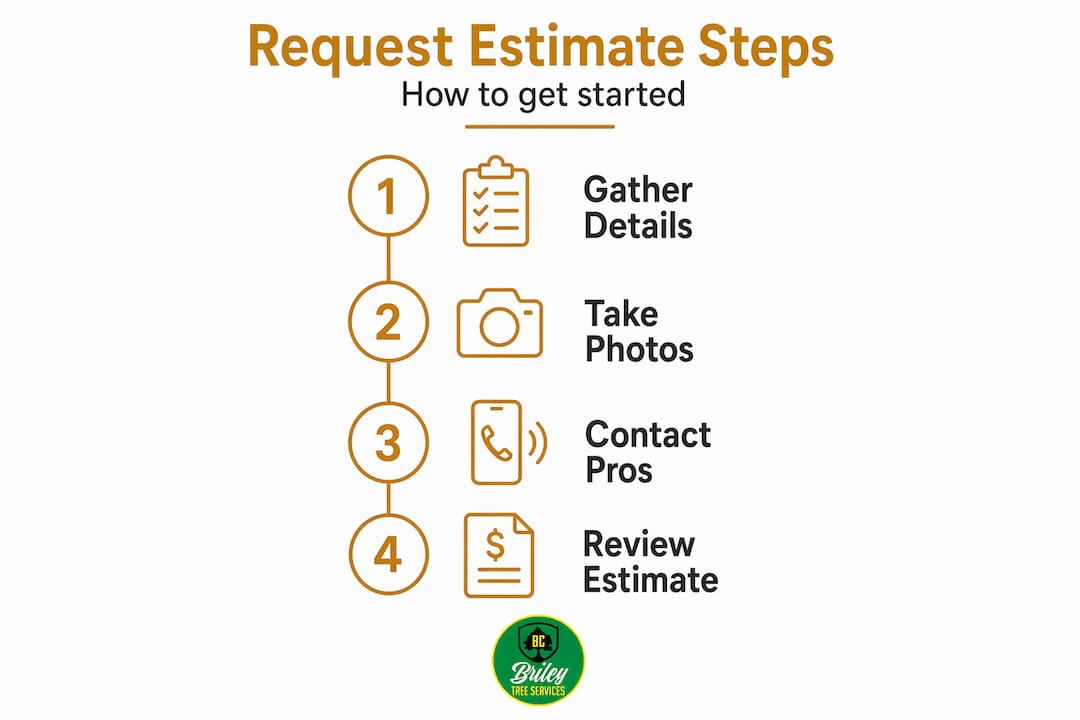
Once you have your preparation done, the actual process of submitting a tree service pricing request is simple. Most Shreveport tree companies accept requests by phone, website contact form, or email. Each method works. What matters is what you include.
Follow these steps to get a reliable quote:
- Contact the company with your prepared details. Send photos, describe the trees, note access points, and specify which services you need. This gives the estimator context before they arrive.
- Schedule an on-site visit. Most companies schedule an on-site evaluation after receiving your initial request to provide a written, no-surprise quote. The in-person visit is where real pricing happens.
- Prepare your property for the visit. Clear access routes, unlock gates, and be available to walk the estimator through the job scope. Point out any concerns like nearby power lines or underground utilities.
- Let the professional assess key factors. During the visit, the estimator evaluates tree health, overall size, structural risk, ease of access, and how much debris removal will be required.
- Receive your written estimate. Depending on the company, you may get an on-the-spot quote or a written estimate delivered within 24 to 48 hours after the visit. Either way, get it in writing.
- Understand what type of estimate you received. A free estimate is a pricing document for the job. A paid arborist risk assessment is a formal evaluation report that costs $300 to $600 and is used for permits, insurance claims, or legal reviews. Know which one you need.
Pro Tip: If you need documentation for an insurance claim or a city permit, ask upfront whether the company provides paid risk assessments. A free estimate will not satisfy those requirements.
Understanding and comparing tree service estimates
Receiving multiple quotes is only useful if you can compare them properly. Two estimates that look different in price might actually cover completely different scopes. This is where most homeowners make an expensive mistake.
The tree-trimming estimate average in the U.S. runs about $460, with a range from $270 to $1,800. Large jobs can exceed $2,000. Knowing that range tells you whether a quote is reasonable or suspicious.
Here is a quick comparison of common estimate line items and what to watch for:
| Line Item | What to Look For | Red Flag |
|---|---|---|
| Tree removal | Fixed price per tree with size noted | Vague "starting at" pricing |
| Trimming | Per tree pricing after inspection | Flat rate without seeing the tree |
| Stump grinding | Priced per stump diameter ($100 to $400) | Not included by default |
| Debris cleanup | Included in base price or listed separately | Not mentioned at all |
| Permits | Handled by contractor with fees itemized | No mention of permit requirements |
| Hauling | Listed as included or add-on cost | Assumed but not confirmed |
Beyond the numbers, check that each estimate clearly states whether pricing is fixed or variable. Written, itemized estimates reduce misunderstandings by confirming scope, line-item costs, and timeline expectations. When comparing quotes, make sure every estimate covers the same services. If one contractor includes stump grinding and another does not, the lower price is not actually lower.
Local Shreveport factors also affect final pricing. Tight access in older neighborhoods, clay-heavy soil that complicates stump grinding, and city permit requirements all add real costs. An estimate from a contractor unfamiliar with the area may miss these entirely.
Common mistakes when requesting tree estimates
Even homeowners who do their homework can fall into traps during the estimate process. Knowing what to watch for saves money and prevents serious project headaches.
- Accepting verbal quotes. A verbal quote protects no one. If the scope changes or costs rise, you have no documentation to fall back on. Always get it in writing.
- Skipping multiple estimates. Getting only one quote gives you no benchmark. Request at least three estimates for any job over $500.
- Ignoring what is excluded. Many quotes focus on the tree itself and leave out debris hauling, stump removal, or cleanup. Estimates should clearly state what is included to prevent unexpected charges.
- Not confirming insurance and licensing. Ask every contractor for proof of liability insurance and, for larger jobs, workers' compensation coverage. This protects you if something goes wrong on your property.
- Waiting too long on permits. Permits should be incorporated early in the estimate timeline to avoid delays. In Shreveport, skipping this step can push your project start back by weeks.
"The cheapest estimate is rarely the best estimate. The best estimate is the one that tells you exactly what you are getting, what it costs, and who is responsible for every part of the job."
What to do after receiving your estimates
Getting your quotes back is not the finish line. It is the starting point for making a smart decision. Here is how to move forward once the estimates are in hand.
- Review each written estimate line by line. Check for scope inclusions, exclusions, start dates, completion timelines, and payment terms. Any estimate that lacks these details is incomplete.
- Compare the same services across each quote. Use the comparison table approach. If scopes differ, call back and ask contractors to revise their quotes to match.
- Check contractor credentials. Verify insurance, licensing, and any certifications. A solid estimate from an uninsured contractor is a liability risk for your property.
- Ask follow-up questions before approving anything. If an estimate is unclear on cleanup costs or permit responsibility, ask in writing. Get any clarification added to the estimate before signing.
- Choose based on quality and transparency, not just price. The contractor who provides the clearest written estimate, confirms all inclusions, and communicates well is usually the safest bet. Learning how to choose tree service providers based on more than price alone pays off every time.
If two estimates vary by more than 30 percent for the same scope, dig into why. One contractor may have missed something. Another may be cutting corners on insurance or permit fees. A large price gap is information, not just a bargain.
My take on the estimate process after working with Shreveport property owners
I have seen the same patterns play out repeatedly. Homeowners call for a quote, accept the first one that sounds reasonable, and then discover at the end of the job that stump removal or haul-away was never included. The dispute that follows costs more in frustration than the original difference in price would have.
The biggest misconception I see is that a free estimate is the same as a risk assessment. It is not. A free estimate tells you what a job will cost. A formal risk assessment, which typically runs $300 to $600, produces a document with legal and insurance standing. If you are dealing with a storm-damaged tree close to your home, a neighbor's fence, or a power line, you likely need the latter. Most people do not find this out until it is too late.
What I have learned from watching these situations unfold is that the estimate document itself tells you a lot about the contractor. A detailed, itemized written quote signals a professional who tracks their work and stands behind it. A vague, single-number quote from someone who "just eyeballs it" is a warning. The Shreveport permit process adds another layer, and the best contractors handle it without being asked. When they bring it up proactively, that is a green flag. When they have never heard of it, that is your cue to keep looking.
— Tatum
Get a free estimate from Briley Tree Service
Brileytreeservice offers free on-site evaluations for Shreveport homeowners and property managers across the region. Their team assesses each tree job in person, then delivers a clear written quote that covers scope, timeline, and pricing with no surprise add-ons. Whether you need a tree removal estimate in the Shreveport area or a full property maintenance plan, Brileytreeservice handles the details including permit guidance and cleanup. They serve Shreveport, Bossier City, and the surrounding communities throughout Northwest Louisiana. Contact Brileytreeservice through their service areas page to schedule your no-obligation estimate and see why local property owners trust them for reliable, professional tree care.
FAQ
How do I request a tree service estimate in Shreveport?
Contact a local tree company by phone, website form, or email with photos of your trees and details on access points. Most companies will schedule a free on-site visit to provide a written quote.
What is included in a free tree service estimate?
A free estimate covers the expected cost of services like removal, trimming, stump grinding, and debris hauling. It is a pricing document, not a formal risk assessment report.
How much does tree removal cost in Shreveport?
Tree removal costs average around $850 in the U.S. in 2026, with a range from $200 to over $5,000 depending on tree size, location, and access difficulty on your property.
Do I need a permit for tree removal in Shreveport?
Yes, Shreveport typically requires a permit for tree removal with fees ranging from $25 to $500 per tree. Ask your contractor to confirm local requirements and factor permit costs into your estimate timeline.
What is the difference between a free estimate and a paid risk assessment?
A free estimate gives you job pricing for removal or trimming. A paid arborist risk assessment costs $300 to $600 and produces a formal evaluation report used for permits, insurance claims, and legal documentation.