
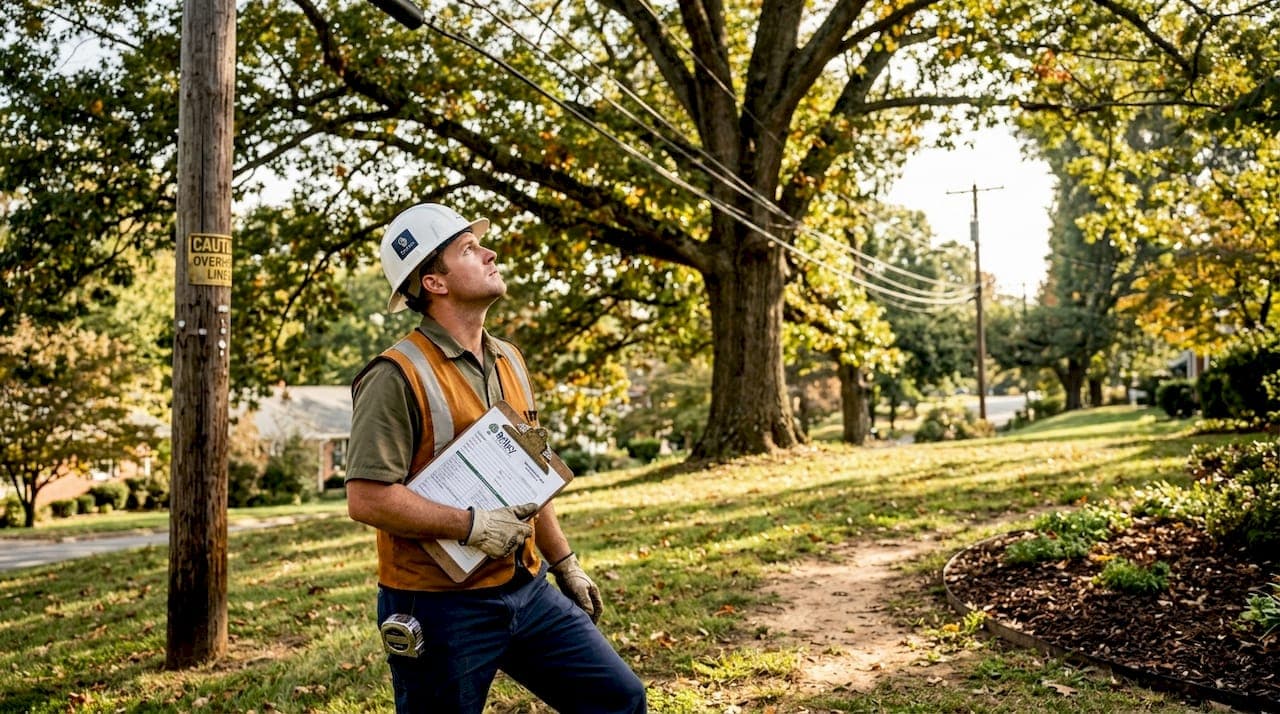
Overhanging branches near power lines are one of the most dangerous situations a homeowner can face on their own property. The instinct to grab a saw and handle it yourself is understandable, but trimming trees near power lines safely requires more than good intentions. Contact with an energized line can cause electrocution, arc flash burns, house fires, and neighborhood outages in seconds. This guide walks you through exactly what you need to know: the legal rules, the preparation steps, the right techniques, and when to call a professional before something goes wrong.
Table of Contents
- Key takeaways
- How to trim trees near power lines safely: understanding the hazards
- Preparation before trimming near power lines
- Safe trimming techniques: step-by-step guidance
- Verification and ongoing maintenance after trimming
- Troubleshooting common challenges near power lines
- My honest take on trimming near power lines
- Professional tree trimming near power lines in Northwest Louisiana
- FAQ
Key takeaways
| Point | Details |
|---|---|
| Know the legal limits | Trimming within 10 feet of energized lines is restricted or illegal without proper authorization. |
| Call your utility first | Utility companies often provide free trimming services or referrals before you touch a branch. |
| PPE is non-negotiable | Insulated gloves, hard hats, and flame-resistant clothing are required near any energized equipment. |
| Hire certified arborists | Only line-clearance arborist certification holders are legally permitted to work near energized lines. |
| Schedule regular clearance | A 3 to 5 year trimming cycle keeps trees safe and reduces the risk of outages or accidents. |
How to trim trees near power lines safely: understanding the hazards
Most homeowners underestimate what power lines can do. These are not just wires carrying a mild current. Distribution lines running through residential neighborhoods typically carry between 4,000 and 35,000 volts. You do not have to touch the wire directly to get hurt. Electricity can arc through the air across several feet, especially in humid conditions common in the South.
The two biggest risks are electrocution and arc flash. Electrocution occurs when current passes through your body to the ground. Arc flash is a rapid energy release caused by electrical current jumping through the air, producing temperatures that can exceed 35,000 degrees Fahrenheit. Both can be fatal.
From a legal standpoint, the rules are strict. OSHA 29 CFR 1910.269 mandates specialized training and certification for any personnel working near energized power lines. This is not a guideline. It is federal law. For lines operating at 50 kV or less, the minimum 10-foot clearance from energized conductors is mandatory. That distance increases as voltage increases.
Some states go further. Massachusetts restricts homeowner trimming near primary lines entirely without utility authorization. Louisiana has similar protections in place under public utility regulations. Violating these rules can result in fines, liability for damages, and criminal charges if someone is injured.
Here is what you need to recognize before you pick up any tool:
- Lines that appear insulated are often not fully protected. The coating on older lines is weatherproofing, not true electrical insulation.
- Dead or low-voltage lines can still carry lethal current. Never assume a line is safe without confirmation from your utility provider.
- Only certified line-clearance arborists are legally permitted to trim within the Minimum Approach Distance to energized lines.
- Contact your utility company before any trimming work begins, regardless of how far the branches appear to be from the lines.
Preparation before trimming near power lines
Good preparation prevents most accidents. Before any branch gets cut, you need to assess the situation carefully and take several steps that most homeowners skip entirely.
Start by visually mapping the tree relative to the lines. Stand back and look at the full canopy. Identify which branches are within 10 feet of any overhead wire. If you cannot clearly determine the distance, assume the branches are too close and contact your utility provider. A rough visual estimate from the ground is not reliable enough when the stakes are this high.
Pro Tip: Call your utility company before hiring anyone. Many providers offer free trimming or will schedule their own crews to clear branches near their lines at no charge to you. This is the safest and most cost-effective first step.
Your utility provider can also confirm whether lines in your area are energized, de-energized, or covered. They may send a crew to handle the work or give written authorization for a certified arborist to proceed. Either way, that communication protects you legally.
The table below outlines what you need to have in order before any trimming begins:
| Preparation step | Why it matters |
|---|---|
| Visual distance assessment | Confirms whether branches fall within restricted zones |
| Utility company contact | Provides authorization, free service options, and line status |
| Permit check with local municipality | Some jurisdictions require permits for tree work near infrastructure |
| Hire a certified arborist | Legally required for work within Minimum Approach Distance |
| Confirm PPE availability | Insulated gloves, hard hat, and FR clothing must be on hand |
If branches are clearly outside the 10-foot restricted zone and you plan to do minor trimming yourself, you still need to follow safe tree trimming techniques. Confirm the work zone is free of other overhead hazards. Inform a neighbor or household member of what you are doing. Never work alone near any overhead infrastructure.
Signs that a professional line-clearance arborist is required include branches touching or resting on a line, visible wire damage near the tree, unusual sounds like buzzing or crackling near the canopy, or any branch that would fall toward a line if cut.
Safe trimming techniques: step-by-step guidance
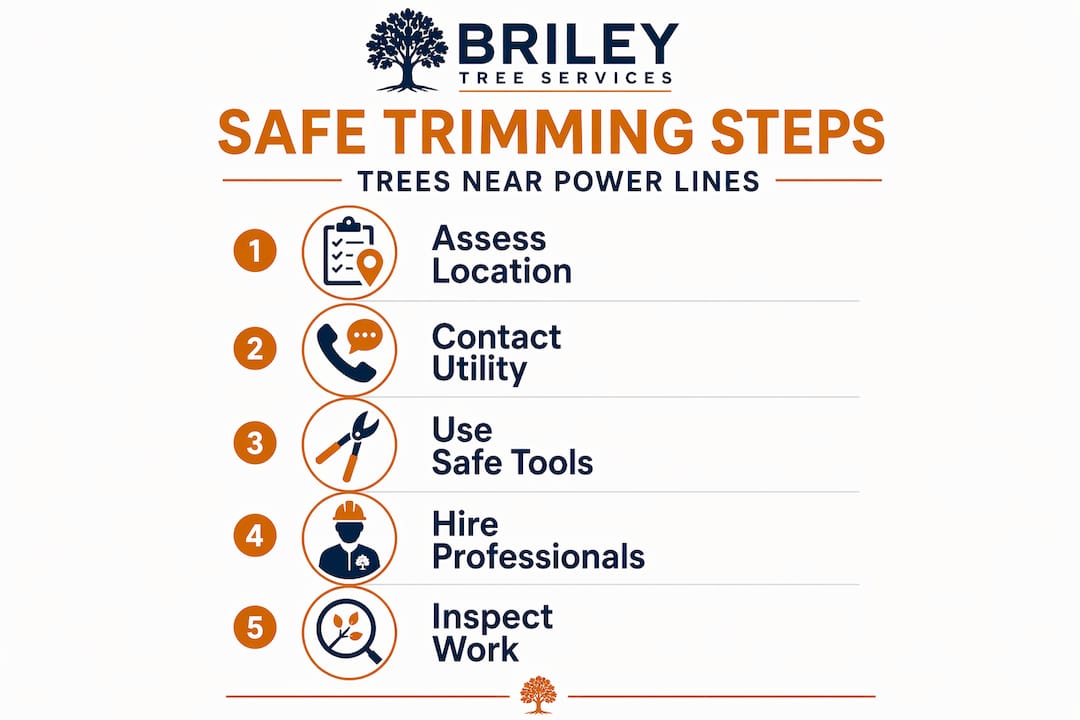
If you have confirmed the branches are outside the restricted zone and your utility company has cleared you to proceed, follow these steps carefully. These best practices for tree trimming near wires apply whether you are doing light maintenance or more significant pruning.
- Inspect the full work zone. Walk the perimeter and identify every overhead line in the area, not just the obvious ones. Cable, telephone, and fiber lines run alongside power lines and can create confusion about which wire is which.
- Choose non-conductive tools. Fiberglass-handled tools are the standard for any work near electrical infrastructure. Never use metal-handled pole saws or ladders near overhead lines.
- Plan your cut direction. Every branch should be cut so it falls away from the lines. This requires thinking through the physics before you make the cut. A branch that swings back toward a line after cutting is a common cause of accidents.
- Use the three-cut method for larger branches. Make an undercut first, then a top cut slightly further out, then a final clean cut at the branch collar. This prevents bark tearing and reduces the chance of the branch falling unpredictably.
- Keep your feet on the ground when possible. Ladders near power lines dramatically increase risk. If you cannot reach the branch safely from the ground, stop and call a professional.
- Watch weather conditions. Wet conditions increase electrical conductivity. Wind changes where a branch falls. Never trim near power lines during or immediately after rain, and never work in windy conditions.
Pro Tip: If a branch is large enough that you are unsure where it will land when cut, it is large enough to require a professional. Unpredictable falls near energized lines are the leading cause of trimming-related electrocutions.
Common mistakes homeowners make when trimming trees near electricity include overreaching from a ladder, using aluminum tools, cutting branches without a fallback plan, and assuming the work is safe because the lines "look far enough away." None of these assumptions hold up when something goes wrong.
Proper pre-job hazard assessment and documented safety checks are required by OSHA for professional crews. Apply the same discipline to your own work.
Verification and ongoing maintenance after trimming
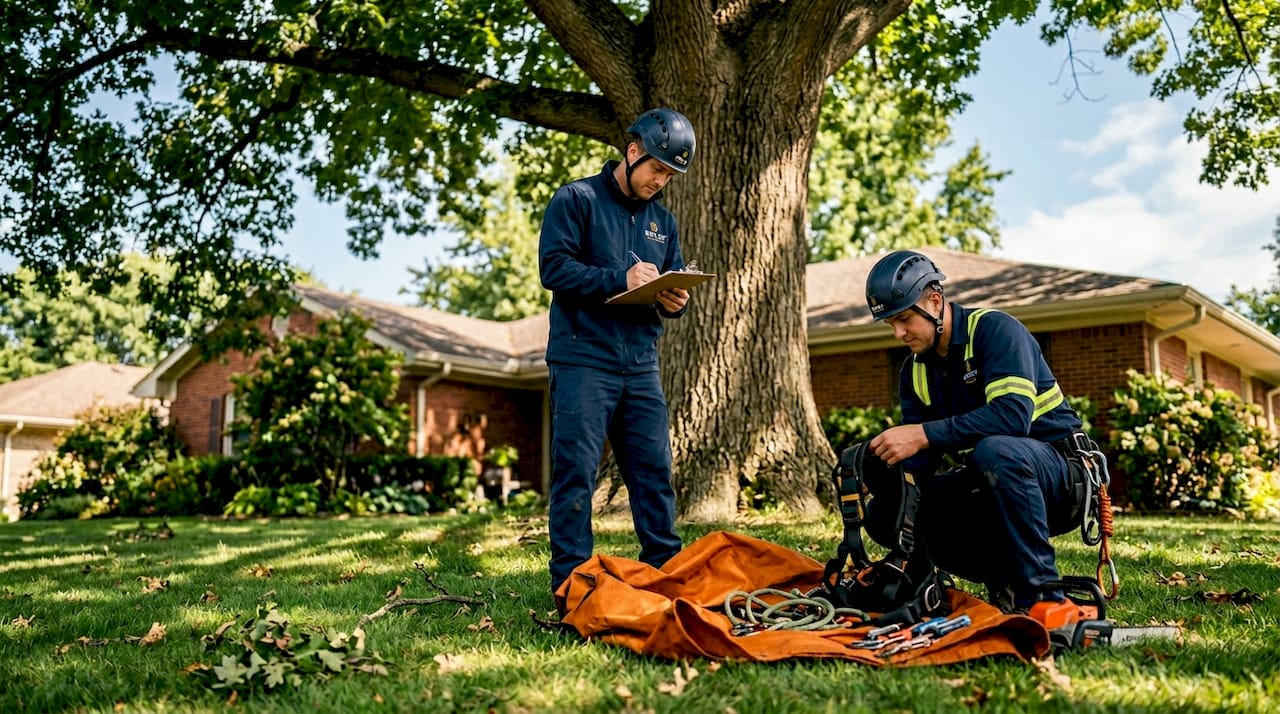
Once trimming is complete, the job is not finished. A post-trimming inspection confirms the work was done safely and that no new hazards were created in the process.
Walk the area and check that all cut branches have been cleared away from the base of the tree and from beneath any lines. Look up and confirm no debris is resting on or near wires. If you see anything touching a line, do not attempt to remove it yourself. Call your utility provider immediately.
Maintaining trees near power lines is an ongoing responsibility, not a one-time task. Utility companies recommend a 3 to 5 year trimming cycle to reduce outages and keep clearances safe. Fast-growing species like water oaks and sweetgums, common across Northwest Louisiana, can close that gap significantly faster. Check your trees every spring and after major storms.
The table below compares self-maintenance with hiring a professional service:
| Factor | Self-maintenance | Professional service |
|---|---|---|
| Legal compliance | Risk of violation near lines | Fully compliant with OSHA and local codes |
| Safety | High risk near energized lines | Trained for electrical hazard environments |
| Equipment | Limited to non-conductive hand tools | Specialized aerial and insulated equipment |
| Liability | Homeowner bears full liability | Insured and licensed coverage |
| Documentation | Informal or none | Written records for compliance purposes |
Keep records of every trimming session. Note the date, what was trimmed, who did the work, and whether utility authorization was obtained. This documentation protects you if a neighbor or utility company questions the work later.
Cooperative scheduling with your utility company also improves community-wide power reliability. Many providers in Louisiana have vegetation management programs that homeowners can participate in at no cost.
Troubleshooting common challenges near power lines
Even with good preparation, unexpected situations come up. Knowing how to respond keeps a manageable problem from turning into an emergency.
The most common surprise is discovering a branch is closer to a line than it appeared from the ground. If this happens mid-job, stop immediately. Do not attempt to finish the cut. Step back, secure the area, and call your utility provider to assess the situation.
If a branch or tree falls onto a power line, treat the scene as a live electrical hazard regardless of whether the line appears damaged.
Never approach a downed or contact line. Keep everyone at least 50 feet away and call 911 and your utility company immediately. Do not assume the line is de-energized.
Legal repercussions for unauthorized trimming near primary lines can include fines from the utility company, liability for repair costs if infrastructure is damaged, and civil liability if a neighbor or passerby is injured. These are not theoretical risks. They happen every year.
Sometimes trimming is not the right answer at all. If a tree has grown so close to lines that safe clearance cannot be maintained without removing major structural limbs, removal may be the only responsible option. You can review signs a tree needs removal to help assess whether your situation has crossed that line.
For any situation involving contact with lines, hidden wires, or trees that have already fallen onto infrastructure, do not attempt a DIY solution. The right call is always to bring in a certified professional.
My honest take on trimming near power lines
I have seen the aftermath of what happens when homeowners underestimate this kind of work. A homeowner in a rush, a branch that swings the wrong way, and suddenly you have a downed line, a fire, and a bill that runs into the tens of thousands of dollars. That scenario plays out more often than most people realize.
What I have learned is that the biggest mistake is not the cut itself. It is the assumption that because nothing bad has happened before, nothing bad will happen this time. Power lines do not give warnings. The hazard is invisible until it is not.
The homeowners I see handle this well are the ones who call their utility company first, every time. Not because they are overly cautious, but because they understand that a free phone call is worth more than any amount of DIY confidence. Many utilities in Louisiana will send a crew out or connect you with a certified arborist at no cost. That is a deal worth taking.
My recommendation is straightforward. If branches are within 10 feet of any line, do not touch them yourself. If you are not certain of the distance, call before you cut. And if a tree has grown into a line, that tree likely needs to come down, not just be trimmed back. Proactive maintenance on a 3 to 5 year cycle keeps you out of that situation entirely.
— Tatum
Professional tree trimming near power lines in Northwest Louisiana
If your trees are growing close to overhead lines and you are not sure what to do next, Brileytreeservice handles exactly this kind of situation every day across Shreveport, Bossier City, and the surrounding areas.

Brileytreeservice provides professional tree trimming and removal with a focus on safety near electrical infrastructure. The team understands local utility regulations, works with certified arborists for line-clearance situations, and carries full insurance coverage so your property is protected throughout the job. Whether you need a routine trim or a full removal for a tree that has grown too close to the lines, Brileytreeservice offers free estimates across Northwest Louisiana. Contact Brileytreeservice today to schedule an assessment and get the job done right.
FAQ
Can homeowners legally trim trees near power lines?
In most states, homeowners cannot legally trim branches within 10 feet of energized power lines without utility authorization. Some states, including Massachusetts, prohibit it entirely near primary lines. Contact your utility company before doing any trimming near overhead wires.
How close to a power line is too close to trim yourself?
OSHA requires a minimum 10-foot clearance from lines carrying 50 kV or less. If any branch is within that range, the work must be handled by a certified line-clearance arborist, not a homeowner.
What should I do if a tree falls on a power line?
Keep everyone at least 50 feet away and call 911 and your utility company immediately. Treat all downed or contacted lines as energized and dangerous until the utility company confirms otherwise.
How often should trees near power lines be trimmed?
Utility companies recommend trimming on a 3 to 5 year cycle to maintain safe clearance. Fast-growing trees may need attention more frequently, especially after storm seasons in Louisiana.
What tools are safe to use near power lines?
Use fiberglass-handled tools only. Metal-handled saws, ladders, and pole pruners conduct electricity and should never be used near overhead lines. PPE including insulated gloves and flame-resistant clothing is required for any professional working near energized equipment.