
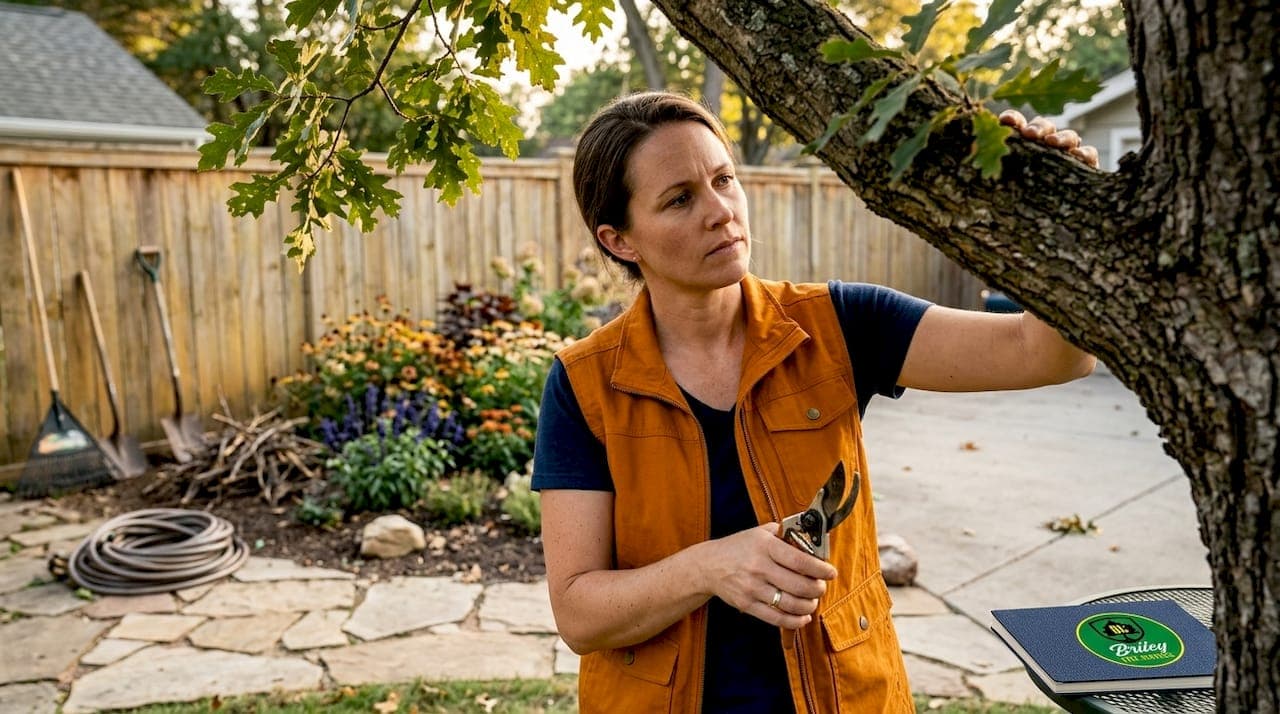
Overgrown, lopsided, or neglected trees can make even a well-maintained home look rough from the street. If you want to improve curb appeal, tree trimming is one of the most effective tools you have. The right cuts open up your yard, let light reach your lawn, and give your entire property a cleaner, more intentional look. This guide walks you through the tools you need, the correct techniques, how to pair trimming with your broader landscaping, and the mistakes that can set you back.
Table of Contents
- Key takeaways
- Improve curb appeal with the right tree trimming prep
- Step-by-step trimming techniques for better appearance
- Combining tree trimming with landscaping for full impact
- Common tree trimming mistakes to avoid
- How to evaluate results and stay on schedule
- My honest take on tree trimming and curb appeal
- Get professional tree trimming in your area
- FAQ
Key takeaways
| Point | Details |
|---|---|
| Start with the "4 Ds" | Remove dead, diseased, damaged, and dangerous branches before making any aesthetic cuts. |
| Never remove more than 25% | Taking too much canopy in one session stresses the tree and causes poor regrowth. |
| Use the 3-cut method | This technique protects the branch collar and prevents long-term bark damage and decay. |
| Pair trimming with landscaping | Combine trimmed trees with shaped shrubs and fresh plantings for a cohesive yard. |
| Know when to call a pro | Large trees, high branches, and stressed trees are jobs for a certified arborist. |
Improve curb appeal with the right tree trimming prep
Before you pick up a single tool, preparation makes the difference between a clean result and a costly mistake. Regularly trimmed trees look healthier and improve surrounding plant growth, but only when the work is done correctly.
Here is what you need before you start:
- Pruning shears: For small branches up to ¾ inch in diameter. Clean, bypass-style shears give sharper cuts than anvil types.
- Loppers: Handle branches from ¾ inch to 1.5 inches. Long handles give you reach and leverage without a ladder for lower limbs.
- Pruning saw: For anything over 1.5 inches. A folding hand saw works well for most homeowner jobs.
- Pole pruner: Lets you reach branches 10 to 15 feet up without a ladder, which is safer for most DIY projects.
- Safety gear: Heavy gloves, safety glasses, and a hard hat for any work overhead. Non-slip footwear matters more than most people think.
- Disinfectant spray: A 10% bleach solution or isopropyl alcohol to wipe blades between trees prevents spreading disease.
Before you cut, assess the tree. Look for cracks in major limbs, fungal growth at the base, or significant lean toward a structure. If you see any of those signs, stop and contact an arborist. You can also check out signs a tree needs removal before assuming trimming alone will solve the problem.
Timing matters too. Most trees benefit from pruning during late dormancy in late winter. Spring-flowering trees like dogwoods should be trimmed right after they bloom. Oak trees in Louisiana should not be pruned between February and June to reduce the risk of oak wilt.
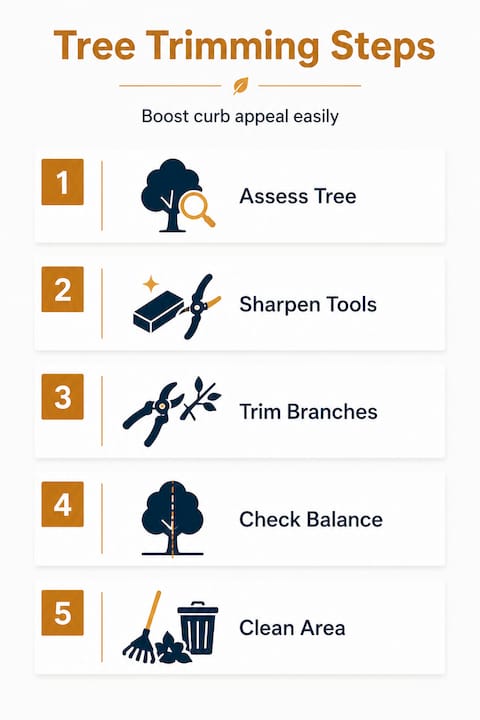
Pro Tip: Sharpen your tools before every trimming session. Dull blades crush tissue instead of cutting it cleanly, which slows healing and opens the door to infection.
| Tool | Best for | Limitation |
|---|---|---|
| Pruning shears | Branches under ¾ inch | Cannot handle larger wood |
| Loppers | Branches up to 1.5 inches | Limited reach without extension |
| Pruning saw | Branches over 1.5 inches | Requires steady footing |
| Pole pruner | High branches up to 15 feet | Less control on precise cuts |
Step-by-step trimming techniques for better appearance
Getting the cuts right is where most homeowners go wrong. Here is a clear sequence to follow for safe, effective trimming that genuinely improves how your yard looks.
-
Start with the "4 Ds." Remove dead, diseased, damaged, and dangerous branches before anything else. These cuts are non-negotiable for safety and tree health, and they often improve the look dramatically on their own.
-
Choose your pruning type. There are three main approaches: thinning removes select branches to improve light and air movement through the canopy; raising removes lower branches to open sightlines and clear sidewalks or driveways; reduction shortens the overall size while keeping the tree's natural shape. Most curb appeal work uses a combination of raising and thinning.
-
Use the 3-cut method for large limbs. The 3-cut method prevents bark tearing by removing weight in stages. First, make an undercut about 12 inches from the trunk, cutting upward about a third of the way through the branch. Second, make a top cut a few inches further out until the limb falls. Third, make the final cut just outside the branch collar, angling slightly away from the trunk. This protects the collar, which is the tissue zone the tree uses to close wounds naturally.
-
Never make flush cuts. Flush cuts are a major mistake. Removing the branch collar destroys the tree's ability to compartmentalize decay, and the wound often rots inward over time.
-
Avoid topping. Topping destroys the natural tree form and leads to dense, weak regrowth called "water sprouts." These sprouts look messy, grow fast, and create the same problem you started with, only worse. There is no legitimate reason to top a healthy tree for aesthetics.
-
Stay under the 25% canopy limit. Never remove more than 25% of a mature tree's canopy in a single session. If more work is needed, spread it across multiple seasons. The goal is the smallest number of cuts that achieve the result you want.
-
Skip wound paint. Sealants trap moisture and pathogens, which actually slows the healing process. Trees close wounds best on their own.
Pro Tip: Step back and look at the tree from the street after every few cuts. What looks balanced up close can look uneven from 50 feet away. The street view is what counts for curb appeal.
Combining tree trimming with landscaping for full impact
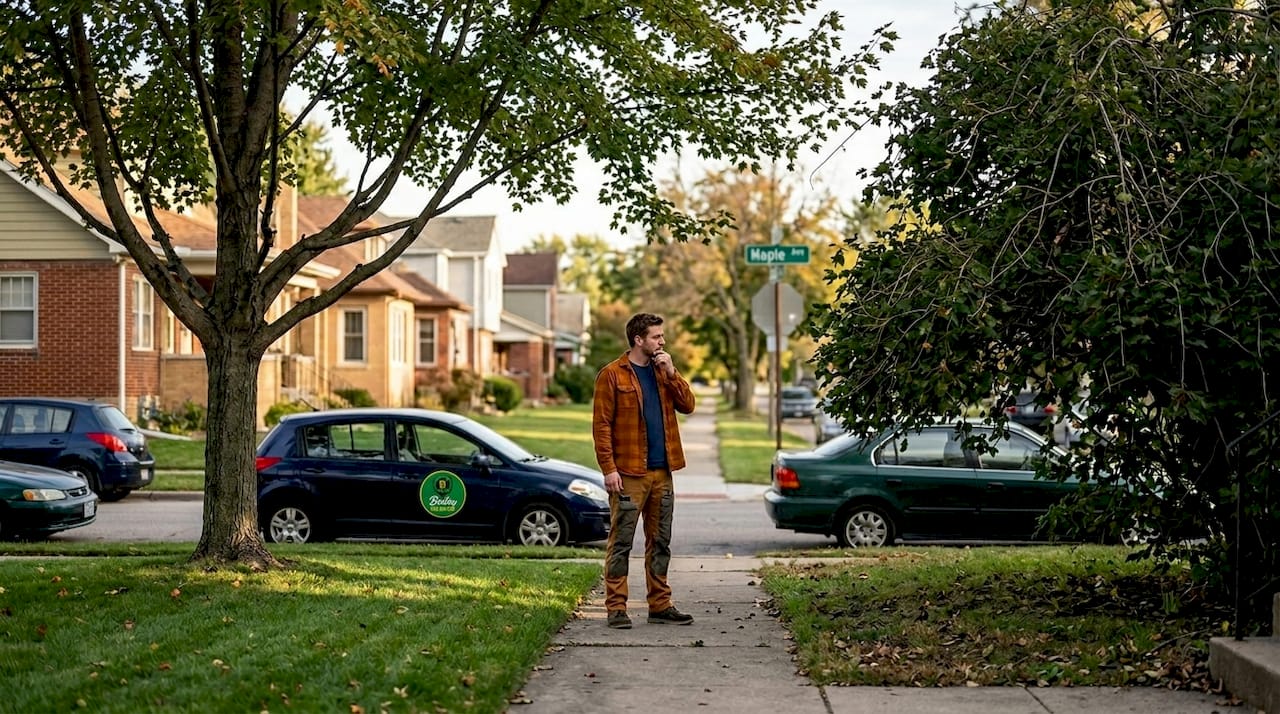
Trimming alone improves the look, but pairing it with smart landscaping choices is what transforms a yard. Thoughtful plant selection and consistent maintenance around your trees ties the whole picture together.
Here is how to build on your trimming work:
- Shape shrubs to complement tree form. After raising lower tree branches, trim foundation shrubs to a consistent height. This creates visual flow from the ground up and makes the yard feel intentional rather than accidental.
- Define flower beds under trimmed trees. Now that more light reaches the ground under the canopy, use it. Plant shade-tolerant annuals like impatiens or begonias at the base of trees. A clean bed edge does as much for curb appeal as the trim itself.
- Use ground cover under dense canopies. Where grass struggles to grow, liriope, mondo grass, or mulched beds keep things looking tidy. Exposed bare soil makes even a beautifully trimmed tree look neglected.
- Frame your path or driveway. Trees positioned along a walkway or driveway become architectural elements once the lower branches are raised. Use trimmed trees to frame the front door or guide the eye toward an entry. This is one of the best examples of curb appeal tree improvements because it creates structure without adding a single new plant.
- Add seasonal color near trimmed focal point trees. A raised canopy on a mature oak or magnolia is the perfect backdrop for seasonal plantings at its base. Swap in color based on the time of year for a yard that always looks fresh.
Light and airflow also benefit the lawn beneath the tree. Thinning a heavy canopy allows turf to thicken up in previously shaded areas, which is a visible win within one growing season.
Common tree trimming mistakes to avoid
Some of the most common curb appeal problems come from well-intentioned trimming done the wrong way. Here is what to watch out for:
- Over-pruning in one session. Removing too much at once causes stress that shows up as wilting leaves, stunted growth, or early leaf drop. This is especially damaging in the heat of a Louisiana summer.
- Pruning at the wrong time for the species. Fruit trees, flowering trees, and oaks all have different ideal windows. Pruning at the wrong time can prevent blooming or expose the tree to disease and insects.
- Using dirty tools. Moving from one tree to another with unclean blades spreads fungal and bacterial infections between otherwise healthy trees.
- Ignoring the warning signs. Cracks, hollow spots, mushroom growth at the base, and hanging dead branches are red flags. Louisiana storm damage and high winds can expose these weaknesses. When you see them, trimming is not the right solution.
"Proper pruning done correctly extends a tree's lifespan by decades and helps avoid costly replacements." — treecarezone.com
Pro Tip: After trimming, monitor the tree for two to four weeks. Healthy trees show new bud growth and no discoloration. Yellowing leaves or weeping sap are signs the tree needs professional attention.
How to evaluate results and stay on schedule
A one-time trim looks great for a season. Consistent care is what keeps your property looking its best year over year.
-
Inspect cuts after one month. Look for wound closure starting at the edges of each cut. Healthy trees begin forming a ring of callus tissue within weeks. If you see sunken, dark, or wet-looking wounds, consult an arborist.
-
Set a maintenance calendar. Most mature trees benefit from a light trim every one to three years. Young trees may need annual shaping. Structured pruning of young trees shapes strong architecture early and reduces what you need to correct later.
-
Track what you removed. Keep notes on which branches you cut and how much canopy you took. This helps you stay within safe limits across seasons and lets you explain the history if a professional takes over.
-
Know when to stop DIYing. Any branch over 6 inches in diameter, any work requiring a chainsaw above shoulder height, and any tree near a power line is a job for an ISA Certified Arborist. Professional arborists meet safety and pruning standards that most homeowners cannot reliably reach on their own, especially for large or complex trees.
-
Consider the long-term value. Trees maintained properly add measurable value to a property. A well-shaped mature tree is an asset. A neglected or improperly topped tree is a liability and an eyesore.
My honest take on tree trimming and curb appeal
I have watched homeowners go after their trees with too much confidence and too little information. The most common mistake is not neglect. It is over-enthusiasm. Someone wants fast results, so they remove every crossing branch, every low limb, and half the canopy in a single afternoon. Three months later, they wonder why the tree looks stressed and the yard looks worse than before.
In my experience, less is genuinely more with tree trimming. A few strategic cuts, properly placed, do more for improving yard visual appeal than an aggressive session that strips the tree bare. The first time you step back and see how raising just two or three low branches opens up the front of a home, it clicks. You realize you do not need to do much. You need to do the right things.
I also think homeowners underestimate how different a professionally trimmed tree looks compared to a DIY result. It is not snobbery. It is geometry. Arborists read a tree's structure and work with it. Most homeowners cut what they can reach and stop there. The results reflect that.
The trees on your property are long-term assets. They deserve the same care you give your roof or your foundation.
— Tatum
Get professional tree trimming in your area
If your trees need more than light maintenance, or if you are not sure where to start, Brileytreeservice is ready to help.
Brileytreeservice serves homeowners across Shreveport, Bossier City, and the surrounding areas of Northwest Louisiana. The team specializes in tree trimming, tree removal, stump grinding, and storm cleanup for residential and commercial properties. Every job is done safely, efficiently, and with full cleanup when the work is done. Whether you need a seasonal trim to sharpen your yard's look or have a hazardous tree that needs professional attention, Brileytreeservice offers free estimates and personalized service. Check service areas near you and reach out today.
FAQ
What is the best time of year to trim trees for curb appeal?
Late winter, just before new growth starts, is the best window for most trees. Trimming during dormancy reduces stress and allows wounds to close quickly once spring growth begins.
How much can you trim from a tree at one time?
Never remove more than 25% of the canopy in a single session. Removing too much at once stresses the tree and can cause a significant decline in health and appearance.
Does tree trimming actually increase home value?
Yes. Well-maintained trees improve a property's visual appeal and perceived value. Trees that are neglected or improperly trimmed can have the opposite effect, reducing value and creating safety hazards.
What is the 3-cut method and why does it matter?
The 3-cut method removes large branches in stages to prevent bark tearing. It protects the branch collar, which is the tissue the tree uses to close wounds, reducing the risk of long-term decay.
When should you hire a professional instead of trimming yourself?
Hire a certified arborist for any branch over 6 inches in diameter, work near power lines, trees showing signs of disease or structural failure, or any cuts that require a chainsaw above shoulder height.