
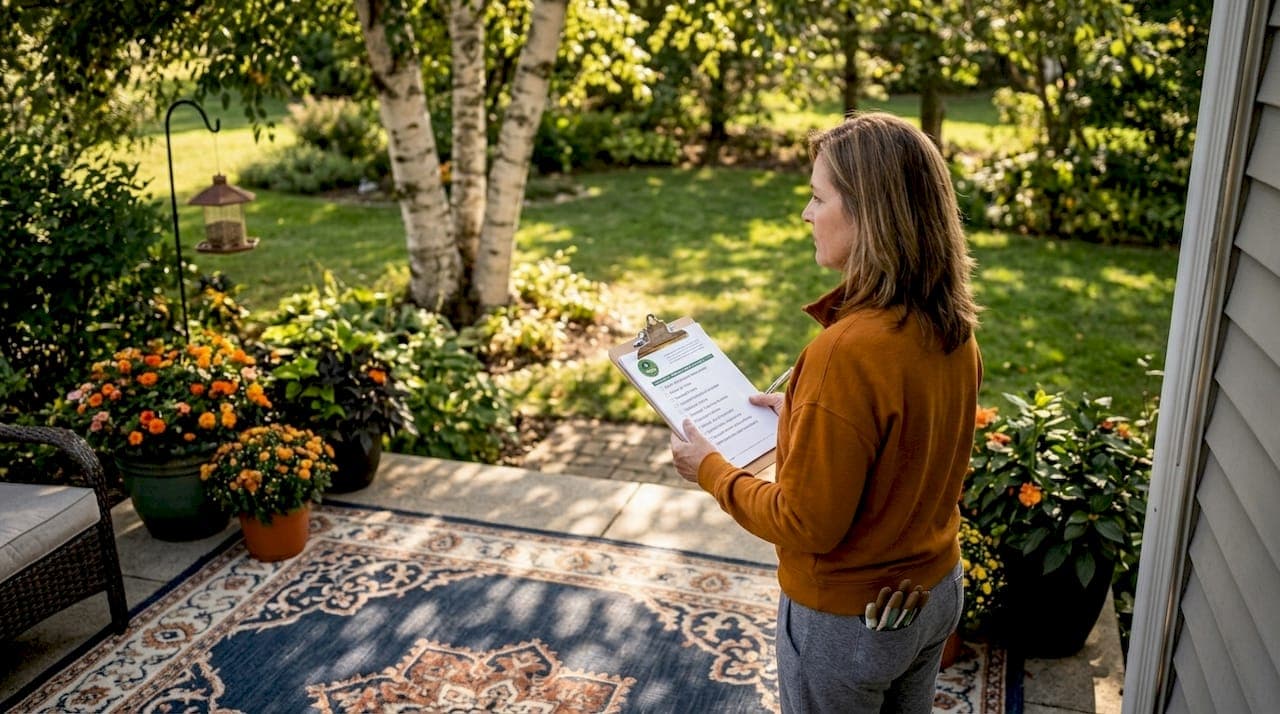
Hiring a tree service sounds straightforward until something goes wrong. An unlicensed crew drops a limb on your roof. A worker gets hurt with no insurance coverage. A contractor starts removing a city tree without a permit and you end up liable. Using a solid tree service hiring checklist before you sign anything protects your property, your finances, and your legal standing. This guide walks you through every step, from verifying credentials to reviewing contracts, so you hire a qualified professional with confidence.
Table of Contents
- Key takeaways
- 1. Your tree service hiring checklist starts with credentials
- 2. Understand local permitting requirements before work begins
- 3. Evaluate contractor experience and professional reputation
- 4. Request and compare detailed written estimates
- 5. Assess professionalism, availability, and red flags
- My honest take after years of dealing with tree contractors
- Why Brileytreeservice makes the checklist easy to clear
- FAQ
Key takeaways
| Point | Details |
|---|---|
| Verify credentials first | Always confirm business licenses, contractor licenses, and ISA certification before accepting any bid. |
| Insurance is non-negotiable | Request Certificates of Insurance and confirm general liability and workers' comp are both current. |
| Permits affect your timeline | Work on public trees or rights-of-way requires approved permits before a single cut is made. |
| Written estimates protect you | A detailed written bid with scope, costs, and cleanup terms prevents billing surprises later. |
| Watch for red flags | Cash-only demands, evasive answers about insurance, and no written contract are signs to walk away. |
1. Your tree service hiring checklist starts with credentials
The first step in any tree service evaluation guide is confirming that the company is legally authorized to operate and carries the right credentials. This sounds basic, but a surprising number of homeowners skip it and pay for it later.
There are three distinct types of credentials you need to check:
- Business license: This confirms the company is registered to operate in your state or municipality. Ask for the license number and verify it through your state's contractor licensing board.
- Contractor license: Some states require a separate arborist or contractor license for tree work. Confirm what your local jurisdiction requires before assuming a general business license is enough.
- ISA Certified Arborist: ISA certification covers tree biology, safety protocols, and pruning standards. It is the clearest signal that the person assessing your trees has formal training. Specialized ISA credentials also exist for utility and municipal tree work contexts.
Beyond licensing, two forms of insurance are non-negotiable. General liability insurance covers damage to your property if something goes wrong. Workers' compensation covers the crew if someone is injured on your property. Without workers' comp, an injured worker can file a claim against your homeowner's insurance.
Ask for a Certificate of Insurance (COI) directly from the company. Call the insurer listed on the document to confirm coverage is active.
Pro Tip: Request COIs showing current effective dates and verify the policy has not lapsed. A policy expired even one day before your job starts leaves you unprotected.

Some jurisdictions also require contractors to carry a surety bond, which covers incomplete or substandard work. Check with your local licensing authority to see if bonding is mandatory in your area.
2. Understand local permitting requirements before work begins
Permitting is not a formality. It is a legal and safety requirement that directly affects your project schedule and liability exposure. Skipping this step can result in fines, stop-work orders, or worse.
The rules vary significantly depending on where your tree is located. Permitting requirements differ based on whether work involves private property, public rights-of-way, or protected tree zones. The City of Bend, Oregon, for example, uses a decision flowchart to help property owners determine if city approval is required based on site context.
For publicly managed trees, requirements are even stricter. Spokane's municipal code prohibits major pruning or removal of street trees without a permit that specifies the work scope and carries an expiration date. A notice of completion must be filed within five business days for inspection. Missing that window can void the permit.
The timing matters too. Work cannot begin until the permit is fully approved, not submitted. Spokane's Urban Forestry office reviews and decides on permit applications within two working days, which is fast. But any contractor who tells you to start while waiting for approval is putting you at legal risk.
There are also specific thresholds for work near power lines. Pruning exceeding 15% canopy loss or work within 10 feet of power lines typically triggers additional permit requirements and contractor qualifications.
Before you solicit any bids, determine tree location relative to your property lines and any public rights-of-way. This prevents misclassification of permit requirements from the start.
Pro Tip: Ask each contractor to describe the planned work in terms of measurable thresholds, such as percentage of canopy removed or distance from power lines. Contractors who can do this clearly demonstrate real permit awareness.
3. Evaluate contractor experience and professional reputation
Credentials confirm someone is qualified on paper. Experience and reputation show you how they actually perform on the job. This part of the tree removal service checklist separates the professionals from the fly-by-night operations.
Start with project-specific experience. A company with solid residential trimming experience may not have handled large hazard removals near structures. Ask directly whether they have completed similar projects and request before-and-after photos.
For complex jobs, ISA arborist involvement in the on-site evaluation is a strong indicator of quality. An arborist can assess structural defects, decay, and root system issues that an untrained crew member would miss entirely.
Here is what a professional on-site evaluation should include:
- A thorough review of tree health, lean, and structural integrity
- Clear explanation of the removal or pruning plan before any equipment is staged
- Details on rigging approach and risk mitigation, especially near structures or utilities
- Confirmation of cleanup process and debris removal plan
References still matter. Ask for three recent clients with jobs similar to yours. Call them. Ask whether the crew showed up on time, completed work as described, and left the property clean.
Pro Tip: For complex removals, ask for a written scope that specifically describes rigging methods, crane use if applicable, and how access to your property will be managed. This tells you immediately whether the contractor has actually thought through the job.
Reading online reviews gives you pattern data. A few negative reviews are normal. A pattern of complaints about hidden charges, missed appointments, or damage claims is a serious red flag.
For additional guidance on evaluating qualified contractors, the team at Brileytreeservice has published detailed advice on what to look for during the selection process.
4. Request and compare detailed written estimates
A verbal quote is not a contract. Requesting 3 to 5 written quotes and comparing them carefully is one of the most reliable best practices for tree service hiring. It reveals pricing inconsistencies and exposes contractors who are underspecifying the work to win the bid.
A professional written estimate should include every one of these elements:
- Specific scope of work (which trees, which branches, removal vs. trimming)
- Itemized costs for labor, equipment, and disposal
- Timeline with start date and estimated completion
- Debris cleanup and haul-off details
- Stump grinding or removal terms if applicable
Once you accept a bid, convert it to a signed contract. The contract should match the estimate exactly. Any deviation at the contract stage is a warning sign.
Here is how common bid elements tend to vary across contractors:
| Bid element | Strong bid | Weak bid |
|---|---|---|
| Scope of work | Tree-by-tree, branch-specific detail | Vague description like "remove large tree" |
| Cleanup terms | Explicit debris removal and site restoration | "Clean up included" with no specifics |
| Payment structure | Deposit under 50%, balance on completion | Full payment upfront or cash only |
| Warranty or guarantee | Written terms for workmanship issues | No mention of post-job concerns |
| Permits | Contractor confirms responsibility for permits | Permits described as "your responsibility" |
Pro Tip: Avoid paying more than 50% upfront on any job. Legitimate contractors do not require full payment before work starts. Also read any warranty terms carefully. A 30-day workmanship guarantee means something. A vague "satisfaction guarantee" with no terms means nothing.
5. Assess professionalism, availability, and red flags
How a company communicates before you hire them tells you a lot about how the job will go. This part of the tree service hiring guide focuses on the softer signals that indicate whether a contractor is reliable and worth trusting with your property.
Responsiveness is a real indicator of professionalism. If a company takes four days to return a call or sends you a one-line email when you asked a detailed question, expect that same level of engagement when there is a problem on the job site.
Watch for these red flags:
- No physical business address or only a phone number
- Refusal to provide insurance documentation before signing
- Cash-only payment requirements
- Pressure to decide immediately or "lose the deal"
- No written contract offered at any point
- Inability to explain permit requirements for your specific tree
Availability alignment matters for property managers especially. Confirm the contractor can begin and complete the work within your required window. For emergency storm cleanup, ask upfront whether they offer 24-hour response. Some contractors prioritize emergency calls; others book standard jobs first regardless of urgency.
Also consider whether the company offers services that cover what comes after removal. Understanding your options for stump grinding vs. removal helps you get a complete picture of the total project cost before you commit.
Companies that offer land clearing, stump grinding, and storm damage response as part of their service menu are typically better equipped and more experienced than those handling only basic trimming.
My honest take after years of dealing with tree contractors
I've watched homeowners make the same mistake repeatedly. They get three bids, pick the lowest one, and skip the credential check entirely because the guy seemed knowledgeable and the price was right.
In my experience, the contractors most likely to cause problems are the ones who give the fastest, cheapest quotes. That's not because affordable pricing is bad. It is because fast, cheap quotes usually mean the contractor skipped the proper evaluation. They didn't assess the rigging challenges, account for permit requirements, or price in real cleanup time.
The credential verification step is the one most people find tedious and skip. It's also the one that matters most. An uninsured crew working on your property is your liability the moment someone gets hurt. I've seen homeowner insurance claims filed because a contractor had no workers' comp. The homeowner had no idea they were exposed.
My recommendation is to treat the ISA certification check and the insurance verification as non-optional. Everything else on this checklist matters, but those two items are where the real risk lives.
The permit question is where I see the most confusion. A lot of homeowners assume permits are the contractor's problem. They are not always. In many jurisdictions, the property owner shares responsibility for permitted work. If your contractor starts without an approved permit, you may face the fine.
Do the checklist. All of it. The job takes an afternoon to vet properly, and it protects months of potential headaches.
— Tatum
Why Brileytreeservice makes the checklist easy to clear
When you work through a tree service hiring checklist, every item points in the same direction: find a company that is licensed, insured, experienced, and transparent. Brileytreeservice checks every box.
Brileytreeservice serves Shreveport, Bossier City, and across Northwest Louisiana with fully licensed and insured crews. Services include tree removal, tree trimming, stump grinding, and emergency storm cleanup for both residential and commercial properties. The team shows up on time, explains the work before starting, and cleans up completely after every job. Property managers in Springhill, LA and homeowners in Benton, LA trust Brileytreeservice for professional tree care that meets all the criteria outlined in this guide. Contact Brileytreeservice today for a free estimate.
FAQ
What credentials should I verify before hiring a tree service?
Verify a valid business license, any required contractor or arborist license in your state, and ISA Certified Arborist credentials. Always request Certificates of Insurance confirming both general liability and workers' compensation coverage are active.
Do I need a permit to remove a tree on my property?
It depends on the tree's location and your municipality. Trees on public rights-of-way or in protected zones almost always require a permit. Permitting rules vary by jurisdiction, so confirm requirements with your local urban forestry or planning office before any work begins.
How many tree service bids should I get?
Request between three and five written bids. This gives you enough data to spot pricing inconsistencies and identify contractors who are underspecifying the scope of work to appear more affordable.
What should a professional tree service estimate include?
A solid estimate covers itemized costs, a specific scope of work, a project timeline, debris removal details, and clarity on who handles permitting. Written contracts that match the estimate protect both parties and prevent disputes after the job is done.
What are the biggest red flags when hiring a tree service?
The clearest red flags are refusal to provide insurance documentation, cash-only payment demands, inability to explain permit requirements, and pressure to sign without a written contract. A contractor who cannot answer basic questions about their credentials is not worth hiring regardless of price.