
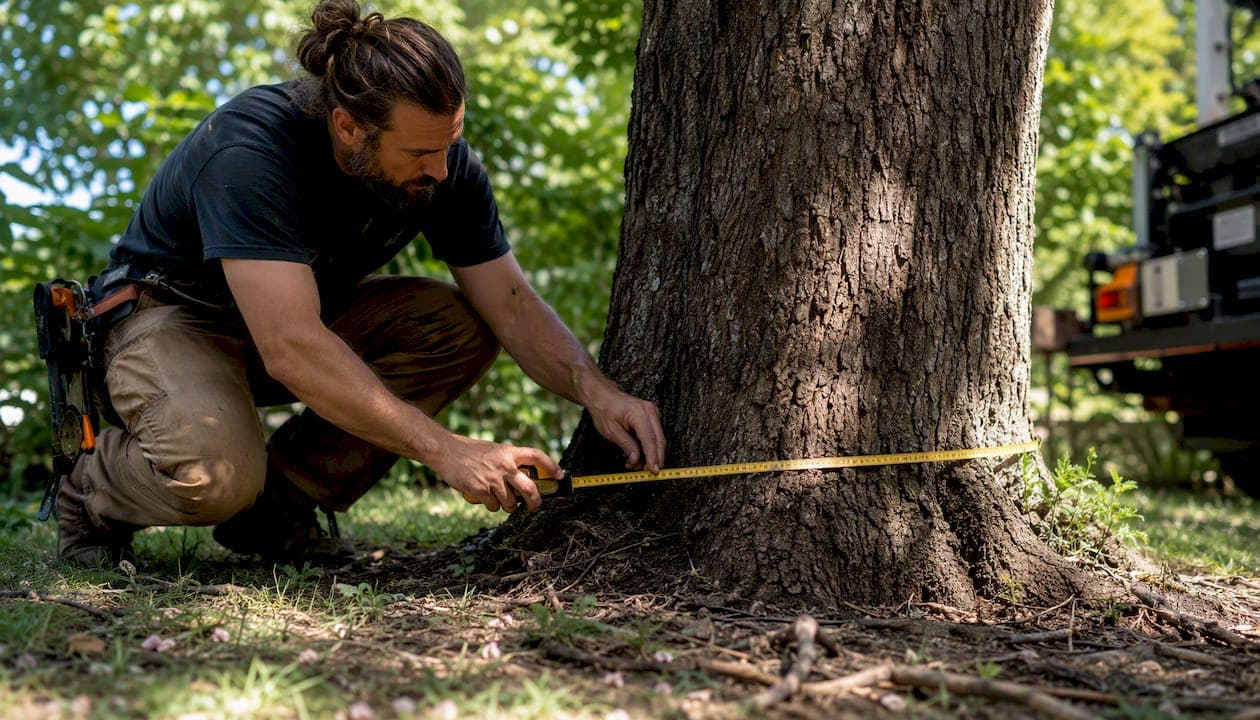
Most tree removals on private property in Ruston, Washington will require you to check in with the city first, and in a meaningful share of cases, you will need a permit before the saw touches bark. The reason comes down to location and purpose: Ruston's rules focus heavily on trees near public right-of-way, easements, critical areas, and anything tied to development or site work. A tree standing well inside your yard, away from any street, slope, or shoreline, is far more likely to be a straightforward removal. A tree near a sidewalk, utility line, or lot boundary is a different story.
The fastest way to get a real answer for your specific tree is to contact the City of Ruston Permit Service Center directly, either by email at permits@rustonwa.gov or by phone during business hours. Don't guess based on what a neighbor did last year or what worked in a different city. Permit thresholds change, and enforcement varies by jurisdiction.
Three situations almost always trigger a permit requirement:
- The tree sits in or near a public right-of-way, easement, or shared property line.
- The removal is connected to construction, grading, or another development permit.
- The tree falls under a protected species, heritage designation, or shoreline/critical-area rule.
If your tree touches any of those three categories, don't schedule a contractor yet. Email permits@rustonwa.gov with your address, a photo of the tree, and a short description of why you want it removed. That single message can save you a stop-work order later.
Key Takeaways
Ruston property owners should confirm permit requirements before removal, since location near right-of-way, development, or critical areas usually determines whether one is required.
| Point | Details |
|---|---|
| Verify first | Email permits@rustonwa.gov with photos and property details before hiring a contractor. |
| Check the three triggers | Right-of-way location, development ties, and species/shoreline protections drive most permit requirements. |
| Document everything | Photos, a site plan, and contractor insurance proof speed up review and avoid delays. |
| Confirm debris responsibility | Contractors must haul what they cut; city pickup is capped and may carry a special fee. |
| Ask about appeals | If denied or contested, request the appeal process directly from the Permit Service Center. |
Table of Contents
- Ruston Tree Removal Permit: What Actually Triggers One
- How to Apply for a Tree Removal Permit in Ruston
- What Does a Ruston Tree Removal Permit Cost and How Long Does It Take?
- Exceptions: Emergencies, Utilities, and Development Tie-Ins
- Who Removes the Debris, and What Are Ruston's Hauling Limits?
- What Happens If You Remove a Tree Without a Permit?
- What a Local Tree Contractor Wishes Every Homeowner Knew
- Frequently Asked Questions
- Sources
Ruston Tree Removal Permit: What Actually Triggers One
The core question behind "ruston tree removal permit" searches isn't really "is there a rule." It's "does my tree qualify." Ruston's permitting approach mirrors what many small municipalities use: routine maintenance on private residential property is often allowed without a permit, while removals connected to development, rights-of-way, or environmentally sensitive land are treated differently. Standard pruning and minor trimming on a private residential lot typically doesn't require a city sign-off, but a full removal is a separate decision.
Here's what usually pushes a project into permit territory:
- Right-of-way or easement location. If the tree sits between your property line and the street, or inside a utility easement, the city likely has a say in whether and how it comes down.
- Development or site work. Clearing trees as part of a remodel, addition, or new construction almost always gets folded into that project's permit application rather than handled separately.
- Critical areas or shoreline zones. Ruston sits along Puget Sound, and shoreline-adjacent parcels commonly carry extra protections under state and local critical-areas rules.
- Size or species thresholds. Some municipal codes set a diameter cutoff, meaning smaller trees can come down freely while larger, older specimens require review.
Run this two-minute self-check before you call a contractor. First, confirm your property line and whether the tree sits inside it, on it, or outside it. Second, look for visible utility lines, poles, or easement markers near the trunk. Third, check whether any construction or grading is planned nearby. Fourth, note whether the tree looks unusually large, old, or is a species you can't identify. If you can answer all four questions and nothing raises a flag, you're in low-risk territory. If any answer is unclear, that's your cue to call.
Pro Tip: Pull up your county assessor's parcel map before you contact the city. Having your exact lot lines and a photo ready when you email permits@rustonwa.gov means the permit staff can often give you a same-day answer instead of asking you to send more information first.
How to Apply for a Tree Removal Permit in Ruston
Start with the source: the application form and submission instructions live with the City of Ruston Permit Service Center, and the listed intake contact is permits@rustonwa.gov. Call ahead or check the city's permit page before you assume a form is downloadable, since small municipalities sometimes process permit requests by email correspondence rather than a public online portal.
Once you know a permit applies to your situation, the tree removal application process in Ruston generally follows this sequence:
- Photograph the tree from multiple angles, including one shot that shows its position relative to the street, sidewalk, or property line.
- Sketch or pull a simple site plan showing the tree's location on your lot, especially if it's near a boundary or easement.
- Complete the permit application form provided by the Permit Service Center, listing the reason for removal (hazard, disease, development, landscaping).
- Attach proof of ownership if requested, such as a property tax statement or deed excerpt.
- Provide contractor information, including the company name and proof of liability insurance, if a licensed tree service will perform the work.
- Include an arborist report if the city asks for one, particularly for large or potentially protected trees.
- Submit and pay any applicable fee, then wait for confirmation before scheduling removal.
A tight, well-documented application avoids the back-and-forth that delays permits by weeks. Cities commonly ask for:
- Clear, well-lit photos showing the trunk, canopy, and surrounding structures.
- A hand-drawn or printed site plan with rough measurements.
- Contractor license and insurance certificates, if you're hiring out the work.
For anything urgent, mention it directly in your email to permits@rustonwa.gov and ask whether an expedited review is available. Business hours and phone response times vary, so email tends to be the more reliable first contact for documentation purposes.
What Does a Ruston Tree Removal Permit Cost and How Long Does It Take?
Permit fees typically break into a few categories: an application or processing fee, a possible inspection fee if the city sends someone to view the tree, and in some cases a separate charge if the city itself hauls away debris. Exact dollar amounts should come from the Permit Service Center directly, since small-city fee schedules change and aren't always posted in a single, easy-to-find document.
- Application/processing fee, charged when you submit the form.
- Inspection fee, if a site visit is required to confirm the tree's condition or location.
- Special pickup fee, only relevant if you request city hauling for nonstandard debris loads (more on that below).
A typical municipal review cycle runs anywhere from about one to four weeks, depending on whether an inspector needs to visit the property and how complete your initial application is. A tree tied to a development permit will often move on that project's timeline instead of a standalone schedule.
If you're facing a genuine emergency, meaning the tree poses an immediate risk to a structure or person, that changes the process entirely. Document the hazard, take photos, and contact the Permit Service Center as soon as possible, even if the removal happens before formal approval. The exceptions section below covers that in more detail.
Fee schedules and review timelines live in the municipal code and with the permit office directly, so treat any number here as a planning estimate rather than a final figure.
Exceptions: Emergencies, Utilities, and Development Tie-Ins
Not every removal follows the standard path. A handful of scenarios shift the rules, and knowing which one applies to you saves real time.
- Emergency hazard removal. If a tree is actively failing, leaning dangerously, or has already fallen and threatens a structure, document the condition with photos and notify the city as soon as you can, even after the fact.
- Utility-related removals. If a utility company identifies a tree as a line hazard, coordinate directly with that utility. They often handle their own permitting or work under a separate agreement with the city.
- Development-related clearing. If tree removal is part of a construction or landscaping project already under permit review, fold the tree request into that same application instead of filing separately.
- Disease or infestation. A tree confirmed to carry disease or pest infestation may qualify for expedited handling, particularly if it threatens neighboring trees.
For after-the-fact permitting following an emergency, keep dated photos, notes on the hazard (a crack, lean angle, storm damage), and any communication with a contractor or arborist. That documentation is what turns "I removed it without asking" into a defensible, retroactive approval. If your situation involved storm damage specifically, understanding what to document after a storm helps you build that record correctly the first time.
Shoreline and critical-area protections deserve a direct call to the Permit Service Center rather than a guess. Puget Sound-adjacent parcels frequently carry layered state and local rules that a standard removal permit doesn't cover on its own.
Who Removes the Debris, and What Are Ruston's Hauling Limits?
Cutting the tree down is only half the job. Municipal code in comparable small cities typically requires that private tree contractors and tree surgeons remove all limbs, cuttings, and stumps they generate, rather than leaving that debris for the city to collect. That obligation should sit clearly in your written contract before work starts.
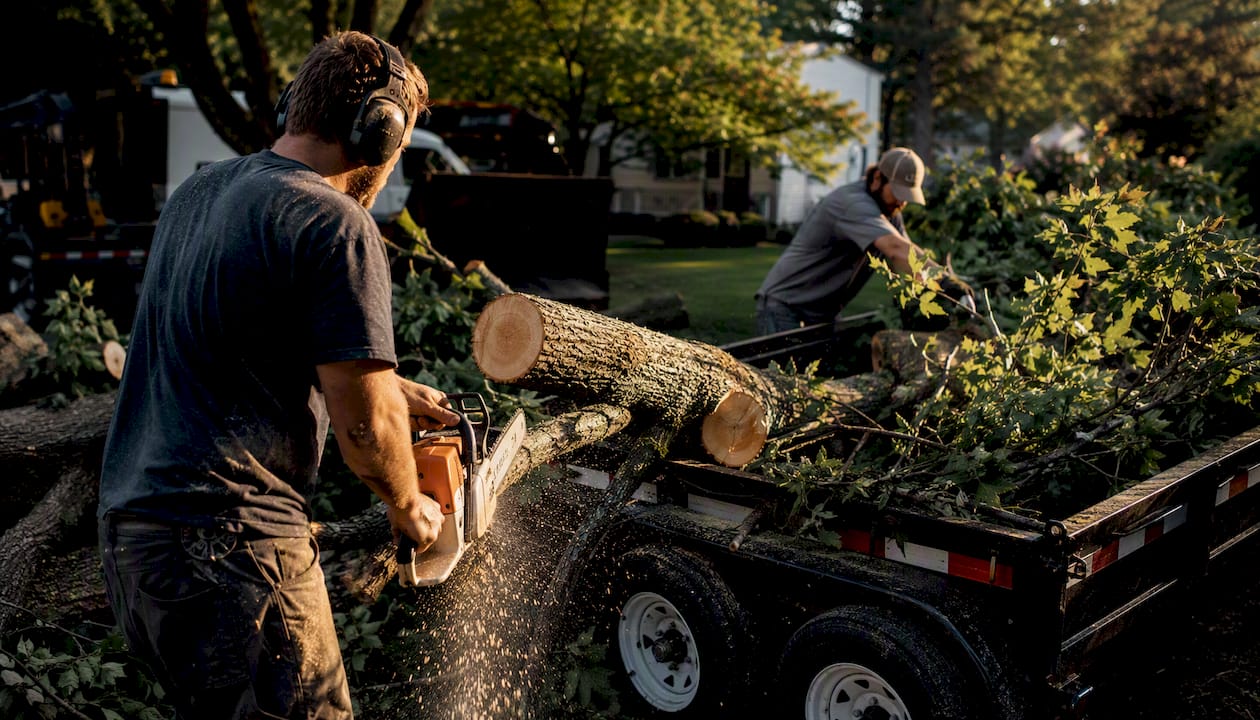
City hauling support, where it exists, tends to come with real caps. In Ruston, Louisiana's comparable municipal code, the city limits debris removal from contractor-cut trees to no more than one trailer load, or approximately 25 cubic yards, per parcel per month. That same code structure allows bulk bags at no charge, capped at one per household, with a limit of two bulk-bag pickups per month. Ruston, Washington's own public works department should confirm whether its pickup limits and bag policy mirror this structure, since municipal debris rules vary by jurisdiction even when the surrounding code language looks similar.
Before you sign a contract, confirm in writing:
- Debris disposal is the contractor's responsibility, not yours or the city's.
- The contractor carries current liability insurance and, if applicable, a business license.
- The contract states who pays if a special pickup fee applies for nonstandard loads.
Homeowners who assume "the city will haul it" after a big removal are often the ones who get hit with an unexpected special pickup charge. Ask the question before, not after.
Pro Tip: If you're removing more than one tree, schedule the work in stages across separate months rather than all at once. That keeps debris volume under the monthly cap and avoids triggering a special pickup fee for exceeding standard hauling limits. Working with a licensed and insured arborist who builds debris removal into the written scope removes this guesswork entirely.
What Happens If You Remove a Tree Without a Permit?
Skipping the permit step doesn't just risk a fine. Depending on the violation, enforcement can include a stop-work order on any related project, a required after-the-fact permit application with added penalty fees, or in some cases a mandate to plant replacement trees to offset the loss.
Common enforcement outcomes look like this:
- A monetary fine, scaled to the severity or scope of the unauthorized removal.
- A stop-work order if the removal was tied to a larger construction project.
- Mandatory mitigation planting, replacing the removed tree with one or more new plantings.
- An after-the-fact permit process, which may still require fees and documentation even though the tree is already gone.
If you discover a tree on your property was removed without proper permitting, whether by a previous owner or a contractor who skipped the step, contact the Permit Service Center directly, document the current site conditions, and ask specifically about the after-the-fact application process. Waiting rarely improves the outcome.
If a permit application gets denied, or a neighbor contests a planned removal, the municipal code should outline an appeal path. That process typically involves a written request for reconsideration, sometimes with additional documentation like an arborist's hazard assessment. Confirm the exact appeal steps with permit staff rather than relying on general assumptions, since appeal procedures are one of the more jurisdiction-specific parts of any tree code.
What a Local Tree Contractor Wishes Every Homeowner Knew
Permit delays almost never come from bureaucracy for its own sake. They come from incomplete applications. A blurry photo, a missing site plan, or a contractor without proof of insurance sends a file back for revision, and that single round-trip can add a week or more to your timeline. The fix is simple: over-document before you submit, not after a reviewer asks.
Coordinating with utility companies before removal day matters more than most homeowners expect. A tree that looks like it's entirely on your property can still have a utility easement running through the root zone, and cutting into that without notice can create liability that has nothing to do with the tree itself. A quick call to the utility, or a request that your contractor confirm clearance, avoids that entirely.
Timing removal work around city debris pickup limits is one of those details that separates a smooth job from a frustrating one. If your project generates more debris than the monthly hauling cap allows, either stage the work or budget for a special pickup fee upfront instead of discovering it on a bill. And always, always confirm the contractor carries current liability insurance and puts debris removal in writing. Verbal promises don't hold up when a dispute happens, but a signed emergency tree service contract does.
Frequently Asked Questions
Do I need a permit to remove a dead tree in my backyard in Ruston? A dead tree well inside your property line, away from right-of-way or easements, is often lower risk, but confirm with the Permit Service Center before removal, especially if the tree is large or near a structure.
How long does the Ruston tree removal permit process take? Standard applications typically process within one to four weeks, though timelines depend on whether an inspection is required and how complete your initial submission is.
Who pays if a tree overhangs both my property and my neighbor's? Ownership usually follows the trunk's base location, but shared canopies over a boundary line often require coordination with the neighbor and possibly the city before removal.
What if my contractor's debris exceeds the city's monthly pickup limit? Comparable municipal code caps contractor debris hauling at roughly one trailer load per parcel monthly; exceeding that typically means arranging private hauling or paying a special pickup fee.
Can I appeal if my tree removal permit is denied? Most municipal codes include an appeal path involving a written request and additional documentation, such as an arborist assessment; confirm the exact steps with Ruston's Permit Service Center.
Sources
Confirm every detail in this guide against the primary sources before scheduling work, since municipal code language and fee schedules shift over time.
- Chapter 15 - GARBAGE, WEEDS AND TRASH | Code of Ordinances | Ruston, LA | Municode Library
- Tree Trimming & Pruning Ruston, LA | Costs, Tips & Regulations
Municipal code structure and fee amounts vary even between similarly named cities, so always confirm the current Ruston, Washington ordinance language and fee schedule directly with the Permit Service Center rather than relying on comparable code from another jurisdiction. If your project also involves post-removal cleanup or replanting, a licensed commercial tree service can help coordinate permitting and debris hauling in a single contract, and a backyard landscaping partner can help you plan what goes in the space once the stump is gone.