

An emergency tree service contract is a legally binding agreement that defines how a tree care company responds to urgent hazards like storm-downed limbs, uprooted trees, or branches threatening a structure. Unlike a standard tree service agreement, this contract governs time-sensitive work where delays create real safety and property risks. Knowing what is in an emergency tree service contract before a crisis hits is the difference between fast, protected service and costly confusion when you need help most.
What is an emergency tree service contract vs. a standard agreement?
An emergency tree service contract focuses exclusively on hazard mitigation, not routine care. Standard tree service agreements cover scheduled pruning, fertilization, and cosmetic trimming on a planned timeline. Emergency contracts exist for situations where a tree or limb poses an immediate threat to people, structures, or utility lines.
The most visible difference is response time. Municipal and commercial contracts require a 2-hour emergency response window with a 4-hour minimum billing period. That kind of commitment does not appear in a routine maintenance agreement. It reflects the unpredictable nature of emergency work.
Pricing models also differ sharply. Standard contracts use flat or per-tree pricing because the scope is predictable. Emergency contracts use hourly rates because site conditions after a storm can change the job completely. Pre-event master service agreements offer priority access and lock in rates before a disaster, preventing surge pricing that can appear when demand spikes after a major storm.
- Scope: Emergency contracts cover hazard removal and stabilization only, not cosmetic work
- Timing: Response time guarantees (often 2 hours) are contractually required
- Pricing: Hourly or surge-based rates replace flat fees
- Legal terms: Cancellation cooling-off periods can be waived in writing for true emergencies
Pro Tip: Ask any tree service provider whether they offer a pre-event master service agreement. Signing one before storm season locks in your response priority and rate, which can save hundreds of dollars compared to post-disaster pricing.
What does a tree service contract include for emergency situations?
A well-structured emergency tree service agreement contains several specific clauses that protect both you and the contractor. Understanding each one before you sign prevents disputes after the work is done.
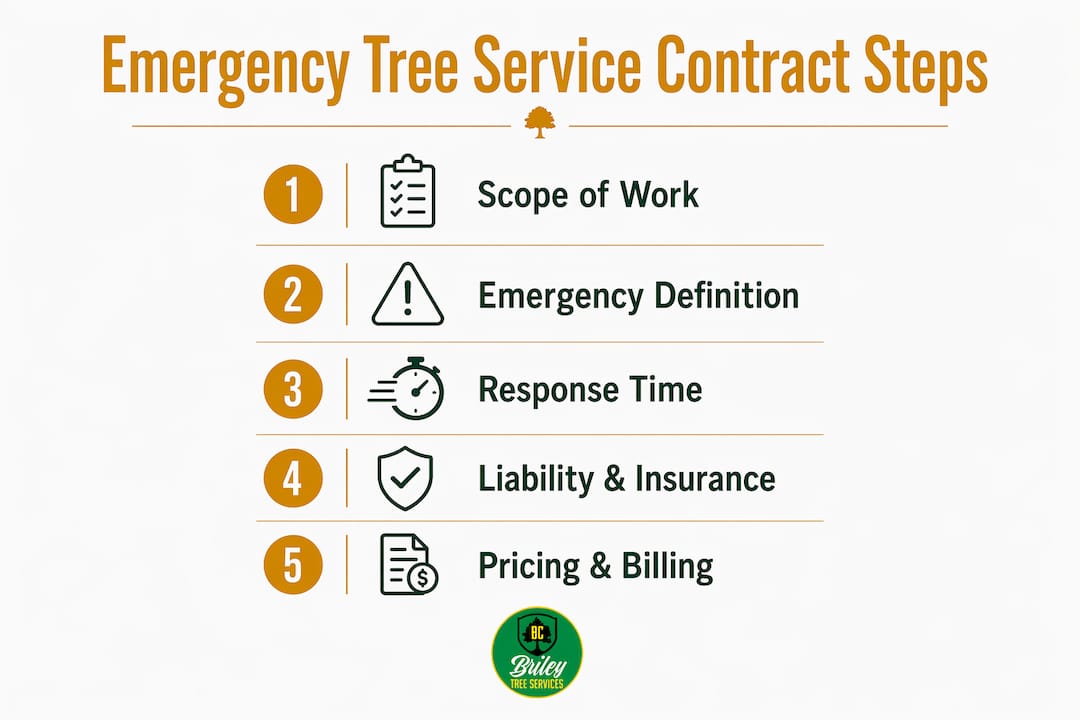
1. Scope of work
The contract must define exactly what work is covered. Emergency contracts cover hazard removal, debris clearance from the immediate danger zone, and tree stabilization. They do not automatically include stump grinding, soil restoration, or landscaping repairs. Those tasks require separate supplemental work orders after the emergency phase is complete.
2. Emergency classification definition
A strong contract defines what triggers emergency status. Measurable risk indicators include structural failure blocking egress, contact with energized utility lines, or a tree actively threatening a building. Without this definition, a contractor could classify any call as an emergency and charge accordingly, or delay response by arguing the situation does not qualify.
3. Response time commitments
The contract should state a specific response window in hours. Priority clients under formal agreements typically receive faster response than walk-in callers during high-demand storm events. This clause is what separates a true emergency tree service agreement from a general service contract with vague language.
4. Liability and insurance requirements
Contractors must provide current insurance certificates before emergency work begins. This means general liability coverage and workers' compensation. Without verified insurance, you as the property owner could be liable for injuries or property damage that occur during the job. Never waive this requirement, even when the situation feels urgent.
5. Pricing and billing terms
The contract should spell out the hourly rate, minimum billing period, and any conditions that trigger surge pricing. Emergency service costs typically range from $300 to $3,500 based on tree size, urgency, and site conditions. That wide range makes a written pricing structure critical.
6. Cancellation rights waiver
Many jurisdictions allow the standard 3-day cancellation or cooling-off period to be waived when a client submits a written request for immediate service. Virginia law and similar statutes permit this waiver in true emergencies. The contract should document this waiver clearly so both parties understand the legal standing.
Pro Tip: Request a sample contract before any emergency occurs. Review the emergency classification definition and insurance requirements while you have time to ask questions. Reviewing a contract during an active storm is not the right moment to find gaps.
How does an emergency tree service contract work during a real hazard event?
Understanding the process from first call to final invoice helps you know what to expect and what to watch for.
- Step 1: Emergency notification. You call the tree service and describe the hazard. The contractor logs the call and dispatches a crew based on your contract priority level.
- Step 2: On-site assessment. Only certified arborists can authorize emergency removals above certain size thresholds, particularly for large trees near structures. The arborist assesses the site and confirms the scope of immediate work.
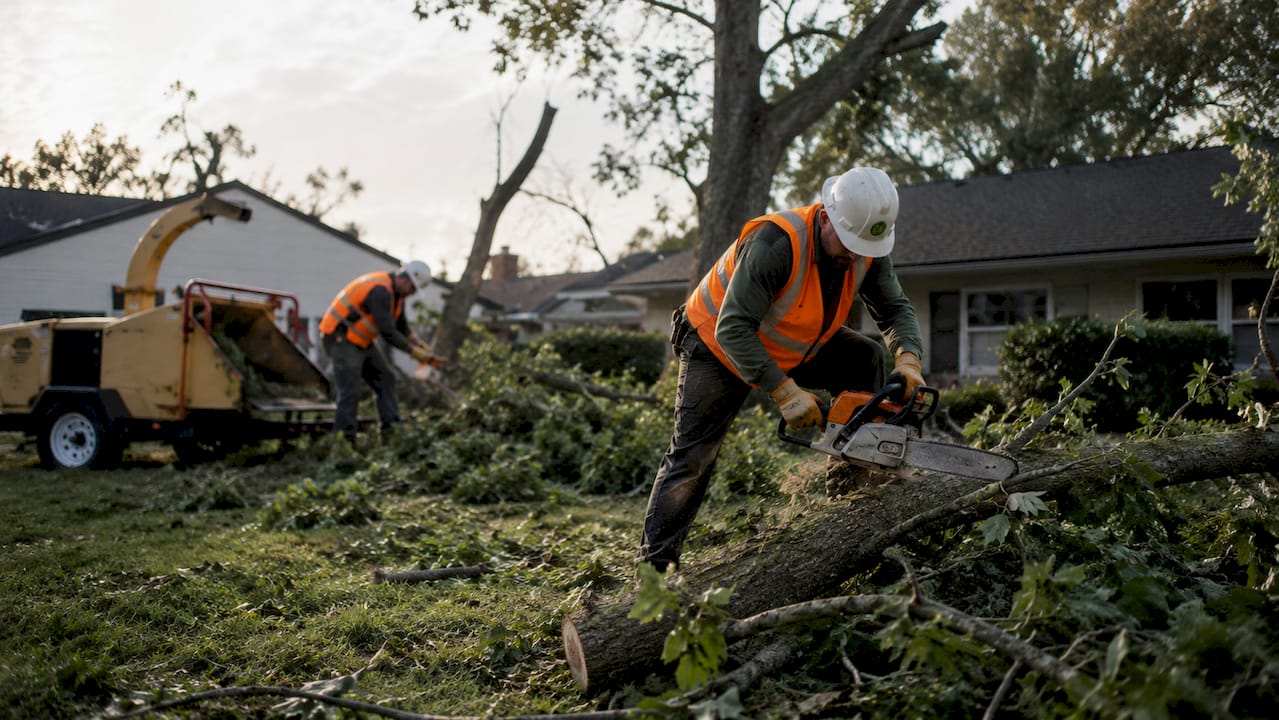
- Step 3: Hazard mitigation. The crew removes or stabilizes the immediate threat. This is triage work. The goal is stopping damage, not restoring the landscape.
- Step 4: Documentation and billing. The contractor documents hours, equipment used, and materials. Billing follows the rates in your contract. If no pre-negotiated contract exists, surge pricing may apply.
- Step 5: Supplemental work order. After the hazard is cleared, a separate agreement covers stump removal, soil work, or replanting. This is not part of the emergency contract.
Emergency tree work is triage, not restoration. The contract covers stopping the damage. Everything after that is a separate conversation and a separate contract.
Coordination with your homeowner's insurance is a parallel process. Document the damage with photos before work begins. Your insurer may require a contractor's written assessment to process a claim. A reputable tree service will provide this documentation as part of the job. You can learn more about what counts as a tree emergency to prepare before a storm season arrives.
What should you look for before signing an emergency tree service contract?
Vetting a contractor and a contract before an emergency is the most effective protection you have. Here is what to check.
- Emergency definition: Confirm the contract defines what qualifies as an emergency with specific, measurable criteria. Vague language creates disputes.
- Response time guarantee: The contract should state a specific window, such as 2 hours for priority clients. A general promise to "respond quickly" is not enforceable.
- Insurance verification: Request current certificates for general liability and workers' compensation. Verify the policy is active, not expired.
- Pricing structure: Understand the hourly rate, minimum billing period, and any surge fee conditions. Ask directly whether post-storm demand affects your rate under the contract.
- Certification and authorization: Confirm that a certified arborist will assess the site before major removals. This protects you legally and ensures the work is done safely.
- Cleanup scope: Ask whether debris removal and site cleanup are included or billed separately. Many emergency contracts exclude full cleanup, so know what you are paying for.
- Cancellation rights: Understand what you are waiving if you sign an immediate-start authorization. Know your legal rights in your state before signing.
A useful resource for this process is a tree service hiring checklist that walks through contractor vetting step by step. Reviewing industry response time standards also helps you evaluate whether a contractor's promises are realistic.
Pro Tip: Ask the contractor to walk you through the contract's emergency classification clause out loud. If they cannot explain it clearly, that is a signal the contract language is too vague to protect you.
Key Takeaways
A pre-event emergency tree service agreement is the single most effective tool for controlling costs and guaranteeing fast response when a tree hazard strikes your property.
| Point | Details |
|---|---|
| Emergency vs. standard contracts | Emergency contracts cover hazard mitigation only, not routine pruning or cosmetic work. |
| Response time guarantees | Contracts should specify a response window, such as 2 hours, not vague promises. |
| Insurance is non-negotiable | Verify general liability and workers' comp certificates before any work begins. |
| Scope limits matter | Stump grinding and restoration require separate supplemental contracts after emergency mitigation. |
| Pre-event agreements save money | Signing a master service agreement before a storm locks in rates and prevents surge pricing. |
Why I think most homeowners sign emergency tree contracts at the worst possible moment
Most people encounter an emergency tree service agreement for the first time when a tree is already on their roof. That is the worst time to read a contract carefully. You are stressed, the clock is ticking, and the contractor is standing in your driveway waiting for a signature.
What I have seen repeatedly is that homeowners skip the emergency classification clause entirely. They assume the contract covers everything related to the tree. It does not. The contract covers the immediate hazard. The stump, the soil damage, the fence the tree crushed on the way down, those are separate conversations and separate invoices.
The other common mistake is skipping insurance verification because the situation feels urgent. A contractor without active workers' compensation coverage puts you at legal risk if a crew member is injured on your property. Urgency does not eliminate that liability. It just makes it easier to overlook.
My honest recommendation is to contact two or three reputable local tree services before storm season and ask about their pre-event master service agreements. Lock in a rate, confirm their insurance, and understand their emergency classification criteria while you have time to think. The financial advantage is real. Pre-event agreements prevent surge pricing and guarantee priority response, which matters when every tree service in your area is fielding calls after the same storm.
The contract is not the enemy. A clear contract protects you. A vague one protects the contractor.
— Tatum
Get professional emergency tree care you can count on in Northwest Louisiana
When a storm hits Shreveport, Bossier City, or the surrounding Northwest Louisiana area, you need a tree service that shows up fast and works safely. Brileytreeservice provides emergency storm cleanup, tree removal, and hazard mitigation for residential and commercial properties throughout the region. The team arrives on time, documents the work thoroughly, and cleans up after every job. Free estimates are available for both emergency response and routine tree care. If you have a hazardous tree that needs immediate attention, contact Brileytreeservice today. For homeowners in the Natchitoches area, local tree removal services are available with the same trusted expertise. You can also review storm removal guidance to understand what to expect before the crew arrives.
FAQ
What is an emergency tree service contract?
An emergency tree service contract is a legally binding agreement that defines how a tree care company responds to urgent hazards like storm damage, fallen limbs, or uprooted trees threatening a structure. It specifies response times, pricing, scope of work, and insurance requirements.
How is an emergency tree service agreement different from a standard contract?
A standard tree service contract covers scheduled, routine work like pruning and trimming. An emergency tree service agreement covers immediate hazard mitigation with faster response times, hourly pricing, and legal clauses like cancellation waivers that do not appear in routine contracts.
What should I look for in tree service contract details before signing?
Verify the emergency classification definition, response time guarantee, current insurance certificates, and pricing structure before signing. Confirm whether cleanup tasks like stump grinding are included or require a separate supplemental work order.
Can a contractor waive the cancellation period in an emergency tree contract?
Yes. Many states permit waiving the standard 3-day cancellation period when a client submits a written request for immediate service deployment. This waiver is legally recognized in Virginia and similar jurisdictions, and it should be documented clearly in the contract.
How much does emergency tree care typically cost without a pre-negotiated contract?
Emergency tree service costs typically range from $300 to $3,500 depending on tree size, urgency, and site conditions. Without a pre-negotiated contract, surge pricing can push costs higher during high-demand storm events.