
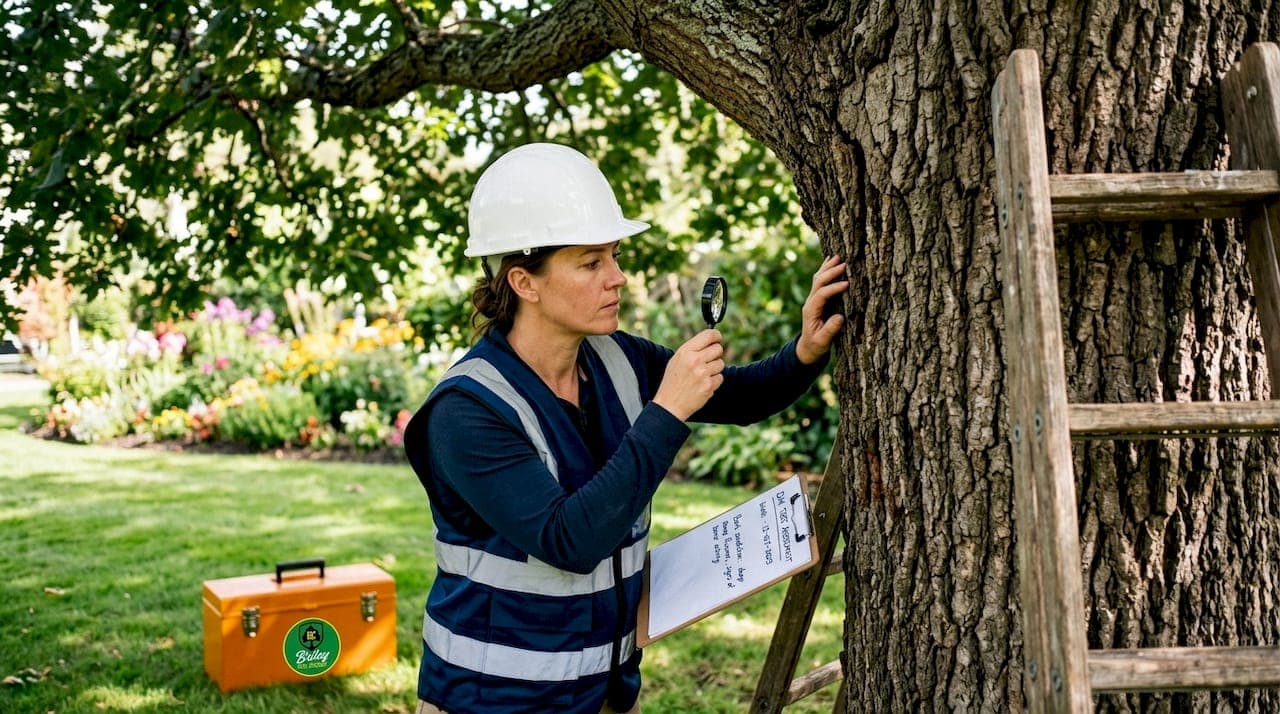
Arborist certification is a voluntary, exam-based credential that confirms a professional's knowledge in tree biology, diagnosis, maintenance, and safety. The International Society of Arboriculture (ISA) administers the most widely recognized program in North America. Passing the ISA exam signals that a tree care professional meets a defined standard of competence, not just years on the job. For homeowners and property managers in Shreveport and across the country, understanding what this credential means is the first step toward hiring someone who will protect your trees and your property.
What is arborist certification and what does it represent?
ISA Certified Arborist status is a formal recognition of professional-level knowledge across core arboriculture disciplines. The exam covers tree biology, pest and disease diagnosis, pruning standards, soil management, and safety practices. Candidates must demonstrate competence across all these areas, not just one specialty.
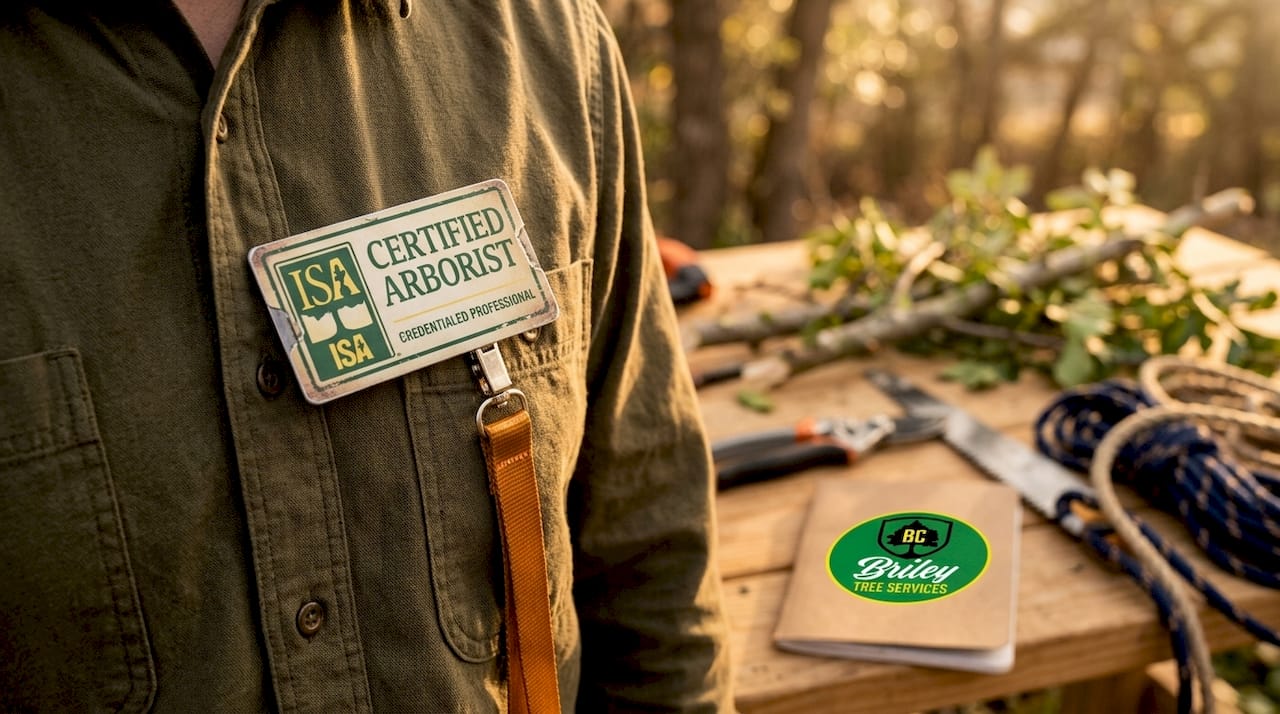
One distinction homeowners often miss: certification is not a government license. ISA certification is administered by a non-governmental organization and does not replace local business licenses, contractor permits, or liability insurance. A certified arborist still needs to carry proper insurance and comply with local regulations. Certification confirms knowledge. It does not confirm legal authorization to operate in your city or state.
The credential also signals ongoing professional commitment. Certified arborists must stay current with industry standards and renew their credentials on a set schedule. That ongoing requirement separates a certified professional from someone who simply has years of field experience with no formal validation.
- Tree biology and physiology: Understanding how trees grow, respond to pruning, and recover from damage
- Diagnosis and risk assessment: Identifying disease, pest damage, structural defects, and hazard conditions
- Pruning and maintenance standards: Applying ISA Best Management Practices for cuts, timing, and technique
- Safety protocols: Working safely around utilities, structures, and people
Pro Tip: Ask any arborist you consider hiring to show you their ISA credential ID number. You can verify it directly through the ISA's public directory before signing any contract.
What is the arborist certification process and requirements?
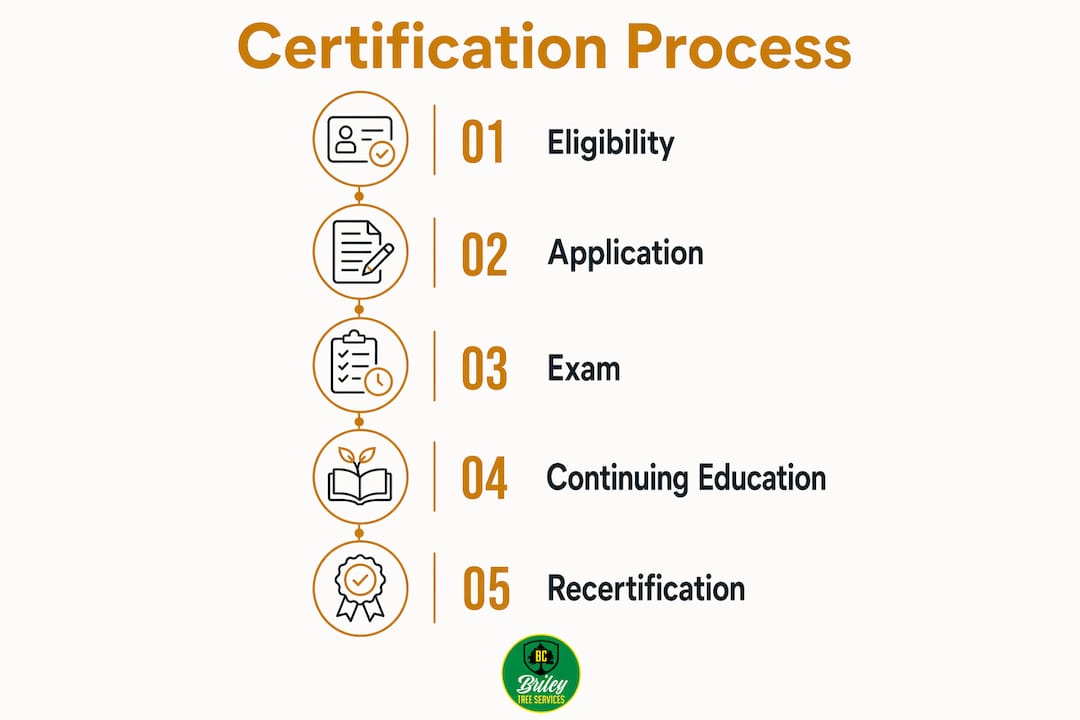
The arborist certification process follows a structured sequence that filters for genuine field experience before any exam is attempted. Here is how it works from start to finish.
- Meet the experience requirement. Candidates must document a minimum amount of hands-on experience in arboriculture. ISA requires this to confirm applicants have real-world exposure before sitting for the exam.
- Submit an application. The application is reviewed and approved before exam enrollment opens. Applications are processed within five business days, and the exam is available in both computer-based and paper-based formats.
- Enroll through an approved testing center. Candidates schedule their exam through local ISA chapter partners or Pearson VUE testing centers, which operate at hundreds of locations across the country.
- Pass the exam. The passing score is approximately 76%, though this threshold can shift slightly when ISA updates its job task analyses. That score reflects a meaningful competence threshold, not a rubber-stamp pass rate.
- Maintain the credential. Certified arborists recertify every three years and must complete continuing education units to keep their status active. This requirement keeps certified professionals current with evolving best practices.
The exam itself is built from job task analyses that define key competencies across arboriculture. This means the test reflects what arborists actually do in the field, not abstract theory. For homeowners, that matters because it ties the credential directly to practical, real-world skills.
Pro Tip: When reviewing arborist certification courses or prep materials, look for programs aligned with ISA's current job task analysis. Outdated study guides may not reflect the current exam content.
How do ISA certification levels compare?
Not all ISA credentials are equal. The ISA offers a progression of certifications, and knowing the difference helps you match the right professional to the complexity of your tree care needs.
| Certification level | Requirements | Best suited for |
|---|---|---|
| ISA Certified Arborist | Experience requirement + written exam (approx. 76% passing score) | Routine pruning, tree health assessments, general residential work |
| ISA Certified Arborist Utility Specialist | ISA Certified Arborist status + utility-focused exam | Work near power lines and utility infrastructure |
| ISA Tree Risk Assessment Qualification (TRAQ) | ISA Certified Arborist status + specialized risk assessment training | Formal tree risk assessments and hazard documentation |
| Board Certified Master Arborist (BCMA) | Extensive experience + rigorous scenario-based exam + Code of Ethics adherence | Complex tree health, high-risk removals, advanced diagnostics |
The Board Certified Master Arborist credential sits at the top of this hierarchy. Fewer than 2% of arborists hold the BCMA designation, which requires passing a more demanding exam and committing to a formal Code of Ethics. That rarity matters. When a property manager is dealing with a large, structurally compromised tree near a building, a BCMA brings a level of diagnostic depth that a baseline certification does not guarantee.
For most residential tree trimming, pruning, and standard removal work, an ISA Certified Arborist is the right credential to look for. The BCMA credential becomes relevant when the work involves complex risk assessment, high-value trees, or situations where a formal written report may be needed for insurance or legal purposes.
A certified arborist report, sometimes called a tree assessment report, is a written document produced by a certified professional that evaluates tree health, structural integrity, and risk. These reports are often required by insurance companies, municipalities, or attorneys. Only a credentialed arborist should produce one, and a BCMA is the strongest choice for high-stakes assessments.
How can homeowners verify arborist certification before hiring?
Verification takes less than five minutes and removes all guesswork. Homeowners can confirm an arborist's certification status through the ISA's online public directory using the professional's credential ID number. That search shows whether the certification is active, expired, or suspended.
Here is what to check before hiring any tree care professional:
- ISA credential status: Search the ISA directory with the arborist's credential number to confirm active certification and renewal date
- Local business license: Certification does not cover local operating permits. Ask for proof of a valid business license in your city or parish
- Liability insurance and workers' compensation: Request a certificate of insurance directly from the provider, not just a copy from the contractor
- Renewal date: Certification verification should include reviewing the renewal date to confirm the credential has not lapsed
Hiring a certified arborist gives you access to professionals trained in safe, industry-recognized tree care standards. That training reduces the risk of improper pruning cuts that damage tree structure, incorrect removal techniques that threaten nearby structures, and missed diagnoses that allow disease or pest damage to spread.
The tree service hiring checklist for homeowners covers this verification process in detail, including what questions to ask and what documentation to request before any work begins. Certification is one piece of the hiring puzzle. Insurance, licensing, and a written scope of work complete the picture.
One more point worth knowing: a certified arborist who also carries a TRAQ qualification can produce a formal tree risk assessment that holds up in insurance claims or legal disputes. If you have a tree that may be causing a neighbor dispute or a potential liability issue, that specific credential combination matters more than general certification alone.
Key takeaways
Arborist certification is a validated, exam-based credential that confirms professional knowledge in tree care, but it must be paired with insurance and local licensing checks to fully protect your property.
| Point | Details |
|---|---|
| Certification confirms knowledge | ISA Certified Arborist status proves competence in tree biology, diagnosis, pruning, and safety through a formal exam. |
| Not a substitute for licensing | Certification does not replace local business licenses, contractor permits, or liability insurance. |
| BCMA signals advanced expertise | Fewer than 2% of arborists hold the BCMA credential, making it the right choice for complex or high-risk tree work. |
| Verification is fast and free | Use the ISA's public directory with a credential ID number to confirm active certification status before hiring. |
| Recertification keeps skills current | Certified arborists must renew every three years with continuing education, so the credential reflects current standards. |
Why certification matters more than most homeowners realize
I have seen homeowners focus entirely on price when hiring tree care professionals, and I understand why. Tree work is expensive, and the quotes can vary widely. But the gap between a certified arborist and an uncertified one is not just a credential on paper. It shows up in how a professional reads a tree, how they make a pruning cut, and how they assess whether a removal is actually necessary.
The ISA certification process is built around job task analyses that reflect real field decisions. That means the exam tests what arborists actually encounter on residential properties. When a certified professional looks at a tree near your house, they are applying a framework that was validated by the industry, not just personal habit.
What I find most useful to tell property owners is this: certification tells you what someone knows. Insurance tells you what happens if something goes wrong. Local licensing tells you they are operating legally. You need all three. Checking only one of those boxes is how homeowners end up with property damage and no legal recourse.
For complex situations, like a large oak showing signs of root decay near a foundation, I would always recommend asking specifically about TRAQ qualification or BCMA status. The baseline ISA certification is a solid starting point for routine work. But for anything involving structural risk, a formal written assessment, or a tree that could cause serious damage if it fails, the higher credentials exist for a reason.
The regular trimming guide for homeowners explains how certified arborists approach routine maintenance differently from general laborers. That difference compounds over time in the health and longevity of your trees.
— Tatum
Work with certified tree care professionals in Shreveport
Briley Tree Service serves homeowners and property managers throughout Shreveport, Bossier City, and Northwest Louisiana with a team that meets professional tree care standards. Whether you need tree removal, trimming, stump grinding, or emergency storm cleanup, Briley Tree Service brings the credentials and insurance coverage that protect your property and give you confidence in the work being done.
Before any job begins, Briley Tree Service provides a free estimate and clear scope of work so you know exactly what to expect. Check service areas and availability to confirm coverage in your area and request your free estimate today. Homeowners across the Shreveport area trust Briley Tree Service because the team shows up on time, cleans up after every job, and treats your property with care.
FAQ
What is arborist certification exactly?
Arborist certification is a voluntary, exam-based credential issued by the International Society of Arboriculture (ISA) that confirms a professional's knowledge in tree biology, diagnosis, maintenance, and safety. It is not a government license but a recognized industry standard for competence.
How do I verify an arborist's certification?
Use the ISA's online public directory with the arborist's credential ID number to confirm their certification is active and current. This search takes under five minutes and shows renewal status.
What is a certified arborist report?
A certified arborist report is a written assessment of a tree's health, structure, and risk level, produced by an ISA Certified Arborist. These reports are commonly required for insurance claims, property disputes, or municipal permit applications.
Is a certified arborist the same as a licensed contractor?
No. ISA certification confirms professional knowledge in arboriculture, while a contractor's license is a legal authorization issued by a local or state government. Homeowners should verify both credentials separately before hiring.
What is the highest level of arborist certification?
The Board Certified Master Arborist (BCMA) is the highest ISA credential, held by fewer than 2% of arborists. It requires passing a rigorous scenario-based exam and adhering to a formal Code of Ethics, making it the strongest indicator of advanced expertise.