
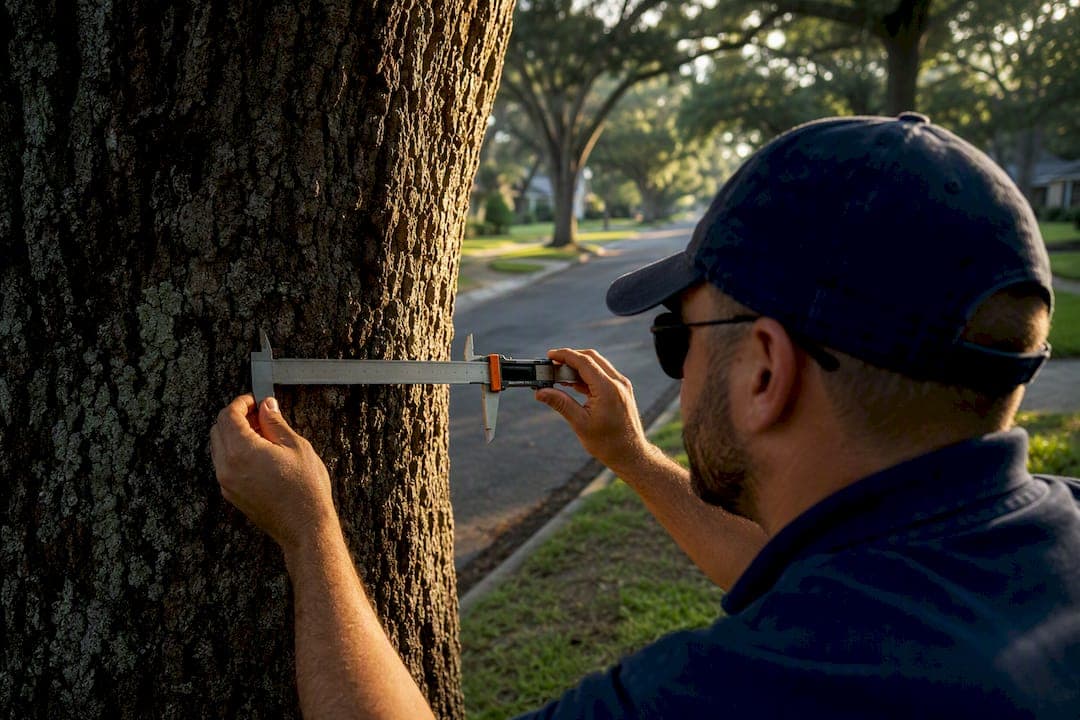
You generally do not need a city permit to remove a tree on your own private lot in Shreveport. You do need one before removing a tree that stands in a street right-of-way or other public ground, once that tree measures 30 inches or more in caliper. The Unified Development Code sets that threshold, and the city's Streets & Drainage division handles the paperwork.
TL;DR:
- Trees in street rights-of-way or public grounds measuring 30 inches or more in caliper require a $50 permit from the Streets & Drainage division before removal.
- No permit is needed for private-property trees, regardless of size, unless they are located in the right-of-way strip between the sidewalk and curb.
- Hiring a registered, insured arborist and documenting the tree’s location are essential steps to avoid delays or violations during permitted removal.
- Emergency removals due to storm damage or utility work can proceed without permits, but homeowner documentation and city notification may still be required afterward.
- Removing a protected public tree without approval can lead to fines up to $500 per offense and potential replacement or penalty requirements.
Table of Contents
- Tree Removal Permit Shreveport: Quick Facts
- Who Needs a Permit? Public Right-of-Way vs. Private Property
- How to Get a Tree Permit in Shreveport: Step by Step
- Licensed Arborist Registration and Contractor Responsibilities
- Emergency Removals and Utility Exceptions
- What Happens If You Remove a Public Tree Without Approval
- Homeowner Checklist Before You Hire or File
- Where to Find Forms, Contacts, and Official Code
- Replacement Tree Planting and Mitigation Requirements
- Protected Species and Historic Tree Restrictions
- Inspection Process Before and After Removal
- Local Environmental Considerations and Community Guidelines
- Appeal Process If Your Permit Is Denied
- A Local Practitioner's View on Permit Pitfalls
- Get Permit Help and a Free Estimate From Briley Tree Service
- Sources
- FAQ
Tree Removal Permit Shreveport: Quick Facts
Before you call a crew, confirm these basics. They cover almost every question a Shreveport homeowner asks before starting a removal.
- Permit trigger: 30 inches or larger in caliper, for trees on street rights-of-way or other public grounds.
- Approving office: City of Shreveport Streets & Drainage division, sometimes coordinated with SPAR for park property.
- Fee: $50, nonrefundable, regardless of whether the permit is approved.
- Documentation: Proof of arborist registration for the crew doing the work, plus a description or sketch of the tree's location.
- Private-lot removals: No city permit required, but the crew you hire still needs city registration.
Who Needs a Permit? Public Right-of-Way vs. Private Property
The line that matters is location, not tree size on your own land. A tree growing entirely inside your fence line, away from the street, is yours to remove without asking the city. A tree standing between the sidewalk and the curb, or on other public ground, falls under a different set of rules the moment it hits 30 inches in caliper.
Caliper gets measured 12 inches above the ground, not at chest height like a forester might use on a hardwood stand. Multi-trunk trees follow a specific formula in the code: the largest trunk counts fully, and the remaining trunks each count at half their diameter toward the total.
- No permit needed: A backyard oak entirely within your property lines, regardless of size.
- Permit needed: A front-yard tree rooted in the right-of-way strip between your sidewalk and the street, once it reaches the 30-inch caliper mark.
- Gray area worth a phone call: A tree that straddles the property line or sits close enough to utility easements that ownership isn't obvious from the yard.
If you're not sure which side of that line your tree falls on, Streets & Drainage staff can tell you over the phone before you spend money on a survey.
How to Get a Tree Permit in Shreveport: Step by Step
Filing correctly the first time saves you a second trip and a second wait. Here's the sequence that works.
- Confirm the tree qualifies. Measure caliper at 12 inches above grade, or have your contractor confirm it, since guessing here is the top reason applications bounce back.
- Contact Streets & Drainage. Reach out to the city's Streets & Drainage division to get the current application form and confirm which department handles your specific address, since some park-adjacent removals route through SPAR instead.
- Gather your documents. You'll typically need a site sketch or clear photos showing the tree's exact location, proof that your hired arborist is registered with the city, and basic proof of property ownership.
- Pay the fee. The city lists a nonrefundable $50 fee. Confirm the current accepted payment method (check or money order has been the city's preference) directly with the office before you show up.
- Submit and wait. Processing times vary with staff workload, but incomplete paperwork, missing arborist registration, or a vague site description are the most common reasons an application stalls.
Pro Tip: Take photos of the tree from at least two angles, including one that shows its position relative to the curb or sidewalk, before you file. It resolves boundary disputes faster than any written description.
Licensed Arborist Registration and Contractor Responsibilities
Shreveport requires arborists and tree companies working on public grounds to carry current city registration. That single requirement is where most permit delays and most homeowner liability problems both start.
Hiring a registered, insured crew protects you two ways. First, an unregistered crew working the right-of-way can get your permit rejected outright. Second, if an uninsured worker gets hurt on your property, you can end up financially exposed regardless of whose fault it was. That risk is worth understanding in more detail if you've never hired tree work before.
- Ask to see the contractor's current city registration before signing anything.
- Request a certificate of insurance naming general liability coverage, not just a verbal assurance.
- Get the estimate and scope of work in writing, including who pulls the permit if one is needed.
Emergency Removals and Utility Exceptions
Storm damage changes the rules. When a tree is severely damaged and poses an immediate danger to people or property, the Unified Development Code allows removal to proceed without waiting on standard permit review.
Utility providers also have independent authority to prune or remove trees that interfere with power lines or other service infrastructure, permit or no permit. After a storm, photograph the damage before cleanup starts, and if a public-ground tree is involved, call the city to confirm whether any follow-up documentation is expected. That habit saved more than one Shreveport homeowner from a dispute over who authorized what.
What Happens If You Remove a Public Tree Without Approval
Damaging or removing a tree in a public right-of-way without approval is a code violation, and the city can pursue civil penalties. Local guidance cites fines that can reach $500 per offense. Enforcement typically starts with a documented complaint or inspection, followed by an administrative notice, and can include a requirement to replace the tree or pay for its value. The city keeps photographic and written records of violations, so a rushed weekend removal without checking the rules first can turn into a paperwork problem that outlasts the stump.
Homeowner Checklist Before You Hire or File
Run through this list before you sign a contract or submit paperwork.
- Confirm your contractor's city arborist registration and ask for their insurance certificate.
- Get a written estimate that specifies who is responsible for pulling any required permit.
- Photograph the tree and mark the property line if there's any question about right-of-way boundaries.
- Approximate caliper yourself with a tape measure at 12 inches above ground, but call a professional to confirm before filing if the tree is close to the threshold.
Pro Tip: File early in the year if you can. Spring storm season pushes permit and inspection requests up across North Louisiana, and processing tends to slow when everyone's calling at once.
Where to Find Forms, Contacts, and Official Code
Everything above traces back to two official sources, and it's worth bookmarking both.
- Streets & Drainage, City of Shreveport: application info, fee details, and department contact numbers.
- Article 10, Unified Development Code: the legal text governing caliper thresholds, exceptions, and penalties.
- Confirm the $50 fee and current accepted payment method directly with the city before your visit, since office procedures can shift.
Replacement Tree Planting and Mitigation Requirements
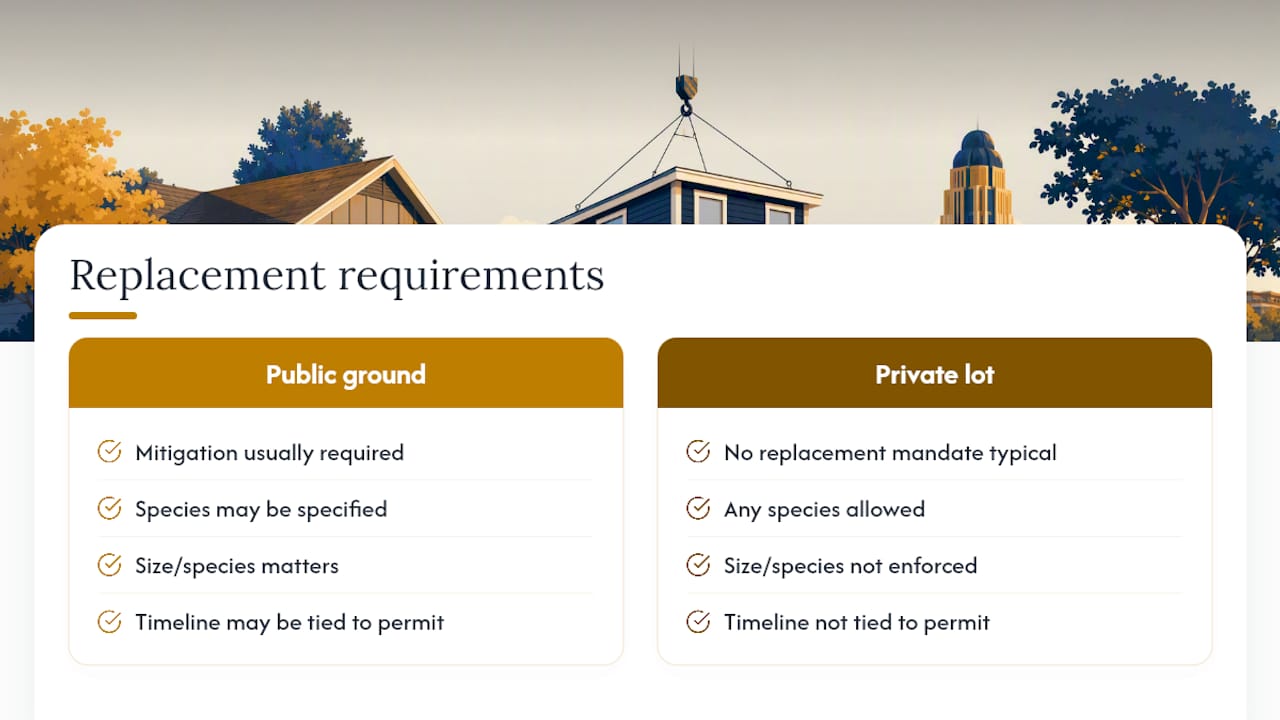
When a public-ground tree comes down under permit, the city typically expects some form of mitigation, whether that's a replacement planting on or near the same site or another arrangement worked out with Streets & Drainage during the application process. This is where a lot of homeowners get caught off guard: they plan for the removal cost but not for what comes after.
The scope of that replacement obligation depends on the tree's size and location, and it's not something you should guess at. If your permit application involves a mature street tree, ask the reviewing office directly what species and size they'll accept as a replacement, and whether the timeline for planting is tied to your original permit approval or handled separately. Some homeowners assume any young tree satisfies the requirement, but species selection matters. A fast-growing ornamental doesn't offer the same shade canopy or root stability as the hardwood species common along Shreveport streets, and the city may steer you toward a specific list.
Private-lot removals typically carry no replacement mandate, since the tree ordinance's mitigation language targets public rights-of-way and public grounds specifically. That's one more reason the private-versus-public distinction matters as much as it does. If you're removing a backyard tree with no public exposure, you can plant whatever you like, or nothing at all. If the tree sits in that right-of-way strip, build the replacement conversation into your permit application from the start rather than treating it as an afterthought once the stump is already ground down.
Protected Species and Historic Tree Restrictions
Not every tree gets treated the same, even within the 30-inch caliper framework. Certain species or individually significant trees, particularly older specimens tied to a neighborhood's character or historic district, can carry additional scrutiny before removal gets approved. This is less about a rigid protected list and more about how the reviewing office weighs the request when a tree has clear historical or ecological value.
If your property sits within one of Shreveport's historic districts, or the tree in question is unusually large or old for its species, expect the review process to take longer and possibly involve additional documentation. Staff may ask for more detail on the tree's condition, whether it poses a genuine hazard, and whether pruning or cabling could address the safety concern instead of outright removal. That's a reasonable question to ask yourself too. A tree service that inspects the tree honestly, rather than defaulting to removal because it's the bigger job, will tell you when trimming solves the problem.
Practically speaking, if you suspect your tree might fall into this more sensitive category, mention it explicitly when you first contact the city rather than waiting for staff to flag it during review. Bringing it up early tends to move the conversation forward faster than having it surface as a surprise objection later.
Inspection Process Before and After Removal
Inspections happen on both ends of the process, and skipping either one is a common reason permits stall or get flagged after the fact. Before approval, city staff or their designated reviewer may want to see the tree in question, either through submitted photos or an actual site visit, to confirm the caliper measurement and verify the tree's condition matches what the application describes.
After the work is done, particularly for public-ground removals, don't assume the file closes itself. Some permits carry a follow-up check to confirm the removal matched what was approved, that the stump was handled appropriately, and that any required replacement planting is either underway or scheduled. Keep your own photos from before, during, and after the job. If a question comes up months later about what actually happened at your address, your own documentation is often faster to produce than requesting city records.
Homeowners hiring a crew should ask upfront whether the contractor handles the post-removal documentation or whether that responsibility falls back on the property owner. It's a small question that prevents a real headache if an inspection request comes in after the crew has already left the property and moved on to the next job.
Local Environmental Considerations and Community Guidelines
Shreveport's tree ordinance isn't purely about property boundaries and paperwork. The underlying goal is maintaining street canopy, controlling erosion along drainage corridors, and keeping mature trees in place where they contribute to a neighborhood's shade and stormwater absorption. That context matters when you're deciding whether a tree genuinely needs to come down or whether trimming would solve the actual problem.
Mature hardwoods along Shreveport streets do real work during heavy rain events common to this part of Louisiana, helping slow runoff before it hits storm drains. Removing a healthy public-ground tree removes that function too, which is part of why the permit process exists rather than leaving removal purely to a property owner's preference. Some neighborhoods, particularly older ones with established tree-lined streets, also carry informal community expectations around preserving canopy even where no formal historic designation applies.
If you're on the fence about removal versus trimming, it's worth getting an honest read on the tree's actual condition before assuming removal is the only option. A tree with structural issues limited to one section, or root damage from nearby construction, might need aggressive trimming rather than full removal. Signs that indicate genuine removal need are different from cosmetic concerns, and knowing that difference before you file a permit saves both money and a tree that didn't need to come down.
Appeal Process If Your Permit Is Denied
A denial isn't necessarily final. If Streets & Drainage turns down your application, the first step is understanding exactly why. Most denials trace back to incomplete documentation, an unregistered arborist listed on the application, or a caliper measurement that doesn't match what staff verified on-site.
Start by requesting the specific reason for denial in writing if it wasn't already provided. Many rejected applications simply need a correction and resubmission rather than a formal appeal. If your registered arborist wasn't listed correctly, or a document was missing, fixing that and refiling is usually faster than pursuing a contested appeal.
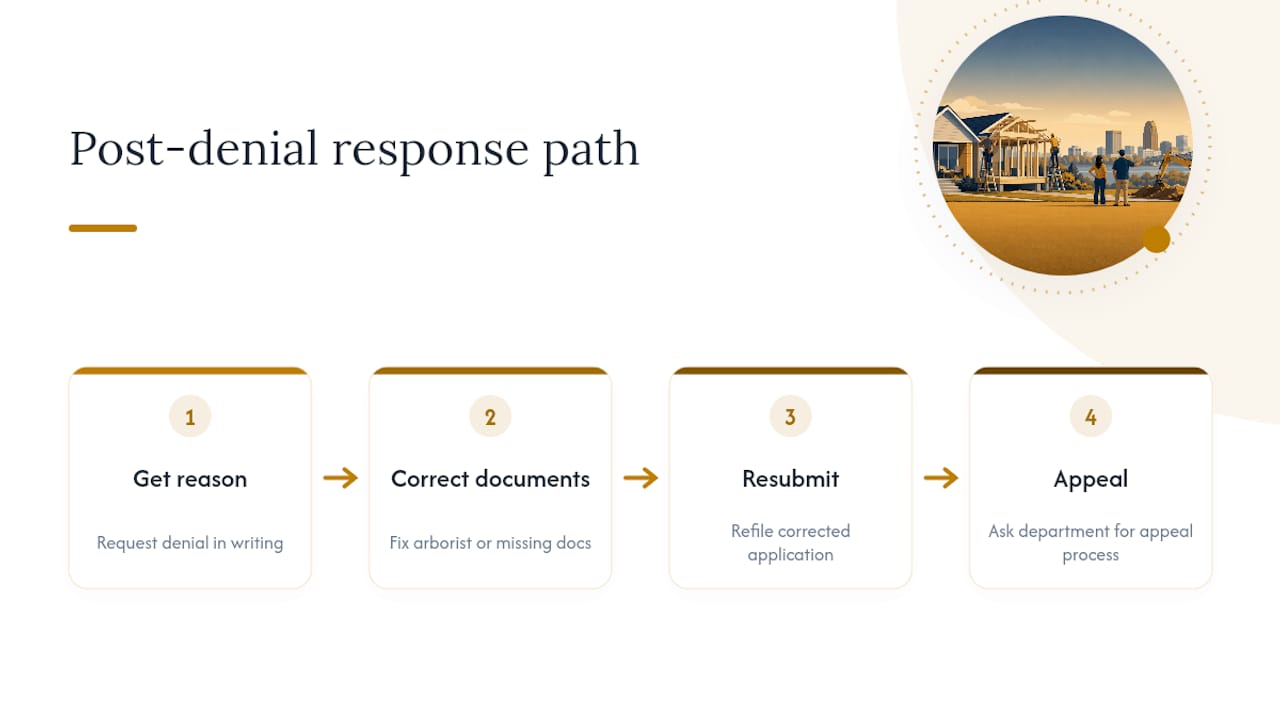
If you believe the denial was made in error, based on a measurement dispute or a disagreement about whether the tree actually sits in the right-of-way, ask the department directly what their formal appeal or reconsideration process looks like. Because the tree ordinance sits within the Unified Development Code, procedural appeals connected to development code decisions generally route through the city's standard administrative review channels rather than a separate tree-specific board. Confirm the current process directly with the department, since staff can walk you through the exact steps for your situation faster than any guide can.
A Local Practitioner's View on Permit Pitfalls
The most common mistake we see is homeowners eyeballing a tree near the curb and assuming it's clearly on their private lot when it's actually rooted in the right-of-way. The second is hiring a crew without asking whether they're registered with the city, which can hold up a permit that's otherwise straightforward. Professional tree services can handle on-site measurement, documentation, and coordination with the city's permit office as part of an estimate, so homeowners don't have to guess at any of it.
— Tatum
Get Permit Help and a Free Estimate From Briley Tree Service
Filing a Shreveport tree removal permit correctly the first time means confirming caliper, verifying arborist registration, and getting the paperwork in front of the right office, and that's exactly where Briley Tree Service saves homeowners the most time. Rather than researching code sections and measuring trunks yourself, our licensed and insured crew measures the tree, documents the site, and coordinates directly with Streets & Drainage on your behalf.
Tree service companies typically serve homeowners and property managers in the Shreveport area and surrounding North Louisiana, handling services from permit coordination to removal, stump grinding, and cleanup. If you're weighing removal costs against a trim, our breakdown of what drives removal pricing is worth a look before you call. When you're ready, request a free on-site estimate and we'll tell you plainly whether your tree needs a permit, and handle the filing if it does.
Sources
Every rule cited in this guide traces back to the two sources below, plus a plain-English companion summary.
- ARTICLE 10. - LANDSCAPE AND TREE PRESERVATION | Unified Development Code | Shreveport, LA | Municode Library
- Streets & Drainage | Shreveport, LA - Official Website
- Tree Protection: The Rules That Matter | CityRuleLookup
FAQ
Do I need a permit to remove a tree on my private property in Shreveport?
No. Removing a tree entirely within your private lot generally does not require a city permit, though any hired crew still needs to be registered with the city.
What size tree requires a permit in Shreveport?
Trees measuring 30 inches or larger in caliper, measured 12 inches above the ground, require a permit when they're located in a street right-of-way or other public grounds.
How do I apply for a tree permit online in Shreveport?
Contact the City of Shreveport's Streets & Drainage division directly for the current application form and filing instructions, since the office handles both the paperwork and payment confirmation.
What are the penalties for removing a tree without a permit in Shreveport?
Unauthorized removal of a protected public tree is a code violation, and the city can pursue civil penalties, with local guidance citing fines up to $500 per offense.
Can I get help with the permit process instead of handling it myself?
Yes. Some tree services coordinate directly with the city's permit office as part of their estimate process, handling measurement and documentation so homeowners don't have to navigate the application alone.