
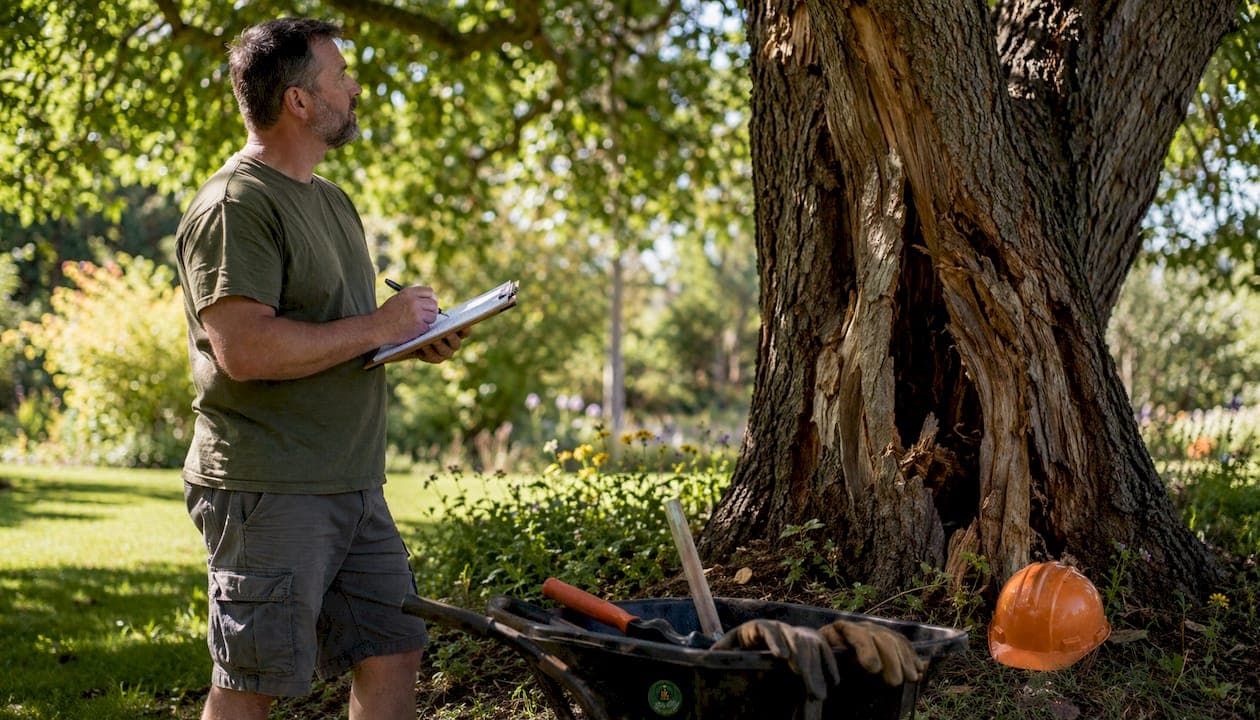
A tree that needs removal is defined by specific physical conditions that signal structural failure, irreversible disease, or an immediate safety hazard. Recognizing these signs early protects your home, your family, and your neighbors. Shreveport homeowners face added pressure from Louisiana's storm season, where a compromised tree can fail without warning. Professional arborists use established standards, including the ISA's Tree Risk Assessment Qualification (TRAQ) framework, to evaluate whether a tree should come down or be monitored. Brileytreeservice works with these same standards to help homeowners across Shreveport make safe, informed decisions about their trees.
1. Signs tree needs removal: severe trunk damage and hollowing
A tree with more than 30% of its trunk damaged or hollow has lost the structural integrity needed to stand safely. The trunk is the tree's load-bearing column. Once that column is compromised beyond a third of its cross-section, the tree cannot reliably support its own weight, let alone wind loads from a Louisiana thunderstorm.
Trunk damage takes several forms that homeowners can spot without any special equipment:
- Deep vertical cracks running along the bark, especially after a storm
- Missing bark patches exposing bare wood, often called "cankers"
- Cavities or hollow sections visible at the base or mid-trunk
- Soft, spongy wood when you press on an exposed area
- Seams or splits where two major stems meet at a tight angle
The danger with hollow trunks is that the outside can look healthy while the interior is rotted out. A tree can appear green and full while carrying almost no structural strength at its core.
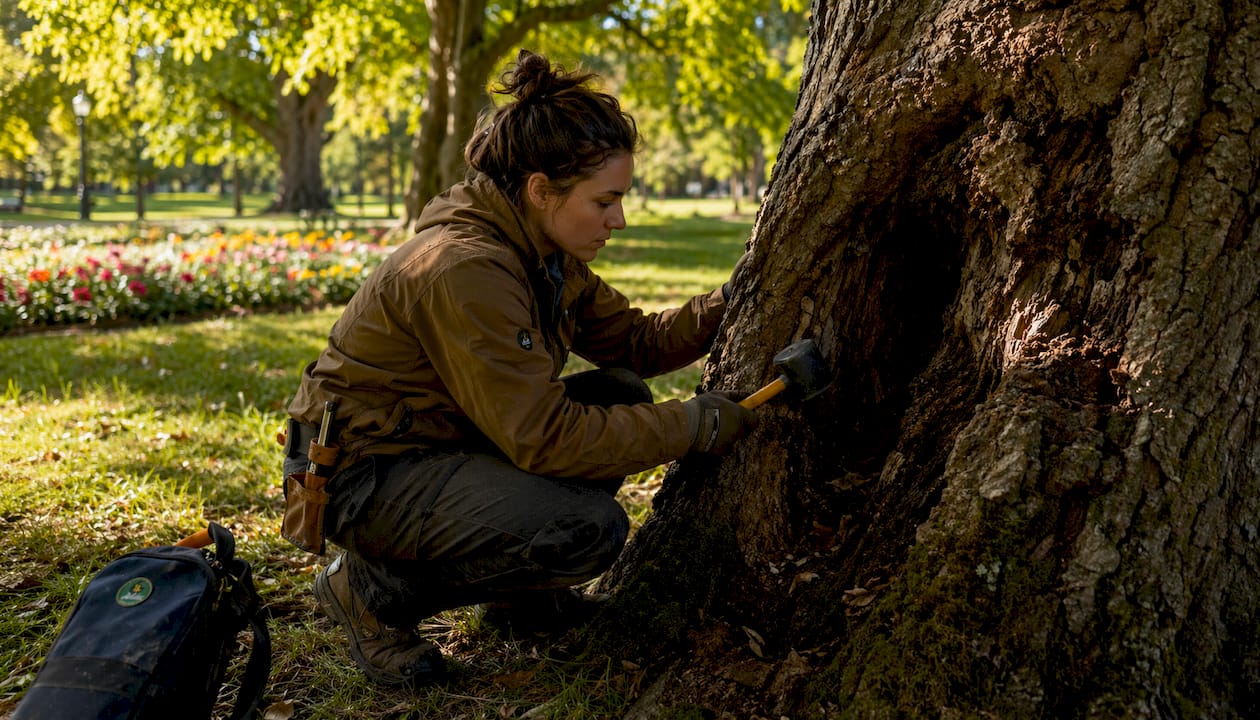
Pro Tip: Tap the trunk with a rubber mallet. A hollow sound in a large section indicates internal decay that a visual inspection alone will miss.
2. Dead or dying branches and canopy decline
More than 50% of a tree's branches being dead or leafless during the growing season is a clear signal that removal is the right call. At that level of canopy loss, recovery is unlikely. The tree no longer has enough photosynthetic capacity to sustain itself, and its decline will accelerate.
The key distinction homeowners need to understand is the difference between routine deadwood and serious canopy decline:
- Under 30% dead branches: Normal aging, manageable with routine pruning
- 30–50% dead branches: Significant decline, warrants a professional assessment
- Over 50% dead branches: Removal is needed; recovery is not realistic
Deadwood is also a falling hazard independent of the tree's overall health. A single large dead limb over a roof or driveway creates serious risk even if the rest of the tree is healthy. Brileytreeservice handles both targeted dead branch removal and full tree removal when the canopy decline has gone too far.
Statistic callout: Arborist standards set the canopy loss threshold at 50% during the growing season. Below that line, preservation options exist. Above it, removal is the standard recommendation.
3. Root problems and tree leaning as urgent warning signs
A tree leaning more than 15 degrees from vertical is a major removal candidate. That lean threshold matters because it indicates the root plate has already shifted or partially failed. A tree that leans gradually over years is different from one that has developed a sudden lean after a storm. Sudden lean is an emergency.
Root failure signs are often visible at ground level before the tree actually falls:
- Soil cracks or heaving around the base of the tree, especially on the side opposite the lean
- Exposed or lifted roots that were previously underground
- Fungal growth at the base (covered in the next section)
- Soft or sunken ground near the root zone after rain
Root damage is particularly deceptive. Signs of root damage can appear 3–7 years after the original disturbance, such as construction, trenching, or soil compaction. A tree that looked fine when you bought your home may now be failing because of work done years before you moved in.
Pro Tip: If you know your property had construction or utility work done within the last decade, have any large trees near the work zone assessed by a professional. Root damage from that period may only now be showing up.
4. Fungal growth and disease as signs of irreversible decay
Visible fungal growth at the base or roots of a tree, particularly species like Ganoderma or Armillaria, indicates advanced internal decay with no curative treatment available. This is one of the most misunderstood warning signs of tree failure. Homeowners often see mushrooms or bracket fungi and assume it is a minor issue. It is not.
Fungal fruiting bodies are the visible output of a much larger internal process. By the time you see conks or mushrooms growing from the bark or soil, the heartwood or root system has already experienced significant decay. The fungus has been working inside the tree for months or years before it becomes visible.
Common fungal indicators to watch for:
- Bracket fungi (conks) growing directly from the trunk or major roots
- Mushrooms clustered at the base of the tree, especially after rain
- Honey-colored mushrooms in a ring pattern, which often indicate Armillaria root rot
- White or yellow shelf fungi on the lower trunk
No spray or treatment reverses advanced heartwood rot. Wishing for recovery from fungal decay leads to unsafe outcomes. The tree needs to come down before it fails on its own terms.
5. Trees too close to buildings, power lines, or infrastructure
A tree near your house is not automatically a removal candidate unless structural defects create a direct hazard. Proximity alone does not justify removal. What matters is whether the tree's condition creates a specific risk to the structure, utility lines, or people nearby.
Situations where proximity does require removal include:
- Dead branches directly over the roofline with no safe pruning solution
- Roots actively lifting or cracking the foundation or driveway
- Trunk growing into or toward power lines where pruning would leave the tree structurally compromised
- Trees leaning toward the house with root plate movement already visible
Shreveport homeowners should also factor in the local storm season. A tree that is borderline manageable in calm conditions becomes a serious liability during a severe thunderstorm or tropical weather event. Early removal planning, before a storm forces the issue, is far less expensive and far safer than emergency tree removal after a failure.
When pruning can solve the problem, that is always worth exploring first. When the tree's structure means that pruning would leave it more unstable, removal is the right call.
6. Multiple defects occurring together
A single defect rarely tells the whole story. The most dangerous trees are those showing multiple warning signs at the same time. A tree with a 20% hollow trunk is concerning. That same tree with a 10-degree lean, soil heaving at the base, and bracket fungi growing from the roots is an urgent removal situation.
Arborists use the TRAQ risk matrix to evaluate failure likelihood alongside consequence. A tree in a remote corner of a large rural property may be monitored even with significant defects. A tree with the same defects positioned over a bedroom or a child's play area requires urgent action. The consequence of failure drives the urgency as much as the defect itself does.
Homeowners should think about their trees the same way. Walk your property and look at each large tree in relation to what it could hit if it fell. That assessment changes the priority level immediately.
Key Takeaways
Recognizing tree removal signs early, using arborist standards like the 30% trunk damage threshold and 50% canopy loss rule, is the most reliable way to protect your property and prevent injury.
| Point | Details |
|---|---|
| Trunk damage threshold | Remove a tree when more than 30% of the trunk is damaged or hollow. |
| Canopy decline rule | More than 50% dead branches during growing season means removal is needed. |
| Lean and root failure | A lean exceeding 15 degrees signals root plate failure and urgent removal risk. |
| Fungal growth is serious | Visible bracket fungi or mushrooms at the base indicate irreversible internal decay. |
| Multiple defects multiply risk | Trees showing two or more defects near structures require professional assessment immediately. |
What I've learned about tree removal decisions after years in the field
Most homeowners I talk to make one of two mistakes. They either wait too long because they are emotionally attached to a tree, or they agree to removal too quickly because a contractor told them it was necessary without providing any real documentation.
The ISA's TRAQ framework exists precisely to prevent both errors. A documented hazard inspection from a certified arborist gives you an objective, written evaluation of failure likelihood and consequence. That document protects you legally and gives you a real basis for the decision. Many contractors recommend removal even when trees can be preserved. Getting a second opinion, especially a written one, is never a waste of money on a large tree.
The hardest conversations are with homeowners who have a 60-year-old oak they planted with their parents. I understand the attachment. But a tree that is showing three or four of the signs covered here is not the same tree it was 20 years ago. Safety has to come first, and acting before a failure is always better than responding after one.
— Tatum
Brileytreeservice: professional tree assessments for Shreveport homeowners
Brileytreeservice serves Shreveport, Bossier City, and Northwest Louisiana with professional tree removal services and documented risk evaluations. The team assesses trunk integrity, canopy health, root stability, and proximity risks to give homeowners a clear picture of what their trees actually need. Whether the situation calls for targeted pruning or full removal, Brileytreeservice shows up on time, works safely, and cleans up completely after every job. Contact Brileytreeservice today for a free estimate and get a straight answer about the trees on your property.
FAQ
How do I know if a tree needs removal or just trimming?
If dead branches make up less than 30% of the canopy, pruning is usually sufficient. When deadwood exceeds 50% of the canopy during the growing season, removal is the standard recommendation.
What does a dangerous lean look like?
A tree leaning more than 15 degrees from vertical, especially with soil heaving or cracking at the base, is a removal candidate. Sudden lean after a storm is an emergency situation.
Are mushrooms at the base of a tree a serious problem?
Mushrooms or bracket fungi growing at the base indicate advanced internal decay with no effective treatment. Removal is typically the only safe option once visible fungal growth appears.
Can a tree near my house be saved without removal?
Proximity alone does not require removal. The decision depends on whether the tree has structural defects, dead branches over the structure, or roots damaging the foundation. A professional assessment determines the right course of action.
How do I find out if my tree has root damage?
Look for soil heaving, exposed roots, and soft ground near the base. Root damage can take 3–7 years to show visible symptoms after construction or site disturbance, so knowing your property's history matters.