
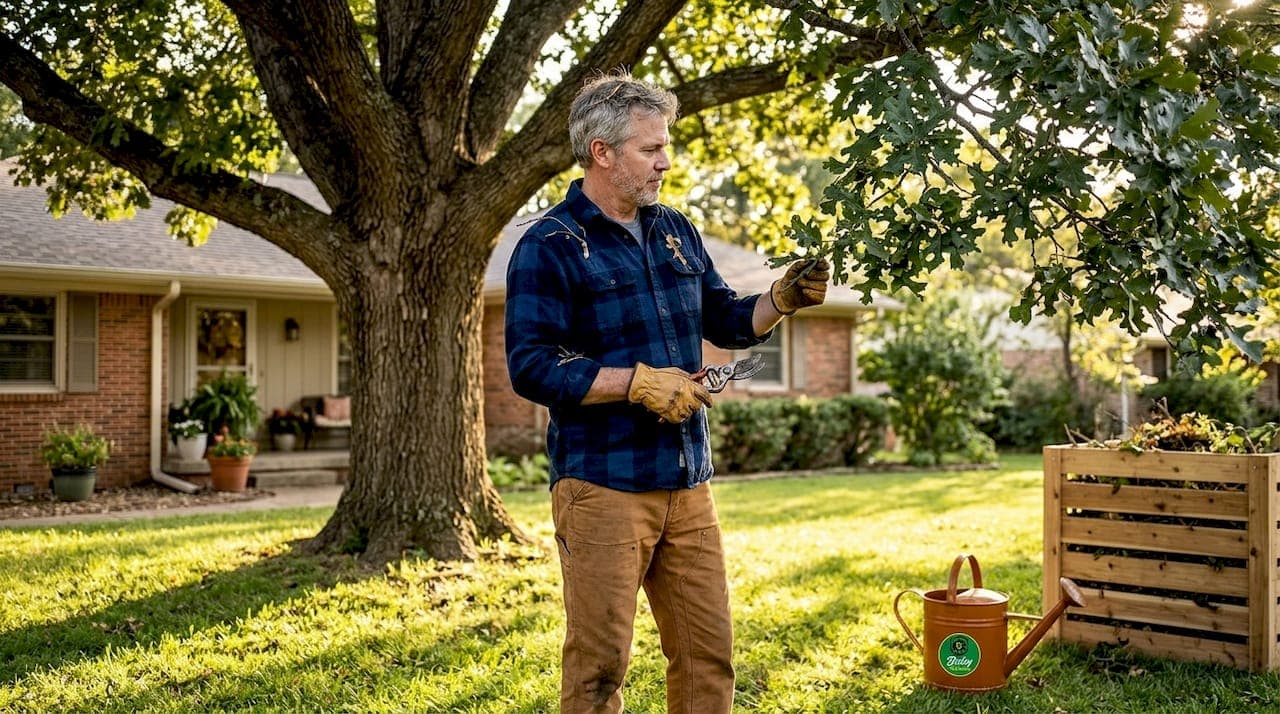
Overgrown trees are more than an eyesore. Heavy limbs crack under their own weight, diseased branches spread decay to healthy wood, and roots of weak trees become liabilities during storm season. Regular tree trimming — the practice arborists more precisely call pruning — is the most direct way to address all three concerns at once. Tree trimming benefits homeowners across multiple fronts: health, safety, curb appeal, and long-term property protection. This article breaks down exactly what those benefits look like, how proper technique makes the difference, and what you need to know before picking up the shears.
Table of Contents
- Key Takeaways
- 1. Tree trimming benefits homeowners by improving tree health
- 2. Removing dead and diseased branches prevents pest spread
- 3. Safety improves when hazardous branches are removed
- 4. Trimming protects your home and structures from damage
- 5. Curb appeal and property value increase with well-trimmed trees
- 6. Infrastructure protection through directional pruning
- 7. Regular trimming extends the life of your trees
- 8. Understanding the right approach and timing
- My take on what most homeowners get wrong about tree trimming
- Professional tree trimming services from Brileytreeservice
- FAQ
Key Takeaways
| Point | Details |
|---|---|
| Pruning improves tree health | Thinning the canopy increases light and airflow, reducing disease and decay in your trees. |
| Regular trimming reduces hazards | Removing dead or cracked branches before storms prevents damage to your home, vehicles, and family. |
| Curb appeal and property value rise | Well-shaped trees complement landscaping and make your property more attractive to buyers and neighbors. |
| Proper technique matters | Thinning cuts preserve natural form; heading cuts like topping cause regrowth problems and can draw fines. |
| Timing and regulations affect outcomes | Pruning at the wrong time or without permits near power lines can harm trees and create legal issues. |
1. Tree trimming benefits homeowners by improving tree health
Healthy trees do not happen by accident. Proper pruning improves tree health by opening up the canopy so sunlight reaches inner branches and air moves freely through the crown. That combination discourages the fungal growth and moisture buildup that cause rot.
The type of cut you make determines whether the tree thrives or struggles. The two primary options are thinning cuts and heading cuts. Thinning cuts promote natural growth by removing branches back to their point of origin, preserving the tree's structure. Heading cuts shorten branches without removing them to a natural attachment point. When done excessively, as in the practice called topping, heading cuts trigger dense, weakly attached regrowth and leave large wounds vulnerable to decay.
Beyond structure, removing dead, diseased, or broken branches stops problems from spreading. A rotting limb does not stay isolated. Decay-causing fungi travel through shared wood, and bark beetles move from dead tissue to living tissue quickly. Trimming removes the entry point before the rest of the tree is compromised.
Pro Tip: Look for branches with discolored bark, soft wood, or visible fungal growth at the base. Those are your first targets in any pruning session.
2. Removing dead and diseased branches prevents pest spread
Pest management is one of the less-discussed advantages of tree pruning, but it matters a great deal. Dead wood is an invitation. Bark beetles, wood borers, and carpenter ants all prefer compromised wood as a starting point before moving into healthy tissue.
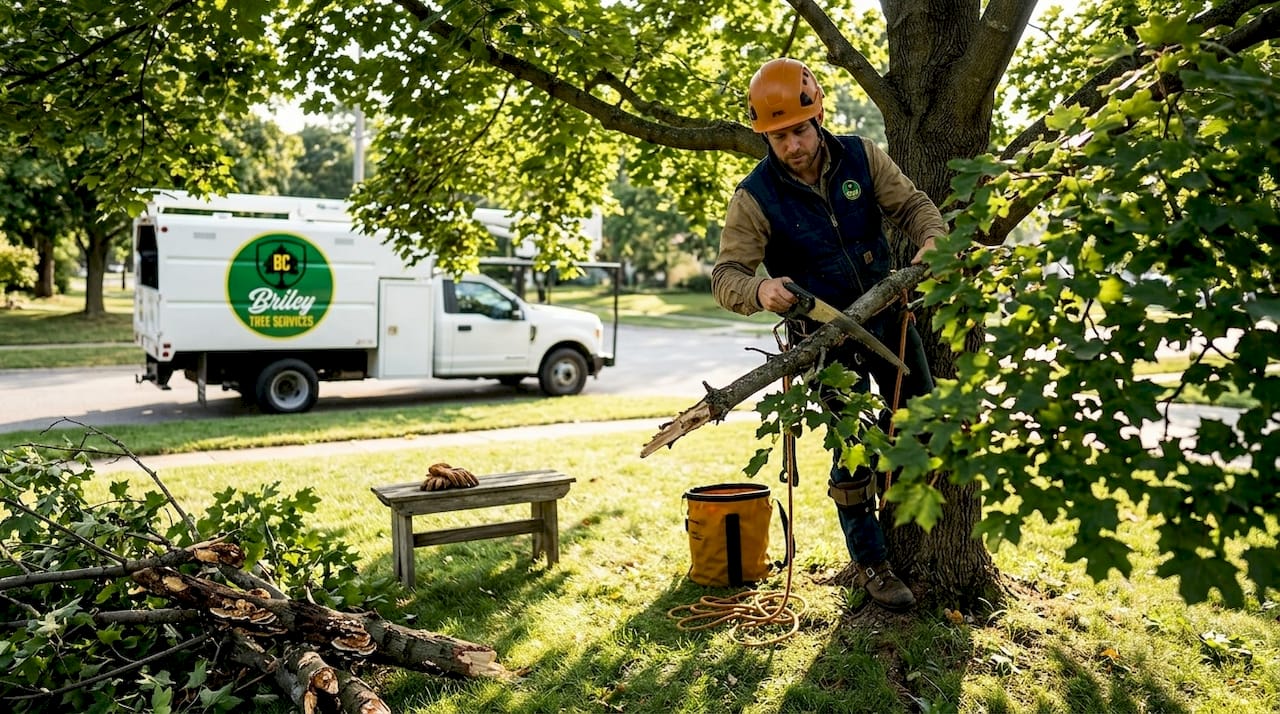
Tree maintenance that removes dead branches reduces pest pressure significantly. When you cut away infested wood early, you interrupt the breeding cycle. Pair that removal with proper disposal — not just piling the debris in your yard — and you limit reinfestation risk.
The benefit of tree care here is cumulative. Each trimming session makes the next one less intensive. Trees that receive consistent attention over years rarely develop the large-scale infestations that require expensive treatment or complete removal.
3. Safety improves when hazardous branches are removed
This is the benefit most homeowners feel most urgently. A cracked limb over a roof, a heavy branch extending toward a power line, or deadwood hanging above a driveway: all of these are hazards waiting for the right wind to become a claim on your homeowner's insurance.
Pruning promotes safety by removing dead and diseased branches and maintaining clearance for pedestrian and vehicle traffic. Municipal forestry programs follow this same logic — they prioritize pruning not for aesthetics but for structural integrity and clearance.
Here are the most common safety-related pruning priorities:
- Remove branches with visible cracks or splits at the attachment point.
- Clear branches growing over the roofline or within three feet of the structure.
- Eliminate deadwood above driveways, sidewalks, and play areas.
- Address branches rubbing against each other, which creates open wounds on both.
- Cut back growth that blocks visibility near driveways and street intersections.
"Pruning reasons include promoting plant health, removing damaged or dead branches, improving safety by eliminating hazards, and guiding future growth." — City of Champaign Forestry Services
Consult the tree service hiring checklist before you bring in a crew to handle anything near structures or power lines.
4. Trimming protects your home and structures from damage
Branch-related property damage is not rare. It is one of the leading causes of homeowner claims during storm season in the Gulf South. Heavy limbs do not need to fully break to cause problems. Branches that sway and scrape against siding, gutters, and roofing over time cause abrasion damage that accumulates invisibly until water intrusion reveals it.
Keeping branches at least six feet from your roofline reduces this wear significantly. It also removes the bridge that squirrels, raccoons, and roof rats use to access your attic. That is an overlooked homeowner tree service benefit that most articles skip entirely.
Storm readiness is the other dimension. Trees that have been regularly thinned present less wind resistance. Benefits of tree care during normal conditions become most obvious when severe weather hits. A well-maintained tree sheds wind more efficiently and is less likely to fail at the trunk or drop major limbs.
5. Curb appeal and property value increase with well-trimmed trees
A shapeless, overgrown tree does not complement a clean yard. The way trees frame a home, provide shade without blocking views, and balance the overall landscape composition all affect how buyers and visitors perceive the property. This is where tree aesthetics for property become a real financial consideration.
The specific curb appeal advantages of tree pruning include:
- Balanced canopy shape that frames the home rather than obscuring it
- Removal of crossing or competing branches that create a tangled silhouette
- Increased light reaching garden beds and lawn beneath the canopy
- A cleaner, more deliberate overall landscape appearance
Pro Tip: For flowering trees, timing your pruning to immediately after bloom preserves next year's flower buds and keeps the show going year after year.
Well-maintained trees also signal to buyers that the property has been cared for. A tree that looks unhealthy or structurally risky has the opposite effect — it raises questions about what else may have been neglected.
6. Infrastructure protection through directional pruning
Trees near power lines require a specific approach. Utility companies use directional lateral pruning to maintain clearances while minimizing the cuts that trigger aggressive regrowth. The goal is to direct growth away from lines, targeting roughly a 10-foot clearance that holds for four to five years before the next cycle is needed.
This approach reduces how often trimming is needed and preserves more of the tree's structure compared to aggressive heading. The comparison matters:
| Method | Effect on tree | Clearance longevity | Decay risk |
|---|---|---|---|
| Directional lateral pruning | Preserves structure and form | 4 to 5 years | Low |
| Topping or heading cuts | Triggers dense, weak regrowth | 1 to 2 years | High |
| No pruning | Uncontrolled growth toward lines | Variable | Variable |
Directional pruning extends time between trimmings by reducing regrowth toward hazards. That means fewer disruptions and lower long-term costs. For detailed guidance on what is and is not safe to handle yourself, the resource on trimming near power lines covers the specifics clearly.
7. Regular trimming extends the life of your trees
Trees that go years without attention accumulate problems that compound. Crossing branches cause chronic wounds. Weak, narrow crotch angles develop structural failure points. Deadwood left in place accelerates decay into the heartwood. Each of these conditions shortens the tree's functional life.
Pruning for health and structure is how municipal forestry programs think about long-term tree sustainability. The same principles apply to trees on your property. Consistent, well-timed trimming keeps trees structurally sound and reduces the likelihood of unexpected failure that forces full removal.
The financial logic is straightforward. A trimming session costs a fraction of what tree removal costs. Homeowners who build regular pruning into their yard maintenance schedule spend less over a decade than those who react only when a tree becomes an emergency.
8. Understanding the right approach and timing
How you prune matters as much as whether you prune. Light, regular pruning yields better outcomes than severe periodic cutting because each session removes a smaller percentage of the canopy. Heavy removal stresses the tree and triggers defensive regrowth that weakens its form.
Key considerations for homeowners planning a pruning schedule:
- Dormant season pruning works well for most deciduous trees, reducing stress and limiting pest exposure to fresh cuts.
- Spring-flowering trees like dogwoods and redbuds should be pruned immediately after bloom, not in late winter, to preserve next season's buds.
- Dead or hazardous branches can and should be removed any time of year, regardless of season.
- Major pruning — defined in many municipal codes as cutting branches over two inches in diameter or working within ten feet of power lines — often requires permits and professional handling.
Topping is one of the most damaging practices a homeowner can choose, and it carries real consequences beyond tree health. A San Francisco homeowner was fined in 2026 for topping street trees in violation of local ordinances. Check your local codes before cutting, especially on trees near the street or property line.
My take on what most homeowners get wrong about tree trimming
I have seen the same mistake repeat itself on properties across the region. Homeowners wait too long, then ask for too much at once. They let trees go five or six years without attention, then want everything corrected in a single session. That is not how healthy trees work.
In my experience, the homeowners with the best-looking, longest-lived trees treat pruning the same way they treat gutters or HVAC filters. It is scheduled maintenance, not emergency intervention. Light work done every one to two years keeps trees manageable, safe, and visually strong.
The other misconception I see regularly: more cutting equals better results. That logic is backward. Removing large portions of the canopy at once puts the tree under real stress. The tree responds by throwing out dense, fast-growing shoots called water sprouts, which are structurally weak and aesthetically messy. You end up with more work, not less.
My advice is to get a professional assessment once, build a pruning plan based on the actual species and conditions on your property, and follow through consistently. That one-time investment in planning pays off for years.
— Tatum
Professional tree trimming services from Brileytreeservice
Brileytreeservice provides professional tree trimming and pruning for residential properties throughout Northwest Louisiana, including Shreveport, Bossier City, and surrounding communities. The team at Brileytreeservice handles everything from routine canopy thinning to hazardous branch removal, working safely and efficiently on every job.
Whether you are dealing with overgrown limbs near your roofline or need a full pruning plan for your property, Brileytreeservice offers free estimates with no obligation. Service areas include Vivian, Ruston, Natchitoches, and the full Briley service area across the region. Contact Brileytreeservice today to schedule your free estimate and get your trees on a maintenance plan that protects your property year-round.
FAQ
What are the main tree trimming benefits for homeowners?
Tree trimming improves tree health, reduces hazards from dead or weak branches, protects structures from damage, and boosts curb appeal. Regular pruning also extends tree lifespan and lowers long-term maintenance costs.
When is the best time of year to trim trees?
Most deciduous trees respond best to dormant season pruning in late winter. Spring-flowering trees should be trimmed right after they bloom to protect next year's flower buds.
Does tree trimming increase property value?
Well-maintained trees improve curb appeal and signal to buyers that the property has been properly cared for, which supports stronger market perception and can increase property value.
What is the difference between pruning and topping?
Pruning uses thinning cuts that remove branches back to their natural attachment points, preserving tree structure. Topping removes large portions of the canopy indiscriminately, triggering weak regrowth and increasing decay risk.
When does tree trimming require a permit?
Major pruning near power lines or cuts involving branches over two inches in diameter often require permits under local municipal codes. Always verify your local regulations before trimming trees near streets or utility lines.