
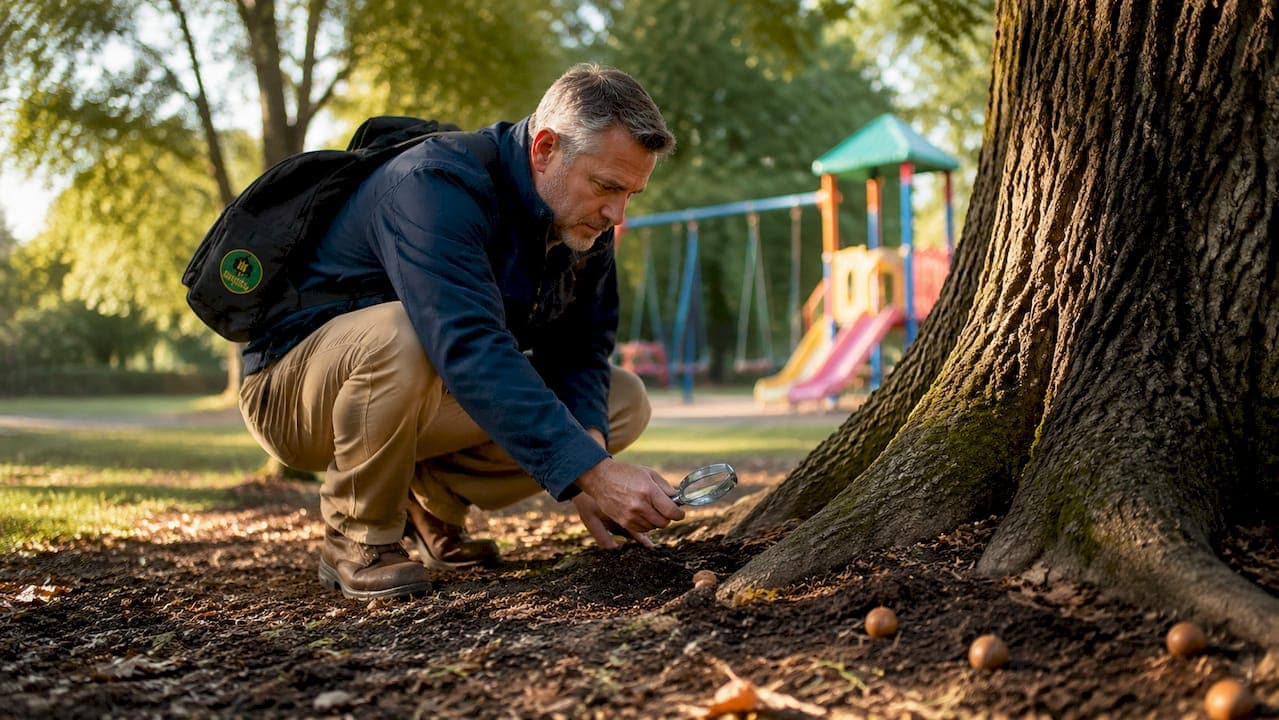
A tree requires removal when structural damage, disease, or hazard risk exceeds the point where preservation is safe or practical. Knowing how to determine if a tree needs removal protects your home, your family, and the value of your property. The standard industry term for this process is tree risk assessment, and it follows a structured set of tree removal criteria used by certified arborists across the country. This guide gives homeowners and property managers a clear, practical framework for reading the signs, applying the right thresholds, and making a confident decision.
How to determine if a tree needs removal: key signs to look for
The most reliable indicators of a tree that needs removal fall into four categories: structural damage, canopy condition, root system health, and fungal decay. Recognizing these signs early gives you more options and lower costs.
Structural damage is the first place to look. Cracks or splits running vertically along the trunk, co-dominant stems with included bark between them, and visible cavities all signal compromised structural integrity. A sudden lean beyond 15 degrees accompanied by soil heaving on the opposite side signals imminent root failure and demands immediate professional attention. Trees that have been previously topped, where the main leader was cut flat, often never recover structurally and carry a higher risk of sudden failure.
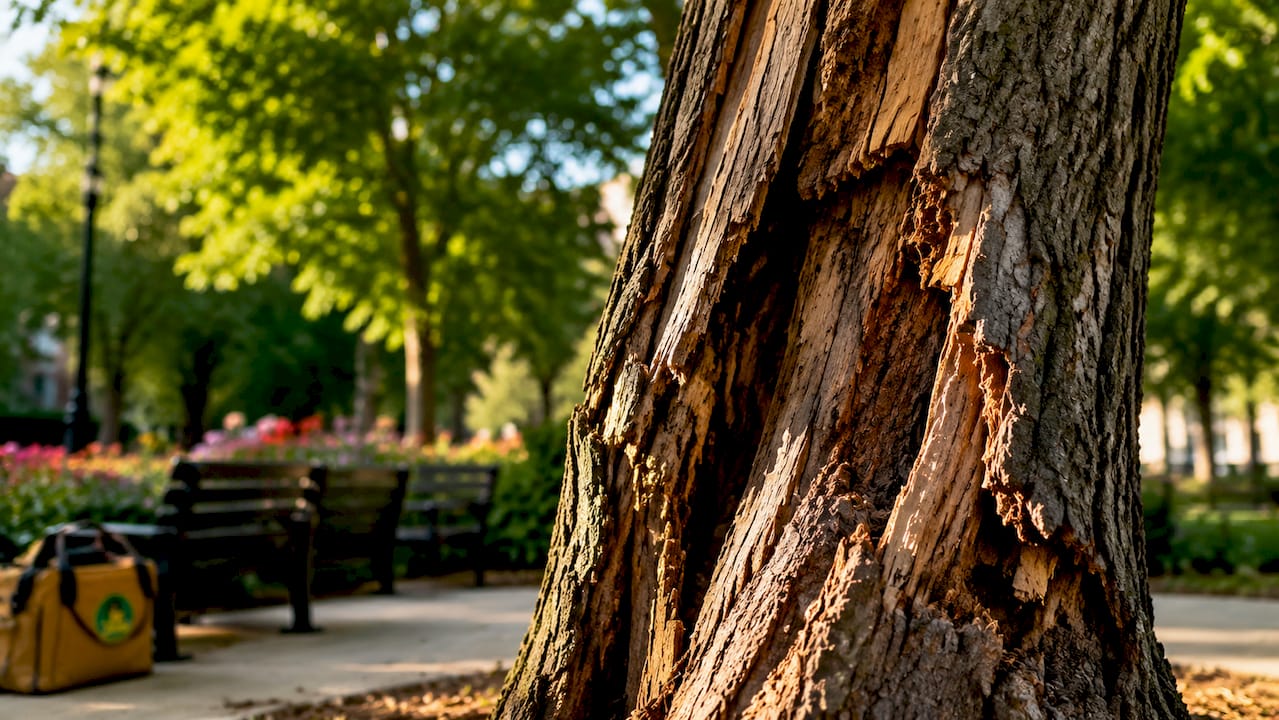
Canopy and branch condition tells you how much of the tree is still alive and functioning. Dead branches concentrated in one area can indicate localized disease, while dieback spread across the entire crown points to systemic decline. A tree with more than 50% of its canopy dead or dying crosses the threshold where removal is typically the right call.
Root system warnings are easy to miss because most of the damage is underground. Soil heaving around the base, exposed roots with visible rot, and soft or sunken ground near the trunk base all point to root failure. Root damage from soil compaction or nearby construction is often hidden but detectable through these surface clues. Root intrusion can also extend damage beyond the tree itself, affecting underground infrastructure like sewer lines.
Fungal growth is one of the clearest indicators of internal decay. Mushrooms or shelf fungi at the trunk base confirm that wood breakdown is already happening inside the tree, even if the exterior looks intact. This is not a cosmetic issue. It means the tree's structural core is compromised.
- Large cracks or splits running along the trunk
- A new lean greater than 15 degrees with soil heaving
- More than 50% of the canopy dead or in dieback
- Mushrooms, shelf fungi, or conks at the trunk base or roots
- Exposed, rotted, or damaged roots near the base
- Soft, sunken, or heaving soil around the root zone
- Co-dominant stems with included bark creating a weak union
Pro Tip: Inspect your trees at least twice a year, once in late winter before leaf-out and once in midsummer when the full canopy is visible. Each season reveals different problems.
How do you accurately assess tree health and structural integrity?
Accurate tree health assessment moves through three levels: a homeowner visual check, a written professional evaluation, and advanced diagnostic tools. Each level builds on the last.
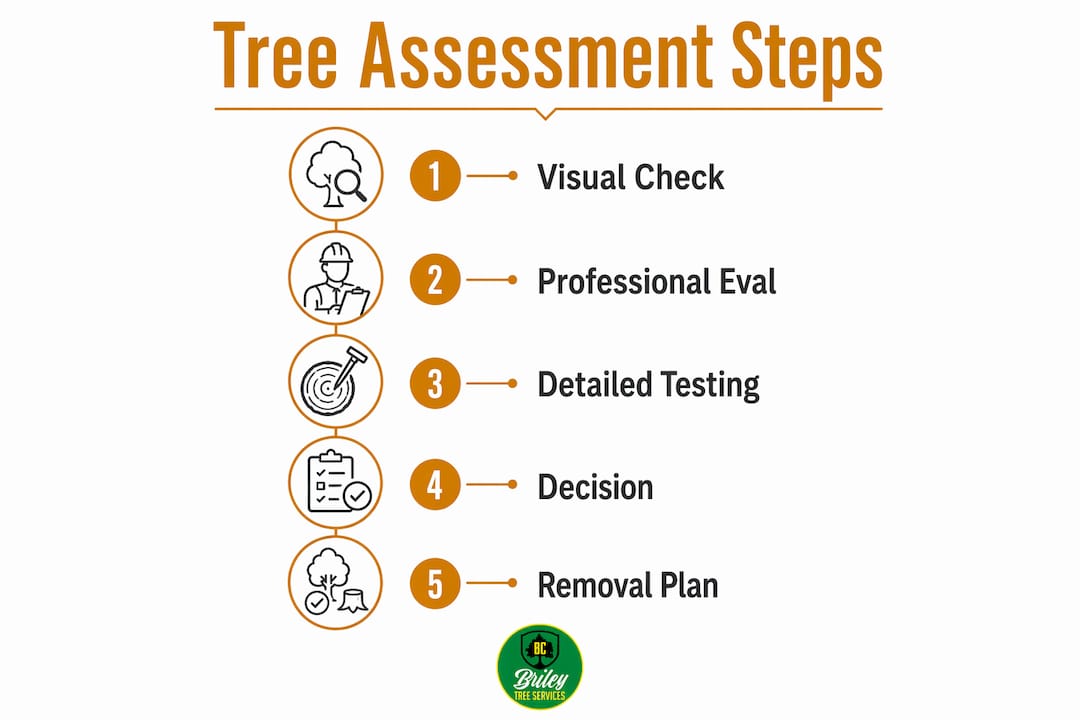
Level 1: Homeowner visual check. Walk around the entire tree and look at the trunk from base to crown. Check for bark abnormalities, cracks, cavities, and any lean. Look at the root flare, the area where the trunk meets the ground. Root flare buried under mulch or soil can suffocate a tree and cause decline that never shows up in the canopy until the damage is severe. Homeowners consistently overlook this area, and it is one of the most critical factors in overall tree viability.
Level 2: Professional written assessment. A certified arborist from the International Society of Arboriculture (ISA) conducts a formal evaluation using standardized tree risk assessment protocols. They examine the root zone, trunk, scaffold branches, and canopy systematically. They also factor in the target zone, meaning what or who is directly in the path if the tree fails. Risk assessment balances likelihood of failure with the consequences of failure. A decayed tree over a children's play area demands faster action than one in a remote corner of a field.
Level 3: Advanced diagnostics. When visual inspection leaves doubt, professional arborists use sonic tomography and mallet sounding to detect internal decay invisible to the eye. These tools map the density of wood inside the trunk and reveal hollow sections that look solid from the outside. This technology allows arborists to make better decisions about whether to save or remove a tree.
The thresholds that guide removal decisions are specific:
- Canopy dieback exceeding 50% of the total crown
- Trunk decay beyond one-third of the trunk's cross-section
- A new lean greater than 15 degrees with root heaving
- Fungal fruiting bodies at the base confirming internal rot
- Root damage or loss affecting more than one-third of the root system
| Assessment method | Best for | Limitation |
|---|---|---|
| Homeowner visual check | First-pass identification of obvious signs | Misses internal decay and root damage |
| ISA-certified arborist evaluation | Formal risk rating and written documentation | Requires scheduling and cost |
| Sonic tomography / mallet sounding | Detecting hidden internal decay | Specialized equipment, higher cost |
Pro Tip: Always get an ISA-certified arborist to assess any tree you are uncertain about before making a removal decision. Certification means the arborist follows a professional code of practice and carries current knowledge of tree risk standards.
Common mistakes homeowners make when deciding on removal
The most expensive mistake in tree care is waiting too long. Delaying removal increases both cost and danger compared to proactive removal at earlier stages of decline. A tree that could have been removed cleanly for a reasonable fee becomes an emergency job requiring cranes, road closures, or damage repair.
Several other errors consistently lead homeowners to wrong decisions:
- Confusing pruning needs with removal necessity. A tree with dead branches or poor structure often needs skilled pruning, not removal. Certified arborists recommend removal only when necessary and prioritize preservation through pruning or cabling when the tree can be made safe.
- Assuming proximity to a structure means removal is required. A healthy tree near a house is not automatically a removal candidate. Location matters, but health and structural integrity matter more. The risk context determines the decision, not distance alone.
- Ignoring subtle internal decay. A tree can look healthy from the outside while rotting from the inside. Fungal growth, soft spots on the trunk, and hollow sounds when tapped are signs that require professional follow-up, not watchful waiting.
- Skipping a second opinion on borderline cases. If one arborist recommends removal and you are not sure, get a second assessment. Reputable arborists welcome this. It protects you and confirms the right course of action.
- Treating a dead tree as low priority. A dead tree loses structural integrity faster than a living one. Bark falls away, wood dries and becomes brittle, and the risk of sudden failure rises every season it stands.
What is the step-by-step process for arranging tree removal?
Once you have identified the signs and completed an assessment, the removal process follows a clear sequence.
- Complete a full visual inspection of the trunk, canopy, root zone, and surrounding area. Note any cracks, lean, fungal growth, or root heaving.
- Contact an ISA-certified arborist for a professional risk assessment. Ask for a written report that documents the findings and recommendation.
- Check local permit requirements. Many municipalities in Louisiana and across the country require a permit before removing trees above a certain diameter. Contact your local city or parish office to confirm.
- Schedule removal during the optimal season. Late winter to early spring is the best time for tree removal. Trees are dormant, pest activity is low, and the ground is firm enough for equipment access.
- For urgent or emergency situations, contact a tree service immediately. Storm damage, a sudden new lean, or a tree that has already partially failed requires emergency tree response, not a scheduled appointment.
- Hire a licensed, insured tree service. Verify credentials before any work begins. Use a tree service hiring checklist to confirm insurance, licensing, and cleanup standards.
| Situation | Urgency level | Recommended action |
|---|---|---|
| New lean with soil heaving | Immediate | Call arborist same day |
| 50%+ canopy dieback | High | Schedule assessment within one week |
| Fungal growth at base | High | Professional inspection within two weeks |
| Dead branches in upper crown | Moderate | Assess within one month |
| Tree near structure, healthy | Low | Annual monitoring, no immediate action |
For property managers overseeing multiple trees, commercial tree maintenance practices include scheduled risk assessments as part of a regular property management plan, which reduces liability and keeps removal costs predictable.
Key takeaways
A tree requires removal when structural damage, decay, or hazard risk exceeds safe thresholds, and early assessment by an ISA-certified arborist is the most reliable way to make that call.
| Point | Details |
|---|---|
| Use clear thresholds | Remove when canopy dieback exceeds 50% or trunk decay passes one-third of the cross-section. |
| Root zone is critical | Buried root flares and soil heaving are removal indicators that homeowners frequently miss. |
| Risk context drives decisions | A defective tree over a play area demands faster action than one in a remote location. |
| Early action costs less | Proactive removal at early decline stages is safer and less expensive than emergency removal. |
| Get professional confirmation | An ISA-certified arborist assessment provides a documented, reliable basis for any removal decision. |
What I have learned from borderline tree cases
I have seen homeowners hold on to trees long past the point where preservation was realistic, and I understand why. A mature oak or pecan that has been on a property for decades carries real value, both financially and personally. But the cases that stick with me are the ones where waiting turned a manageable removal into a crisis.
The honest truth about borderline cases is that the answer is almost never obvious from the outside. I have seen trees that looked rough but were structurally sound, and trees that looked fine until a storm proved otherwise. The difference between those outcomes usually came down to whether someone had done a proper root zone inspection and checked for internal decay, not just looked at the canopy.
What I tell property owners consistently is this: the goal is not to remove every tree that shows a problem. The goal is to make an informed decision with complete information. Pruning, cabling, and targeted soil care can extend the life of many trees that would otherwise be written off. But when the thresholds are crossed, acting quickly is the responsible choice. A tree that fails on its own terms does not give you the option of a clean, controlled removal. It gives you damage, liability, and a much larger bill.
Preventive monitoring is the most underused tool in residential tree care. Walking your property twice a year and knowing what to look for puts you ahead of most problems before they become urgent.
— Tatum
Get a professional tree assessment from Briley Tree Service
If you have spotted warning signs on your property and need a clear answer, Briley Tree Service provides professional tree removal and risk assessments for homeowners and property managers throughout Shreveport, Bossier City, and Northwest Louisiana.
Brileytreeservice sends experienced crews who assess structural integrity, root health, and canopy condition before any work begins. Every job includes a full cleanup, and the team treats your property with the same care they would give their own. Whether you need a free removal estimate in Vivian, LA or a full evaluation across a managed property in Springhill or Benton, Brileytreeservice is ready to help. Contact Briley Tree Service today to schedule your free estimate.
FAQ
What are the main signs a tree needs to be removed?
The main signs include more than 50% canopy dieback, trunk decay exceeding one-third of the cross-section, a new lean greater than 15 degrees with soil heaving, and fungal growth at the trunk base. Any one of these warrants a professional assessment.
How do I know if my tree is dying or just stressed?
A stressed tree typically shows localized dieback, leaf discoloration, or reduced growth but retains structural integrity. A dying tree shows widespread canopy loss, soft or hollow trunk sections, and root zone deterioration. An ISA-certified arborist can confirm which condition applies.
When is the best time to cut down a tree?
Late winter to early spring is the best time for tree removal because trees are dormant, pest pressure is low, and the ground supports equipment access. Emergency removals after storm damage or sudden structural failure should happen immediately regardless of season.
Does a tree near my house always need to be removed?
No. Proximity to a structure alone does not determine removal. A healthy, structurally sound tree near a home is not a removal candidate. The decision depends on the tree's health, structural integrity, and the risk it poses if it were to fail.
Can a hollow tree be left standing safely?
A tree with more than one-third of the trunk hollowed or rotten generally lacks enough structural support to remain safely standing. Smaller cavities in otherwise healthy trees may be manageable with professional monitoring, but this requires a formal arborist evaluation to confirm.