
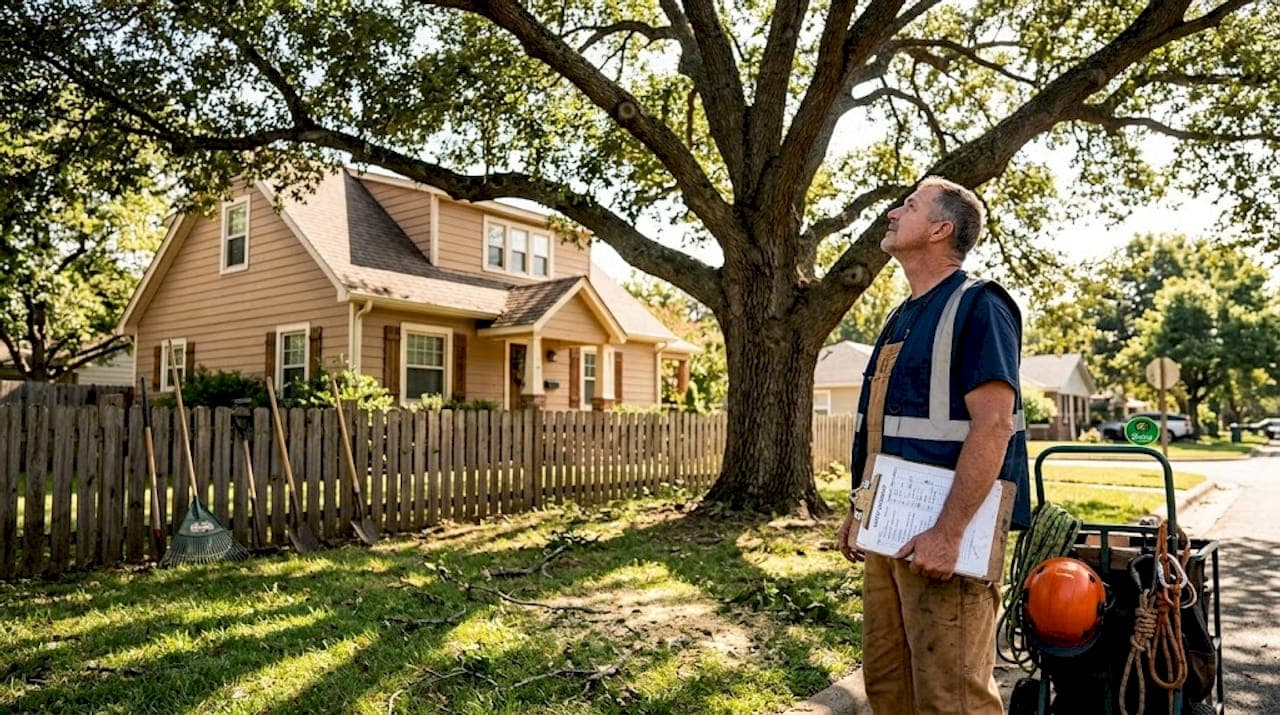
Large trees can make a property look established, provide shade, and even boost curb appeal. But understanding why large trees need removal is something every homeowner and property manager should take seriously. A tree that looks perfectly healthy from the street can harbor internal decay, compromised roots, or structural defects that make it a genuine hazard. This guide breaks down the real safety risks, the warning signs to watch for, and when removal is the only responsible choice.
Table of Contents
- Key Takeaways
- Why large trees need removal: key safety hazards
- Warning signs a large tree may need to come down
- The risks of delaying removal
- When pruning helps and when only removal will do
- My take on making tough tree removal decisions
- Let Brileytreeservice handle the hard calls
- FAQ
Key Takeaways
| Point | Details |
|---|---|
| Healthy appearance can deceive | Trees with full canopies can still have internal decay or root failure that makes them dangerous. |
| Warning signs are often visible | Cracks, fungal growth, leaning, and deadwood are observable signals that a large tree may need removal. |
| Delaying increases costs and risk | Emergency removals after failure are more expensive and more dangerous than planned removal. |
| Professional assessment is critical | Certified arborists use specialized tools to find hidden structural problems not visible to the eye. |
| Removal is sometimes the only option | Trees near homes, power lines, or with root plate failure often cannot be made safe through pruning alone. |
Why large trees need removal: key safety hazards
The most direct reason for removing a large tree is physical danger. Size alone amplifies every risk. A branch that snaps from a 15-foot ornamental tree does minor damage. The same failure from a 70-foot oak can collapse a roof or kill someone standing below.
Heavy rainfall saturates soil and reduces root anchorage, making large trees prone to uprooting during storms. The tree crown acts like a sail in high winds, and once the root system loses its grip on waterlogged soil, the entire tree can topple with almost no warning. That is a serious and underappreciated danger for any home with large trees nearby.
The most common large tree risks include:
- Storm failure. Large limbs or entire trees can fall on homes, vehicles, and power lines during severe weather.
- Diseased or dying wood. Dead or diseased trees are structurally unstable, especially when they lean or have already lost major limbs.
- Hidden structural defects. A full, green canopy does not mean a sound trunk. Internal cavities and decay can exist without any obvious external sign.
- Proximity to targets. The closer a large tree sits to a house, driveway, or power line, the more destructive any failure becomes.
Pro Tip: If a large tree sits within falling distance of your home or a neighboring structure, treat it as a higher priority for inspection regardless of how healthy it looks.
Warning signs a large tree may need to come down
Most trees give signals before they fail. The problem is that homeowners rarely know what to look for, and some of the most serious defects are easy to miss or dismiss.
Visible defects such as vertical cracks, hollow cavities, and fungal brackets increase failure probability significantly during high winds. Fungal growth at the base of a trunk is not cosmetic. It typically signals active wood decay inside the tree, which weakens its structural core over time.
Watch for these specific indicators:
- Cracks and splits. Long vertical cracks or splitting bark near major limbs or the trunk base.
- Leaning. A tree that has recently started leaning, or leans toward a structure, deserves immediate attention.
- Canopy dieback. Large sections of the crown dying back or losing leaves out of season.
- Deadwood accumulation. Multiple dead branches throughout the canopy, not just at the tips.
- Fungal brackets or mushrooms. Appearing at the base, on roots, or along the trunk.
- Soil heaving. The ground lifting near the root zone, which often indicates root plate movement.
Trees with V-shaped crotch formations are structurally weaker and significantly more prone to splitting compared to trees with U-shaped crotches. This is worth knowing when you look at large trees with multiple major stems growing from the same point.
Root problems are especially tricky because they develop underground. Construction nearby, changes to drainage, or soil compaction from heavy equipment can all damage roots without leaving obvious aboveground signs for months or even years. If your property has had recent construction or utility work near a large tree, a professional inspection is worth scheduling.
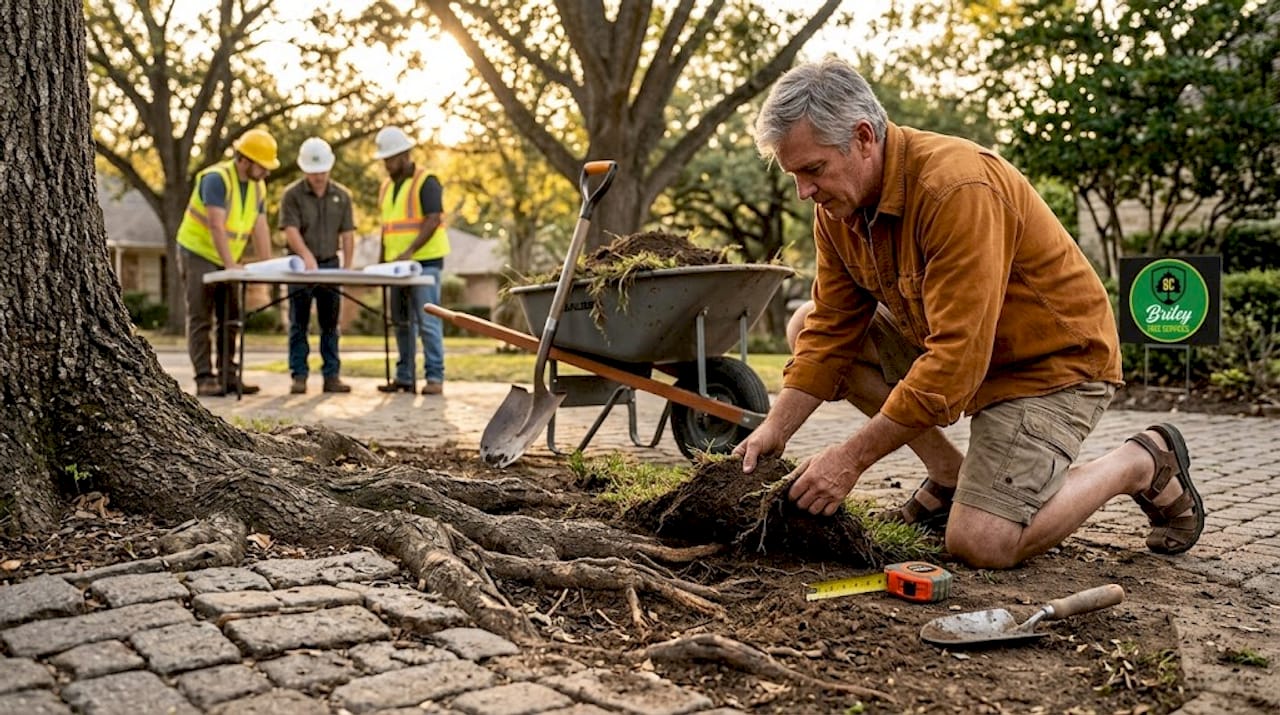
Pro Tip: After any major storm, walk your property and note any new leaning, cracks, or fallen debris from your trees. Storm stress often accelerates existing weakness.
The risks of delaying removal
One of the most consistent and costly mistakes homeowners make is waiting. The assumption is usually that there is still time, that the tree looks okay, or that removal can happen next season. But trees with internal trunk cavities or root rot often show no external signs until failure occurs. That failure can happen on a calm day, not just during a storm.
"The two primary components of any removal decision are the likelihood of failure and the consequences if that failure occurs. Visible health is not the same as structural safety."
Urban trees face additional stress from soil compaction, root zone restriction, and construction damage that creates hidden failure points over time. A tree that looked fine five years ago may have spent that time slowly losing root integrity from a drainage project two blocks away.
Emergency removals are more expensive and more dangerous than planned removals done in controlled conditions. When a tree falls on a house or blocks a road after a storm, removal crews work under pressure, often at night, with limited equipment access and debris everywhere. Planned removal, by contrast, allows crews to work methodically, use the right equipment, and protect surrounding structures.
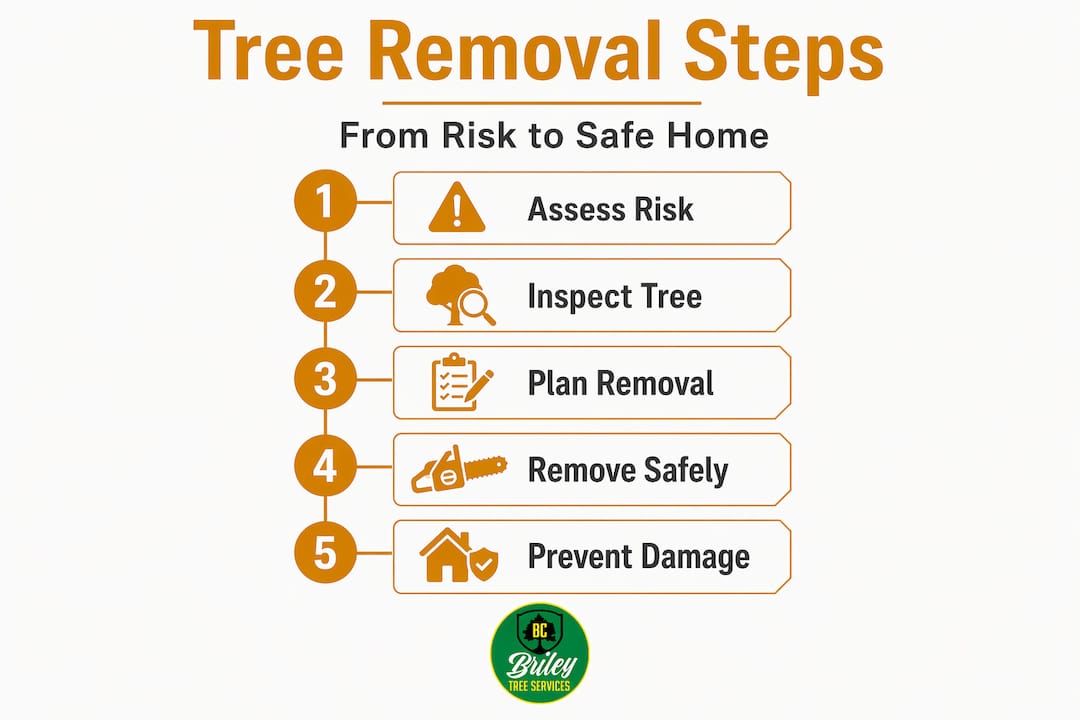
Certified arborists use specialized tools like sonic tomography to detect internal decay that is completely invisible from the outside. This technology sends sound waves through the trunk and maps density, revealing cavities and decay pockets that no visual inspection could catch. A written risk assessment from a certified arborist also gives you documentation for insurance purposes if a claim ever becomes necessary.
Pro Tip: Schedule a professional tree inspection before major storm seasons or before any nearby construction begins. It is far cheaper than an emergency call after a failure.
When pruning helps and when only removal will do
Not every large tree needs to come down. Structural pruning can reduce risk in trees that have sound structure but overgrown or unbalanced canopies. Crown cleaning removes dead, crossing, and weakly attached branches, which reduces weight and wind resistance. These approaches work well when the tree's core structure is still sound.
Here is a practical comparison of the two paths:
| Situation | Recommended action |
|---|---|
| Healthy structure, overgrown canopy | Crown reduction or structural pruning |
| Single dead limbs, otherwise sound tree | Crown cleaning and deadwood removal |
| Codominant stems with included bark | Cabling or removal depending on location |
| Internal decay or hollow trunk | Removal |
| Root plate failure or severe leaning | Immediate removal |
| Advanced disease with poor regrowth potential | Removal |
Removal is necessary for trees with advanced decay, compromised root plates, or poor regrowth potential, especially when they sit near homes or power lines. Pruning a structurally failed tree does not fix the underlying problem. It only delays the inevitable while giving a false sense of security.
Species matter too. Trees like tulip poplars grow fast with brittle wood, creating a higher hazard potential compared to slower-growing species. A large tulip poplar near your home carries different risk than a mature oak of the same height, and that should factor into any removal decision.
For trees near power lines specifically, the decision framework changes. Even a partially healthy tree can become a removal candidate based on location alone. The potential consequences of failure near energized lines are severe enough that proximity often overrides tree health as the determining factor.
The deciding factors for full removal almost always come down to four things: the tree's overall health, its location relative to structures and people, the likelihood of failure based on structural assessment, and whether any pruning approach could meaningfully reduce that failure risk.
My take on making tough tree removal decisions
I have seen homeowners hold on to large trees for years, sometimes because of sentimental value, sometimes because of cost, and often because the tree still looks green and full from the driveway. What I have learned working in this industry is that visible health is one of the most misleading signals when it comes to tree safety.
The most serious removals I have been part of involved trees that, from a distance, looked completely fine. One had a canopy full of leaves right up until a soil assessment revealed the root plate had been compromised by a drainage project three years earlier. The homeowner had no idea. Once the arborist explained the failure risk, the decision was easy.
What changes people's minds more than anything is a professional assessment that puts the risk in plain terms. When a certified arborist shows you a sonic tomography reading that reveals a hollow core running two-thirds up the trunk, the conversation shifts immediately. No one debates the decision after that.
My honest advice: do not wait for a storm to make the decision for you. Commercial property managers who schedule regular inspections almost never face emergency removals. Homeowners who wait often do. The financial and safety difference between planned and emergency removal is significant. Proactive decisions protect both your property and the people on it.
— Tatum
Let Brileytreeservice handle the hard calls
When a large tree on your property raises concerns, Brileytreeservice has the experience and equipment to handle it safely. The team serves Shreveport, Bossier City, and surrounding areas in Northwest Louisiana, offering full tree removal services for residential and commercial properties. Whether the job involves a hazardous tree near your home, a storm-damaged oak leaning toward a fence, or a large tree too close to power lines, Brileytreeservice approaches every removal with a clear plan and proper safety protocols. Homeowners in Minden and nearby communities can request a free estimate and get a professional assessment before any work begins. Contact Brileytreeservice today to schedule your inspection.
FAQ
What are the most common reasons for tree removal?
The most common reasons include storm damage, advanced disease or internal decay, root failure, and proximity to structures or power lines. Trees that lean toward homes or show significant deadwood often require removal before they fail on their own.
Can a tree with a full green canopy still need removal?
Yes. Trees with internal cavities or root rot often show no external signs until failure occurs. A healthy-looking canopy does not mean the trunk or root system is structurally sound.
When should I call a professional instead of waiting?
Call a professional if you notice leaning, cracks, fungal growth, soil heaving, or significant deadwood in any large tree near your home. After a major storm, an inspection is worth scheduling even if the tree looks undisturbed.
Is pruning always an alternative to removing a large tree?
Not always. Structural pruning works when the core structure is still sound. Trees with advanced decay or root plate failure cannot be made safe through pruning and require full removal.
How much more does emergency tree removal cost compared to planned removal?
Emergency removals consistently cost more than planned removals due to hazardous working conditions, limited equipment access, and time pressure. Scheduling removal proactively before a tree fails is almost always the more affordable option.