
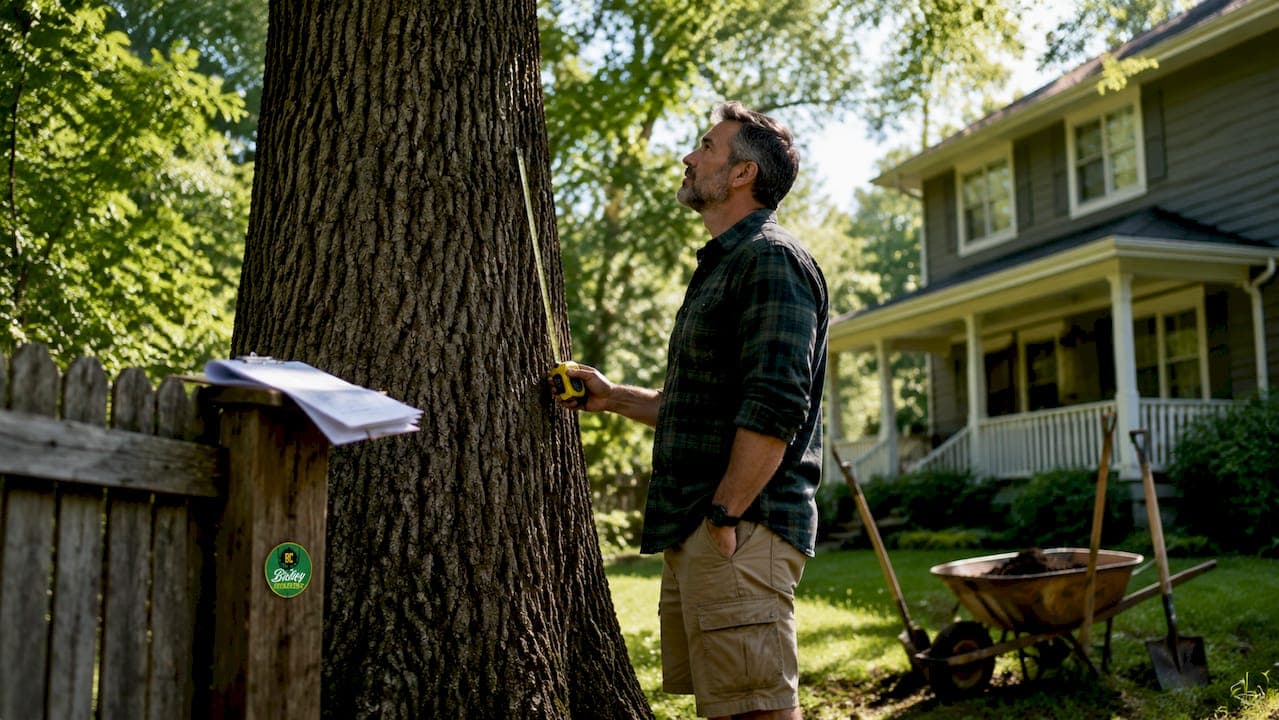
Tree removal cost factors are defined by measurable job attributes including tree size, species, location, and site complexity. In Shreveport, where mature oaks, pines, and sweetgums are common, the cost of tree removal typically runs from $200 to $2,000, with complex jobs exceeding $10,000. That wide range exists because no two trees come down the same way. Understanding what drives pricing puts you in a stronger position when comparing bids, avoiding surprise charges, and deciding when to call a professional.
1. How tree size and species affect removal costs
Tree size is the most direct pricing variable in any removal job. Height and trunk diameter determine how long the job takes, how many crew members are needed, and what equipment must be brought on site. A 20-foot ornamental tree in an open yard is a fundamentally different job than a 70-foot water oak overhanging a fence line.
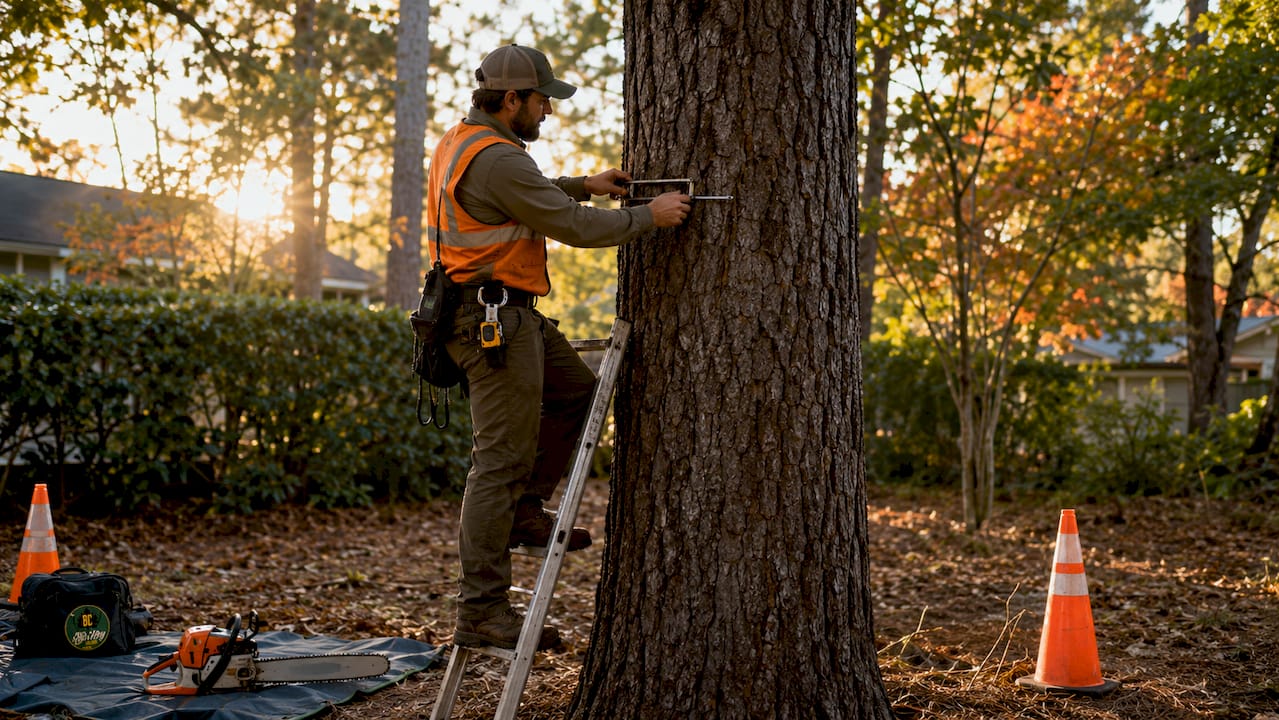
Species matters just as much as size. Dense hardwoods cost 30% to 50% more to remove than softwoods of comparable height. Oak and maple require heavier cutting equipment, slower sectional felling, and more labor during cleanup because the wood is heavier and harder to process. Pine and cedar, by contrast, cut faster and produce lighter debris. In Shreveport, where loblolly pines and water oaks are both common, the species difference alone can shift a quote by several hundred dollars.
Here is a general size and species pricing framework:
- Small trees (under 30 feet): $200 to $600. Includes most ornamental trees and young pines.
- Medium trees (30 to 60 feet): $600 to $1,200. Covers most residential pines and mid-size hardwoods.
- Large trees (60 to 80 feet): $1,200 to $2,000. Common for mature oaks and pecans.
- Very large trees (over 80 feet): $2,000 and above. Often requires crane access or advanced rigging.
Pro Tip: Ask your contractor to specify the species in the written quote. Two companies quoting "large tree removal" may be pricing completely different species and effort levels.
Dead or diseased trees add another layer of cost. A dead tree is structurally unpredictable, which means crews must use more conservative, time-intensive removal methods. Dead trees cost more to remove than healthy ones because of the additional safety precautions required.
2. The impact of location, accessibility, and proximity to structures
Where a tree sits on your property shapes the price as much as the tree itself. A contractor pricing a job in an open front yard is calculating a very different risk and labor profile than one working in a tight backyard with a six-foot gate.
Access limitations requiring manual removal of limbs increase labor costs by 20% to 40%. When a chipper truck or skid steer cannot reach the work area, crews carry every branch and log section by hand. That adds hours to the job and raises the final bill proportionally. Narrow side yards, fenced properties, and soft ground that cannot support heavy equipment are all common access constraints in Shreveport neighborhoods.
Proximity to structures creates a different set of challenges. Trees close to homes, fences, sheds, or driveways require careful sectional removal with rigging systems to control where each piece falls. That precision work takes more time and more skill. Accessibility and proximity to structures increase removal costs by 25% to 50% compared to open-access jobs.
Power lines are the most serious proximity issue. Trees near power lines require utility coordination, add $500 to $1,500 to the job cost, and can delay scheduling by one to four weeks. Entergy Louisiana, which serves the Shreveport area, has specific protocols for de-energizing lines before tree work can proceed. That coordination is not optional, and the cost reflects real safety requirements. You can learn more about what that process involves in this guide on trimming near power lines.
Common location factors that raise costs:
- Fenced backyards with gates under 36 inches wide
- Soft or wet ground that limits equipment access
- Trees within 10 feet of a structure's foundation or roofline
- Slopes that require additional anchoring and rigging
- Proximity to utility lines requiring coordination with Entergy Louisiana
Pro Tip: Before calling for a quote, measure your gate width and note any overhead lines near the tree. Sharing that information upfront gives contractors what they need to price accurately on the first visit.
3. Emergency removal, multiple trees, cleanup, and permits
Beyond size and location, several additional variables explain why tree removal bids vary from one job to the next.
Emergency removal carries a significant premium. Emergency tree removal costs 25% to 75% more than scheduled work due to after-hours labor, unstable tree conditions, and limited resource availability. A storm-damaged tree leaning against your roof in Shreveport after a spring severe weather event is a genuine emergency. But a dead tree that has been standing for months is not. Scheduling that removal as a routine job rather than an emergency call can save you hundreds of dollars. For guidance on when urgency is truly warranted, this resource on tree service response time is worth reading.
Multiple tree removals work in your favor. Bundling removals often qualifies for 10% to 25% discounts per tree because mobilization and equipment costs are spread across the full job. If you have three trees that need to come down, scheduling them together almost always costs less per tree than three separate visits.
Here is a comparison of how additional services affect total cost:
| Service | Typical Cost Range | Included by Default? |
|---|---|---|
| Stump grinding | $150 to $500 per stump | Rarely |
| Debris hauling | $50 to $200 | Sometimes |
| Full cleanup and raking | $50 to $150 | Varies by contractor |
| Municipal permit | $0 to $100+ | Not applicable to all jobs |
Stump grinding typically costs $150 to $500 and is almost always quoted separately. Assuming it is included when it is not is one of the most common sources of post-job frustration for homeowners. Shreveport does not universally require permits for residential tree removal on private property, but some neighborhoods and HOA zones do. Confirm with your contractor before work begins.
If a tree fell on your home or vehicle during a storm, contact your homeowner's insurance carrier before scheduling removal. Many policies cover emergency removal costs when a tree causes structural damage.
4. How to interpret and compare tree removal bids effectively
Getting three quotes is standard advice. Getting three comparable quotes is what actually protects you. The reason why tree removal bids vary so widely is often not the contractor's pricing model. It is what each quote actually includes.
Scope differences between quotes are the primary source of confusion. One company may quote tree felling only. Another may include stump grinding, debris hauling, and final cleanup. A third may offer a middle option. Without line-item detail, you cannot make a fair comparison. Always ask each contractor to break out the cost of felling, stump removal, and cleanup as separate line items.
Crane usage versus manual removal is another major variable. Cranes are faster and safer for large trees in tight spaces, but they add $500 to $1,500 or more to the job. Some contractors include crane costs in their base quote. Others list it separately. Knowing which method a contractor plans to use tells you a lot about how they assessed the job.
Follow these steps when reviewing bids:
- Confirm what "tree removal" includes. Ask specifically about stump, debris, and cleanup.
- Ask whether the quote assumes equipment access or manual carry-out.
- Verify that the contractor carries general liability and workers' compensation insurance.
- Request the method of removal: crane, bucket truck, or manual climb and cut.
- Ask about disposal. Some contractors chip debris on site; others haul it away.
For a deeper look at what a professional estimate should contain, this guide on reading a tree estimate covers the key components clearly.
Pro Tip: Ask each contractor: "What is not included in this quote?" That single question surfaces exclusions faster than reviewing the fine print.
5. Situational advice for Shreveport homeowners to manage costs
Timing and planning are the two most underused tools for controlling tree removal costs. Scheduling removals during slow months, typically late fall through early spring, can save 10% to 20% because demand drops and contractors have more scheduling flexibility. In Shreveport, that window also avoids the peak storm season, which runs from late spring through early fall.
Practical steps to reduce your total cost:
- Bundle jobs. If you have multiple trees, shrubs, or stumps to address, combine them into one visit.
- Clear access before the crew arrives. Moving vehicles, patio furniture, or portable structures saves labor time.
- Ask about wood retention. Some contractors will reduce the price if you keep the wood for firewood or mulch, since they save on hauling.
- Confirm the scope in writing. A written scope prevents disputes about what was and was not included.
- Assess urgency honestly. If a tree is dead but stable, a planned removal is almost always cheaper than calling it an emergency.
Pro Tip: Call for estimates in January or February. Contractors in Northwest Louisiana are typically less booked during those months, and you have more leverage to negotiate scope and price.
Labor, safety measures, and technical rigging account for the largest share of removal costs, not materials. That means your ability to reduce friction on the labor side, through access, timing, and bundling, directly affects what you pay.
Key takeaways
Tree removal pricing is determined by a combination of measurable job variables, and understanding each one gives you real leverage when evaluating quotes and planning removal projects.
| Point | Details |
|---|---|
| Size and species drive base cost | Large hardwoods like oak cost 30% to 50% more than softwoods of similar height. |
| Location adds 25% to 50% | Tight access, structures nearby, and power lines all push prices higher. |
| Emergency jobs cost significantly more | Urgency adds 25% to 75% to the standard removal price. |
| Scope differences explain bid gaps | Always request line-item breakdowns covering stump, debris, and cleanup separately. |
| Timing and bundling reduce costs | Off-season scheduling and combining multiple trees can save 10% to 25%. |
What I've learned about tree removal pricing after years in the field
The single biggest mistake homeowners make is treating tree removal as a commodity purchase. They get three numbers and pick the lowest one. That approach works fine when you are buying a product with a fixed specification. It fails completely when the "product" is a complex labor job where every site is different.
I have seen homeowners accept a low quote only to discover the contractor planned to leave the stump, pile the debris at the curb, and charge extra for anything beyond the trunk. The original quote was not dishonest. It was just narrow. The homeowner assumed "removal" meant the whole job.
The other pattern I see regularly is the emergency misclassification. A tree that has been dead for two years is not an emergency because it finally fell in the yard. Calling it one, or accepting a contractor who prices it that way, costs real money. True emergencies are trees actively threatening a structure or blocking access. Everything else can be scheduled, and scheduled jobs are priced more fairly.
The contractors who earn long-term trust in this business are the ones who explain their pricing before you ask. Transparent line items, clear scope language, and honest site assessments are the markers of a professional operation. If a contractor cannot tell you exactly what is and is not included in their quote, that is your answer about how the job will go.
— Tatum
Get a straight answer on your tree removal cost in Shreveport
Briley Tree Service provides free, detailed estimates for tree removal throughout Shreveport, Bossier City, and Northwest Louisiana. Every quote includes a clear breakdown of felling, stump grinding, debris removal, and cleanup so you know exactly what you are paying for before any work begins. The team handles everything from small ornamental trees to large storm-damaged hardwoods, with the equipment and experience to work safely around structures, fences, and utility lines. If you are ready to get a clear number without the guesswork, contact Briley Tree Service for a free estimate today. Local knowledge, transparent pricing, and a crew that cleans up after every job.
FAQ
How much does tree removal cost in Shreveport?
Most residential tree removals in Shreveport range from $200 to $2,000 depending on tree size, species, and site conditions. Complex jobs involving large hardwoods, tight access, or power line proximity can exceed that range.
Why do tree removal bids vary so much between companies?
Bid differences usually come down to scope. One quote may include stump grinding and debris hauling while another covers only the felling. Always request a line-item breakdown to compare quotes accurately.
Does homeowner's insurance cover tree removal?
Insurance typically covers removal costs when a fallen tree causes structural damage to your home or a covered structure. Removal of a standing dead tree or routine removal is generally not covered.
Is emergency tree removal always more expensive?
Yes. Emergency removal costs 25% to 75% more than scheduled work due to after-hours labor and hazardous conditions. If a tree is not actively threatening a structure, scheduling it as a routine job saves money.
What is stump grinding, and is it included in removal quotes?
Stump grinding is the mechanical removal of the remaining stump after a tree is felled. It typically costs $150 to $500 and is rarely included in base removal quotes. Always confirm whether it is part of the scope before signing.