

A professional tree estimate is a detailed, itemized quote that outlines the full scope of proposed tree care work, including labor, equipment, site conditions, safety planning, and cleanup costs. This document is the industry standard used by licensed tree service companies and ISA Certified Arborists to communicate exactly what a job requires before any work begins. Homeowners and property managers across Shreveport, Bossier City, and Northwest Louisiana rely on these estimates to budget accurately, compare providers, and avoid costly surprises. Understanding what a tree service estimate contains puts you in control of every decision.
What is a professional tree estimate and what does it include?
A professional tree estimate is more than a number on a piece of paper. According to industry practice, professional quotes specify species, work scope, equipment to be used, debris disposal method, timeline, and payment terms. Each of these line items exists for a reason, and knowing what to look for tells you whether a company is thorough or cutting corners.
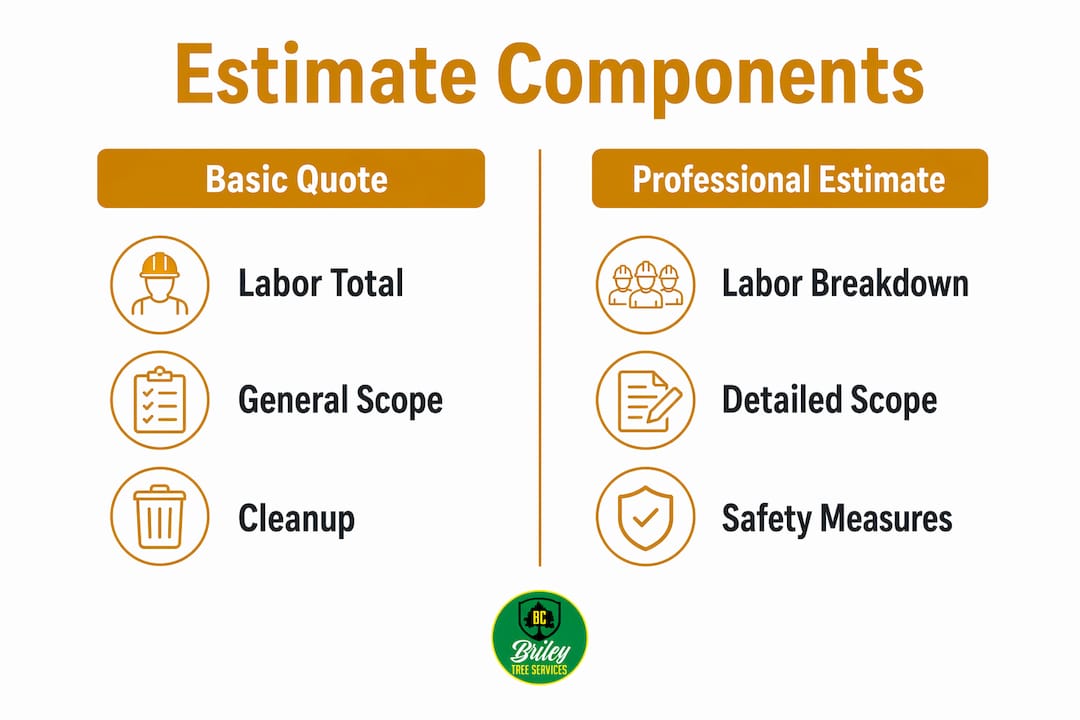
A complete estimate covers these core components:
- Labor costs: Crew size, number of hours, and hourly or flat rates. Labor accounts for 30 to 50% of a tree company's operational costs, which is why it appears as a primary line item on every professional quote.
- Equipment: Crane rental, bucket truck fees, wood chipper use, and stump grinder charges are itemized separately. A job requiring a crane costs significantly more than one handled with climbing gear alone.
- Scope of work: This section describes exactly what will be done. Removal, crown pruning, deadwood trimming, and cabling are each listed with clear descriptions so there is no ambiguity about what you are paying for.
- Site conditions and access: Tight access, slopes, or proximity to fences and driveways affect how long a job takes and what equipment fits on site.
- Safety planning: Hazard mitigation steps, traffic control, and utility line proximity notes appear here. This section protects both the crew and your property.
- Cleanup and debris disposal: Hauling logs, chipping brush, and raking the site are separate cost items. Some companies include this; others charge extra.
- Timeline and scheduling: Start date, estimated duration, and any weather contingencies are stated clearly.
Pro Tip: Ask for a written, itemized estimate rather than a verbal quote. Proposals with photos and detailed scopes close about 31% more jobs than plain number quotes, which tells you that reputable companies already know the value of thorough documentation.
Here is a quick comparison of what separates a professional estimate from a basic quote:
| Element | Basic quote | Professional estimate |
|---|---|---|
| Labor breakdown | Total only | Crew size, hours, rate |
| Equipment costs | Not listed | Itemized by type |
| Scope of work | General description | Task-by-task detail |
| Cleanup | Assumed | Explicitly stated |
| Safety plan | Not included | Noted with hazard details |
| Timeline | Verbal only | Written with start date |
How tree species, size, and site conditions affect your estimate
Tree species, size, and site conditions are the three biggest pricing variables in any tree care pricing guide. Hardwoods cost more to remove than softwoods, and permits can add $200 to $500 to the total. These are not arbitrary charges. They reflect real differences in labor time, equipment wear, and job complexity.
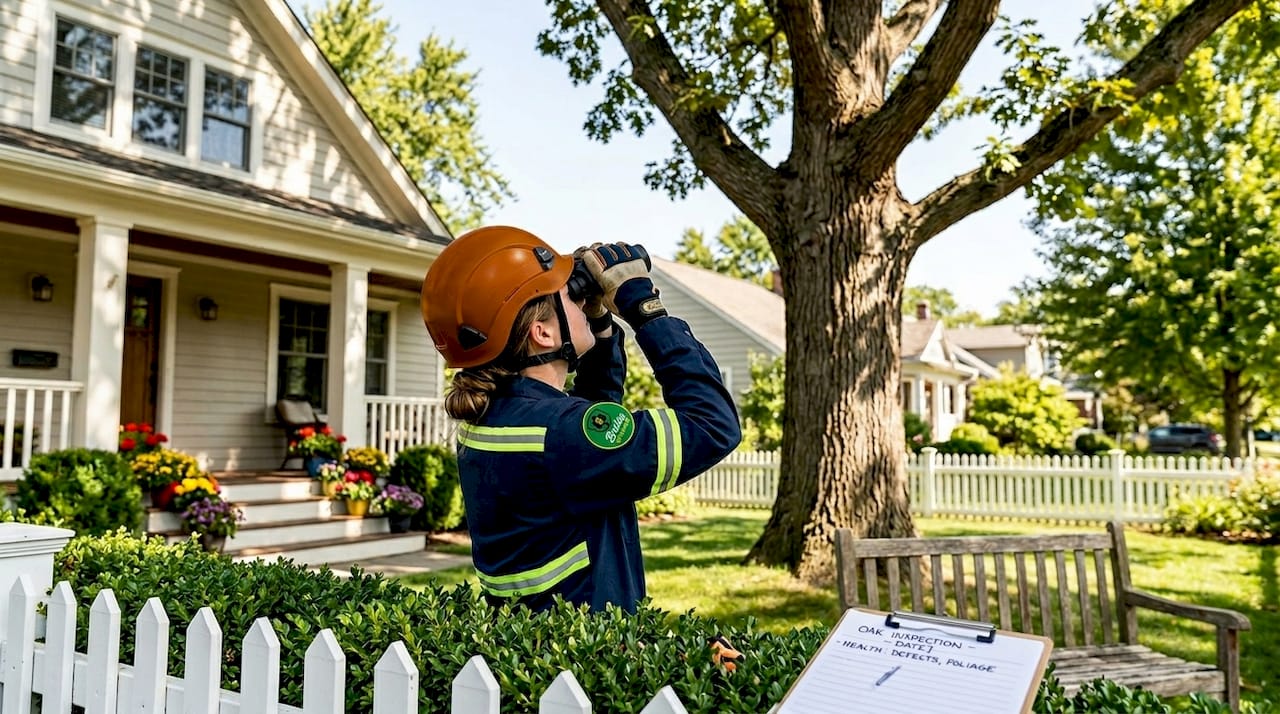
Species matter because wood density determines how long cutting and chipping takes. An oak or hickory takes longer to process than a pine of the same height. That difference shows up directly in labor hours on the estimate.
Size factors include:
- Height: Taller trees require more rigging, longer rope work, and more passes with the chipper.
- Trunk diameter: A wider trunk means more saw time and heavier log sections to move.
- Canopy spread: A wide canopy over a structure requires piece-by-piece removal rather than a single fell, which multiplies labor time.
Site conditions add another layer of cost. A tree growing next to a power line, a roofline, or a fence requires specialized rigging and slower, more precise work. Limited access means equipment must be hand-carried or smaller machines must substitute for larger, faster ones. Root conditions near foundations or irrigation systems can also require extra care during stump grinding.
The table below shows how these variables translate to estimate line items:
| Variable | Impact on estimate |
|---|---|
| Hardwood species | Higher labor hours, faster blade wear |
| Tree height over 60 feet | Crane or bucket truck added to equipment list |
| Proximity to structure | Rigging and spotters added to labor |
| Limited site access | Smaller equipment, longer job duration |
| Municipal permit required | Permit fee line item, $200 to $500 |
What does a professional arborist assessment add to an estimate?
A professional arborist assessment is a structured evaluation that goes beyond a standard tree service estimate. A risk assessment is not a quick walk-by opinion but a formal evaluation with a written risk rating and documented mitigation recommendations. This distinction matters when you are dealing with a tree near a structure, a tree showing signs of disease, or a situation where insurance or permits are involved.
A formal arborist risk assessment covers three areas: tree health, structural condition, and site hazards. The arborist examines root stability, trunk integrity, branch attachment angles, and signs of decay or pest damage. The result is a written report that rates the likelihood of failure and the consequences if failure occurs.
Pro Tip: If your estimate involves a tree near a home, power line, or public space, ask whether the provider includes a formal risk assessment or whether that is a separate service. Knowing upfront prevents gaps in your documentation.
Cost ranges for these reports vary by scope. Basic risk assessments for one to three trees run about $300 to $600. Comprehensive reports required for permits or legal purposes cost $500 to $1,200. Reports are typically delivered within three to five business days. The written findings carry weight with insurance companies, municipal permit offices, and HOA boards, making them worth the additional cost in complex situations.
Tree appraisals are a separate category entirely. These use CTLA methodology and address insurance claims or legal disputes rather than routine risk management. If you need a dollar value assigned to a tree for legal or insurance purposes, a standard risk assessment will not satisfy that requirement.
How to compare and validate tree estimates effectively
Getting multiple written quotes is the single most reliable way to understand fair pricing for your specific job. Reputable arborists provide written estimates before scheduling and clarify scope and timelines upfront. Comparing those documents side by side reveals where providers differ on scope, not just price.
Follow this process when evaluating quotes:
- Confirm the estimate is written and itemized. A verbal quote is not a contract. Written estimates with company branding, license numbers, and insurance information signal a professional operation.
- Check for insurance documentation. General liability and workers' compensation coverage protect you if something goes wrong on your property. Ask for certificates, not just verbal assurances.
- Compare scope line by line. Two quotes at different prices may reflect different scopes. One may include stump grinding; the other may not. Identify every difference before comparing totals.
- Look for ISA certification. ISA Certified Arborists have passed a standardized exam and follow a code of ethics. Their involvement on a job adds accountability and technical accuracy to the estimate.
- Ask specific questions. Ask how the crew will access the site, what happens to debris, whether a permit is needed, and what the payment schedule looks like. Vague answers to direct questions are a red flag.
- Watch for red flags. Unusually low prices, no written documentation, pressure to sign immediately, and missing insurance information are all signs to walk away.
You can also use a tree service hiring checklist to verify credentials and compare providers systematically before committing to any quote.
Pro Tip: Request at least three written quotes for any job over $500. Pricing can vary widely based on species, condition, and site specifics, so multiple written quotes provide the most reliable comparison.
Key takeaways
A professional tree estimate is a written, itemized document that covers labor, equipment, scope, safety, and cleanup. Without it, you cannot accurately compare providers or hold a company accountable for what was promised.
| Point | Details |
|---|---|
| Estimates must be itemized | Labor, equipment, cleanup, and scope should each appear as separate line items. |
| Species and site drive price | Hardwoods, large trees, and tight access all increase labor time and equipment costs. |
| Arborist reports add formal value | Written risk assessments cost $300 to $600 and matter for permits, insurance, and legal needs. |
| ISA certification signals credibility | Certified arborists follow standardized protocols and provide documented, defensible findings. |
| Multiple quotes reveal true market price | Comparing three or more written estimates is the most reliable way to validate pricing. |
Why most homeowners underestimate the estimate itself
I have reviewed hundreds of tree service situations, and the most common mistake homeowners make is treating the estimate as a formality rather than a working document. The estimate is where the entire job is defined. If the scope is vague, the cleanup terms are missing, or the equipment list is blank, you have no leverage when the final bill looks different from what you expected.
The second mistake is choosing the lowest number without reading what it covers. A quote that excludes stump grinding, debris hauling, and permit fees can end up costing more than a higher quote that includes all three. Line-by-line comparison takes ten minutes and can save hundreds of dollars.
Certified arborists bring something beyond price accuracy. Their formal training means they identify problems that an untrained eye misses, like co-dominant stems that signal future failure or root damage from nearby construction. That knowledge changes the scope of work and the safety of the outcome. For property managers overseeing multiple trees, a commercial tree maintenance approach that starts with thorough estimates prevents reactive, expensive emergency calls later.
The estimate is not a sales document. It is a technical plan. Treat it that way, and you will make better decisions every time.
— Tatum
Get a free professional tree estimate from Briley Tree Service
Briley Tree Service provides free, written, itemized estimates for homeowners and property managers throughout Shreveport, Bossier City, and Northwest Louisiana. Every estimate covers labor, equipment, scope of work, cleanup, and timeline so you know exactly what to expect before the crew arrives.
Brileytreeservice specializes in tree removal, tree trimming, stump grinding, and emergency storm cleanup for residential and commercial properties. The team is licensed, insured, and experienced with the full range of tree conditions found across Northwest Louisiana. Whether you need a single tree removed or a full property assessment, Brileytreeservice delivers accurate, professional quotes with no pressure and no surprises. Visit the Shreveport service area page to request your free estimate today.
FAQ
What is included in a professional tree estimate?
A professional tree estimate includes labor costs, equipment fees, a detailed scope of work, site access notes, safety planning, cleanup and debris disposal terms, and a project timeline. Each element appears as a separate line item so the homeowner can see exactly what they are paying for.
How much does a tree risk assessment cost?
A basic risk assessment for one to three trees costs between $300 and $600. Comprehensive reports for permits or legal purposes range from $500 to $1,200 and are typically delivered within three to five business days.
How do I compare tree trimming quotes effectively?
Compare written, itemized quotes line by line rather than by total price alone. Differences in scope, such as stump grinding or debris removal, explain most price gaps between providers.
What are red flags in a tree service estimate?
Red flags include missing insurance documentation, vague scope descriptions, no written format, and pressure to sign without time to review. Any estimate that lacks a company license number or contact information should be declined.
Does tree species affect the cost of removal?
Yes. Hardwood species like oak and hickory take longer to cut and chip than softwoods, which increases labor hours and equipment wear. These differences appear directly in the labor and equipment line items of a professional estimate.