
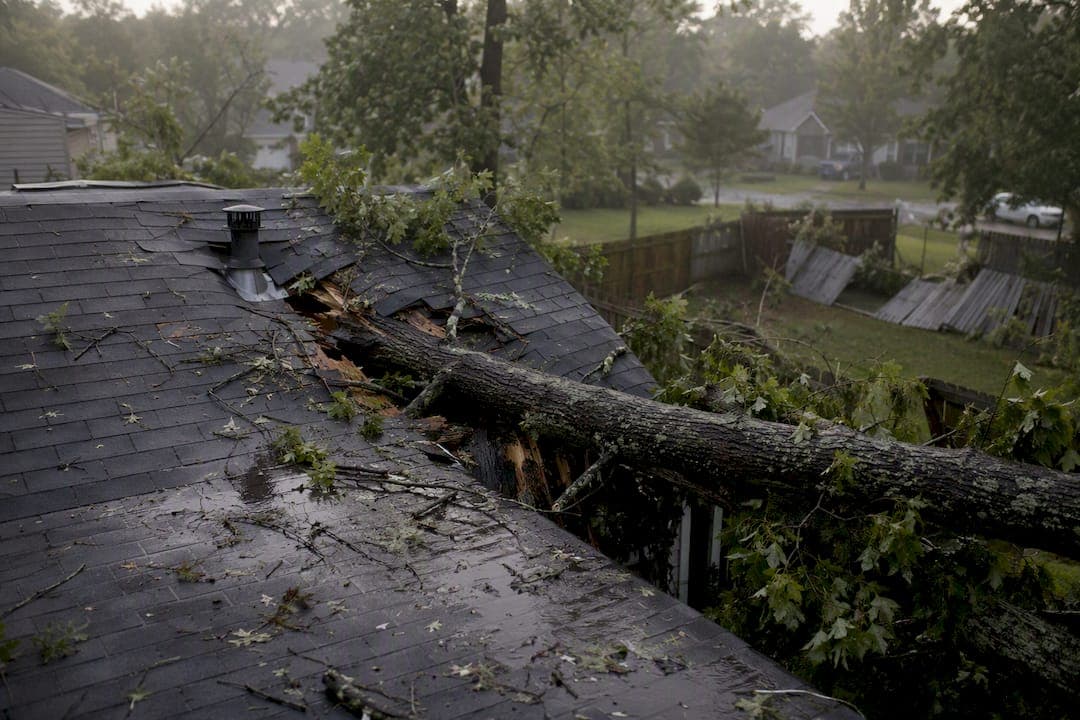
If a tree has fallen on your house, get everyone out and call 911 right now if anyone is hurt or if power lines are down. Do that before anything else.
Once the area is safe, take these steps:
- Evacuate the affected rooms, or the whole house if the structure looks compromised.
- Call 911 for injuries, downed power lines, or a gas smell.
- Call your utility company immediately if lines or a gas meter were hit.
- Photograph the damage before any cleanup starts, since this protects your claim with carriers like Progressive and Allstate.
- Call a licensed emergency crew, such as Brileytreeservice, once the scene is confirmed safe to approach.
Key Takeaways
Acting fast on safety, documentation, and your insurance claim protects both your household and your ability to get paid for the damage.
| Point | Details |
|---|---|
| Safety comes first | Evacuate, call 911 for injuries or downed lines, and stay away from any power line contact. |
| Document before cleanup | Photograph the impact point, root plate, and interior damage with timestamps for your adjuster. |
| Emergency repairs are reimbursable | Tarping, boarding, and moving belongings are typically covered when receipts are kept. |
| Liability follows negligence | A neighbor pays only if they knew or should have known their tree was hazardous. |
| Hire licensed help | Brileytreeservice provides insured emergency tree removal, tarping, and insurance-ready documentation across North Louisiana. |
Table of Contents
- What to Do Immediately After a Fallen Tree on Your House
- How Do You Document Tree Damage for an Insurance Claim?
- Which Emergency Repairs Should You Make Before the Adjuster Arrives?
- When Should You Contact Your Insurer and File a Claim?
- Who Pays When a Neighbor's Tree Falls on Your House?
- How Do You Hire a Safe Contractor for Fallen Tree Removal?
- What Does Homeowners Insurance Typically Cover for Tree Damage?
- When Is It Safe to Go Back Inside After a Tree Falls?
- What Should Homeowners Know About Hidden Tree Damage?
- A Homeowner's Checklist for a Fallen Tree on Your House
- Need Emergency Storm Cleanup Right Now?
- Frequently Asked Questions
- Sources
What to Do Immediately After a Fallen Tree on Your House
Check for injuries first. If anyone is hurt, call 911 and keep everyone else away from the impact zone until paramedics arrive.
Downed power lines change everything. Never touch the tree, the house, or anything metal that's in contact with either one. A downed line can energize a wet lawn or a metal gutter without any visible spark.
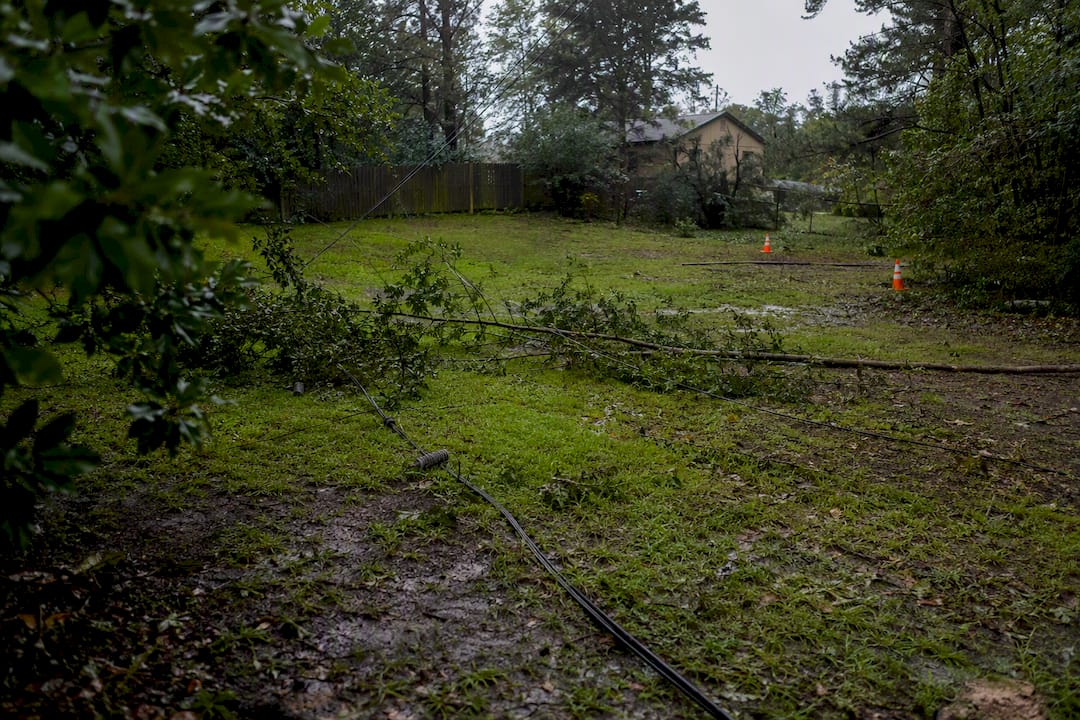
Smell rotten eggs or hear hissing near the meter? That's a gas leak. Evacuate immediately, call 911 and the gas company, and don't flip any switches on your way out. A single spark can ignite escaped gas.
Only shut off electrical panels or gas valves yourself if you can reach them without stepping near the debris or standing water. Otherwise, wait for the utility crew or first responders to confirm it's safe.
Pro Tip: If you're not 100% sure the scene is safe, treat it as live. Waiting ten extra minutes for a utility crew costs you nothing. Guessing wrong costs a lot more.
How Do You Document Tree Damage for an Insurance Claim?
Grab your phone before you touch anything. Progressive's guidance on tree damage puts documentation right alongside safety as a first-day priority, and adjusters rely heavily on what you capture in the first hour.
- Shoot wide shots of the whole scene, then close-ups of the point of impact, the root plate, and any interior damage.
- Timestamp everything, and note the date, time, and weather conditions in your phone's notes app.
- Dig up any older photos that show the tree's condition before it fell, if you have them.
- Save every receipt for emergency expenses, tarps, a hotel stay, or emergency tree service, since insurers typically reimburse reasonable costs here.
- If a neighbor's tree caused the damage, photograph it where it stands (or stood), including any visible rot, dead limbs, or lean.
Which Emergency Repairs Should You Make Before the Adjuster Arrives?
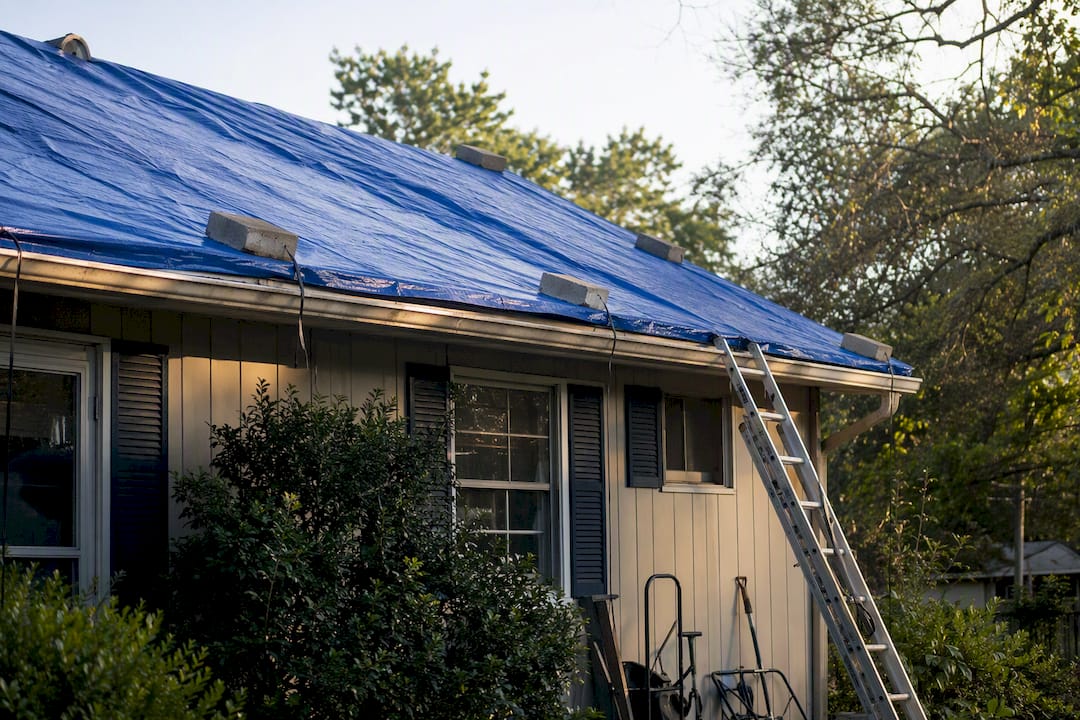
Tarping a roof hole, boarding a broken window, and moving undamaged belongings out of an exposed room all count as reasonable emergency repairs. Keep every receipt.
- Do tarp, board, and relocate valuables away from rain exposure.
- Don't attempt structural roof repairs yourself, don't remove heavily loaded limbs, and don't cut a tree that's still partially holding up part of your roof.
That last point matters more than it sounds. Cutting a load-bearing limb or trunk section can trigger a sudden collapse that turns a repairable situation into a much bigger one.
Pro Tip: Photograph the tarp or boards you installed before and after. Adjusters reimburse "reasonable" emergency repairs, and photos remove any argument about what "reasonable" meant.
When Should You Contact Your Insurer and File a Claim?
Call your insurer as soon as immediate safety is handled, even if a contractor is still on the way. LegalClarity's overview of tree damage claims notes that filing fast matters most after widespread storms, when adjusters get backed up fast.
Have this ready before you call:
- Your policy's declarations page, so you know your deductible and coverage type.
- A list of damaged items, with photos and video attached.
- Emergency repair receipts.
- Any contractor estimates you've already gathered.
- Whether your policy pays replacement cost or actual cash value, since that changes your payout math.
After filing a claim, one can expect an initial inspection, an actual cash value (ACV) payment, and later a payment covering withheld depreciation upon repairs completion, per the same LegalClarity claims breakdown.
- If you disagree with the adjuster's number, get an independent contractor estimate.
- Document the gap in writing and follow your insurer's proof-of-loss or appeal process rather than letting it drop.
Who Pays When a Neighbor's Tree Falls on Your House?
Your own insurer covers your property first, regardless of whose tree caused the damage. LegalClarity's neighbor-liability guide explains that most states hold the tree's owner liable only if they knew, or reasonably should have known, the tree was hazardous. Visible decay, major deadwood, or a pronounced lean count as red flags.
- Dated photos of the hazard, taken before the fall, carry real weight.
- Prior emails, texts, or certified letters asking the neighbor to address the tree strengthen your case.
- A documented inspection report from an arborist helps too.
This is where subrogation comes in. Your insurer pays your claim, then may pursue the neighbor's insurer directly if negligence can be proven. That's why the paper trail matters so much. If you suspect negligence, exchange insurance information calmly, preserve every piece of evidence, and consider a certified letter documenting the hazard if it's safe to send.
How Do You Hire a Safe Contractor for Fallen Tree Removal?
Any job involving climbing, a chainsaw working over your roofline, cabling, or a tree actually resting on the structure needs a professional. This isn't a weekend project.
- Confirm the crew is a licensed, insured arborist, not just someone with a truck and a chainsaw.
- Get a written estimate that separates emergency stabilization from structural repair costs.
- Ask for references and confirm they carry liability coverage.
Emergency removal costs more than a scheduled trim, and for good reason. Sylvan Scapes notes that off-hours work, rigging over an occupied structure, and tarping and stabilization all add cost and complexity that a routine removal never involves.
Watch for red flags: crews demanding full cash payment with no receipt, or insisting on payment before giving you an itemized invoice, usually aren't carrying real insurance.
Pro Tip: Ask the crew to photograph the scene before they cut anything and hand you a written safety plan. Your insurer will want both.
What Does Homeowners Insurance Typically Cover for Tree Damage?
Structural repairs and interior water damage from the same event are usually covered, minus your deductible, and debris removal and emergency repairs are commonly reimbursed too, though caps apply. The Insurance Information Institute confirms that coverage details still vary meaningfully by carrier and policy.
- Tree and shrub coverage often has caps per tree or as a percentage of the dwelling limit.
- If the tree missed your structure but blocks your driveway or poses a safety hazard, removal may still be covered. Otherwise, it often isn't.
- Watch for a percentage-based wind or hurricane deductible, sometimes 2% of your dwelling coverage limit, which runs far higher than a flat-dollar deductible on the same claim.
An initial adjuster visit often happens within days for a routine, isolated claim, but expect delays after a wide storm event when call volumes spike. Payment typically arrives in two stages: the ACV amount up front, then depreciation recovery once repairs finish.
When Is It Safe to Go Back Inside After a Tree Falls?
Stay out of any room beneath the impact until a structural professional, contractor, engineer, or building inspector clears it. Hidden failures sometimes show up hours after the initial impact, not immediately.
- If water is actively entering, document it, then do reasonable emergency water control like tarping or moving belongings, and keep every receipt.
- Start drying and dehumidifying as soon as it's safe. The EPA's mold and moisture guidance recommends calling professional mitigation crews for extensive water intrusion rather than waiting it out.
What Should Homeowners Know About Hidden Tree Damage?
Not all damage shows up from the ground. Iowa DNR's storm guidance points out that stress fractures and internal wood splits often stay invisible until a licensed arborist inspects the trunk directly, which is exactly why cleanup shouldn't start before that inspection happens.
- Severe trunk splitting, loss of more than a third of the bark circumference, or major top breakage usually means removal, not repair.
- Never "top" a damaged tree. Pruning cuts should go back to the first healthy side branch.
- Complex or elevated cuts belong to arborists trained on ANSI A300 pruning standards, not a homeowner with a ladder.
Ice and heavy wet snow multiply limb weight dramatically, which is a major reason healthy-looking trees fail during winter storms, according to University of Nebraska Extension research.
Pro Tip: Most serious tree-related injuries happen during cleanup, not during the storm itself. If it needs a chainsaw off the ground, it needs a professional.
A Homeowner's Checklist for a Fallen Tree on Your House
The conventional advice on this topic gets the order wrong. Most guides bury the neighbor-liability question deep in the article, as if it's a secondary concern. It isn't. The photos you take in the first hour, dated and timestamped, are often the single biggest factor in whether subrogation succeeds later. Skip that step and you've likely handed your insurer a much harder case, even if the neighbor's tree was obviously rotten.
The other overlooked piece is timing your emergency repairs correctly. Homeowners either freeze and do nothing, worried about "messing up" the claim, or they overcorrect and start structural work themselves. Both mistakes cost money. Tarping and boarding aren't just permitted, they're expected, and delaying them can actually work against you if secondary water damage follows.
If you take one thing from this: document first, stabilize second, call your insurer third, and never let anyone without a license near a tree that's still touching your roofline.
Need Emergency Storm Cleanup Right Now?
When a tree comes down on your roof, you don't need a sales pitch, you need a licensed crew that shows up and knows how to work around an active insurance claim. Brileytreeservice handles emergency stabilization, tarping, and storm cleanup across Shreveport, Bossier City, and Ruston, and documents every step of the job with photos your adjuster can use.

Our arborists are licensed and insured, which means the estimate you get separates emergency work from structural repair costs instead of lumping everything into one confusing number. That distinction alone often determines how smoothly your claim moves through the insurer's process.
If a tree is on your house right now, or you're bracing for storm season, get a free estimate from Brileytreeservice and get a crew scheduled before the next call comes in ahead of yours.
Frequently Asked Questions
What should I do first if a tree falls on my house? Get everyone out of the affected area, call 911 if anyone is injured or power lines are down, and photograph the damage once it's safe before starting any cleanup.
Who pays for fallen tree removal, me or my insurer? Your homeowners insurance typically covers removal and structural repair when the tree damages your home, minus your deductible, though tree-specific caps often apply.
Is a neighbor responsible if their tree falls on my house? Only if they knew or reasonably should have known the tree was hazardous. Otherwise, your own insurer covers the damage and may pursue subrogation if negligence is provable.
How long does a fallen tree insurance claim take? An initial adjuster visit often happens within days for isolated incidents, though widespread storms cause delays. Payment usually comes in two stages: an ACV payment, then depreciation recovery after repairs.
Can I remove a fallen tree myself? Only if it's not touching your structure and doesn't require climbing, rigging, or cutting a load-bearing section. Anything involving your roofline needs a licensed arborist.
This article is general information, not a substitute for advice from a qualified financial advisor. Consult a qualified financial professional about your own circumstances before acting on anything here.
Sources
- What to do when a tree falls on your property — Progressive
- Tree Falling on Your House: What to Do and Who Pays - LegalClarity
- Snow and ice damage to trees — UNL / NFS