
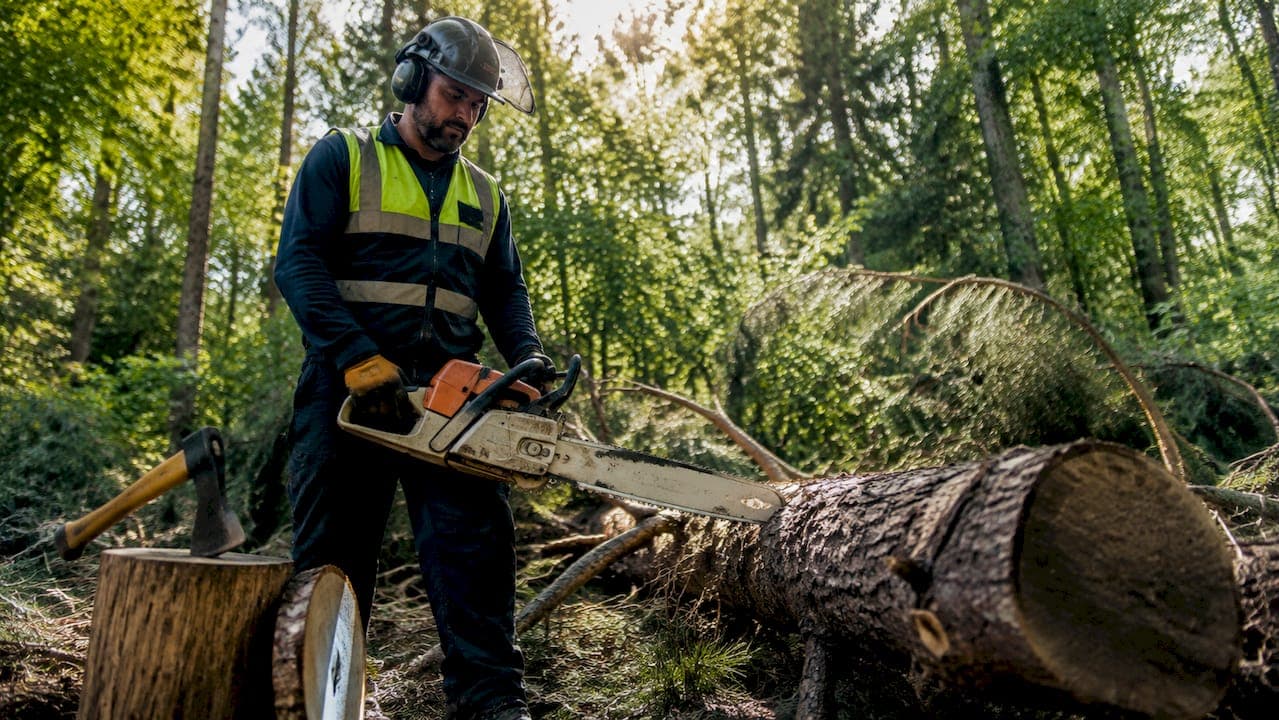
Removing a fallen tree yourself is safe and practical when you follow proven safety protocols, use the right tools, and cut methodically. The industry term for this process is hazard tree remediation, though most homeowners simply call it fallen tree removal. To remove fallen tree diy safely, you need personal protective equipment, a clear site plan, and a working knowledge of wood tension before you ever start a chainsaw. Professional tree removal costs between $385 and $1,070 in 2026, which makes DIY removal an attractive option for many homeowners. The difference between a clean job and a dangerous one comes down to preparation.
What tools and PPE do you need to remove a fallen tree safely?
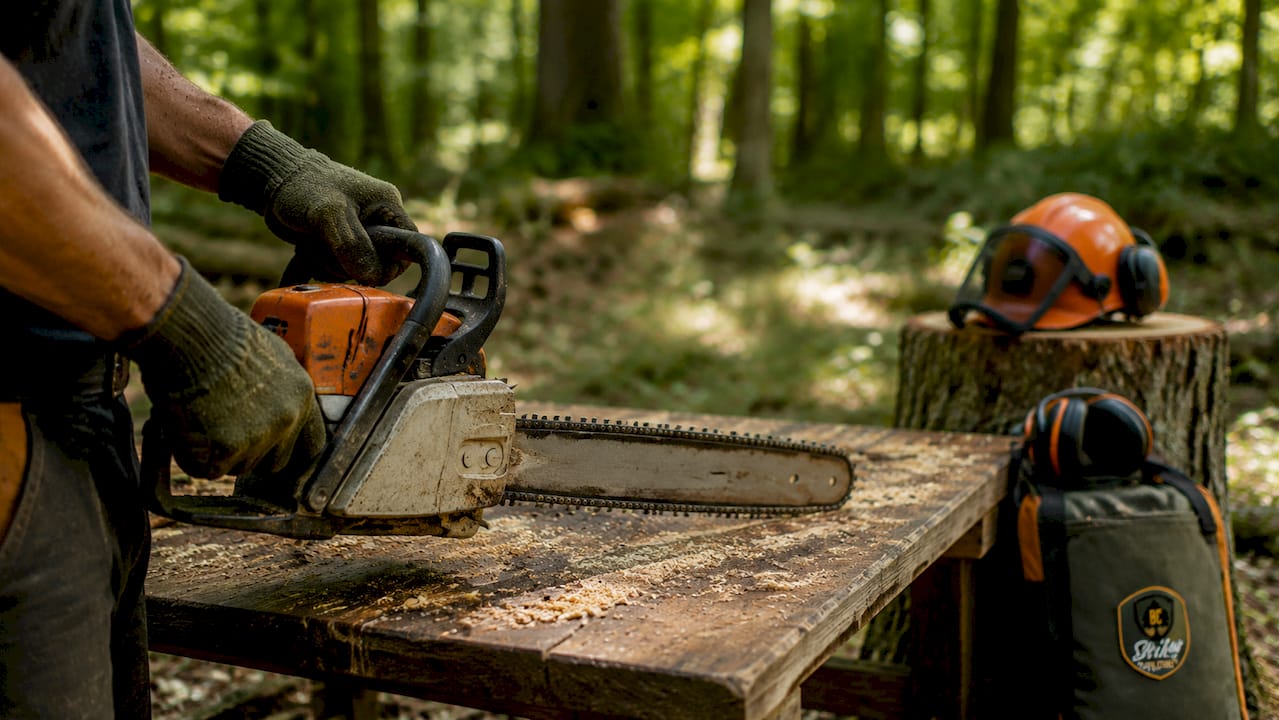
The right equipment is the foundation of any safe diy fallen tree cleanup. Without it, even a small tree becomes a serious hazard.
Cutting tools you need:
- Chainsaw: A gas or battery chainsaw with a 16–20 inch bar handles most residential trees. Look for a model with a chain brake and anti-vibration handle.
- Hand saw: Useful for branches under 3 inches in diameter where a chainsaw is too large to control.
- Felling wedges: Plastic or aluminum wedges prevent saw binding and help direct cuts on heavy trunk sections.
- Felling lever (cant hook): Lets you reposition logs without putting your hands near the cut zone.
- Axe: Useful for splitting smaller sections after cutting.
Personal protective equipment (PPE) is non-negotiable:
- Hard hat with face shield
- Ear protection (chainsaw noise exceeds safe hearing thresholds within minutes)
- Cut-resistant gloves
- Chainsaw chaps: made from ballistic fibers that jam the drive sprocket instantly, stopping the chain before it reaches your leg
- Steel-toe boots with cut-resistant uppers
- High-visibility vest if working near a road or driveway
Chainsaw kickback is a leading cause of chainsaw injury. Chaps are the single most effective barrier between a kickback event and a severe leg wound.
Pro Tip: Inspect every piece of equipment before you begin. Check chain tension and sharpness, test the chain brake, and confirm your chaps have no cuts or worn patches. A dull chain forces you to push harder, which increases kickback risk.
How do you prepare the site and plan your removal?
Pre-cut safety planning accounts for 90% of a safe removal. Skipping the site walk is the most common cause of preventable accidents.
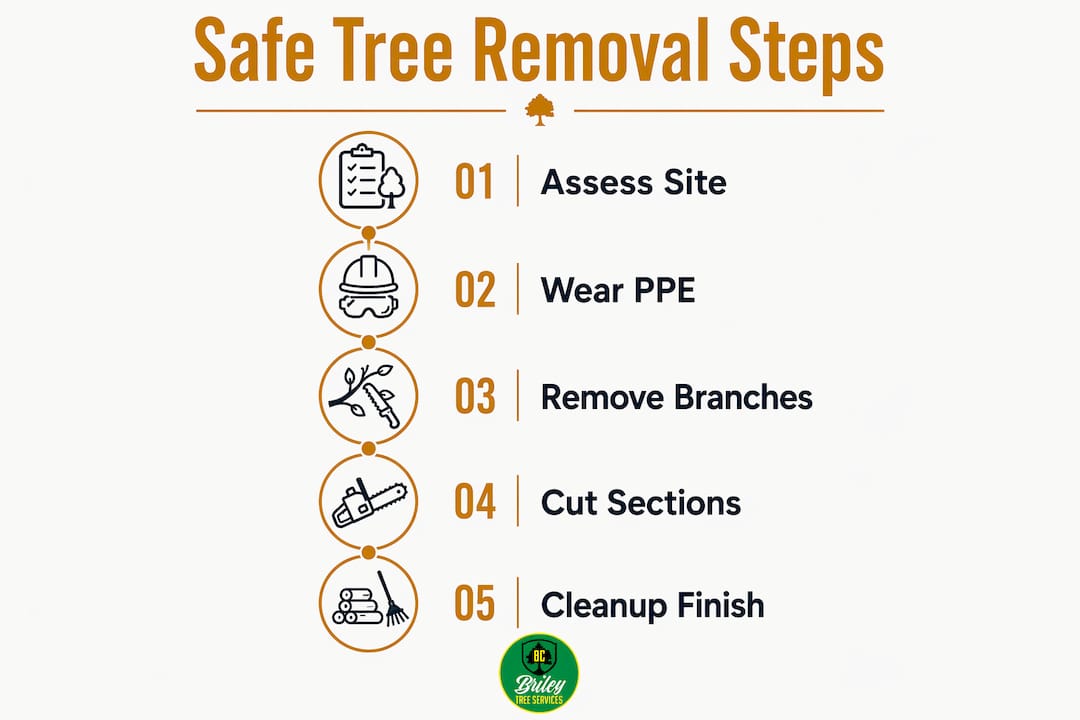
Follow these steps before touching a chainsaw:
- Walk the full perimeter of the tree. Identify which direction the trunk and major limbs are leaning. Note any branches under tension that could spring back when cut.
- Check for power lines. If any part of the tree touches or runs near a power line, stop the DIY process and call your utility company. Never remove a tree touching live lines yourself.
- Clear the work zone. Remove loose debris, tools, and tripping hazards from the area around the tree. You need a clear path to move quickly if something shifts.
- Set your safety perimeter. Bystanders must stand at least twice the height of the tree away from the work zone. For a 30-foot tree, that means 60 feet of clearance.
- Plan two escape routes. Position them at roughly 45-degree angles away from the expected fall direction. Practice walking each route before you cut.
- Check for structures. Fences, sheds, vehicles, and utility boxes all affect where you can safely direct cut sections.
The ax handle trick gives a rough estimate of where a tree top will land: hold an ax handle at arm's length, close one eye, and walk forward or back until the top and base of the tree align with the top and bottom of the handle. Where you stand is roughly where the top will fall. This is an estimate only. Wind and unexpected pivots can change the outcome, so treat it as one data point, not a guarantee.
Pro Tip: Tell someone where you are working before you start. If you are working alone, keep your phone in a chest pocket, not a back pocket. If the tree shifts and pins you, you need to reach it fast.
Review Brileytreeservice's guide on yard preparation for a full checklist of site hazards to clear before cutting begins.
Step-by-step cutting technique for a downed tree
Systematic cutting prevents the two biggest hazards in diy tree removal: saw binding and violent log movement. Work from the outside in, and always manage tension before making a final cut.
Remove branches first
Start at the outer tips of the crown and work toward the trunk. Cut branches flush with the trunk or main limb. For branches over 4 inches thick, use the three-cut method:
- Make an undercut one-third of the way through the branch, about 12 inches from the trunk.
- Make a top cut 2 inches further out from the undercut, cutting all the way through. The branch drops cleanly without tearing bark.
- Remove the remaining stub with a flush cut at the branch collar.
This prevents bark stripping, which can cause decay in the remaining wood.
Identify tension and compression sides before cutting the trunk
Fallen trees resting on slopes or pinned limbs store high tension energy. Cutting the wrong side first causes the log to pinch your saw or kick violently. Here is how to read the wood:
- Compression side: The side being squeezed. The wood fibers are under pressure. Cut from the compression side first, about one-third of the way through.
- Tension side: The side being stretched. Complete the cut from the tension side. The log will drop away cleanly.
If the tree is resting on the ground along its full length, tension and compression are less extreme. Still, check for any elevated sections that could drop when cut.
Cut the trunk into sections
| Situation | Cut from | Finish cut from | Risk if reversed |
|---|---|---|---|
| Tree resting on one end | Compression (top) first | Tension (bottom) | Saw pinches, log kicks |
| Tree suspended at center | Tension (bottom) first | Compression (top) | Log drops suddenly |
| Tree flat on ground | Either side | Opposite side | Minimal, but watch for roll |
Use wedges to keep the saw from binding during any cut that closes as you work through the wood. Drive a plastic wedge into the kerf (the cut slot) with a mallet as you go.
Never operate a chainsaw above shoulder height. If a section requires overhead cutting, reposition the log first using a felling lever.
Pro Tip: If your chainsaw stops cutting smoothly or you have to force it through the wood, stop immediately. Either the chain is dull or the angle is wrong. Both conditions increase kickback risk sharply. Sharpen the chain or reposition before continuing.
What are the most common mistakes in DIY tree removal?
Most accidents in diy fallen tree cleanup follow a predictable pattern. Recognizing these mistakes before they happen keeps you safe.
- Working near power lines. Never attempt removal if the tree contacts a power line. Call the utility company first. This is a hard stop, not a judgment call.
- Skipping escape routes. Homeowners who rush site prep are the ones who get caught when a log rolls or a limb springs back. Walk both escape routes before every new cut sequence.
- Underestimating stored tension. A tree that looks stable can release energy violently when cut. Always assess compression and tension sides before cutting any trunk section.
- Using a dull chain. A dull chain requires more force, increases fatigue, and raises kickback risk. Sharpen before you start and after every hour of cutting.
- Ignoring fatigue. Fatigue significantly increases accident risk. Take a break every 30–45 minutes. Do not push through tiredness to finish faster.
When to stop and call a professional: If the tree has shifted unexpectedly, if you cannot identify the tension side, if any limb is suspended over a structure, or if the job is taking longer than your energy allows, stop. Calling Brileytreeservice is not a failure. It is the right call.
Knowing when a tree needs professional removal is part of being a responsible homeowner. Not every fallen tree is a safe DIY job.
How do you clean up and dispose of debris after removal?
Safe disposal is the final step in a complete diy tree removal. Leaving debris piled near the house creates tripping hazards and can attract pests.
- Cut logs into firewood lengths (typically 16–18 inches) for easy stacking and transport. Dry wood for at least six months before burning.
- Chip or bundle smaller branches. Many municipalities accept bundled brush at curbside on designated pickup days. Check your local waste schedule.
- Use tarps for leaf debris and small twigs. Drag the tarp to a staging area rather than carrying armloads across the yard repeatedly.
- Address the stump. Three options exist: rent a stump grinder for same-day removal, dig it out manually for stumps under 6 inches in diameter, or apply a stump decay accelerator and let it break down over one to two years.
- Inspect the area for buried roots and ground disturbance. Large fallen trees often lift root balls that leave holes in the yard. Fill these with topsoil to prevent ankle injuries.
For larger debris loads, a yard cleanup service can handle hauling and disposal after you complete the cutting work yourself.
Key Takeaways
Safely removing a fallen tree yourself requires proper PPE, a thorough site assessment, and methodical cutting that accounts for wood tension before any chainsaw work begins.
| Point | Details |
|---|---|
| PPE is mandatory | Chainsaw chaps, hard hat, face shield, and steel-toe boots prevent the most common injuries. |
| Site prep comes first | Clear escape routes, set a safety perimeter of twice the tree height, and check for power lines before cutting. |
| Read tension before cutting | Identify compression and tension sides on every trunk section to prevent saw binding and violent log movement. |
| Fatigue causes accidents | Take breaks every 30–45 minutes and never rush cuts when tired or distracted. |
| Know when to stop | Trees near power lines, structures, or with unpredictable tension require a professional, not more DIY effort. |
What I've learned from watching homeowners underestimate fallen trees
Most people who get hurt removing a fallen tree did not make a reckless decision. They made a reasonable one that turned bad because they skipped one step. I have seen homeowners with good equipment and solid intentions get into trouble because they assessed the tree from 10 feet away instead of walking the full perimeter. That one shortcut is where most near-misses start.
The mental side of this work gets underestimated. Before you start a chainsaw, you need a clear picture of every hazard on the site. That means looking up, looking down, and looking at the ground around the tree. A root ball that shifted when the tree fell can roll when you cut the trunk. A branch that looks stable can be holding 200 pounds of tension. None of that is visible from a distance.
My honest advice: give yourself more time than you think you need. A tree that takes a professional crew two hours will take a careful homeowner four to six. That is not a problem. Rushing is the problem. If the job starts feeling bigger than expected, that feeling is usually correct. Brileytreeservice handles emergency storm cleanup across the Shreveport area precisely because some situations escalate beyond what any homeowner should manage alone. Recognizing that line is a skill, not a weakness.
— Tatum
When Brileytreeservice is the right call
Some fallen trees are straightforward DIY jobs. Others are not, and the difference is not always obvious from the driveway.
Brileytreeservice serves homeowners throughout Shreveport, Bossier City, and Northwest Louisiana with professional tree removal services for situations that go beyond safe DIY limits. The team handles hazardous trees near structures, storm-damaged trees with unpredictable tension, and full site cleanup after removal. Every job includes cleanup, and every estimate is free. If you have assessed your fallen tree and decided the risk is too high to handle yourself, contact Brileytreeservice for a straightforward evaluation and a clear plan.
FAQ
What PPE do I need to remove a fallen tree myself?
At minimum, wear a hard hat with face shield, chainsaw chaps, cut-resistant gloves, ear protection, and steel-toe boots. Chainsaw chaps are the most critical item because they stop the chain instantly on contact.
Is it safe to remove a fallen tree near a power line?
No. Never attempt removal if the tree touches or runs near a power line. Call your utility company to deactivate the line or send a crew before any cutting begins.
How do I prevent my chainsaw from binding in the wood?
Identify the compression and tension sides of the log before cutting, and drive a plastic wedge into the kerf as you cut. Starting from the compression side first prevents the wood from closing on the blade.
When should I call a professional instead of doing it myself?
Call a professional when the tree contacts a power line, when a limb is suspended over a structure, or when the tension in the wood is too complex to read safely. Brileytreeservice offers free estimates for exactly these situations.
How do I dispose of a fallen tree after cutting it up?
Cut the trunk into 16–18 inch firewood lengths, bundle branches for curbside pickup, and use a stump grinder or decay accelerator for the stump. Check your municipality's brush pickup schedule for free disposal options.