
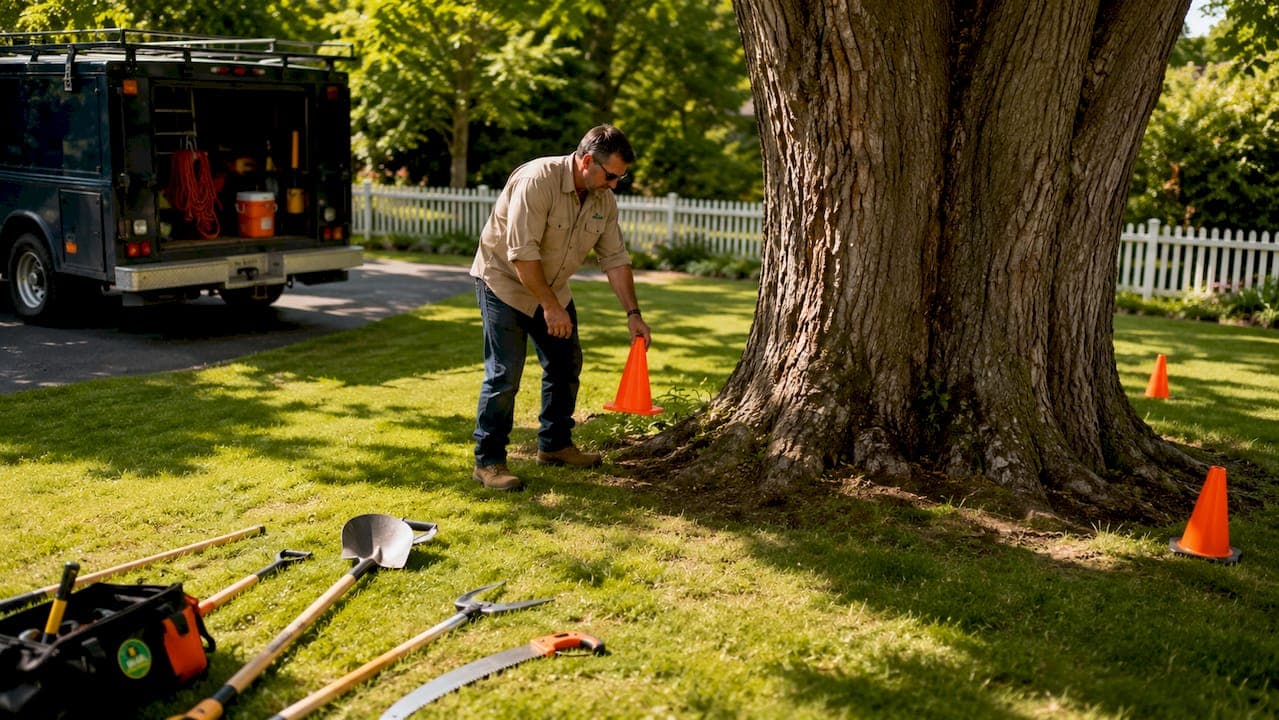
Preparing your yard for tree removal means taking specific safety and logistical steps to clear the work zone and create reliable access for equipment and crews. The process, which arborists call pre-removal site preparation, covers everything from moving patio furniture to calling 811 for utility marking. Done right, it prevents property damage, avoids costly delays, and keeps everyone on site safe. Skip it, and you risk a crew that cannot reach the tree, a utility line struck during stump grinding, or a neighbor dispute that stops the job entirely.
How to prepare your yard for tree removal: safety and clearance first
The single most important step in tree removal preparation is creating a clear work zone around the tree and along every path the crew will travel. This zone is not just the area directly under the tree. It includes the route from the street to the tree, the drop zone where limbs will fall, and the staging area where equipment parks.
Here is what to remove or relocate before the crew arrives:
- Outdoor furniture, grills, and planters: Move anything within at least 50 feet of the tree. Falling limbs travel farther than most homeowners expect.
- Vehicles: Park cars, trucks, and trailers at least 50 feet away. A single falling branch can total a vehicle.
- Garden beds and delicate plants: Cover nearby beds with plywood or burlap to protect them from debris impact.
- Gates and fencing: Unlock all gates the night before. If a fence panel needs to come down temporarily to fit a chipper or lift through, arrange that in advance.
- Pets and children: Keep pets and children indoors for the entire duration of the job. Tree removal is loud, unpredictable, and involves heavy falling material that can cause serious injury.
Pro Tip: Treat the entire equipment access path as part of your controlled work zone. A narrow gate or a car parked in the driveway can delay a crew for an hour or stop the job entirely. Walk the full route from the street to the tree the evening before and remove every obstacle.
Mapping drop zones and equipment routes before cutting begins keeps the crew aware of spatial needs and reduces the risk of accidental property damage. Think of it as drawing a bubble around the tree that expands outward to include every path the crew and their equipment will use.
Why you must call 811 before any tree comes down
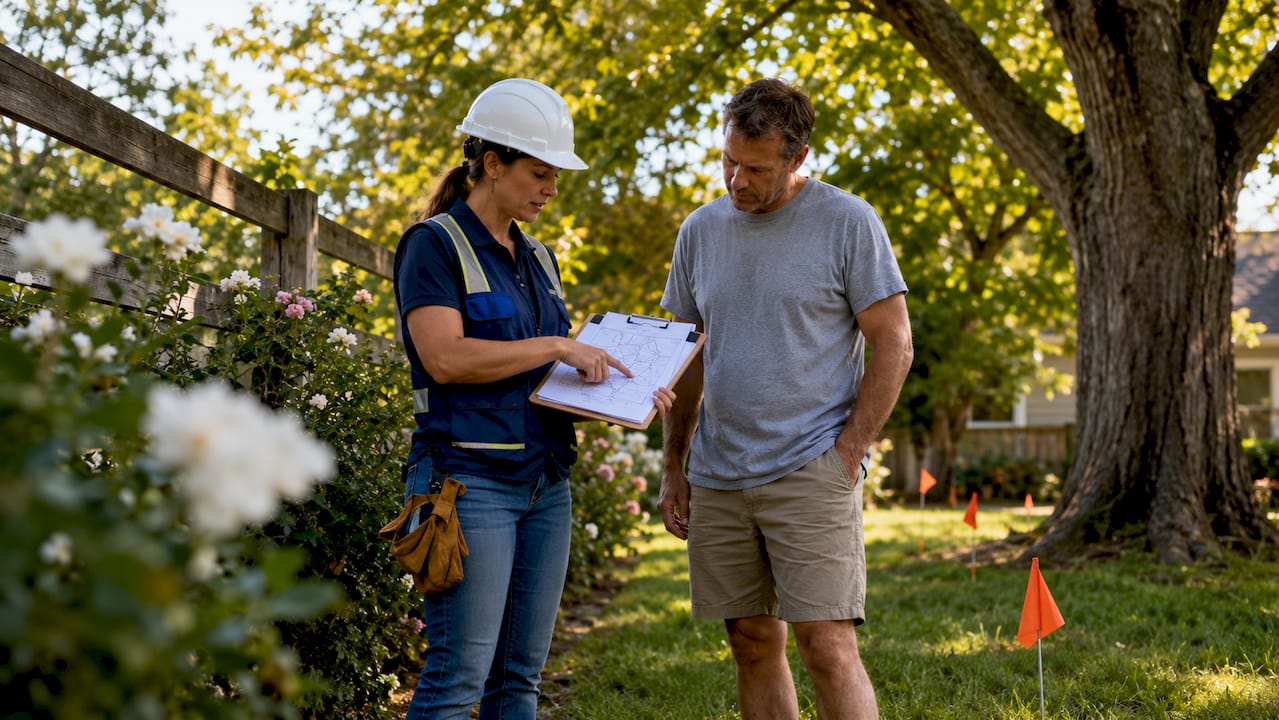
Underground utility strikes are one of the most serious and preventable hazards in tree removal. Call 811 at least 3 business days before the scheduled removal date. This free service dispatches locators who mark the positions of gas, electric, water, and telecommunications lines on your property.
Follow these steps to handle utility marking correctly:
- Call 811 or submit online. Do this at least 3 business days before the job. Same-day requests are not accepted.
- Wait for all lines to be marked. Locators use colored flags and spray paint. Each color represents a different utility type: yellow for gas, red for electric, blue for water, orange for telecommunications.
- Mark your private lines separately. 811 does not identify private utilities like irrigation systems, pet fence wires, or landscape lighting. You are responsible for locating and marking these yourself.
- Extend your awareness beyond the tree base. Utility marking covers equipment travel paths and stump grinding zones, not just the ground directly under the tree. Stump grinders dig several inches into the soil and can easily strike a shallow line.
- Confirm with the crew lead on job day. Walk the marked areas with the crew lead before work starts. Verbal confirmation ensures everyone knows where the lines are.
Pro Tip: Use a combination of spray paint, small flags, and wooden stakes to mark private lines. Flags alone can blow away overnight. Stakes stay put and give the crew a clear, three-dimensional reference.
Hitting an unmarked gas or electric line does not just damage your property. It can shut down the job, trigger emergency utility repairs, and create liability issues. Spending 10 minutes marking your irrigation and pet fence lines is one of the highest-return tasks on your entire tree removal checklist.
Should you tell your neighbors before tree removal?
Yes, and you should do it at least a week before the job. Inform neighbors when a tree is near shared property lines because branches and debris routinely extend beyond your yard. A neighbor who is surprised by a crew, a chipper truck, and falling limbs at 7 a.m. is a neighbor who may call the city or block equipment access.
Here is what to communicate and request:
- Noise and timing: Let neighbors know the approximate start time and expected duration. Tree removal is loud. Giving advance notice prevents complaints.
- Vehicle relocation: Ask neighbors to move cars parked on the street near your property if the crew needs that space for a bucket truck or chipper.
- Pet and child safety: Remind neighbors to keep their pets and children away from the shared fence line during the job.
- Debris on their property: Explain that some sawdust, small chips, or leaf debris may land on their side. Offer to clean it up when the job is done.
Permits and HOA approvals require the same advance planning. Verify all approvals before removal day to prevent job delays or cancellations. Many municipalities require a permit to remove a tree above a certain trunk diameter. HOAs often have their own approval process that runs separately from city permits. Confirm both, and have copies of any approvals ready to show the crew if asked.
What should you discuss with the crew before work starts?
A five-minute conversation at the start of the job prevents hours of confusion. Being available at job start for a quick walk-around with the crew lead is one of the most practical things you can do as a homeowner. Here is what to cover:
- Equipment placement and access routes. Confirm where the truck, chipper, and any lift equipment will park. Make sure the crew lead knows about any soft ground, buried sprinkler heads, or low-hanging wires along the path.
- The drop zone. Agree on where limbs and sections of trunk will fall or be lowered. This matters especially if the tree is close to a structure, fence, or garden.
- Debris handling. Clarify whether wood will be hauled away, left in rounds for you to split, or chipped on site. Misunderstandings about debris are one of the most common sources of post-job disputes.
- Stump grinding. Confirm whether stump grinding is included in the scope of work and how deep the grind will go. A standard grind goes 6–12 inches below grade, which is enough for most lawn applications.
- Cleanup expectations. Ask specifically what the crew will clean up and what they will leave. Most professional crews rake and blow the work area, but confirming this prevents surprises.
Pro Tip: A short pre-work walk-through prevents costly mid-job delays. If the crew lead discovers a problem mid-cut, stopping to resolve it costs time and money. Surface every concern before the first chainsaw starts.
A pre-work conversation clarifies debris handling and stump grinding procedures, which are the two areas most likely to cause confusion after the job. Write down any agreements made during the walk-through so there is no ambiguity later.
Key takeaways
Proper yard preparation is the single most effective way to prevent delays, property damage, and safety hazards during professional tree removal.
| Point | Details |
|---|---|
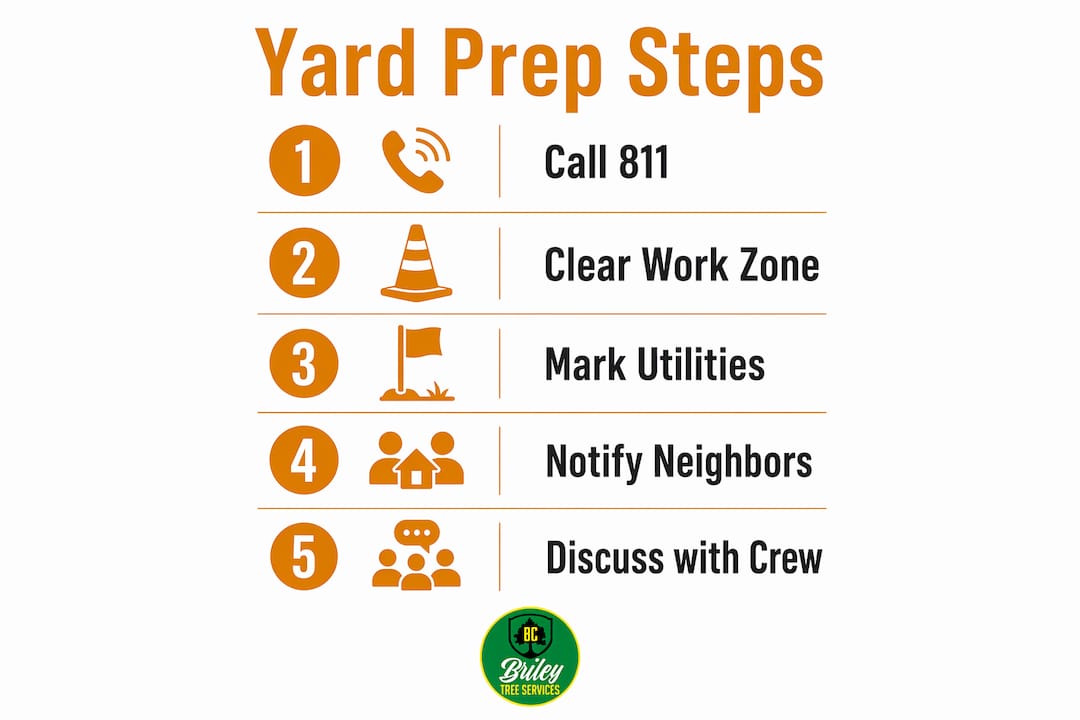
| Clear the full work zone | Remove furniture, vehicles, and obstacles from the tree area and all equipment access paths. |
| Call 811 three days out | Contact 811 at least 3 business days before the job to get public utility lines marked. |
| Mark private utilities yourself | Irrigation lines, pet fences, and landscape lighting are not covered by 811 and must be marked separately. |
| Notify neighbors in advance | Inform neighbors at least one week before removal to prevent disputes and coordinate vehicle and pet safety. |
| Walk through with the crew lead | Be on site at job start to confirm equipment placement, drop zones, debris handling, and cleanup expectations. |
What i have learned from watching homeowners skip the prep
Most homeowners underestimate how much of tree removal happens before the first cut. The jobs that go sideways almost always trace back to one skipped step: an unmarked irrigation line, a gate that was not unlocked, a neighbor who was not told. These are not big failures. They are small oversights that compound fast once a crew is on site and the clock is running.
The detail I see overlooked most often is the equipment path. Homeowners clear the area around the tree but forget that a 60-foot bucket truck needs a clear, firm path from the street. A decorative boulder, a soft patch of lawn, or a low-hanging power line along the driveway can stop a job before it starts. Walk the full path from the curb to the tree and treat every inch of it as part of the work zone.
Utility marking is the other area where I see homeowners take shortcuts. Calling 811 is easy and free. Marking your own irrigation and pet fence lines takes maybe 20 minutes. Skipping either one is a gamble that can result in a flooded yard, a dead pet fence, or a gas leak. The risk is not worth it.
My honest advice: use a tree removal safety checklist and work through it the day before the job. Do not rely on memory. The prep is not complicated, but it is specific, and specific steps are the ones people forget.
— Tatum
Let Brileytreeservice handle the heavy lifting
Knowing how to prepare your yard is half the battle. Having the right crew to execute the removal is the other half.

Brileytreeservice serves homeowners throughout Shreveport, Bossier City, and Northwest Louisiana with professional tree removal, stump grinding, trimming, and emergency storm cleanup. The team shows up on time, walks through the job with you before starting, and cleans up completely when the work is done. If you are not sure whether your tree needs a permit, whether your yard is ready, or what the removal will involve, Brileytreeservice will walk you through every step. Contact Brileytreeservice today for a free estimate on tree removal in Springhill, LA and surrounding areas.
FAQ
How far in advance should i prepare my yard for tree removal?
Start your yard preparation at least 3 business days before the job so utility lines can be marked by 811. Neighbor notifications and permit confirmations should happen at least one week out.
What items need to be moved before tree removal?
Move all outdoor furniture, grills, planters, and vehicles at least 50 feet from the tree. Clear the full equipment access path from the street to the tree, including unlocking gates.
Does 811 mark all underground utilities on my property?
No. 811 marks public utility lines like gas, electric, water, and telecom. Private lines including irrigation systems, pet fence wires, and landscape lighting are your responsibility to locate and mark before the crew arrives.
Do i need a permit to remove a tree in my yard?
Many municipalities require a permit for trees above a certain trunk size, and HOAs often have separate approval requirements. Check local permit requirements and confirm all approvals before removal day to avoid delays.
Should i be home during the tree removal?
Yes, especially at the start of the job. Being present at job start allows you to walk through the plan with the crew lead, confirm equipment placement, and address any last-minute questions before cutting begins.