
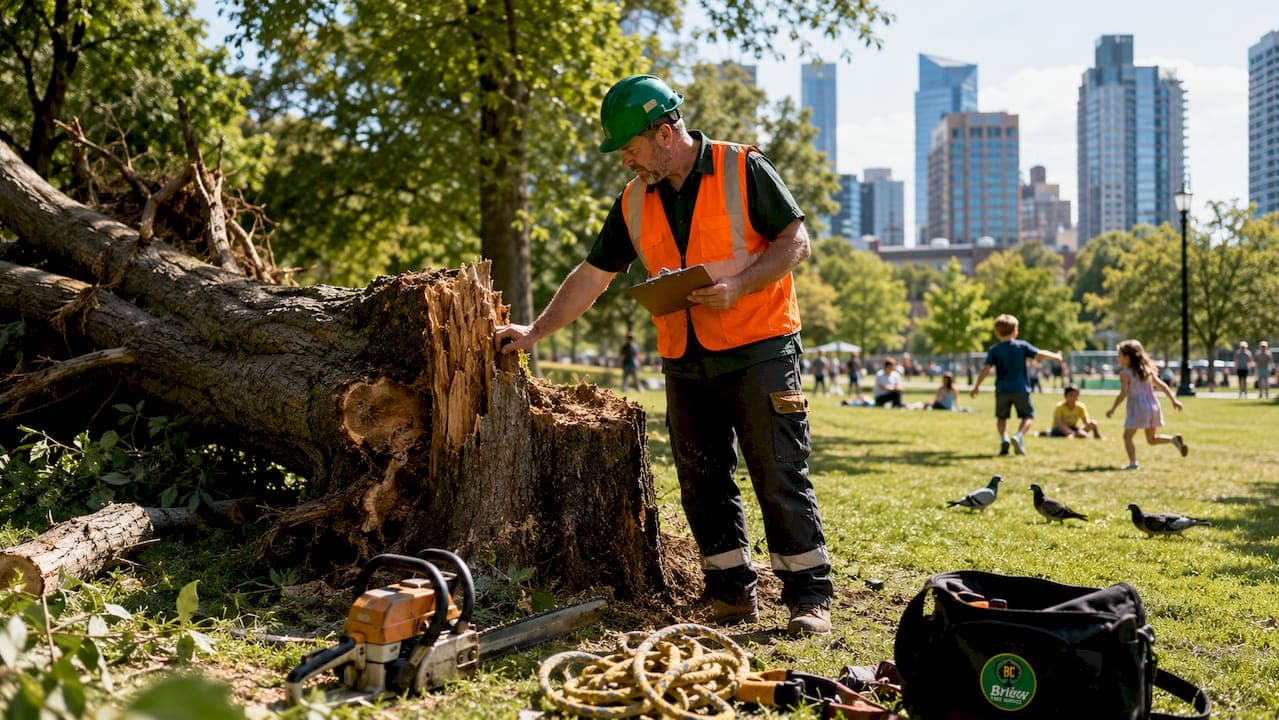
Tree removal is defined as the complete cutting down and extraction of a tree from a property, including its stump, root collar, and all associated debris. This process differs fundamentally from tree trimming or pruning, which only removes branches to improve health or shape. Professional tree removal follows a structured sequence: site assessment, permit acquisition, preparation, felling or sectional dismantling, and stump grinding. Safety regulations from ANSI Z133 and OSHA 29 CFR 1910.67 govern every stage of professional work. Understanding what tree removal actually involves helps homeowners and property managers avoid costly mistakes, legal violations, and serious injuries.
What is tree removal vs. tree trimming?
Tree removal is the complete elimination of a tree from a site, while trimming selectively removes branches to maintain health, shape, or clearance. These are not interchangeable services. They differ in purpose, complexity, cost, and frequency.
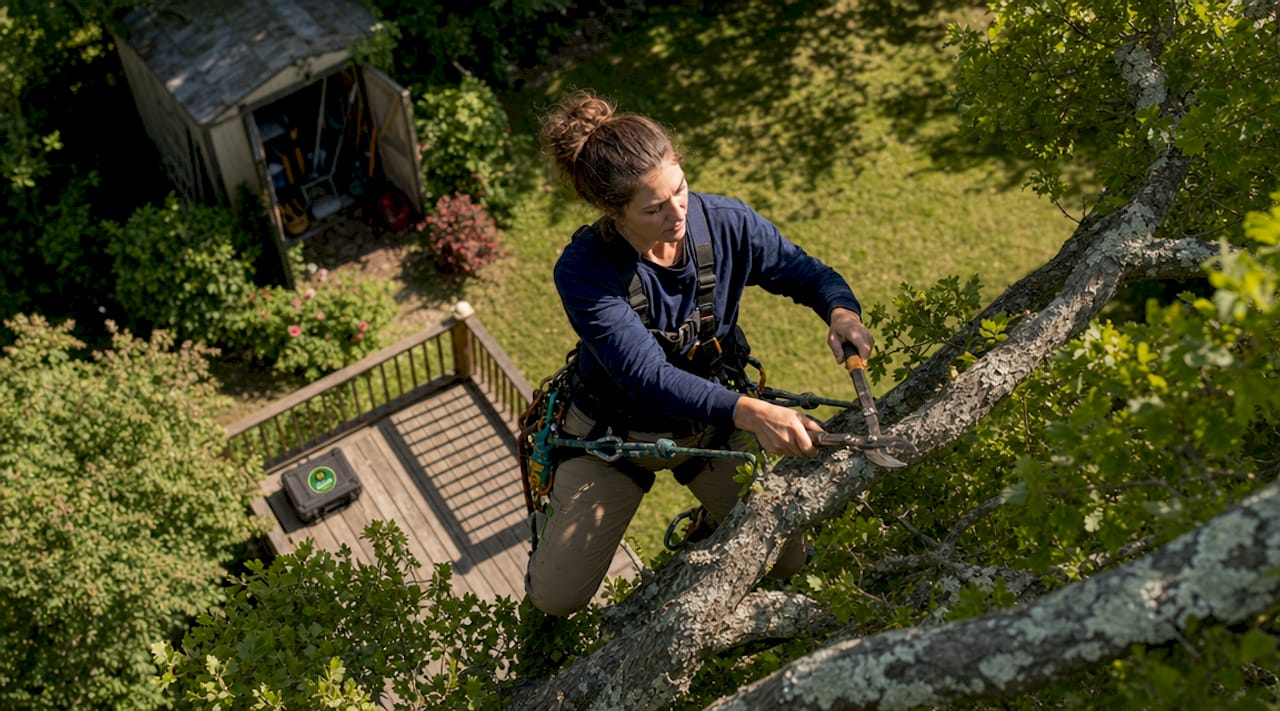
Trimming promotes a living tree's long-term health and appearance. Removal addresses trees that are dead, diseased, structurally compromised, or positioned where they pose a risk to structures or people. You would trim a tree annually to manage growth. You remove a tree once, when no other option is viable.
The cost difference is significant. Trimming a mature tree typically runs $200 to $800 depending on size and access. Full removal, including stump grinding and debris hauling, can reach $1,500 to $3,000 or more for large specimens. Understanding trimming versus removal before calling a contractor prevents you from paying for the wrong service.
| Feature | Tree Trimming | Tree Removal |
|---|---|---|
| Purpose | Maintain health and shape | Eliminate hazardous or dead tree |
| Process | Branch cutting only | Full felling, stump grinding, debris removal |
| Frequency | Annually or seasonally | One-time service |
| Average cost | $200 to $800 | $500 to $3,000+ |
| Permit required | Rarely | Often, depending on species and size |
What methods do professionals use for tree removal?
Most residential tree removals require technical sectional dismantling rather than whole-tree felling, because space constraints near homes, fences, and utility lines make straight felling too risky. Professionals select their method based on tree size, location, lean, and proximity to structures.
The two primary approaches are:
- Straight felling: Used for smaller trees in open areas with a clear drop zone. The crew cuts a notch on the fall side, makes a back cut, and guides the tree down using wedges or a pull rope.
- Sectional dismantling: Used for large or confined-space trees. A climber ascends the tree and removes it in sections from the top down, lowering each piece with rigging ropes and mechanical advantage systems to protect the ground below.
For very large trees near structures, crews use cranes and complex rigging systems to control dynamic forces safely. Dynamic forces during rigging are higher than the static weight of a piece, which means a 200-pound section can generate far greater load on a rope during lowering. Qualified operators calculate these forces before any cut is made.
Stump grinding follows the felling phase. A mechanical grinder removes the stump below ground level, typically 6 to 12 inches deep, eliminating tripping hazards and preventing regrowth. Debris, including wood chips, branches, and logs, is either hauled away or chipped on site depending on the service agreement.
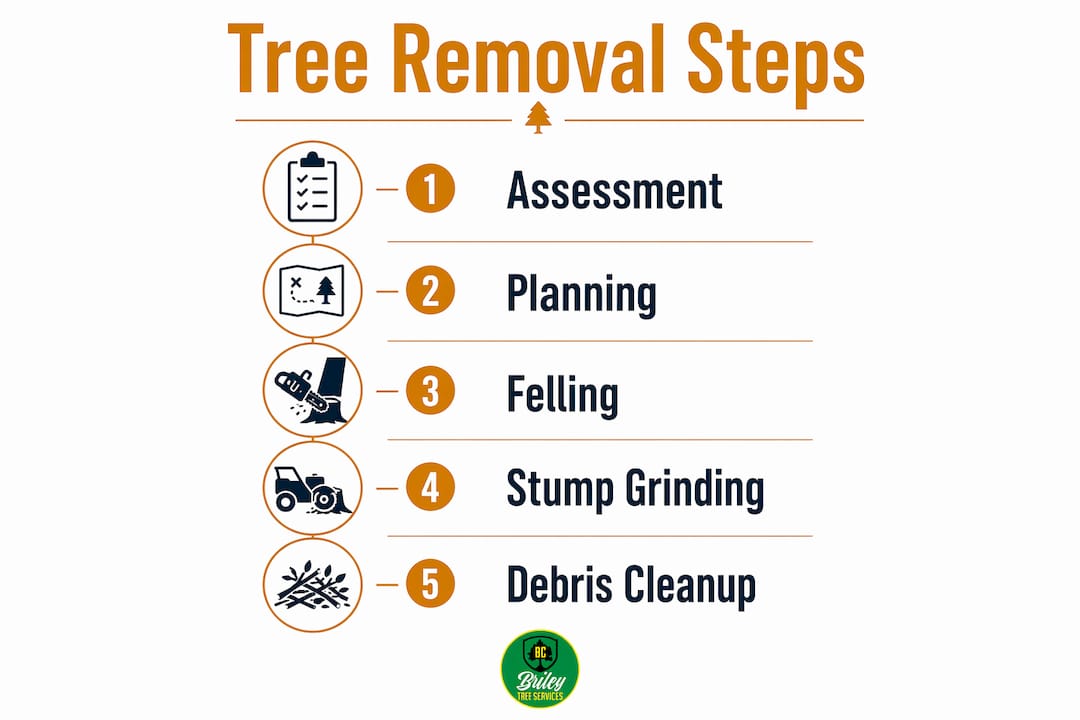
Pro Tip: Ask your contractor whether debris removal is included in the quoted price. Many companies charge separately for hauling, and the cost adds up quickly on large jobs.
What are the safety risks and standards homeowners should know?
Tree removal is one of the most hazardous occupations in the United States. Over 50 workers die annually in the tree care industry due to improper methods, and that figure represents only professional crews. Homeowner DIY attempts carry even higher risk per job.
The primary hazards include:
- Falls: Climbing without proper harness systems or working from ladders near a falling tree.
- Struck-by incidents: Being hit by falling branches, logs, or a tree that falls in an unintended direction.
- Power line contact: Trees near energized lines require utility coordination or specialized insulated equipment.
- Equipment failure: Chainsaws, chippers, and rigging hardware all carry injury risk when misused.
ANSI Z133 and OSHA 29 CFR 1910.67 set the professional standards for fall protection, rigging practices, and working near power lines. These regulations require trained operators, specific PPE including hard hats, chainsaw chaps, and eye protection, and documented safety plans before work begins.
Safe tree removal requires establishing a drop zone equal to twice the tree's height and clearing two escape routes at 45-degree angles from the planned fall direction. These escape routes allow workers to move quickly if the tree shifts unexpectedly. Trees near power lines should never be approached by unlicensed individuals under any circumstances.
Pro Tip: Before hiring any crew, ask for proof of liability insurance and workers' compensation coverage. If a worker is injured on your property without coverage, you may be held financially responsible.
What is a tree removal permit and when do you need one?
A tree removal permit is a legal authorization issued by a local municipality that allows a property owner to remove a protected tree. Permit requirements exist to preserve urban tree canopy, protect heritage species, and prevent indiscriminate clearing that affects stormwater management and neighborhood character.
Permit requirements depend on three primary factors: tree species, trunk diameter at breast height (DBH, measured at 4.5 feet above ground), and local ordinances. Common thresholds that trigger permit requirements include hardwood trees with a DBH of 6 inches or greater, and pine trees with a DBH of 12 inches or greater. Applications typically take 3.5 weeks or more to process, so planning ahead is critical.
| Permit Factor | Typical Threshold | Notes |
|---|---|---|
| Tree size (DBH) | 6"+ hardwood, 12"+ pine | Measured at 4.5 feet above ground |
| Protected species | Oak, magnolia, heritage trees | Species lists vary by municipality |
| Permit fee | $50 to several hundred dollars | Varies by city and tree size |
| Processing time | 3.5 weeks or more | Submit before scheduling removal |
| Non-compliance fine | $5,000 to $20,000 | Some cities require arborist reports |
Fines for unpermitted removal range from $5,000 to $20,000 depending on the jurisdiction and the size of the tree removed. Some municipalities require the property owner to plant replacement trees as an additional penalty. Commercial property managers face stricter scrutiny and often need a certified arborist report as part of the permit application.
The permit process for commercial properties, sometimes called a tree removal permit commercial application, typically involves a site plan, species inventory, and documentation of why removal is necessary. Residential permits are simpler but still require accurate DBH measurements and sometimes photographic evidence of tree condition.
How do you decide when to remove a tree and who to hire?
A tree warrants removal when it presents a safety risk that cannot be resolved through trimming or treatment. Professional assessment looks for specific red flags that indicate a tree is beyond saving or poses imminent danger.
Key signs that removal is necessary:
- Significant lean: A tree leaning more than 15 degrees from vertical, especially if the lean developed recently, signals root failure or structural compromise.
- Fungal growth: Mushrooms at the base or on the trunk indicate internal decay that weakens structural integrity.
- Dead wood: Large dead branches or a dead crown that cannot be corrected through pruning.
- Root damage: Roots severed by construction, soil compaction, or underground intrusion from nearby infrastructure.
- Storm damage: Split trunks, hanging limbs, or uprooting following severe weather events.
When selecting a contractor, use this checklist:
- Verify ISA (International Society of Arboriculture) certification for the lead arborist.
- Confirm liability insurance and workers' compensation are current.
- Request a written scope of work that specifies debris removal, stump grinding, and cleanup.
- Get at least two written estimates before committing.
- Ask whether the company will handle permit applications on your behalf.
Stump grinding and debris removal are standard add-on services. Stump grinding eliminates the root collar below grade, while debris hauling removes all wood waste from the site. Review the tree service scope before signing any contract to confirm exactly what is and is not included.
Key takeaways
Tree removal is a regulated, multi-step process that requires professional expertise, proper permits, and strict safety planning to protect both people and property.
| Point | Details |
|---|---|
| Removal vs. trimming | Removal eliminates the entire tree; trimming only manages branches for health and shape. |
| Safety standards | ANSI Z133 and OSHA 29 CFR 1910.67 govern professional tree removal to reduce fatalities. |
| Permit requirements | Trees above DBH thresholds require permits; violations carry fines up to $20,000. |
| Professional methods | Sectional dismantling and crane rigging protect structures when straight felling is not possible. |
| Hiring criteria | Verify ISA certification, insurance, and a written scope of work before hiring any crew. |
What experience actually teaches about tree removal
I have seen homeowners make the same mistake repeatedly: they treat tree removal as a straightforward cutting job and underestimate everything that comes before the first chainsaw cut. Risk assessment is not a formality. It is the entire foundation of a safe removal.
Trees often have internal decay or structural imbalance that is completely invisible from the outside. A tree that looks solid can have a hollow core that causes it to split unpredictably under load. Hidden structural defects change the removal strategy entirely, and a crew that skips assessment is gambling with your property and their lives.
The permit process frustrates people because it feels like bureaucracy slowing down an urgent job. But permits exist for a reason. Municipalities track tree canopy loss, and the fines for non-compliance are real. I have seen property owners face five-figure penalties for removing a protected oak without documentation. The three-week wait for a permit is far less painful than a $15,000 fine.
My honest recommendation: hire a crew that slows down to assess before they act. Speed is not a virtue in tree removal. Planning is.
— Tatum
Get professional tree removal from Briley Tree Service
Briley Tree Service provides professional tree removal, stump grinding, and emergency storm cleanup for homeowners and property managers throughout Shreveport, Bossier City, and Northwest Louisiana. Every job follows ANSI Z133 safety standards, and the team handles permit coordination so you do not have to navigate municipal requirements alone. Whether you have a hazardous tree leaning toward your home or storm damage that needs immediate attention, Briley Tree Service shows up on time, works safely, and cleans up completely. Contact Briley Tree Service today for a free removal estimate and see why property owners across the region trust this team for every tree care need.
FAQ
What is tree removal in simple terms?
Tree removal is the complete cutting down and extraction of a tree from a property, including the stump. It is a professional service governed by safety regulations and often requires a municipal permit.
How much does tree removal typically cost?
Tree removal costs range from $500 for small trees to $3,000 or more for large specimens, depending on size, location, and whether stump grinding and debris hauling are included.
Do I always need a permit to remove a tree?
Not always, but most municipalities require a permit for trees above a certain size, typically hardwoods with a DBH of 6 inches or greater. Check with your local planning department before scheduling any removal.
Why is DIY tree removal dangerous?
Tree removal causes over 50 deaths annually among trained professionals. Homeowners without proper equipment, training, and safety planning face even greater risk from falls, struck-by incidents, and power line contact.
What happens to the debris after tree removal?
Tree removal debris, including branches, logs, and wood chips, is either chipped on site or hauled away by the crew. Stump grinding produces wood chip mulch that can be left in place or removed. Confirm debris disposal terms in your written contract before work begins.