
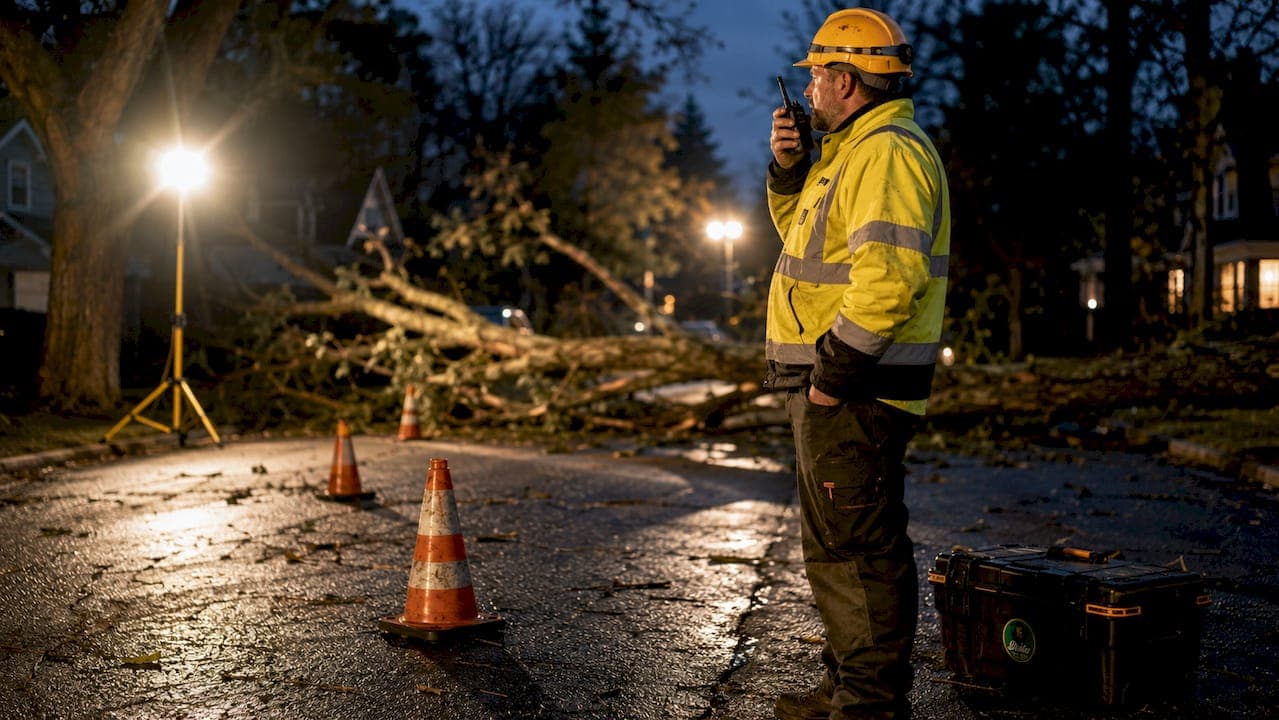
Emergency tree service is defined as any professional response to a tree situation posing immediate risk to people, property, or utilities outside normal business hours. Knowing how to handle emergency tree service nights and weekends can mean the difference between a contained hazard and a catastrophic loss. Reputable providers like Brileytreeservice offer 24/7 tree removal and after hours tree service precisely because storms, falling limbs, and uprooted trunks do not follow a Monday through Friday schedule. This guide walks you through recognizing a real emergency, what to expect from a live crew at 2 a.m., how costs work, and what to do before help arrives.
How to recognize a true tree emergency at night or on the weekend
A tree emergency is not a judgment call you should second-guess. An emergency is any tree situation posing immediate risk to people, property, or utilities, including trees on homes, blocking access routes, or contacting power lines. That definition matters because it sets the threshold for calling now rather than waiting until Monday morning.
Signs that require an immediate call
These situations qualify as genuine emergencies requiring urgent tree removal or nighttime tree assistance:
- A tree or large limb has fallen onto a structure, vehicle, or fence
- A tree is leaning sharply after a storm and threatening a building or road
- A limb is hanging partially broken and suspended above a walkway, driveway, or power line
- A tree has fallen across a driveway or exit, blocking emergency vehicle access
- Any part of a tree is in contact with or near a live power line
Each of these conditions can worsen within hours. Timely treatment within 24 hours significantly reduces secondary damage risks and insurance claim complications. Waiting until morning is not a neutral choice. It is a decision to accept additional risk.
When you are not sure
Call anyway. Professional tree companies encourage calls even when you are unsure about severity. A brief phone assessment from a certified arborist can confirm whether the situation needs an immediate crew or can safely wait until daylight. That five-minute call costs nothing and could prevent a dangerous overnight escalation.

Pro Tip: Take a photo or short video of the tree before calling. It helps the dispatcher assess priority and gives you documentation for your insurance claim.
What to expect from 24/7 emergency tree services
Reliable after hours tree service operates with specific standards that separate professional providers from those who simply list a phone number on a website.
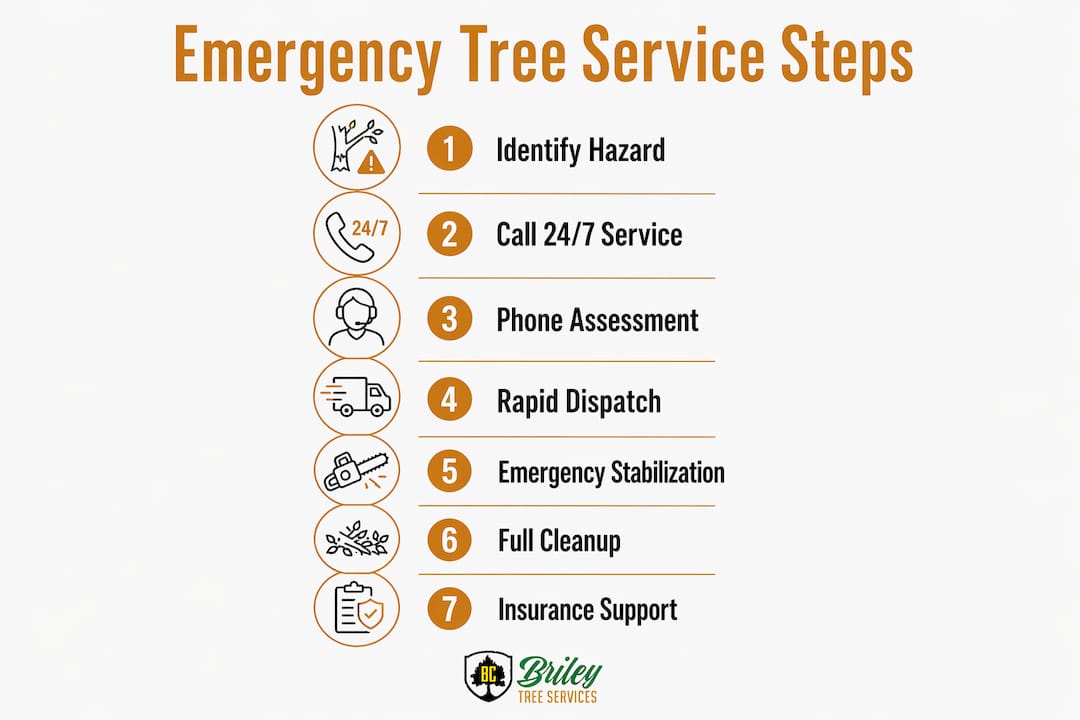
Live dispatch, not voicemail
Legitimate 24/7 emergency tree services maintain a live person on call every day of the year, including nights, weekends, and holidays. No answering machines. No chatbots. A real staff member answers, gathers details about your situation, and dispatches a crew immediately. If you reach a recording when calling an "emergency" line, hang up and call another provider.
Response times and what affects them
Reputable providers aim for on-site response within 60–120 minutes for high-priority emergencies, with some urban providers achieving 35-minute arrivals. Response time depends on your distance from the crew's base, current weather conditions, and how many other calls are active. During widespread storm events, providers use a triage system. A tree through a roof gets dispatched before a tree blocking a side gate. Providers triage calls by life safety and structural risk, so describing your situation accurately and completely helps you get the right priority level.
Emergency stabilization vs. full cleanup
These are two different scopes of work, and understanding the difference saves confusion and money.
| Service Type | What It Covers | When It Happens |
|---|---|---|
| Emergency stabilization | Securing the hazard, removing immediate danger | Night or weekend, during the emergency call |
| Full cleanup and removal | Complete debris removal, stump grinding, site restoration | Scheduled during normal business hours |
| Insurance documentation | Photos, written records of damage | During the emergency response visit |
Emergency crews focus on securing buildings and safety rapidly, deferring detailed cleanup to daytime crews when possible. This is standard practice, not a shortcut. It keeps your costs lower and gets the hazard neutralized faster.
How does emergency tree service pricing work?
After hours tree service costs more than routine tree care. That is a fact, and any reputable company will tell you upfront.
Mobilization fees and after-hours premiums
Emergency after-hours service includes mobilization fees to cover crew call-out costs. These fees are separate from the labor and equipment charges for the actual work. Expect a premium over standard daytime rates. The exact amount varies by provider, distance, and time of call. What matters most is that a trustworthy company discloses these fees before any work begins, not after.
How to reduce your total cost
- Request stabilization only for the overnight visit. Secure the hazard and schedule full removal for the next business day at standard rates.
- Ask for a written estimate before crews start work. Reputable providers give you a number before touching anything.
- Use the staged approach. A staged emergency response stabilizes the hazard immediately and defers full cleanup to normal hours, balancing safety and cost.
- Contact your homeowner's insurance before or during the call. Many policies cover emergency tree removal when a tree damages a structure.
Insurance documentation support
Emergency tree service providers often assist with insurance documentation onsite during the response, including photographic records. Ask your dispatcher whether the crew will document damage for your claim. Getting that documentation during the emergency visit is far more reliable than trying to reconstruct it later.
Pro Tip: Before the crew leaves, ask for a written summary of work performed and photos of the damage. Your insurance adjuster will need both.
Steps to stay safe before the crew arrives
Your job before the emergency tree crew arrives is simple: do not make the situation worse.
Immediate actions to take
- Move everyone, including pets, away from the affected area and stay clear of the tree
- Do not attempt to move, cut, or prop up a fallen or leaning tree yourself
- If a tree is near or touching a power line, call your utility company immediately and stay at least 30 feet away
- Turn on exterior lights if it is dark so you can monitor the situation from a safe distance
- Unlock any gates or access points the crew will need to reach the tree
"When you call, tell the dispatcher exactly what you see: the size of the tree, what it has fallen on or is threatening, whether power lines are involved, and whether anyone is in immediate danger. That information determines how fast a crew gets to you."
What to document before help arrives
Take photos and video of the tree from a safe distance as soon as you notice the hazard. Capture the full tree, the point of contact with any structure, and any visible damage to your property. This documentation supports your insurance claim and helps the crew understand the scope of work before they arrive. Do not wait until morning to document. Conditions change overnight.
Common mistakes to avoid
Homeowners frequently make the situation worse by trying to handle it themselves. Do not pull a fallen limb off a roof. Do not use a chainsaw on a tree that is under tension. A tree pinned against a structure stores enormous mechanical force. Cutting it incorrectly can cause it to spring or shift violently. Leave all cutting and moving to the certified crew. For more guidance on hiring after a storm, review the safety steps before any crew arrives at your property.
Property managers should also notify tenants to stay indoors and away from windows facing the affected tree. Document tenant notifications in writing for liability purposes.
Key Takeaways
Handling after hours tree emergencies requires fast recognition, a live-dispatch provider, and clear communication about damage severity to get the right crew to your property quickly.
| Point | Details |
|---|---|
| Define the emergency clearly | Any tree touching a structure, blocking access, or near power lines qualifies as an immediate emergency. |
| Call a live-dispatch provider | Reputable 24/7 services answer every call with a real person and dispatch crews within 60–120 minutes. |
| Expect mobilization fees | After-hours premiums are standard; ask for upfront cost disclosure before any work begins. |
| Use the staged approach | Stabilize the hazard overnight and schedule full cleanup during business hours to reduce total cost. |
| Document everything immediately | Photos and written records taken during the emergency response support faster insurance claims. |
What I have learned about after-hours tree emergencies
After years of watching how property owners respond to tree emergencies at night, the pattern is consistent. The people who handle it best are the ones who call first and ask questions second. The ones who wait until morning because they are not sure it is "bad enough" almost always regret it.
The biggest misconception I see is that calling an emergency tree service means committing to a massive bill for a full removal at 3 a.m. That is not how it works. The staged approach exists specifically to protect you from that scenario. A good crew stabilizes the hazard and gets out. The full cleanup happens the next day at a fraction of the after-hours rate.
The second misconception is that all 24/7 providers are the same. They are not. The difference between a company with a live dispatcher and one with a voicemail box shows up exactly when you need it most. Ask directly before you have an emergency: "Do you answer calls at 2 a.m. on a Sunday?" The answer tells you everything.
My honest advice is to identify your emergency tree service provider before you need one. Save the number. Confirm they serve your area and operate around the clock. When a storm rolls through Shreveport at midnight, you do not want to be searching Google from a dark living room with a tree on your roof.
— Tatum
Brileytreeservice is ready when you need emergency tree help

Brileytreeservice provides professional emergency tree care for homeowners and property managers throughout Shreveport, Bossier City, and Northwest Louisiana. When a tree falls on your home at midnight or a storm leaves a hanging limb over your driveway on a Saturday, Brileytreeservice responds with trained crews, proper equipment, and the expertise to secure your property fast. From emergency storm cleanup to full tree removal and stump grinding, every job is handled safely and completely. Contact Brileytreeservice today for a free estimate and immediate assistance with any urgent tree situation, any time it happens.
FAQ
What counts as a tree emergency at night or on the weekend?
Any tree situation posing immediate risk to people, property, or utilities qualifies as an emergency. This includes trees on structures, limbs over power lines, and trees blocking access routes.
How fast does a 24/7 emergency tree service respond?
Most reputable providers arrive within 60–120 minutes for high-priority calls. Urban providers sometimes achieve 35-minute response times depending on crew location and weather.
Will emergency tree service cost more than regular tree removal?
Yes. After-hours calls include mobilization fees and premiums above standard daytime rates. Ask for upfront cost disclosure before work begins and consider the staged approach to reduce overnight expenses.
Should I call even if I am not sure it is a real emergency?
Yes. Tree professionals recommend calling even when you are uncertain. A brief phone assessment determines whether you need an immediate crew or can safely wait until morning.
Can emergency tree crews help with my insurance claim?
Many providers document damage onsite during the emergency response, including photos and written records. Ask your dispatcher whether insurance documentation support is included in the service.