
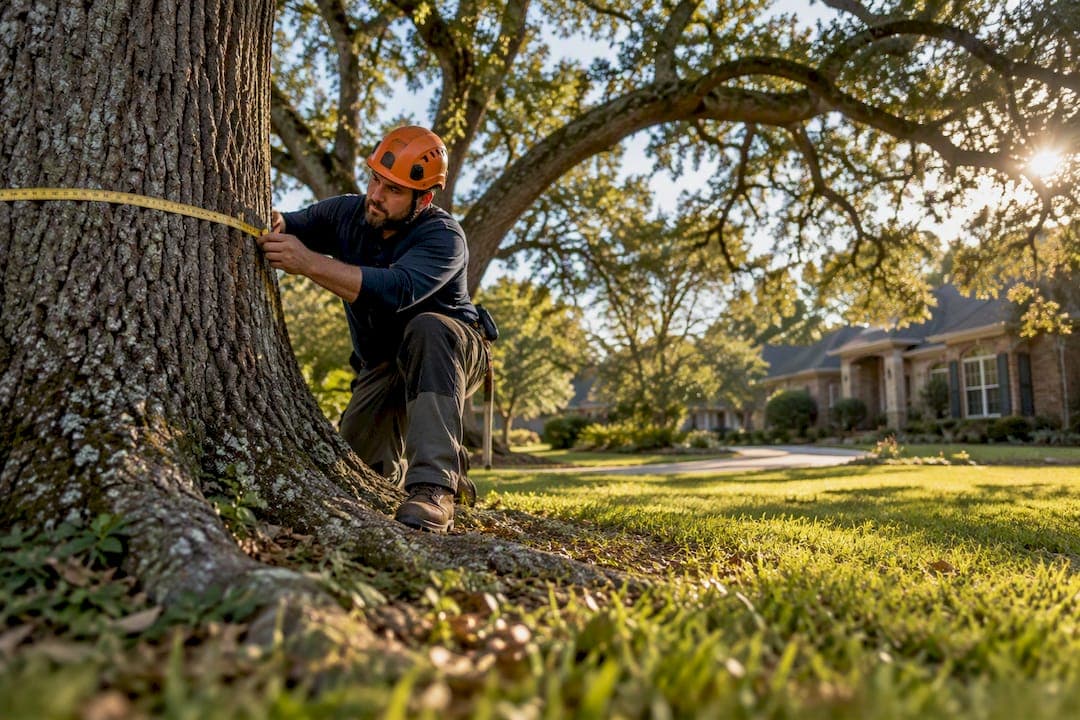
A fair tree service estimate is free, written, and itemized. It names insurance coverage, states who handles permits, and matches the scope you actually asked for. If any of those pieces are missing, ask the contractor to fill in the gaps or move on to another bid. Your next step is simple: collect several written, scope-matched estimates before you commit to anyone.
TL;DR:
- A detailed tree service estimate should include specific tree measurements, removal methods, equipment, debris disposal, permits, and insurance information.
- Price factors such as tree size, species, access difficulty, tree condition, and required equipment significantly influence the total bid.
- Comparing estimates requires matching scope details, verifying insurance, clarifying vague language, and seeking bids with itemized costs and clear scope definitions.
- Hidden fees often appear in vague lines like "cleanup" or "removal," so demand itemized costs and a defined scope before accepting any bid.
- Homeowners should always request three written, scope-matched bids, check insurance validity, and ensure permit and stump removal details are explicitly listed.
Table of Contents
- What Each Line on a Tree Service Estimate Means
- What Drives the Price on Your Estimate
- How to Compare Multiple Tree Service Estimates
- An Annotated Sample Estimate, Line by Line
- How Briley Tree Service Writes Its Estimates
- What Homeowners Get Wrong About Estimates
- Get a Clear, Written Estimate From Briley Tree Service
- Templates and Guidance for Verifying Your Estimate
- Sources
- FAQ
What Each Line on a Tree Service Estimate Means
A real tree service estimate reads like a parts list, not a guess. Every legitimate quote breaks the job into pieces you can check against reality, and knowing what each piece means keeps you from overpaying or missing a hidden gap in coverage.
Here is what a properly itemized estimate should spell out:
- Tree identification: species, diameter at breast height (DBH), and total height. Professionals measure DBH at 4.5 feet above the ground on the uphill side, because that single measurement drives most of the labor and equipment math that follows.
- Removal method and labor: climbing crews, bucket trucks, or sectional dismantling near structures. Labor is usually the single biggest cost driver, often making up a large share of the total bill.
- Equipment charges: cranes, chippers, and stump grinders get billed separately when a job calls for them, not folded into a flat labor rate.
- Debris handling: chipping on-site, hauling everything away, or leaving cut rounds as firewood. Each option changes the price, since hauling adds truck time and dumps fees.
- Stump grinding: almost always a separate line item, priced by stump diameter and grinding depth rather than bundled into removal.
- Permits and municipal fees: your city or parish may require a permit for certain removals, and the estimate should state plainly who pulls it and who pays for it.
- Insurance, timeline, deposit, and validity: license numbers, proof of coverage, a start date, deposit terms, and how long the quoted price holds.
That last point matters more than homeowners realize. A trustworthy tree service estimate template states a deposit amount, a quote expiration (commonly 30 days), and requires written authorization before any extra charge gets added. If your quote skips that language, ask for it in writing.
What Drives the Price on Your Estimate
Size and species set the floor. A small ornamental tree under 30 feet with a modest DBH removes quickly, while a mature oak with a DBH over 24 inches demands more rigging, more labor hours, and often a crane. Two trees that look similar from the curb can carry very different price tags once a crew accounts for wood density and branch structure.
Access changes the math fast. A tree behind a locked gate, on a steep slope, or blocked from a driveway forces crews to work by hand instead of by machine, which adds hours and cost.
Condition adds risk premiums. Dead, hollow, or storm-damaged trees are less predictable to cut, and crews price that unpredictability into the bid.
Specialized equipment carries its own weight. Crane mobilization commonly runs $500 to $800 as a flat fee, and jobs requiring careful rigging near power lines or roofs often carry a 30 to 50 percent premium over a straightforward removal.
Season and local market conditions move prices too. Fuel, insurance, and demand after a storm all shift what crews charge in a given month. Photo-based estimates can give you a useful starting range for simple, open-yard removals, but anything near a structure, fence line, or utility wire needs an on-site look before you trust the number.
How to Compare Multiple Tree Service Estimates
Comparing three quotes side by side only works if you are comparing the same job three times. Here is the checklist that turns a pile of paper into a clear decision.
- Match the scope line by line. Confirm each bid covers the same removal method, the same stump plan (grind, leave, or full removal), the same cleanup level, and the same permit responsibility.
- Verify insurance and licensing. Ask for a certificate of insurance (COI) and a license number, then call the insurer to confirm the policy is active. A credible estimate always names its insurance and license status upfront.
- Pin down vague language. Phrases like "cleanup included" or "make safe" mean nothing until you ask what they cover: Does cleanup mean raking leaves, or hauling every branch off the property?
- Watch for red flags. No written estimate, high pressure to sign same day, no insurance paperwork, or a demand for a large upfront payment are all signs to walk away.
- Look for negotiation room. Letting the crew keep cut wood, scheduling during a slower season, bundling trimming with removal, or accepting partial cleanup can all lower the number without cutting corners on safety.
- Require written change orders. Define upfront what triggers an extra charge, such as discovering rot mid-job, so nothing gets added to your bill without your sign-off.
Pro Tip: The middle bid, not the cheapest one, is usually the safest bet. A fully itemized, insured mid-range estimate tends to reflect a crew that is pricing the job correctly, while a bid that undercuts everyone else often signals missing insurance or a scope that quietly excludes stump work or cleanup.
An Annotated Sample Estimate, Line by Line
Numbers help more than theory here. A typical written estimate for a mid-size backyard oak removal might look like this:
- Tree ID: Water oak, 22-inch DBH, 60 feet tall
- Removal labor (climbing crew, 3 hours): $650
- Equipment (chipper on-site): $150
- Stump grinding (22-inch diameter): $180
- Debris haul-away: $120
- Permit (city right-of-way): $75
- Total: $1,175
- Deposit due: 25% at signing; quote valid 30 days
Read this the way a contractor's estimator would. Confirm the DBH matches what you see on the tree, since DBH drives the labor and equipment estimate more than any other single number. Check whether stump grinding is truly separate, or whether a competing bid buried it inside "removal" to look cheaper on paper. Confirm the permit fee is a pass-through cost, not a markup.
The contractor who hides a fee inside a vague "cleanup" or "removal" line almost always charges more once the job starts. The one who lists every cost separately, even the small ones, is usually the one who finishes at the price you agreed to.
A second bid for the same tree at $850 with no stump grinding, no permit line, and no insurance mention is not actually cheaper. It is an incomplete comparison dressed up as one.
How Briley Tree Service Writes Its Estimates
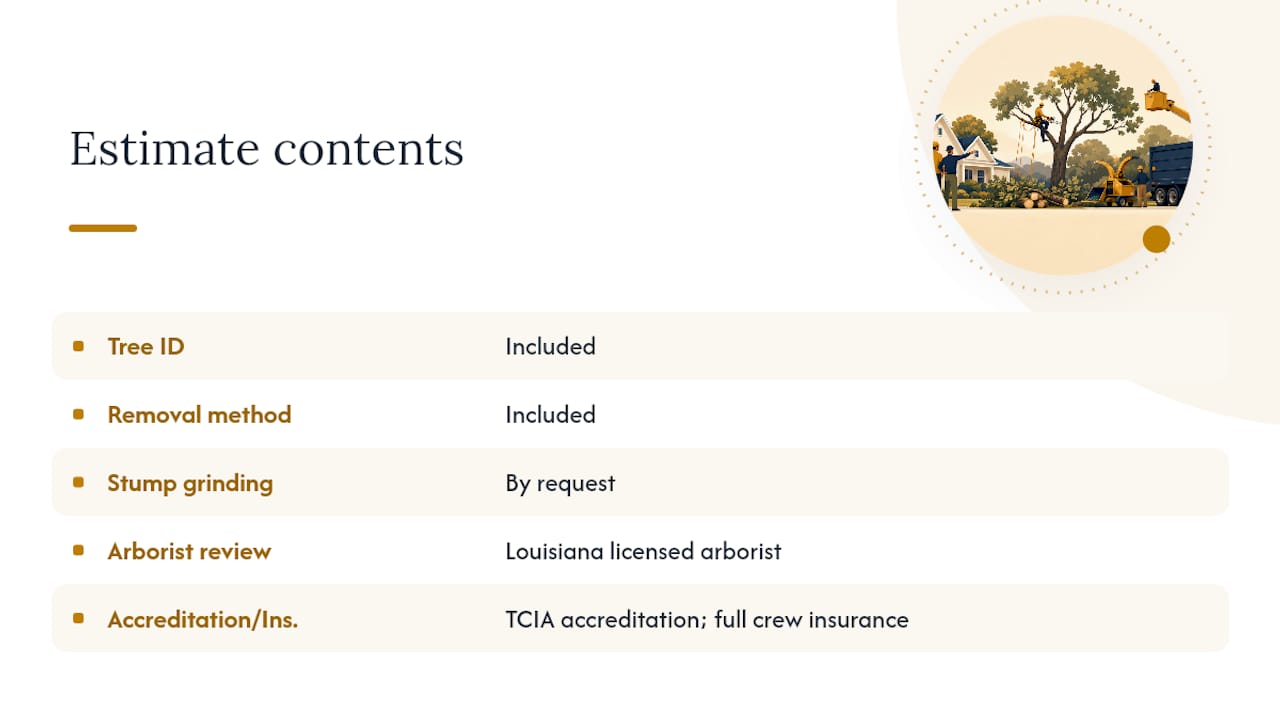
A professional tree service estimate typically includes standard fields: tree identification, removal method, equipment, debris disposal, stump grinding when requested, permit responsibility, and insurance status. A Louisiana Licensed Arborist reviews every job, and the company carries TCIA accreditation with full insurance on every crew that sets foot on your property.
That level of detail protects you, the homeowner, not just the contractor. If your tree shows signs of disease, structural weakness, or root damage that goes beyond a routine removal, ask about a formal arborist report instead of a free estimate. A written report digs deeper into the tree's health and gives you documentation an insurance claim may require.
What Homeowners Get Wrong About Estimates
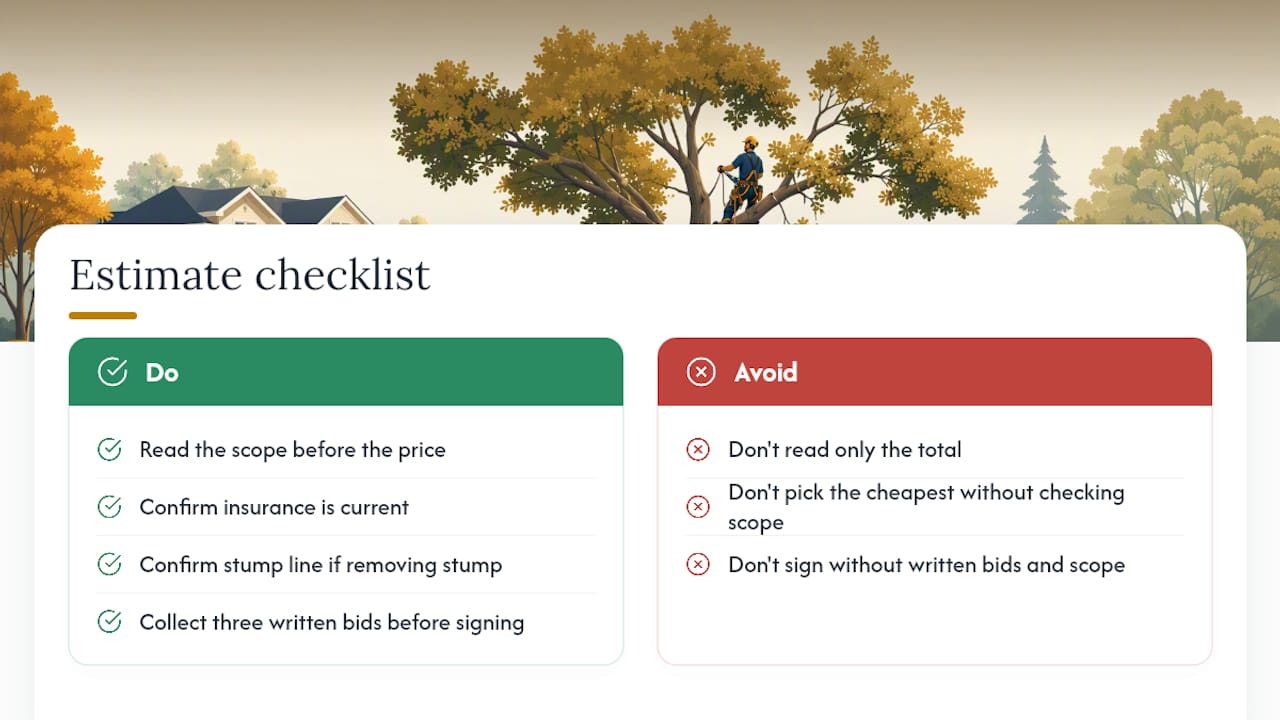
The most common mistake is reading only the total at the bottom. I have seen homeowners choose a bid because it was $200 cheaper, then discover mid-job that stump grinding was never included in the first place.
Read the scope before the price. Confirm insurance is current, confirm the stump line exists if you want the stump gone, and always collect three written bids before you sign anything.
— Tatum
Get a Clear, Written Estimate From Briley Tree Service
Homeowners should seek free, written, itemized estimates with an arborist review and a clean job site guarantee when the crew leaves. Instead of guessing what a vague quote covers, you get a scope you can actually compare.
The company handles tree removal, trimming and pruning, stump grinding, storm cleanup, and land clearing across Shreveport, Bossier City, and Ruston. If a storm just came through and a tree is already down or leaning toward your roof, the emergency service line gets a crew moving fast, day or night. Request your free written estimate today and put every line item this guide covered to the test.
Templates and Guidance for Verifying Your Estimate
Two resources make it easier to double-check any bid you receive:
- A free tree service estimate template gives you unitized fields for tree ID, removal method, equipment, disposal, and permits, so you can lay your quotes side by side.
- The NC State Extension guide to estimating standing tree volume explains DBH measurement in plain terms, useful if you want to sanity-check a contractor's numbers yourself.
Sources
- Tree Removal Estimate: What to Expect & Compare Quotes
- How to Compare Tree Trimming Quotes & Avoid Scams in 2026 | LawnsGuide
- Tree Service Estimate Template: Key Fields and Red Flags - LegalClarity
- Free Tree Service Estimate Template (PDF) + 2026 Pricing Guide
- Estimating the volume of a standing tree using a scale (Biltmore) stick
FAQ
How Much Does It Cost to Cut Down a 30-Foot Tree?
A 30-foot tree with average access and no special equipment needs typically falls on the lower end of most removal ranges, since smaller size and simpler rigging keep labor hours down. Get a written estimate that separates labor, equipment, and stump grinding so you know exactly what that number includes.
How Much Should a Tree Assessment Cost?
A basic tree service estimate for removal or trimming is typically free, but a formal arborist report that documents disease, structural risk, or root damage is a separate, paid service. Ask upfront whether you need a free estimate or a documented tree health assessment for insurance or legal purposes.
What Is the Cheapest Time of Year for Tree Removal?
Late fall and winter tend to bring lower demand for non-emergency tree work, since storm season has passed and many crews have more open scheduling. Booking during a slower season, and letting the crew keep cut wood, are two of the easiest ways to lower your labor cost.
Can Seniors Get Free Tree Removal?
Some local nonprofits, municipal programs, or utility companies occasionally offer free or reduced-cost removal for seniors when a tree threatens power lines or a structure, but availability varies widely by city and is not guaranteed. Contact your local parish extension office or city forestry department directly to ask what assistance programs currently exist in your area.
What Should I Do if My Estimate Doesn't List Insurance?
Ask the contractor directly for a certificate of insurance and a license number before you sign anything. A legitimate estimate always states insurance coverage and license status, and a contractor who hesitates to provide that documentation is one to avoid.