
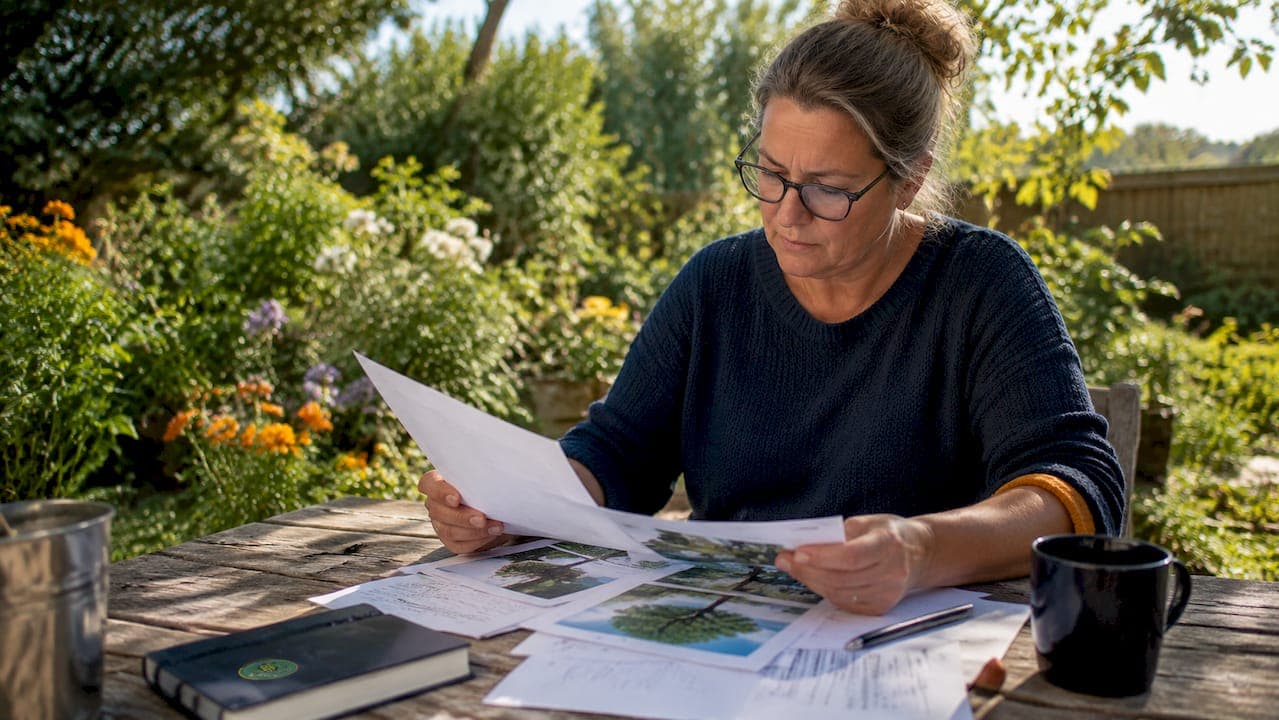
Tree service bid comparison is the process of evaluating multiple detailed tree care estimates side by side to assess cost, scope of work, and contractor qualifications before hiring. Homeowners who compare three or more bids typically save 15% to 23% and reduce exposure to unqualified providers. That savings gap exists because 68% of homeowners hire after only one or two estimates, leaving real money on the table. A thorough comparison covers itemized costs, insurance certificates, ISA Certified Arborist credentials, and the full scope of services included. Getting this right protects both your property and your wallet.
What are the essential components of a tree service bid?
A complete tree service bid is an itemized written document, not a verbal ballpark figure. Every line item should be spelled out so you can compare bids fairly and catch what is missing.
A solid bid covers these core elements:
- Labor costs: The number of crew members, estimated hours, and rate per hour or flat fee for the job
- Equipment fees: Bucket trucks, chippers, cranes, and any specialty gear required for your specific trees
- Stump grinding: Whether grinding is included, how deep the stump will be ground, and if root ball removal is part of the work
- Debris removal and hauling: Confirmation that all branches, logs, and green waste leave your property
- Cleanup: Raking, blowing, and restoring the work area to its original condition
- Insurance documentation: A Certificate of Insurance (COI) showing General Liability and Workers' Compensation coverage
- Credentials: Confirmation that an ISA Certified Arborist is on staff or supervising the job
Residential tree trimming costs range from $75 for small trees up to $2,500 or more for large trees over 80 feet. Trees near power lines or structures carry a 25–50% price premium. Knowing these ranges helps you spot bids that are unrealistically low or suspiciously high.
A reliable tree service estimate must include proof of both General Liability and Workers' Compensation insurance. Without those two documents, you carry the financial and legal risk if a worker is injured on your property.
Pro Tip: Never pay more than 20–30% upfront before work begins. A deposit above that threshold is a red flag that the contractor may not return to finish the job.
How do you compare multiple tree service bids fairly?
Comparing bids fairly requires that every quote covers the exact same scope of work. Without a standardized scope, price differences are meaningless because you are not comparing the same job.
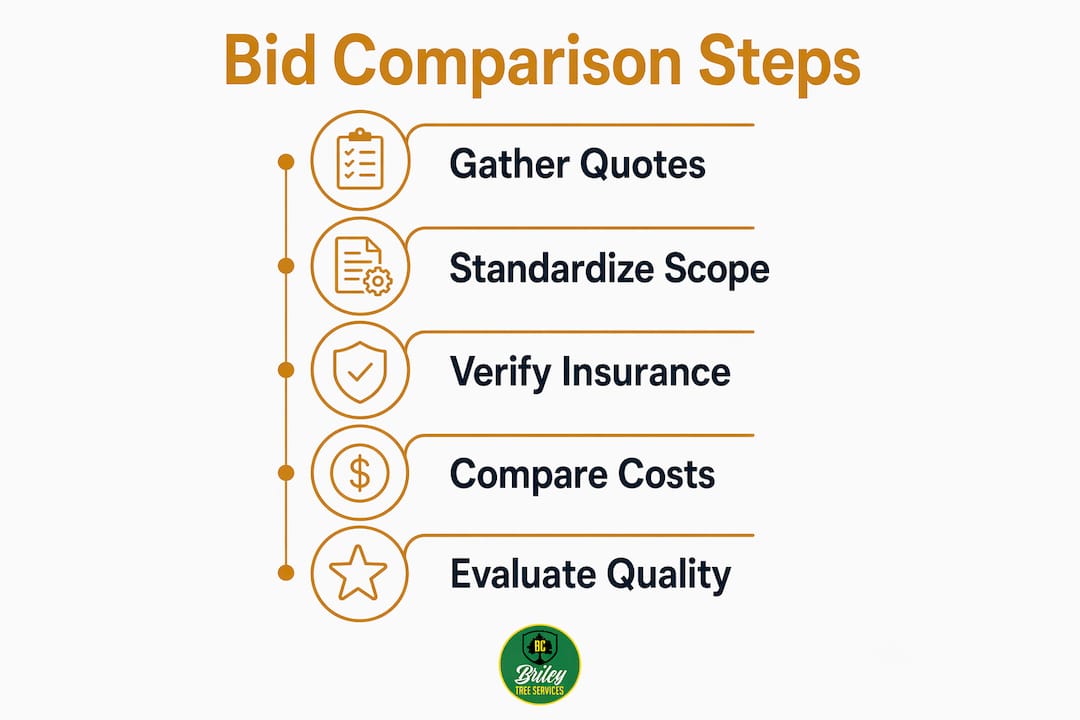
Standardize the scope before requesting quotes
Tell every contractor the same information: the number of trees, their approximate height, the specific services needed (trimming, removal, stump grinding, debris hauling), and any access limitations. Ask each company to provide a written, itemized bid based on that description. Comparing prices alone is misleading without matching scope and verifying credentials.
Use a cost range table as a reference
Tree size and location are the two biggest drivers of price variation. Use the table below to check whether the bids you receive fall within reasonable ranges.
| Service | Small Tree (under 30 ft) | Medium Tree (30–60 ft) | Large Tree (over 80 ft) |
|---|---|---|---|
| Trimming | $75–$450 | $150–$875 | $1,000–$2,500+ |
| Removal | $200–$700 | $700–$1,500 | $1,500–$3,000+ |
| Stump grinding | $75–$250 | $150–$400 | $300–$600+ |
| Near structure premium | +25–50% | +25–50% | +25–50% |
Quotes can vary 3–5 times for identical jobs. That range exists because contractors differ in what they include, not just what they charge per hour.
Weigh more than price
The lowest number on a page rarely tells the full story. Score each bid across four factors: total price, insurance verification, service inclusions, and how clearly the contractor communicated during the estimate process. A contractor who answers questions directly and provides a detailed written scope is demonstrating the same professionalism they will bring to your yard.
Pro Tip: The middle bid among three estimates often represents the best balance of cost and quality. The highest bid may include extra services you do not need. The lowest bid frequently omits safety measures and cleanup.
What are the red flags to watch for in tree service bids?
Red flags in tree service bids signal either missing credentials, incomplete work, or outright dishonest business practices. Recognizing them early saves you from costly mistakes.
Watch for these warning signs before signing anything:
- Unusually low bids with no explanation: Extremely low bids usually indicate missing services, uninsured workers, or improper cutting techniques that cause long-term tree damage.
- No proof of insurance: A contractor who cannot produce a COI on request is a liability risk. Verify the COI directly with the insurer rather than accepting a PDF from the contractor.
- High upfront deposit demands: Requests for more than 30% before work starts suggest cash flow problems or intent to disappear.
- Aggressive sales tactics: Pressure to sign the same day, claims of a "one-day-only" price, or scare tactics about your tree's condition are manipulation, not expertise.
- Missing stump grinding: Many bids omit stump grinding to keep the initial price low, then charge it as a surprise add-on after the tree is already down.
- No debris removal clause: A bid that does not explicitly state debris hauling means you may be left with a yard full of wood and brush.
- No written contract: Verbal agreements offer zero protection. Every bid should convert to a signed, written contract before work begins.
Lack of verified Workers' Compensation or liability insurance shifts the financial and legal burden directly to you as the property owner. If a worker falls from your tree and the contractor carries no coverage, your homeowner's insurance becomes the last line of defense.
Why do certified professionals and proper insurance matter?
Hiring an ISA Certified Arborist is not just a credential check. It directly affects the health of your trees and the safety of the work performed. The International Society of Arboriculture (ISA) sets the industry standard for tree care knowledge, and certification requires ongoing education to maintain.
ISA-certified arborists charge 20–30% more than non-certified providers. That premium buys you proper pruning technique, accurate hazard assessment, and tree health advice that protects your long-term investment. Non-certified crews are more likely to use harmful practices like topping or hat-racking, which strip trees of their canopy and create decay entry points that shorten the tree's life by years.
The benefits of hiring certified, insured professionals include:
- Correct pruning cuts that promote healing and reduce disease risk
- Accurate hazard identification before work begins, not after an accident
- Legal protection through verified General Liability and Workers' Comp coverage
- Long-term tree health guidance that prevents repeat service calls
- Accountability through ISA's professional standards and complaint process
Learn more about what arborist certification means for the quality of work you receive. For a full breakdown of what coverage you need before any crew sets foot on your property, the tree service insurance requirements guide covers every document to request.
There is no federal licensing requirement for tree service companies in the United States. That gap means anyone with a chainsaw and a truck can legally offer tree removal. ISA certification and verified insurance are the two most reliable filters available to property owners.
Key Takeaways
Comparing tree service bids on price alone is the single most common mistake homeowners make. The right approach evaluates scope, credentials, and insurance alongside cost to find the bid that delivers real value.
| Point | Details |
|---|---|
| Get at least three bids | Homeowners who compare three or more bids save 15–23% and reduce risk from unqualified providers. |
| Standardize the scope | Request itemized bids covering labor, equipment, stump grinding, debris removal, and cleanup from every contractor. |
| Verify insurance directly | Confirm General Liability and Workers' Comp coverage with the insurer, not just from a contractor-provided PDF. |
| The middle bid often wins | The lowest bid frequently omits services or credentials; the middle bid typically balances cost and quality. |
| ISA certification matters | Certified arborists cost 20–30% more but protect tree health and reduce liability risk on every job. |
What I've learned after years of watching homeowners hire the wrong crew
The most expensive mistake I see property owners make is not hiring the cheapest contractor. It is hiring without a written, itemized bid and then discovering what was not included after the crew has left.
Stump grinding is the classic example. A homeowner gets a $400 tree removal quote, the tree comes down, and then they learn the stump costs another $200 to grind. The original bid was not dishonest in a legal sense. It was just incomplete, and the homeowner never asked the right question.
My honest recommendation is this: treat the bid process like a job interview. You are evaluating the contractor's communication, detail orientation, and professionalism, not just their price. A crew that shows up on time for the estimate, provides a clear written scope, and answers your insurance questions without hesitation is telling you exactly how they will behave on the job.
Three written bids is the minimum. Check the tree service hiring checklist before you sign anything. And if a bid feels too good to be true, it almost always is. The hidden costs of incomplete work, property damage, or an uninsured injury claim will far exceed whatever you thought you saved upfront.
— Tatum
Brileytreeservice offers transparent, certified bids in Shreveport
Brileytreeservice serves homeowners and property managers across Shreveport, Bossier City, and Northwest Louisiana with fully insured, itemized tree service estimates. Every bid covers labor, equipment, stump grinding, debris removal, and cleanup with no surprise add-ons after the job is done.
Brileytreeservice's team shows up on time, explains the full scope of work before starting, and treats your property with the same care they would give their own. Whether you need a hazardous tree removed, routine trimming, or storm damage cleared, the process starts with a free, no-obligation estimate. Contact Brileytreeservice today to get a written bid you can actually compare.
FAQ
What is tree service bid comparison?
Tree service bid comparison is the process of collecting and evaluating multiple written estimates from different tree care companies to assess cost, scope of work, and contractor credentials before making a hiring decision.
How many bids should I get for tree work?
Get at least three written bids. Homeowners who compare three or more estimates save 15–23% on average and significantly reduce the risk of hiring an unqualified provider.
What should a tree service bid include?
A complete bid should itemize labor, equipment, stump grinding, debris removal, cleanup, and proof of General Liability and Workers' Compensation insurance. Bids missing any of these elements are incomplete.
Why do tree service quotes vary so much?
Tree service quotes vary 3–5 times for the same job because contractors differ in what services they include, whether they carry proper insurance, and whether a certified arborist is involved in the work.
Is the cheapest tree service bid the riskiest?
The cheapest bid is often the riskiest. Low bids typically exclude stump grinding, debris hauling, or proper insurance, and they may involve crews using harmful cutting techniques that damage trees and create long-term costs.