
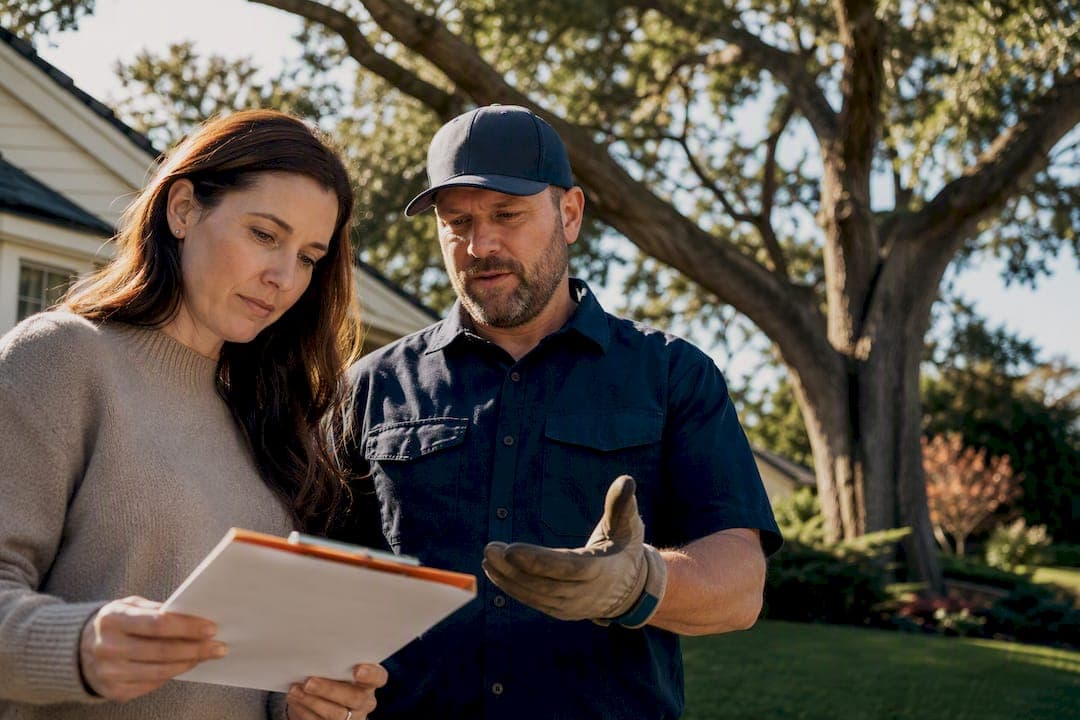
Refuse any tree company that pressures you to sign the same day, and never let a crew start work until you've verified a current certificate of insurance by phone with the actual insurer. Ask for a written scope that spells out cleanup, stump grinding, and change-order terms before anyone touches a chainsaw. These three steps stop the majority of tree service scams before money ever changes hands.
TL;DR:
- Never accept a same-day price or signing over the phone, and always verify insurance coverage by calling the insurer directly before work begins.
- Insist on a detailed written scope of work, including cleanup and change-order policies, to avoid vague or inflated estimates.
- Be wary of cash-only requests, signature-only signatures on tablets, and requests to waive your insurance deductible, as these are common scam tactics.
- Require at least two detailed written estimates, proof of current insurance, licensing verification, and references before hiring a tree service.
- If already scammed, stop work immediately, document damage, contact your insurer, and file complaints with consumer protection agencies.
Table of Contents
- Common Tree Service Scams and How They Work
- Red Flags That Should Stop You Immediately
- How to Vet a Legitimate Tree Service Before You Hire
- Contracts, Payments, and Insurance: Reading the Fine Print
- If You Already Hired a Shady Crew
- Why We Show Our Insurance Before You Even Ask
- Where to Get Help and File Complaints
- Sources
Common Tree Service Scams and How They Work
Most tree removal fraud follows a predictable script. Storm chasers show up door to door within hours of severe weather, using urgency to short circuit your judgment. They know a downed limb on your roof makes you want a fix right now, and that panic is the product they're selling.
Other tactics are quieter but just as costly:
- Lowball, then upsell. The initial quote sounds reasonable, but mid-job the crew claims they found "extra hazards" and the price doubles.
- Fake or expired insurance. Some crews carry no coverage at all, or show you a policy that lapsed months ago.
- Tablet signature traps. You're shown only a signature page, not the full contract, which can quietly authorize invoicing or insurance claim submissions.
- Fear-based diagnoses. A "dying" tree gets recommended for full removal when trimming would have solved the problem, or a healthy tree gets topped, a practice that damages long-term tree health and often violates municipal codes.
- Deposit and disappear. Cash changes hands, and the crew never returns, or leaves a yard full of debris and calls the job done.
The Tennessee Attorney General's consumer alert specifically warns homeowners about signature-tablet traps and crews offering to "waive your deductible," a claim that should raise suspicion every time. The National Insurance Crime Bureau has documented how post-storm urgency gets weaponized into inflated emergency invoices.
Red Flags That Should Stop You Immediately
Some warning signs mean you end the conversation, not negotiate further. Rank these by severity:
- Same-day, "today only" pricing pressure. Legitimate tree companies don't need you to sign before dinner.
- Refusal to produce a current certificate of insurance. No COI, no job. Full stop.
- Cash-only demands or a tablet shown with only the signature line visible. You have a right to read every page before you sign anything.
- No written scope, vague change-order language, or a quote wildly outside what other bids show.
- Unsolicited texts or cold calls offering to waive your insurance deductible. This is a common thread in state attorney general complaints and often signals inflated invoicing designed to profit off your claim.
Pro Tip: Write down the name and DOT or business license number on the truck before the crew even gets out. Legitimate operators expect this and won't blink. Scammers often drive unmarked trucks for a reason.
How to Vet a Legitimate Tree Service Before You Hire
Treat hiring a tree company the same way you'd treat hiring a roofer or an electrician. It's a licensed trade, and the vetting process should look like one.
Start with paperwork:
- Get at least two or three written estimates that list exactly what's included: haul-away, chipping, stump grinding, and crane work if the job needs it.
- Request the certificate of insurance, write down the insurer's name and policy dates, then call that insurer directly to confirm the coverage is active.
- Check licensing status and complaint history through your state Attorney General's office and the Better Business Bureau, and ask for two or three local references you can actually call.
- Nail down contract terms in writing: payment schedule, how change orders get approved, and who's responsible for cleanup.
- Take photos of your property before work starts, and require a final receipt along with a damage-release statement once the job wraps.
Before locking anything in, review Brileytreeservice's own tree service hiring checklist for homeowners, which walks through the same sequence in more detail. Also check what a proper cleanup process should look like so you know what "done" actually means.
Contracts, Payments, and Insurance: Reading the Fine Print
Hidden fees hide in plain sight. Mobilization charges, minimum hourly equipment rates, and "trip fees" can turn a $1,200 estimate into a $2,800 invoice if you don't question them upfront. Ask for equipment-hour rates in writing rather than accepting a vague mobilization fee.
Never sign only a signature page. Review the entire contract, keep your own copy, and confirm it matches what was verbally promised. The Tennessee Attorney General has flagged this exact tactic, where a tablet shows only the line for your name while the rest of the document authorizes far more than a simple estimate.

Insurance fraud often piggybacks on tree damage claims. Some crews inflate invoices or threaten property liens to pressure a bigger payout, and separately, the Indiana Attorney General has taken legal action against companies accused of failing to provide written estimates and charging excessive minimum fees to storm victims. Demand proof of workers' compensation and liability coverage before any worker climbs a tree on your property. If the crew lacks that coverage and someone gets hurt, you may be the one holding liability. Read more on tree service liability before you sign anything.
If You Already Hired a Shady Crew
Act fast if you suspect you've been scammed or the work is already going wrong.
- Stop work immediately if the crew is still on site.
- Photograph all damage with timestamps, and get a neighbor or witness statement if possible.
- Contact your insurer right away and hand over your documentation; ask specifically how the adjuster will evaluate the claim.
- File complaints with your state Attorney General's consumer protection division and the Better Business Bureau.
- If you paid a deposit and the contractor vanished, file a police fraud report and consider small-claims court for recovery.
- Keep every receipt, text message, and contract copy. These become your evidence if the case escalates.
Brileytreeservice's guide on how to file a tree damage insurance claim walks through the adjuster conversation in more detail, which matters most when a scam has already touched your insurance file.
Why We Show Our Insurance Before You Even Ask
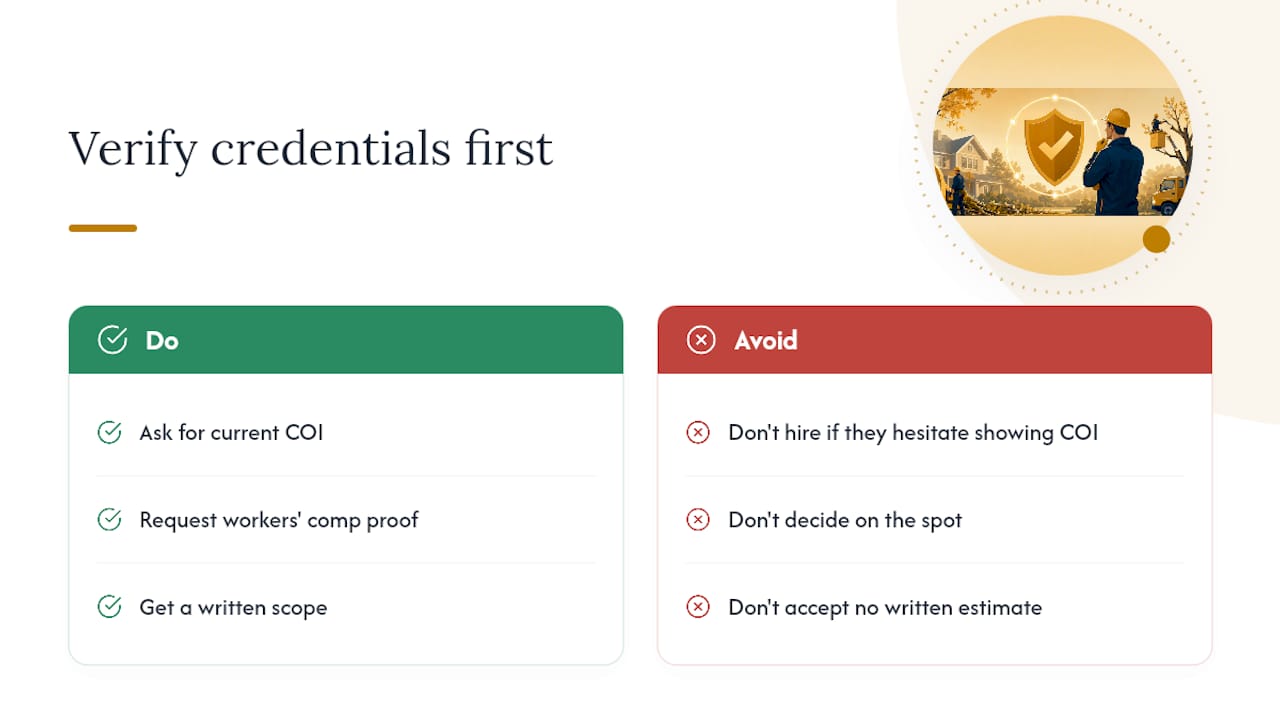
Homeowners shouldn't have to chase down proof that a crew is legitimate. Some tree service companies provide insured crews, written estimates, and cleanup included on every job, often offering free estimates upfront to avoid pressure to decide on the spot.
If another company hesitates to show you a certificate of insurance, that hesitation is the answer. Ask every bidder the same questions you'd ask us: current COI, workers' comp, a written scope, and local references. A company confident in its coverage will hand over that paperwork without a second thought. If you're comparing bids in Shreveport, Bossier City, or Ruston, request a free estimate from Brileytreeservice and use it as your baseline for what a legitimate quote should look like.
— Tatum
Where to Get Help and File Complaints
Start with your state Attorney General's consumer protection division. Most states, including North Carolina's Department of Justice, publish tree removal guidance and complaint forms specific to storm season. The National Insurance Crime Bureau tracks storm-chaser fraud patterns nationally. To verify coverage, call the insurer listed on the certificate directly, and never rely on a number the contractor hands you. If you're weighing broader storm-season property protection, winterizing entry points is a smart companion step to tree risk management.
Sources
- National Insurance Crime Bureau regional news: tree cutting service
- CONSUMER ALERT: Watch Out for Tree Trimming & Removal Scams — Tennessee Attorney General