
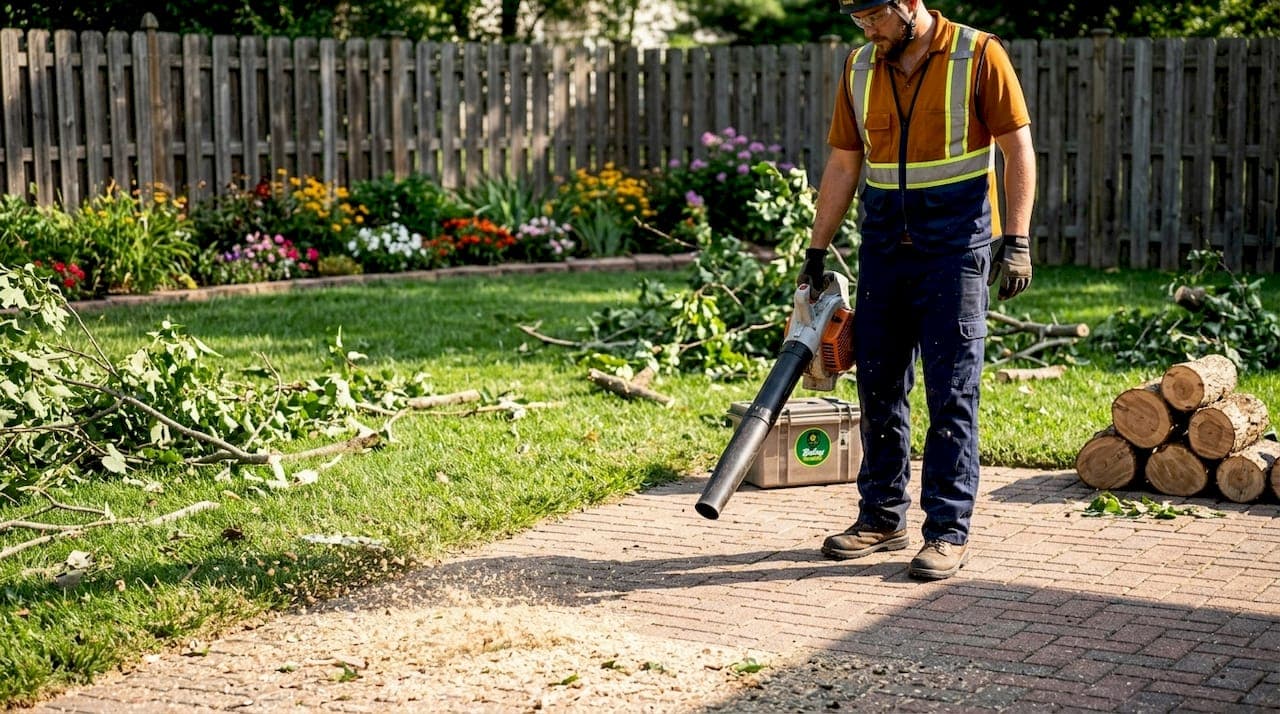
The tree service cleanup process is the systematic removal of debris, wood, and surface waste after professional tree work, restoring your property to a safe and usable condition. Brileytreeservice defines cleanup as a core part of every job, not an optional add-on. Whether the work involves routine trimming, full tree removal, or emergency storm response, the cleanup steps that follow are just as critical as the cutting itself. Understanding what the process includes, how it changes by service type, and what it costs helps you avoid surprises and hold your contractor accountable.
What does the tree service cleanup process include?
Standard tree service cleanup covers a defined set of tasks governed by ANSI A300 standards, which specify professional tree care practices and require cleanup scope to be clearly stated in work contracts. That standard exists for a reason: without it, "cleanup" means something different to every crew. Knowing what to expect puts you in control before the first chainsaw starts.
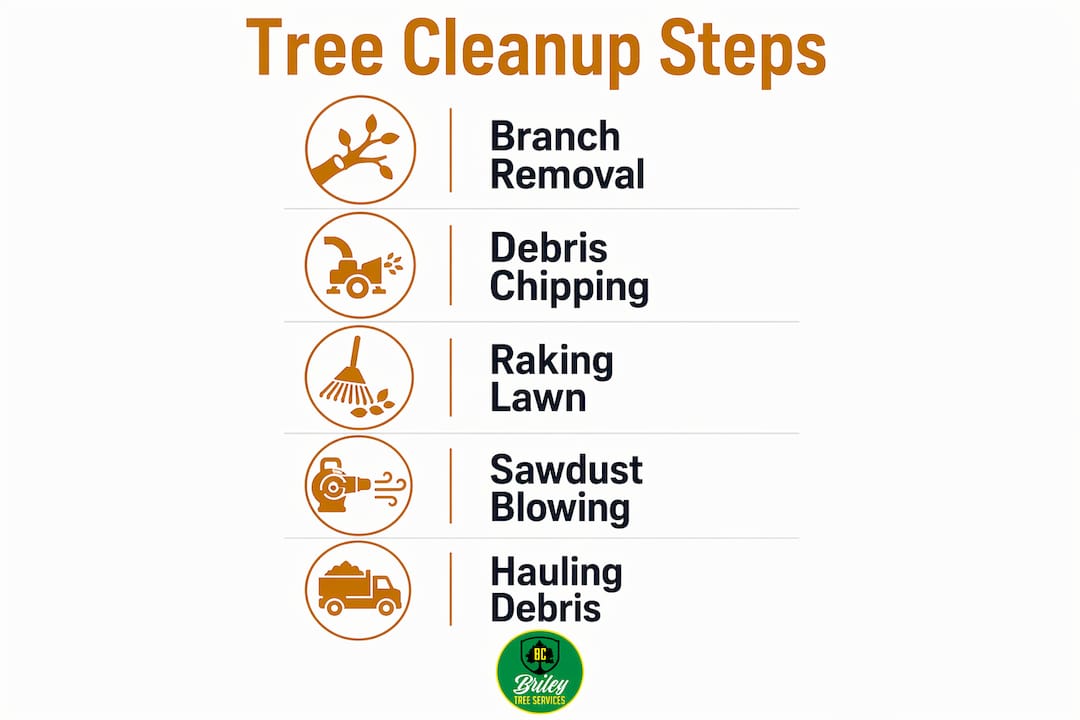
A standard cleanup job typically covers the following tasks:
- Picking up loose branches, small sticks, and twigs from the work area
- Raking leaves, bark fragments, and fine debris from lawn surfaces
- Blowing sawdust and wood chips off driveways, patios, sidewalks, and decks
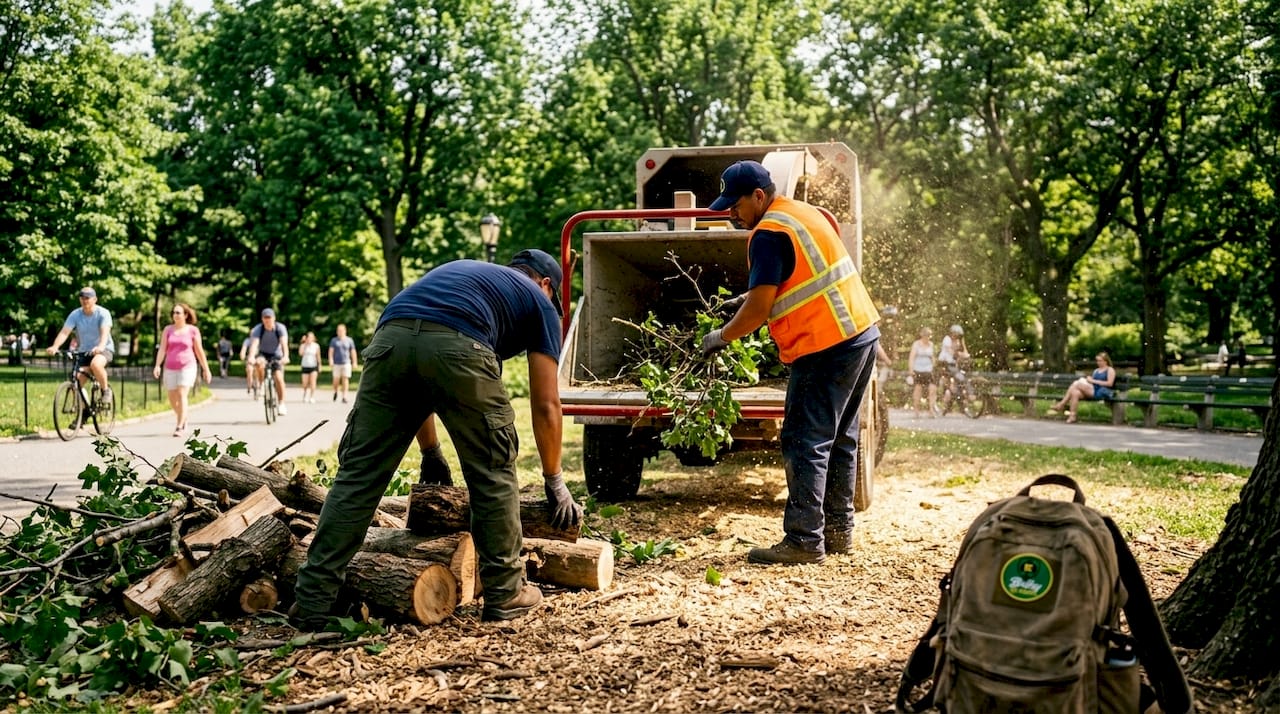
- Chipping smaller branches and brush into mulch using a wood chipper
- Stacking larger logs neatly for firewood or hauling them away entirely
- Removing surface sawdust and wood chip accumulation from hard surfaces
Hauling is where most disputes happen. Some contractors include it in the base price; others charge it as a separate line item. Specifying cleanup in your contract eliminates ambiguity and sets clear expectations for debris removal and site restoration before work begins.
Pro Tip: Ask your contractor to list cleanup tasks explicitly in the written agreement, including whether hauling is included or billed separately. A vague "cleanup included" clause is not enough.
How does storm damage cleanup differ from routine tree work?
Emergency and storm damage cleanup is a different operation entirely. It is not just debris removal. It is a multi-stage risk-mitigation process that includes hazard assessment, controlled dismantling, utility coordination, and site stabilization before any debris is touched.
The process follows a specific sequence:
- Hazard assessment. Crews identify hanging limbs, also called "widow makers," and unstable root systems before any cutting begins.
- Sectional dismantling. Trees are cut from the top down using chainsaws and rigging to control where sections fall.
- Secondary hazard pass. Storm cleanup requires two passes: one to remove downed material and a second to identify weakened hanging limbs that were not visible initially.
- Brush chipping. Smaller branches and brush are fed through a chipper onsite to reduce volume.
- Log hauling or stacking. Large sections are either hauled away or stacked per the homeowner's preference.
- Driveway and walkway clearance. Access points are cleared first to restore safe movement around the property.
- Final raking and blowing. The site is swept clean of residual debris, sawdust, and wood chips.
- Stump assessment. Stump grinding is evaluated as an added step if the root system poses a tripping or regrowth hazard.
The two-pass approach is the detail most homeowners do not know about. A single pass after a storm leaves secondary hazards in place. Weakened limbs that survived the initial storm can fall days later, creating new risks for people and structures.
Pro Tip: After any storm event, ask your contractor specifically whether a secondary hazard assessment pass is included. If it is not, request it. This step protects your property and your liability.
For a full breakdown of what emergency response looks like from a homeowner's perspective, the tree emergency response guide from Brileytreeservice covers the process in detail.
What to expect after tree removal and stump grinding
Tree removal cleanup and stump grinding cleanup are related but distinct operations. Each generates different types of waste and requires different restoration steps.
After a tree is cut down, the removal cleanup process covers branch and brush collection, debris chipping, raking of loose material, and blowing sawdust off hard surfaces. The full scope depends on tree size and how much of the material the homeowner wants to keep.
Stump grinding adds another layer. A standard grind removes material to 4 to 6 inches below grade, leaving a depression in the lawn that requires soil preparation before reseeding or sodding. That detail matters because many homeowners assume the yard is ready for grass seed the moment the grinder stops. It is not. The depression needs topsoil fill and leveling first.
Here is how the two cleanup phases compare:
| Service | Debris type | Cleanup tasks | Aftercare needed |
|---|---|---|---|
| Tree removal | Branches, logs, brush, sawdust | Chipping, raking, blowing, hauling | None beyond surface clearing |
| Stump grinding | Wood grindings, soil displacement | Grinding, leveling, chip removal | Topsoil fill, reseeding or sodding |
The wood chip question comes up on almost every stump job. Grindings can be left as mulch around garden beds, hauled away entirely, or mixed into the soil. Cleanup scope depends on your preference for wood disposal, and communicating that preference before the crew arrives prevents confusion. The stump grinding benefits guide from Brileytreeservice explains how grindings affect soil health and what to do with them.
Stump grinding cleanup also involves surface leveling and soil preparation to ensure proper settling before any lawn restoration work begins. Skipping that step leads to uneven ground that sinks over time.
How much does tree service cleanup cost?
Tree service cleanup pricing varies by job complexity, tree size, access to the site, and whether hauling is included. These are the standard ranges you should budget for:
- Debris hauling add-on: $50 to $150 on top of the base service price, depending on volume and urgency
- Full residential cleanup: $150 to $500 for total debris removal, based on the amount of material and how quickly it needs to go
- Stump grinding: $100 to $400 per stump, with price driven by stump diameter and root complexity
- Emergency storm cleanup: $500 to several thousand dollars, depending on the number of trees, hazard level, and equipment required
The hauling line item is the one most homeowners miss. A contractor can complete a full tree removal, leave a debris pile at the curb, and technically have fulfilled the contract if hauling was never specified. That pile then becomes your problem to schedule and pay for separately.
Emergency pricing reflects the added risk and labor of working in post-storm conditions. Crews face unstable ground, downed power lines, and compromised tree structures. That complexity justifies the higher cost, but it also means getting a written estimate before work starts is non-negotiable.
Pro Tip: Budget for cleanup and hauling as separate line items when requesting quotes. Ask every contractor: "Does this price include debris hauling off my property?" If the answer is unclear, get it in writing.
For a full breakdown of what drives pricing in the Shreveport area, the tree removal cost guide from Brileytreeservice covers local factors in detail.
Key takeaways
A thorough tree service cleanup requires a written scope, two-pass hazard assessment for storm work, and explicit confirmation that hauling is included before any crew arrives on your property.
| Point | Details |
|---|---|
| Cleanup is a defined process | ANSI A300 standards require cleanup scope to be specified in the work contract. |
| Storm cleanup needs two passes | A secondary hazard pass identifies weakened hanging limbs missed in the first sweep. |
| Stump grinding requires aftercare | Grindings must be cleared and the area leveled with topsoil before reseeding or sodding. |
| Hauling is often a separate charge | Debris hauling typically adds $50 to $150 to the base service price and must be confirmed upfront. |
| Wood disposal is your choice | Chips can be left as mulch, mixed into soil, or hauled away based on your preference. |
What I've learned about cleanup being the real test of a tree crew
Most homeowners judge a tree service by how cleanly the tree comes down. The real test is what the yard looks like two hours after the crew leaves.
I have seen jobs where the cutting was technically perfect and the cleanup was an afterthought. Sawdust packed into lawn cracks, wood chips scattered across a driveway, a stump depression left unfilled. The homeowner paid full price and still had work to do. That is not a complete job.
The two things that prevent this are specificity and documentation. A verbal promise to "clean everything up" means nothing when there is a disagreement about what "everything" includes. A written scope that lists raking, blowing, hauling, and stump area leveling leaves no room for interpretation.
Storm cleanup is where I see the biggest gap between what homeowners expect and what they get. The secondary hazard pass is not standard practice at every company. Some crews remove the obvious downed material and call it done. Weakened limbs left overhead are a liability waiting to happen. Ask for it explicitly, and confirm it was done before you sign off.
The contractors worth hiring treat cleanup as part of the job, not a favor. If a company hesitates when you ask about hauling or tries to charge extra for basic surface clearing, that tells you something about how they operate overall. Choose crews who include cleanup in their standard process and can show you exactly what that means before they start.
— Tatum
Get professional tree cleanup from Brileytreeservice in Shreveport
Brileytreeservice handles every stage of the tree service cleanup process for homeowners and property managers across Shreveport, Bossier City, and Northwest Louisiana. From branch collection and debris chipping to stump grinding and surface clearing, every job includes a thorough cleanup with no debris left behind.

The Brileytreeservice team provides free estimates with a clear written scope covering all cleanup tasks, including hauling. Whether you need tree removal in Springhill, LA or emergency storm cleanup after severe weather, you will know exactly what is included before work begins. Contact Brileytreeservice today to schedule your free estimate and get your property back to a clean, safe condition.
FAQ
What does tree service cleanup include?
Tree service cleanup includes picking up loose branches, raking debris, blowing sawdust off hard surfaces, chipping brush, and stacking or hauling wood. Hauling is sometimes a separate charge and should be confirmed in writing before work begins.
How do I clean up after tree removal?
After tree removal, crews collect branches and brush, chip smaller debris, rake the lawn, and blow sawdust off driveways and patios. If stump grinding is included, the area also requires leveling and topsoil fill before reseeding.
How much does tree debris removal cost?
Residential tree debris removal typically costs $150 to $500 depending on volume and urgency, with hauling add-ons running $50 to $150. Stump grinding adds $100 to $400 per stump, and emergency storm cleanup can reach several thousand dollars.
What happens during storm damage tree cleanup?
Storm cleanup follows a multi-step process: hazard assessment, sectional tree dismantling from top to bottom, brush chipping, log hauling, driveway clearance, and a secondary pass to remove weakened hanging limbs. This two-pass approach is what separates professional storm cleanup from basic debris removal.
Is stump grinding part of standard tree service cleanup?
Stump grinding is typically an add-on service, not included in standard cleanup. It removes material to 4 to 6 inches below grade and requires surface leveling and topsoil fill before the area is ready for lawn restoration.