
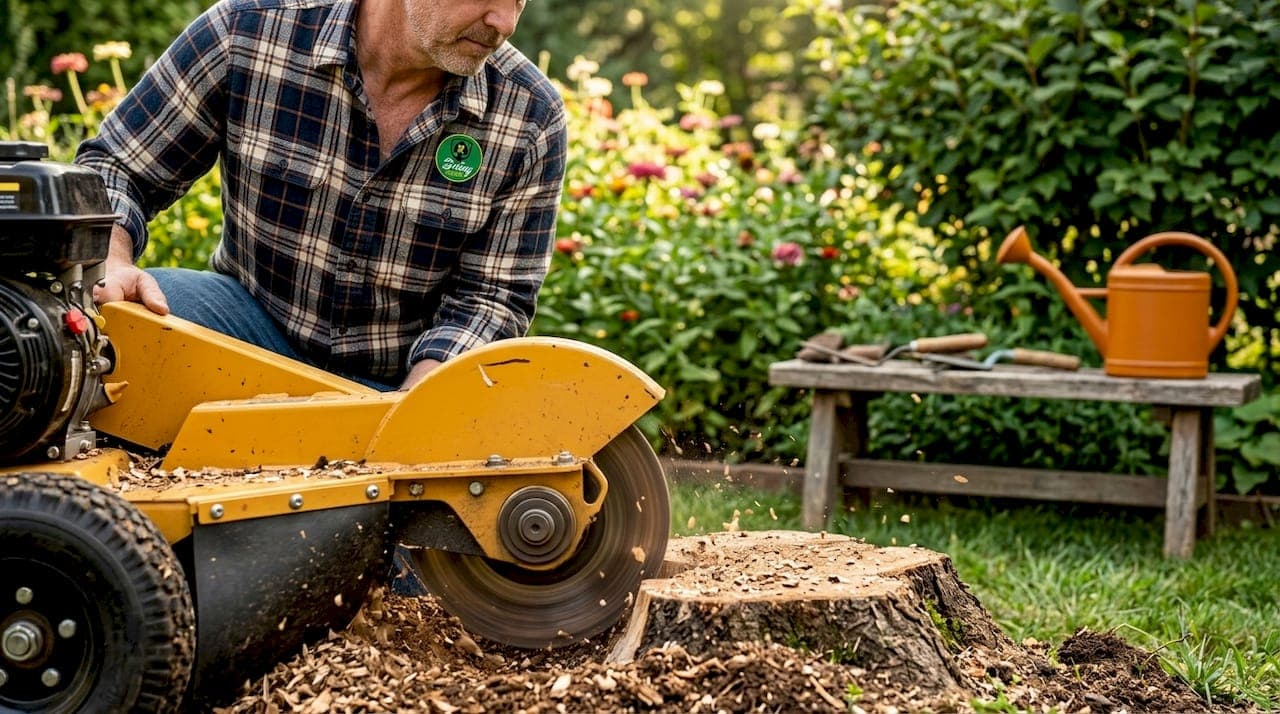
That leftover tree stump sitting in your yard is doing more damage than you might realize. The stump grinding benefits for your yard go well beyond aesthetics. Stump grinding is the professional process of using a rotating cutting disk to chip away a stump down to ground level or below, turning it into wood chips. Unlike full stump extraction, grinding is faster, less invasive, and leaves your yard ready for what comes next. This guide covers every practical advantage, from safety and pest control to landscaping after stump grinding, so you can decide whether it is the right move for your property.
Table of Contents
- Key takeaways
- 1. How stump grinding improves yard aesthetics and reclaims usable space
- 2. Stump grinding as a safety measure for active yards
- 3. Pest prevention benefits of stump grinding for yard health
- 4. Stump grinding versus stump removal versus leaving it alone
- 5. When stump grinding is the right call for your yard
- My honest take on why homeowners underestimate this
- Get professional stump grinding from Briley Tree Service
- FAQ
Key takeaways
| Point | Details |
|---|---|
| Aesthetics and space | Removing stumps instantly improves curb appeal and frees up usable yard space for new projects. |
| Safety for active yards | Grinding eliminates trip hazards that put children, guests, and pets at risk of injury. |
| Pest and disease control | Rotting stumps attract termites, ants, and fungi that can spread to healthy trees nearby. |
| Cost advantage | Stump grinding costs less and disrupts less yard area compared to full stump extraction. |
| Situational choice | Your yard's use, budget, and future plans should drive the decision to grind, remove, or leave a stump. |
1. How stump grinding improves yard aesthetics and reclaims usable space
A single stump can pull down the appearance of an otherwise well-maintained yard. Unsightly stumps make yards look neglected, no matter how neatly the lawn is trimmed or how well the garden beds are kept. Curb appeal matters for both enjoyment and resale value, and a stump sitting in plain sight signals poor upkeep to anyone walking by.
Beyond looks, there is the practical problem of lost space. Grinding restores usable ground so you can plant a new garden bed, lay sod, add a patio, or install a play structure where nothing usable existed before. A stump that is ground below grade gives you a blank canvas. The wood chips left behind can be repurposed, too. Wood chips make excellent mulch for garden beds, which means the grinding process contributes directly to your landscaping rather than creating waste.
Here is what becomes possible once the stump is gone:
- New lawn area seeded or sodded directly over the site
- Raised garden beds placed where the stump once stood
- Walkways or pathways extended without routing around an obstacle
- Outdoor furniture or structures set on level, obstacle-free ground
- Fresh mulch applied to surrounding beds from the chips left by grinding
If you are already planning a yard redesign project, scheduling stump grinding first saves time and avoids having to work around an obstacle mid-project.
Pro Tip: Schedule stump grinding before you order any landscaping materials. Knowing the exact footprint freed up helps you plan accurate quantities for sod, gravel, or garden soil without guessing.
2. Stump grinding as a safety measure for active yards
A stump is a physical hazard. It does not move, it does not shrink, and it is often more dangerous than it looks. Stump grinding prevents injuries caused by tripping, especially in yards where children run and play or guests gather for outdoor events.
The hazard is not always obvious. Stumps close to ground level can hide under grass or leaves, making them nearly invisible until someone catches their foot on one. Sharp edges and hidden obstacles are a particular risk for children and pets who move quickly without watching the ground. An adult walking slowly in daylight may notice the stump. A child sprinting across the yard after dark almost certainly will not.
Common stump-related safety issues homeowners should watch for include:
- Tripping hazards for adults, children, and elderly visitors on uneven terrain
- Hidden stumps obscured by overgrown grass, leaves, or seasonal growth
- Sharp wood edges that can cause cuts and abrasions on impact
- Lawn equipment damage when mowers or trimmers strike unseen stump edges
- Root surface exposure where roots spreading from the stump create secondary trip points
Grinding removes all of these risks at once. The site is brought level with the surrounding ground, and there are no remaining edges or protrusions. For homeowners who host gatherings, have small children, or simply want a yard that is genuinely safe to use, this is one of the most direct and measurable stump removal yard benefits available.
3. Pest prevention benefits of stump grinding for yard health
A rotting stump is not just dead wood. It is an active invitation for pests. Tree stumps attract termites and ants and create breeding grounds that can grow large enough to threaten nearby structures and healthy trees. Once a termite colony establishes itself in a stump, the distance between that colony and your home's wooden framing becomes a real concern.
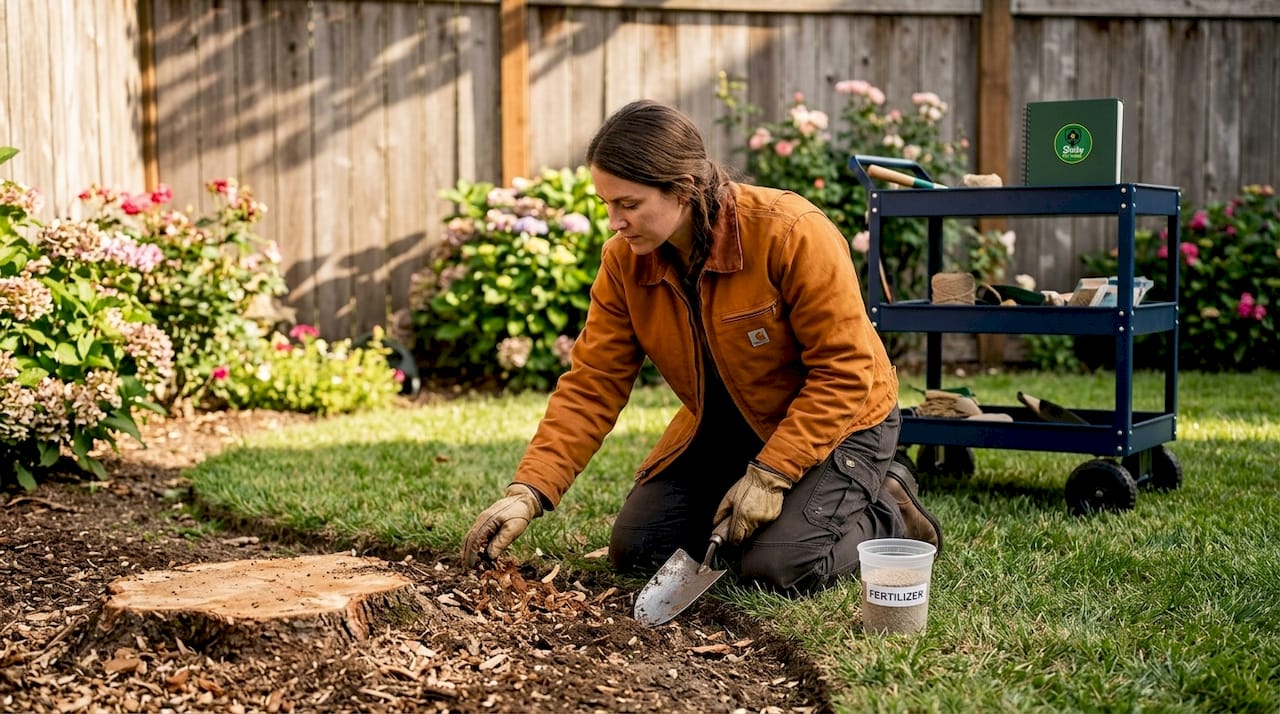
The decay process also creates conditions for fungal disease. Stumps spread disease to nearby plants through shared root systems and soil contact, meaning a diseased stump can weaken or kill healthy trees nearby. This is one of the less obvious but most damaging consequences of leaving a stump in place. Grinding the stump also prevents tree regrowth from the original root system, which can otherwise drain soil nutrients and interfere with new plantings.
Pest and disease risks associated with untreated stumps include:
- Termite colonies establishing in soft, decaying wood
- Carpenter ants burrowing into the stump and spreading to nearby structures
- Fungal root rot traveling through soil to neighboring trees
- Beetle infestations using the stump as a breeding site
- Honey fungus and other pathogens moving into healthy plant root systems
Pro Tip: After grinding, treat the surrounding soil with a wood-decay accelerator or nitrogen fertilizer to speed up decomposition of remaining root material. This discourages pests from settling in the subsurface debris.
4. Stump grinding versus stump removal versus leaving it alone
Homeowners typically face three choices: grind the stump, remove it entirely, or do nothing. Each option has real trade-offs worth understanding before making a decision.
Stump grinding is more affordable and far less labor-intensive than full stump extraction. Removal requires heavy equipment to pull the entire root ball out of the ground, which leaves a large hole and disturbs significant amounts of surrounding soil. Grinding leaves the root system in place underground, where it will decompose naturally over time. The surface is restored quickly, and the disruption to your yard is minimal.
Leaving the stump alone costs nothing upfront, but it accumulates costs over time through pest damage, disease spread, and the ongoing obstacle it creates for mowing and yard use.
| Option | Cost | Yard disruption | Pest risk | Future landscaping |
|---|---|---|---|---|
| Stump grinding | Moderate | Low | Eliminated | Immediately usable |
| Full removal | Higher | High | Eliminated | Usable after fill |
| Leave as-is | None upfront | None | Grows over time | Blocked or limited |
Full removal makes sense when you plan to pour concrete or build a foundation directly over the site, since underground roots left by grinding can interfere with certain structures. For most residential yard goals, though, grinding delivers the right balance of cost, speed, and result. The scope of any tree service job should match the actual need, and for most stumps, grinding is that match.
5. When stump grinding is the right call for your yard
Not every stump needs the same solution. The right choice depends on how you use your yard, what you plan to do with the space, and how much the stump is actively causing problems right now.
Stump grinding is typically the best fit when:
- Children or pets use the yard regularly and the stump poses a clear trip or injury risk.
- You want to improve curb appeal without investing in full landscaping work.
- Pests or decay are already visible on the stump or surrounding trees.
- You plan to plant, sod, or redesign the area where the stump sits.
- Budget matters and you want effective stump handling without the higher cost of full extraction.
- A storm or tree removal left the stump behind and you want the yard restored quickly. This is especially relevant when dealing with storm damage and trying to get a yard back in order fast.
Ask yourself these questions before deciding: Is the stump in an area where people walk or play? Are there signs of rot, insects, or fungal growth? Do you have plans to use that space in the next year? If you answer yes to any of these, grinding is almost certainly worth it.
Where grinding may not be the best option: if you need the root system fully extracted for a construction project, or if local regulations require complete removal for certain permits.
My honest take on why homeowners underestimate this
I have talked with a lot of homeowners who see stump grinding as optional, almost cosmetic. The stump is not in the way, the yard looks mostly fine, and spending money on something that is "just a stump" feels low priority. I get it.
But what I have seen repeatedly is that the stumps homeowners ignore become the stumps that cause real problems 12 to 18 months later. The pest activity starts quietly. A termite population does not announce itself. By the time someone notices the damage, it has often moved from the stump to a fence post, a deck, or worse.
The safety piece surprises people too. Homeowners with kids will sometimes tell me the stump is far enough out of the way that it is not a concern. Then a game of tag or a backyard birthday party puts 10 kids running around a yard they do not know well, and suddenly that stump is exactly in the way.
What I consistently tell homeowners is this: stump grinding is one of the few yard maintenance decisions where the stump grinding cost benefits are front-loaded and the risks of waiting compound quietly. You spend a reasonable amount once, and the problem disappears completely. There is no cheaper version of that outcome.
— Tatum
Get professional stump grinding from Briley Tree Service
Brileytreeservice handles stump grinding for residential properties throughout Shreveport, Bossier City, and Northwest Louisiana. The team arrives on time, grinds stumps to well below grade, and cleans up completely before leaving. Professional grinding services take care of the debris and wood chip cleanup that makes DIY approaches impractical for most homeowners. Brileytreeservice also offers tree removal, trimming, and emergency storm cleanup, so related yard work can be handled in a single appointment. If you are in the Shreveport area and ready to get a stump taken care of, contact Brileytreeservice today for a free estimate.
FAQ
What are the main benefits of stump grinding for a yard?
Stump grinding removes trip hazards, eliminates pest habitats, prevents disease spread to nearby trees, and reclaims usable yard space. It also restores a clean, level surface for new landscaping or lawn growth.
Is stump grinding worth the cost?
Yes, for most homeowners. Grinding costs less than full stump removal, prevents pest and disease damage that costs far more to treat, and immediately improves the usability and appearance of the yard.
How long does stump grinding take?
Most residential stumps are ground in one to two hours. Larger stumps or those with extensive root flare may take longer, but the process is significantly faster than full stump extraction.
Can I plant grass or a garden after stump grinding?
Yes. Once the stump is ground below grade and the wood chips are cleared or used as mulch, the area can be filled with topsoil and seeded, sodded, or planted with garden plants immediately.
Does stump grinding stop pest problems?
Grinding removes the primary habitat that attracts termites, ants, and wood-boring beetles. It does not treat an existing infestation, so if active pests are already present, a pest management professional should be consulted alongside the grinding service.