
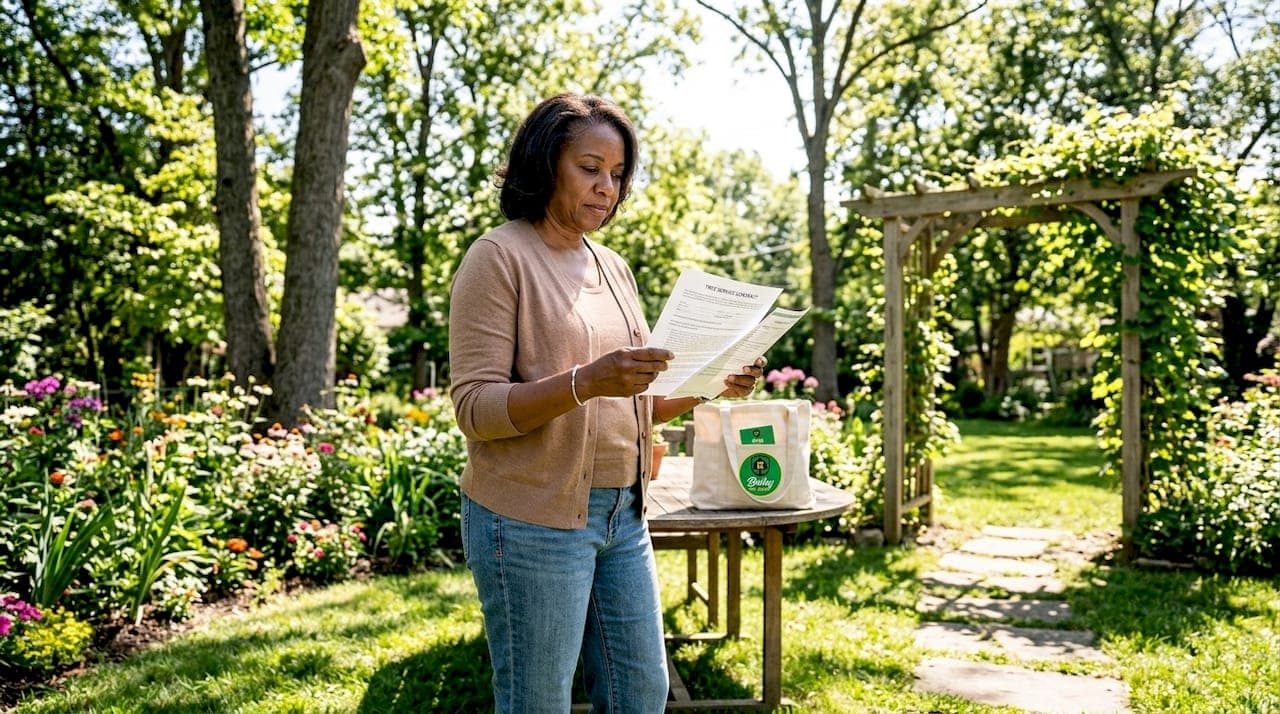
Tree service liability is defined as the set of insurance coverages and legal responsibilities that protect both tree service companies and property owners from costs related to bodily injury or property damage caused during tree care operations. Homeowners and property managers who hire tree crews without verifying this coverage risk absorbing significant financial losses. Standard contracts require $1 million per occurrence and $2 million aggregate coverage, with luxury and municipal contracts often pushing totals to $5 million. Knowing what is tree service liability, and how to verify it, is the single most effective step you can take before any crew sets foot on your property.
What does tree service liability coverage include?
General liability insurance for tree services is the primary policy covering third-party bodily injury and property damage. It pays for medical bills, repair costs, and legal defense when a tree crew's work causes harm to someone or something outside the crew itself.
Coverage typically falls into four categories:
- Bodily injury: Pays medical and legal costs if a falling branch injures a bystander, neighbor, or passerby. Bodily injury claims can exceed policy limits due to long-term rehabilitation costs, which is why high coverage limits matter.
- Property damage: Covers repairs to roofs, vehicles, fences, and underground utility lines damaged during tree removal or trimming. Property damage claims average $18,000, a figure that reflects how quickly roof and utility repairs add up.
- Personal and advertising injury: Covers claims like defamation or copyright infringement tied to the contractor's business operations.
- Legal defense costs: Pays attorney fees and court costs even when the contractor is not ultimately found liable.
One critical gap exists in most standard policies: the care, custody, and control exclusion. This exclusion means typical liability policies don't cover damage to the trees under service care. If a contractor drops a tree incorrectly and destroys the very tree they were hired to trim, the standard policy will not pay for it. A specific endorsement is required to close that gap.
Pro Tip: Ask any contractor whether their policy includes a care, custody, and control endorsement before signing a contract. Without it, damage to the tree itself falls on you or the contractor out of pocket.
How much does tree service liability insurance cost?
Cost is one of the clearest signals of whether a contractor carries adequate coverage. General liability insurance for small tree service operations costs between $700 and $2,500 annually, or roughly $3 to $8 per $1,000 of revenue.
| Cost Factor | Typical Impact |
|---|---|
| Crew size | Larger crews increase exposure and raise premiums |
| Equipment value | Higher-value equipment raises property damage risk |
| Location | States with active litigation environments carry higher rates |
| Coverage limits | Higher per-occurrence limits increase annual cost |
| Claims history | Prior claims push premiums up significantly |
A contractor quoting unusually low prices may be cutting costs by carrying minimal coverage. That savings transfers directly to your risk. Property managers often require umbrella liability policies above base coverage to protect against catastrophic loss, and those umbrella policies add cost to a contractor's overhead. A contractor who cannot afford proper coverage is a contractor who cannot afford to pay for your damaged roof.
Location matters more than most homeowners realize. Tree work in areas with higher litigation rates, like coastal states or dense urban markets, carries steeper premiums. Northwest Louisiana sits in a moderate-risk zone, but storm-related emergency work still elevates exposure for any crew operating after severe weather events.
Why verifying a contractor's insurance matters
Hiring an uninsured tree service contractor puts you in a position most homeowners do not anticipate: you may become personally responsible for damages and injuries that occur on your own property. Verification takes less than ten minutes and eliminates that risk entirely.
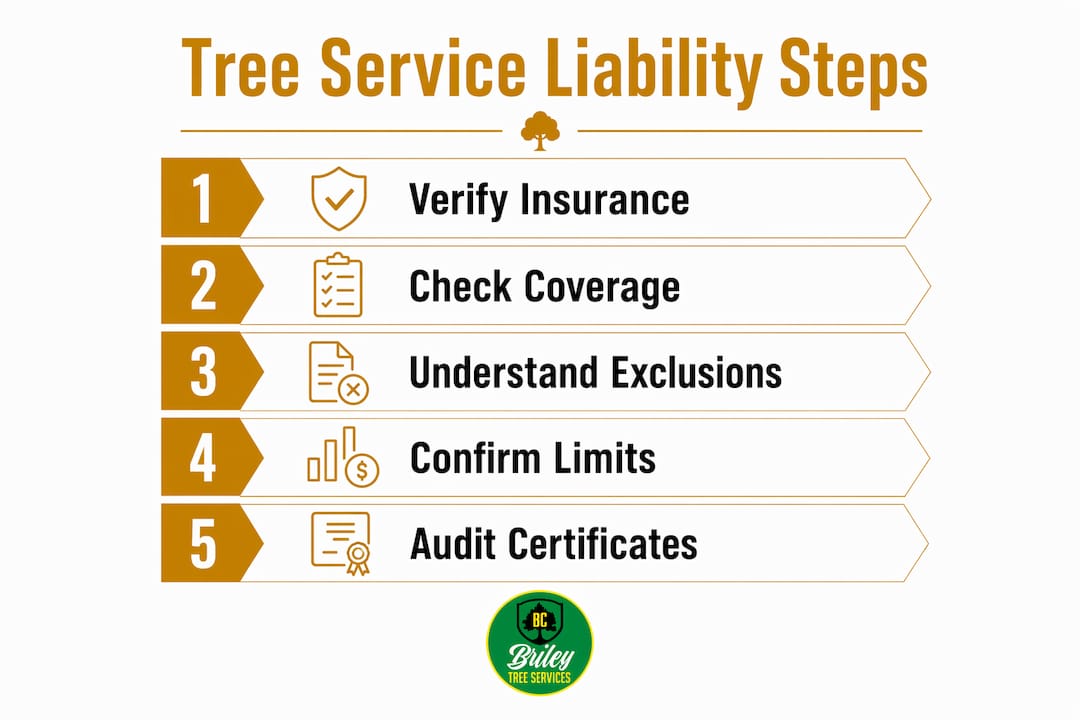
Follow these steps before any work begins:
- Request a Certificate of Insurance (COI). Ask the contractor to provide a current COI directly from their insurer. Do not accept a verbal confirmation.
- Confirm coverage types. The COI should show general liability and workers' compensation as separate line items. Without workers' compensation insurance, homeowners may be liable for medical bills if a worker is injured on their property.
- Check the coverage limits. Verify the per-occurrence and aggregate limits meet the $1 million/$2 million standard minimum.
- Look for additional insured status. Ask to be listed as an additional insured on the policy. Additional insured endorsements shift claim responsibility to the contractor's insurer first, protecting your own policy from being tapped.
- Verify the policy is active. Call the insurer listed on the COI to confirm the policy has not lapsed.
Pro Tip: Property managers should audit COIs every contract renewal cycle, not just at initial hire. Policies lapse, and a contractor who was covered last year may not be covered today.
General liability and workers' compensation are two distinct policies. General liability covers damage to third parties and property. Workers' compensation covers the contractor's own employees. You need to see both. Seeing only one is not enough.
For a full breakdown of what to look for, the tree service hiring checklist from Brileytreeservice covers each verification step in detail.
Common liability pitfalls and how to protect yourself
Several coverage gaps catch homeowners and property managers off guard after an incident has already occurred. Knowing them in advance is the only reliable protection.
The care, custody, and control exclusion is the most misunderstood gap. Most homeowners assume that if a contractor damages something on their property, the contractor's liability policy covers it. That is true for third-party property. It is not true for the tree itself while it is under the contractor's direct control.
"The care, custody, and control exclusion means that if a tree service company damages the tree they were hired to work on, the standard general liability policy will not pay for it. Property owners who want that protection need to confirm the contractor carries a specific endorsement covering contractor-controlled property."
High deductibles and aggregate limit exhaustion are two other risks. A contractor may carry a $2 million aggregate limit, but if they have already filed multiple claims in the same policy year, that limit may be partially or fully exhausted before your job begins. Ask for a current loss run report if you are managing a large commercial property.
Commercial clients often require certificates of insurance with additional insured and primary/non-contributory clauses for risk transfer purposes. The primary/non-contributory clause means the contractor's policy pays first, and your policy is not called upon unless the contractor's limits are fully exhausted. Without this clause, both insurers may dispute who pays, leaving you in the middle of a coverage argument.
Umbrella policies add a layer of protection above the base general liability limit. For property managers overseeing multiple units or large commercial sites, an umbrella requirement in the service contract is standard practice and worth enforcing.
What to do if damage or injury occurs during tree work
Acting quickly and methodically after an incident protects your legal and financial position. Delayed documentation weakens any claim you file.
- Stop the work. Ask the crew to pause operations until the situation is assessed. Continuing work can worsen damage or create additional liability.
- Document everything immediately. Photograph all damage from multiple angles before anything is moved or repaired. Note the date, time, and names of crew members present.
- Contact the contractor in writing. Send an email or text describing the incident. Written communication creates a record that verbal conversations do not.
- Pull the COI and contact the contractor's insurer directly. Do not rely on the contractor to file the claim on your behalf. Contact the insurer listed on the COI and open a claim yourself.
- Keep all receipts and repair estimates. Insurers require documentation of actual costs. Get at least two independent repair estimates.
- Consult a property attorney if the claim is disputed. If the contractor's insurer denies the claim or disputes liability, an attorney familiar with contractor liability can advise on next steps without requiring a full lawsuit.
Understanding neighbor's tree liability scenarios also helps property owners recognize when adjacent property disputes may intersect with contractor claims.
Key Takeaways
Tree service liability coverage is the financial and legal protection that every homeowner and property manager must verify before hiring a contractor, with standard minimums set at $1 million per occurrence and $2 million aggregate.
| Point | Details |
|---|---|
| Standard coverage minimums | Require $1M per occurrence and $2M aggregate before approving any tree service contract. |
| Property damage average | Claims average $18,000, covering roof, vehicle, and underground utility repairs. |
| Workers' comp is separate | General liability does not cover crew injuries; always verify workers' comp as a distinct policy. |
| Care, custody, and control gap | Standard policies exclude damage to the tree under service; confirm a specific endorsement exists. |
| Additional insured status | Request to be listed as additional insured so the contractor's policy responds first in any claim. |
What I've learned about tree service liability after years of watching claims unfold
The most common mistake I see is homeowners treating insurance verification as a formality. They ask for proof of insurance, glance at a certificate, and move on. They never check whether the policy is active, whether the limits are adequate, or whether workers' compensation is included. Then a branch falls on a car, or a worker gets hurt, and the financial exposure lands on them.
The second mistake is assuming that general liability covers everything. It does not. The care, custody, and control exclusion alone has surprised more property owners than any other single policy detail. A contractor can drop a tree on your garage and have that covered. That same contractor can destroy the tree they were hired to prune, and the standard policy will not pay a dollar toward it.
My honest advice: treat the COI review the same way you treat a contract review. Read it. Call the insurer to confirm it is active. Ask specifically about workers' compensation and the care, custody, and control endorsement. That ten-minute process is the difference between a covered claim and an out-of-pocket loss.
— Tatum
Brileytreeservice: insured tree care for Shreveport homeowners
Brileytreeservice carries full general liability and workers' compensation coverage on every job across Shreveport, Bossier City, and Northwest Louisiana. Homeowners and property managers can request a Certificate of Insurance before any work begins. Brileytreeservice handles tree removal, trimming, stump grinding, and emergency storm cleanup with a crew that shows up on time and cleans up completely. Every job is backed by proper coverage, so you are not left managing a claim after the crew leaves. Contact Brileytreeservice for a free estimate and confirm your property is protected from the first cut to the final cleanup.
FAQ
What is tree service liability insurance?
Tree service liability insurance is a general liability policy that covers bodily injury and property damage caused by a tree service contractor during their work. It protects both the contractor and the property owner from out-of-pocket costs when accidents occur.
Do tree services need workers' compensation insurance?
Yes. Workers' compensation is a separate policy from general liability and covers medical costs for crew members injured on the job. Without it, the property owner may be personally liable for those medical bills.
What coverage limits should I require from a tree service?
The standard minimum is $1 million per occurrence and $2 million aggregate. Luxury residential and commercial contracts often require higher limits, up to $5 million total.
What is the care, custody, and control exclusion?
The care, custody, and control exclusion means a standard liability policy will not cover damage to the tree the contractor is actively working on. A separate endorsement is required to cover that specific risk.
How do I verify a tree service contractor's insurance?
Request a Certificate of Insurance directly from the contractor, then call the insurer listed on the certificate to confirm the policy is active and the limits are current.