
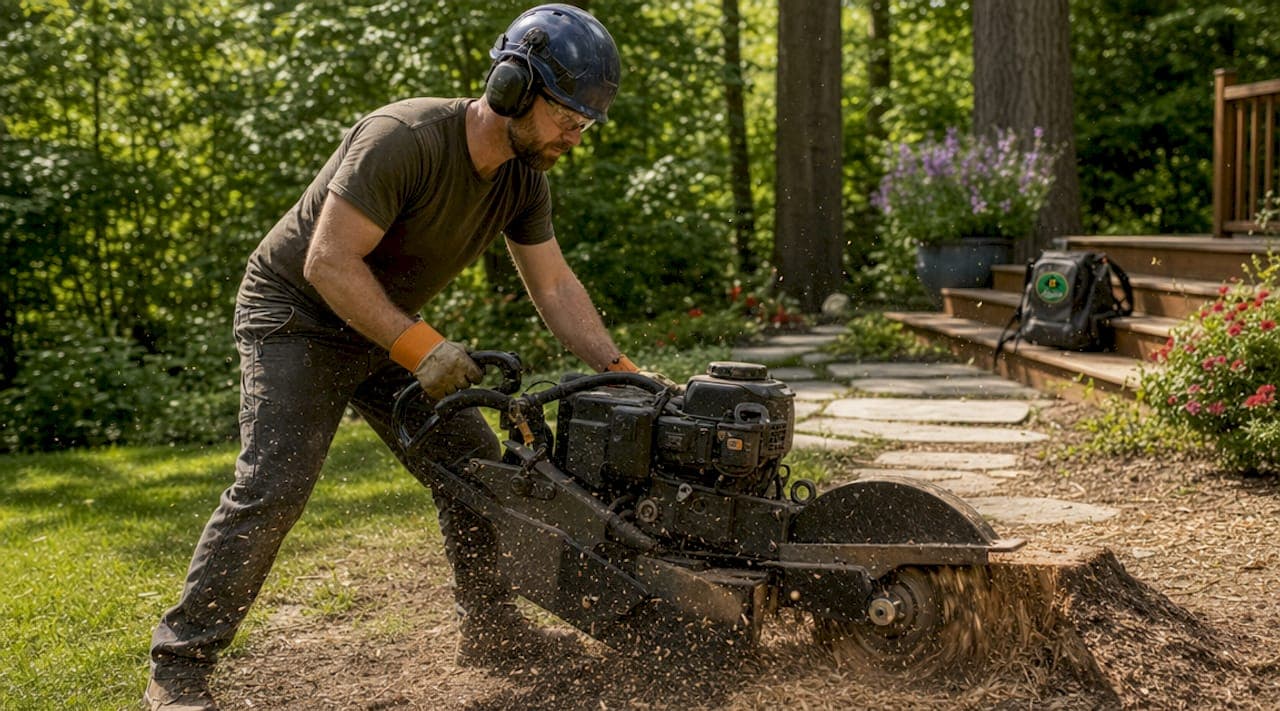
Stump grinding is defined as the mechanical process of reducing a tree stump to wood chips below the soil surface using a specialized machine fitted with a rotating carbide-tipped cutting wheel. It is the most practical method for clearing a stump after tree removal without excavating the entire root system. Standard grinding depths range from 4 to 8 inches, though deeper passes are possible when construction or landscaping requires it. Most residential jobs take between 30 minutes and 2 hours, making it one of the fastest property cleanup options available to homeowners and commercial property managers alike.
What is stump grinding and how does the process work?
Stump grinding uses a stump grinder, a machine built around a rotating cutting wheel studded with carbide teeth. The wheel spins at high speed and the operator moves it back and forth across the stump face, shaving the wood down in layers. Each pass removes material until the stump sits below ground level, leaving behind a pile of wood chip mulch where the stump once stood.
The process follows a clear sequence every time a professional arrives on site.
- Site assessment. The operator walks the area to check for underground utilities, irrigation lines, and nearby structures before any equipment starts.
- Stump preparation. Rocks, debris, and surface roots close to the grinder path are cleared to protect the cutting wheel and prevent projectiles.
- Grinding passes. The cutting wheel works across the stump in overlapping horizontal passes, moving progressively deeper with each round.
- Depth confirmation. The operator measures the grinding depth to confirm it meets the agreed specification, whether standard 4 to 8 inches or deeper for structural projects.
- Cleanup. Wood chips are raked back into the hole or removed from the site depending on the homeowner's preference.
Wood species and site conditions directly affect how long each job takes. Hardwoods like oak and hickory resist the cutting wheel longer than softwoods like pine or sweetgum. A large hardwood stump in a tight backyard takes considerably more time than a small pine stump in an open lawn.
Pro Tip: Before scheduling any grinding work, call 811 (the national "Call Before You Dig" line) to have underground utilities marked. A professional operator will do this as standard practice, but confirming it upfront protects your yard and your safety.
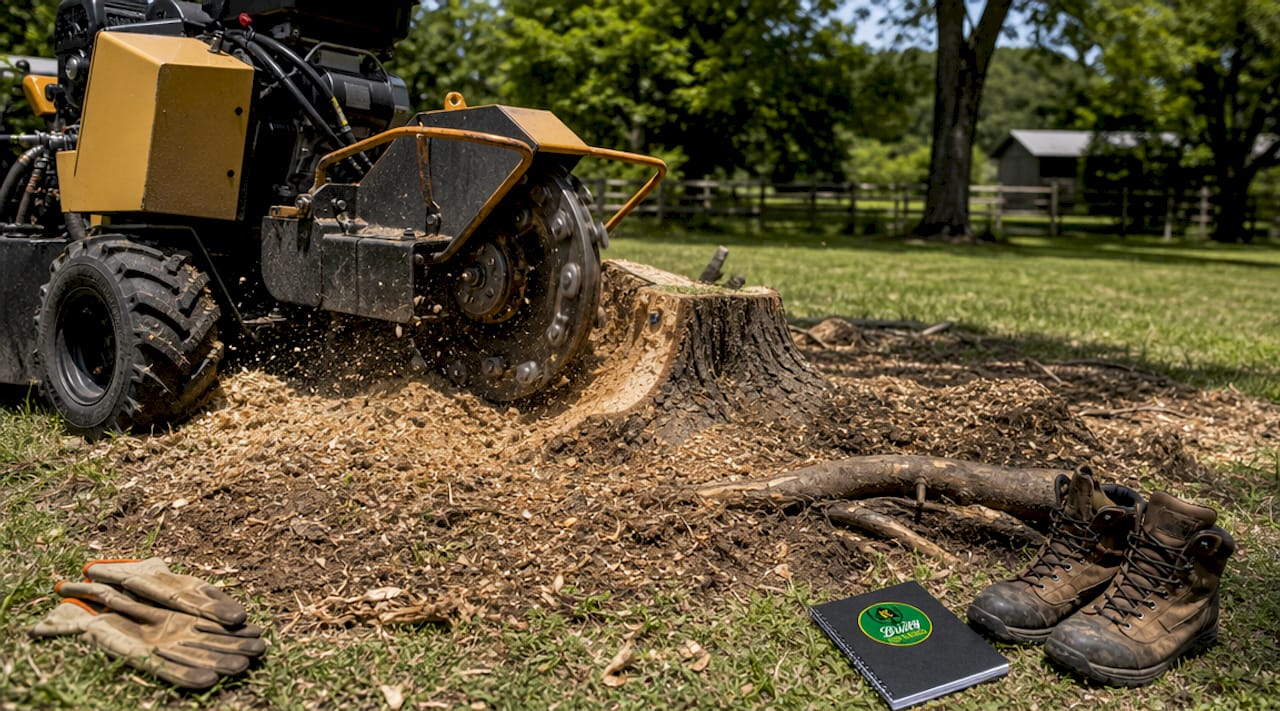
Why stump grinding beats full removal for most properties
Stump grinding is less invasive than full stump removal because it does not require excavating the entire root ball. Full removal pulls the root system out of the ground, leaving a hole several feet wide and deep that must be backfilled before the yard is usable again. Grinding avoids that disruption entirely.
The practical advantages for homeowners and property managers are direct:
- Faster site restoration. The ground is ready for replanting, seeding, or sodding within days rather than weeks.
- No tripping hazard. The stump disappears below grade, removing a liability risk on residential and commercial properties.
- Pest reduction. Decaying above-ground stumps attract termites, carpenter ants, and beetles. Grinding eliminates that habitat before an infestation starts.
- Sprout prevention. Grinding shreds stump tissue effectively, preventing the root system from sending up new growth.
- Free mulch. The wood chips produced can be spread directly over garden beds or used as ground cover.
The cost difference is also significant. Stump grinding typically costs $175 to $475, while full stump removal runs $300 to $1,000 due to the heavier excavation equipment and labor involved. For most residential lots, grinding delivers the same functional result at a lower price point.
| Factor | Stump grinding | Full stump removal |
|---|---|---|
| Invasiveness | Low. No large excavation required. | High. Entire root ball is extracted. |
| Site recovery time | Days | Weeks |
| Cost range | $175 to $475 | $300 to $1,000 |
| Root system | Left to decompose underground | Fully removed |
| Best use case | Lawn restoration, replanting | Construction, foundation work |
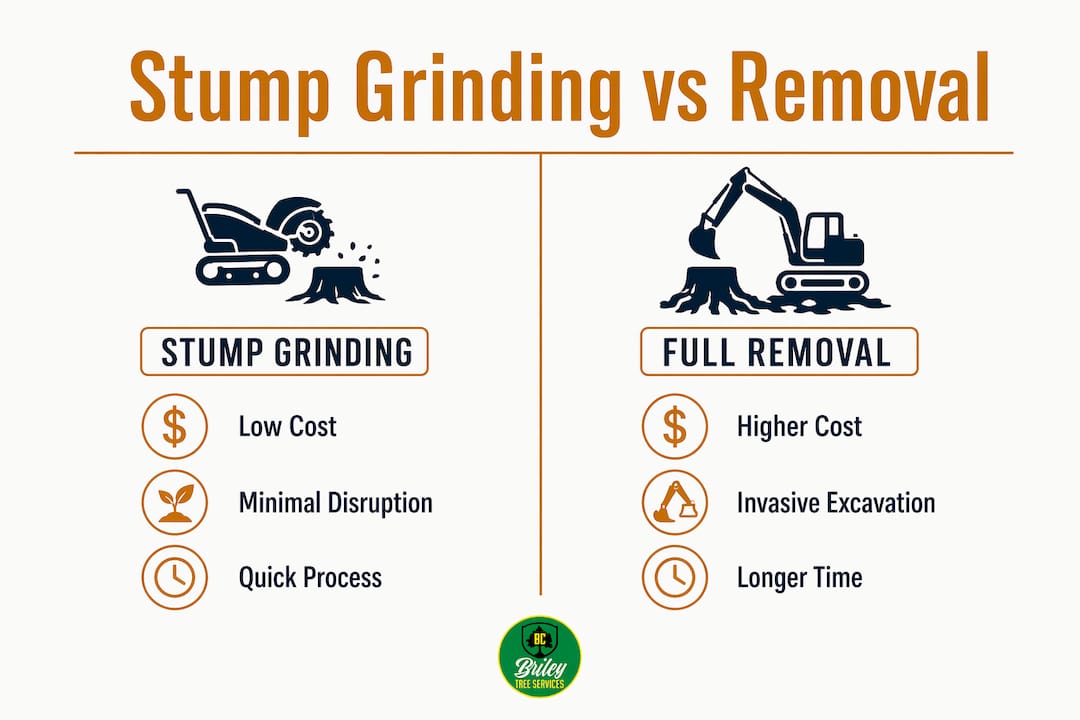
For homeowners focused on yard restoration after grinding, grinding is almost always the right call. The only scenario where full removal makes more sense is when the root system sits directly under a planned structure like a driveway, patio, or building foundation.
What factors affect stump grinding cost and complexity?
No two stumps grind the same way. Several variables determine how long a job takes and what it costs, and understanding them helps you ask the right questions before hiring a crew.
- Stump diameter. Larger stumps require more passes and more time. A 12-inch stump grinds faster than a 36-inch stump with a wide root flare.
- Wood hardness. Hardwoods take longer to grind than softwoods. Oak, elm, and hickory dull cutting teeth faster and slow the process.
- Grinding depth required. Standard residential grinding goes 4 to 8 inches below grade. If you plan to pour concrete or install pavers, deeper grinding over 12 inches is necessary to prevent future ground instability.
- Site accessibility. A stump in an open front yard is straightforward. A stump wedged against a fence, near a gas meter, or in a tight side yard requires a smaller machine and more careful maneuvering.
- Number of stumps. Commercial properties and bulk stump grinding jobs often qualify for volume pricing. Scheduling bulk stump grinding for a commercial site with multiple stumps at once reduces the per-stump cost significantly.
- Operator experience. Stump grinder operators must adjust technique based on stump diameter, wood hardness, and root complexity. An experienced operator works faster and avoids costly mistakes.
Pro Tip: When getting an estimate, tell the contractor exactly what you plan to do with the space afterward. If you are planting grass, standard depth is fine. If you are pouring a slab or building a raised bed, request deeper grinding and confirm the depth in writing before work begins.
Manual stump removal is only practical for stumps under 12 inches in diameter. Anything larger demands professional equipment for both safety and efficiency. Renting a stump grinder is an option, but operating one without training creates real risks, including kickback injuries and underground utility strikes.
What are the limitations of stump grinding?
Stump grinding is effective, but it does not do everything. Setting accurate expectations before the job prevents disappointment after it.
- Roots stay in the ground. Grinding removes the visible stump and surface roots, but the bulk of the root system remains underground. Those roots decompose naturally over time, which is environmentally sound and avoids structural disruption, but they do not disappear immediately.
- A slight depression may form. As the wood chips settle and the underground roots break down, a small low spot can develop over the grinding area. Filling it with topsoil or the wood chip mulch from the job corrects this easily.
- Not a substitute for full removal near structures. If a stump sits directly under a planned driveway or concrete slab, grinding alone may not provide enough ground stability. Deeper grinding or full removal is the correct approach in those cases.
- DIY grinding carries real risk. Stump grinders throw debris at high velocity and can strike buried lines. Homeowners benefit most from professional grinding because trained operators manage these hazards as a matter of routine.
- Species-specific sprouting. Some tree species, particularly certain oaks and maples, can still produce root sprouts after grinding if the root system remains intact. Applying a stump treatment product to exposed root tissue before grinding reduces this risk.
Understanding these limits does not diminish the value of stump grinding. It simply helps you plan the follow-up work accurately, whether that means ordering topsoil, scheduling a landscaper, or specifying a deeper grind from the start.
Key takeaways
Stump grinding is the most cost-effective and least disruptive method for removing a tree stump on residential and commercial properties, with costs ranging from $175 to $475 and jobs completing in under two hours.
| Point | Details |
|---|---|
| Core process | A carbide-tipped cutting wheel grinds the stump to wood chips 4 to 8 inches below grade. |
| Cost advantage | Grinding costs $175 to $475 versus $300 to $1,000 for full removal. |
| Depth matters | Specify grinding depth before work starts. Construction projects need 12 or more inches. |
| Roots remain | Underground roots decompose naturally. This is normal and environmentally sound. |
| Hire a professional | Trained operators handle utility risks and adjust technique for wood species and site conditions. |
Why I always recommend grinding over removal for standard yards
I have seen homeowners spend twice the money on full stump removal when grinding would have given them the exact same result. The instinct to "get it all out" makes sense emotionally, but it rarely makes sense practically. Unless you are pouring concrete directly over the stump location, the roots left underground are not a problem. They break down over two to ten years depending on species, and the yard above them stays stable throughout.
The mistake I see most often is homeowners not specifying depth upfront. They get a standard grind, then decide six months later to install a patio over the spot. At that point, they need a second visit and a deeper pass. Telling your contractor the end use of the space before the first grind saves time and money.
I also think the DIY rental route is underestimated as a risk. Stump grinders are powerful machines that require real skill to operate safely. The cost difference between renting and hiring a professional is smaller than most people expect, and the liability gap is enormous. A professional carries insurance. A homeowner operating a rental grinder does not have that protection if something goes wrong.
For property managers handling landscape design planning across multiple sites, bulk grinding contracts with a single reliable crew are far more efficient than managing individual jobs. The per-stump cost drops, the scheduling is simpler, and the quality stays consistent.
— Tatum
Get professional stump grinding from Brileytreeservice

Brileytreeservice provides professional stump grinding for residential and commercial properties throughout Shreveport, Bossier City, and Northwest Louisiana. The team uses commercial-grade stump grinders and adjusts grinding depth based on your specific plans for the space, whether that is lawn restoration, replanting, or construction prep. Every job includes a site assessment, cleanup of wood chip debris, and a free estimate before any work begins. Property managers looking to schedule stump grinding services for multiple sites can request bulk pricing directly. Contact Brileytreeservice today to get a free estimate and clear your property efficiently.
FAQ
What is the stump grinding definition in simple terms?
Stump grinding is the process of using a machine with a rotating cutting wheel to reduce a tree stump to wood chips below the soil surface. The result is a cleared, level area ready for replanting or landscaping.
How deep does stump grinding go?
Standard grinding depth is 4 to 8 inches below grade for typical lawn and garden use. Projects involving driveways, slabs, or structural work require grinding 12 or more inches deep to prevent future ground instability.
How much does stump grinding cost compared to full removal?
Stump grinding costs $175 to $475 for most residential stumps, while full stump removal runs $300 to $1,000 due to the excavation equipment and labor required to extract the root ball.
Can you remove a stump without grinding?
You can remove a stump without grinding by manual excavation, chemical treatment, or burning, but manual removal is only practical for stumps under 12 inches in diameter. For larger stumps, professional grinding is the safest and most cost-effective option.
What happens to the roots after stump grinding?
The root system remains underground and decomposes naturally over time. This is standard practice in residential settings and does not cause structural problems for lawns or garden beds in most cases.