
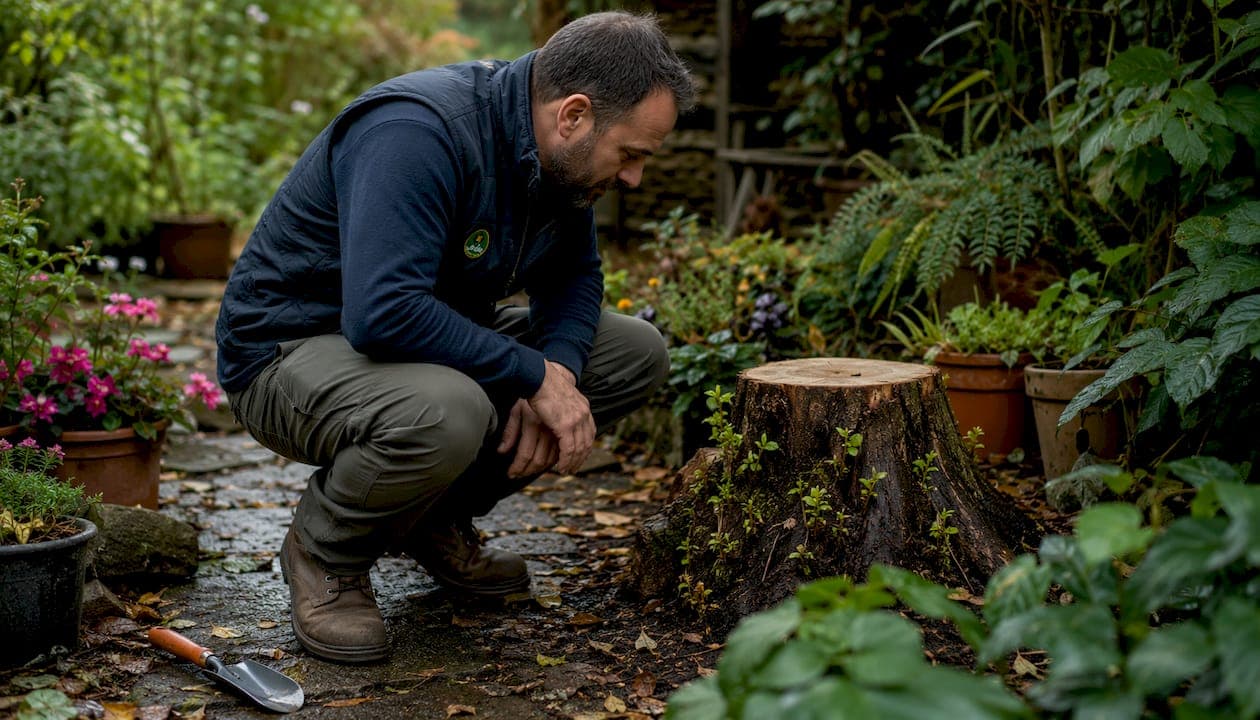
Yes, many tree stumps will regrow after cutting. This is called stump sprouting, and it happens when dormant buds at the root collar activate after the tree is removed. For homeowners and property managers, that means a cut stump is not always a finished job.
Here is what to do right now:
- Monitor the stump for new shoots within the first few weeks after removal.
- Plan for grinding or excavation if the species is a known sprouter or if you cannot allow regrowth on the site.
- Contact a licensed tree service like Brileytreeservice if sprouts are already appearing, the stump is large, or roots are near structures.
Pro Tip: Check the species before assuming the stump is dead. Crape myrtles, willows, and many oaks will sprout reliably. Conifers like pines and spruces almost never do.
Table of Contents
- Why tree stumps regrow: the biology behind stump sprouting
- Which tree species are most likely to resprout
- What site and stump factors determine whether sprouts survive
- When sprouts appear and how long regrowth can persist
- How to stop a stump from regrowing: your practical options
- When you should call a licensed tree service
- Key Takeaways
- Stump regrowth is a maintenance problem, not a recovered tree
- Brileytreeservice stops stump regrowth for good
- Useful sources and further reading
Why tree stumps regrow: the biology behind stump sprouting
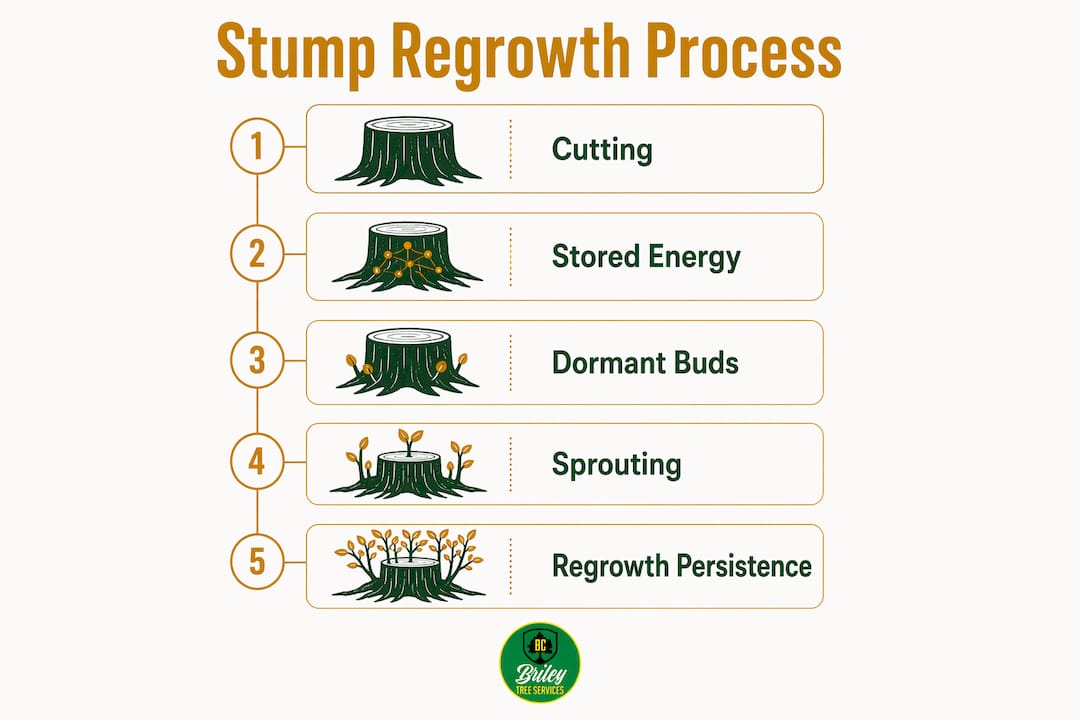
The short answer is stored energy. When a tree is cut, the root system still holds large carbohydrate reserves. Dormant buds at the root collar, which are genetically juvenile and can remain viable for the tree's entire lifespan, activate in response to that disturbance. These are different from epicormic buds found higher on the trunk. Root-collar buds sit at or just below the soil line, which is why sprouts often emerge right at the base of the stump.
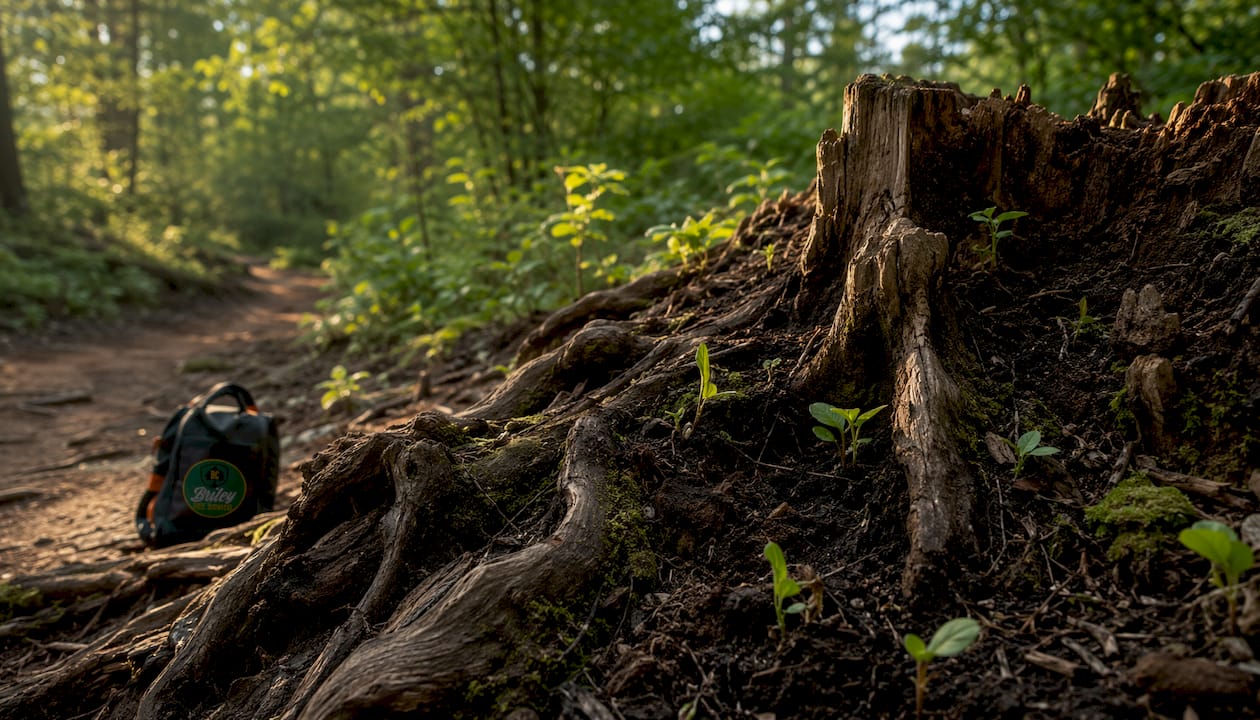
Those carbohydrate reserves matter a great deal. Large root systems supply the energy that drives rapid early sprout growth, giving stump sprouts a competitive advantage over seedlings starting from scratch. A sprout drawing on an established root system can outgrow a seedling many times over in the first season.
There is another factor most homeowners do not expect. Root grafts and mycorrhizal networks can transfer dissolved sugars from neighboring trees into a cut stump, keeping it biologically active even without foliage. This is why some stumps continue adding annual rings or forming callus tissue long after felling.
Stump diameter is linked to higher sprout density and better early survival. Larger stumps support denser, more vigorous sprouts because they carry more stored carbohydrates and root mass.
Pro Tip: If a neighboring tree of the same species is within root-contact distance, the stump may stay active longer than you expect, even without visible sprouts.
Which tree species are most likely to resprout
Species biology is the single biggest predictor of whether a stump will sprout. Hardwoods, particularly deciduous species, are far more likely to resprout than conifers. USDA Forest Service research confirms that stump sprouting is an evolutionary adaptation in many temperate hardwoods, developed to recover after fire, logging, or other major disturbances.
Common prolific sprouters include:
- Crape myrtle — notorious for vigorous regrowth from even small remnants
- Willow — fast-growing sprouts from stumps and roots
- Many oak species — strong sprouters, especially after disturbance
- Sweetgum, elm, and cottonwood — all known to produce persistent sprouts
Conifers, including pines, spruces, and firs, rarely resprout after cutting. Their root systems do not carry the same dormant bud structure at the root collar, so removal is generally more final.
Pro Tip: Before choosing a removal strategy, identify the species. A local arborist can confirm whether your stump is a high-risk sprouter and recommend the right treatment for your region.
What site and stump factors determine whether sprouts survive
Even a species known to sprout will not always produce persistent growth. Several practical variables shape the outcome.
- Stump height: Taller stumps retain more cambium tissue and more dormant buds, increasing the chance of successful sprouting. Cutting close to the ground reduces but does not eliminate that risk.
- Root diameter and stored carbohydrates: Larger root systems mean more fuel. Stump diameter correlates with sprout vigor and early survival rates.
- Moisture and soil productivity: Drier sites can show higher sprouting probability for some species, while rich, moist soil encourages faster sprout development once shoots emerge.
- Light availability: Increased light after canopy removal stimulates dormant bud activation. Stumps in newly opened areas often sprout more aggressively.
- Browsing pressure: Deer and livestock can repeatedly browse new shoots, preventing sprouts from maturing even when the stump has strong sprouting potential.
- Season of cutting: Trees cut during active growth periods may sprout faster. Cutting in late fall or winter, when carbohydrate reserves are lower, can reduce initial sprout vigor.
Pro Tip: On commercial properties with open, sunny conditions and no browsing pressure, assume high-risk species will sprout. Plan for follow-up treatment at the time of removal, not after sprouts appear.
When sprouts appear and how long regrowth can persist
First sprouts from a viable stump often appear within weeks to a few months after cutting, depending on species and season. Vigorous sprouters like crape myrtle and willow can produce dense new growth within a single growing season. Left unmanaged, those sprouts can return annually for years.
Large root systems are the key driver of persistence. Established root carbohydrate reserves can sustain repeated sprouting cycles even after multiple rounds of cutting. Dormancy can also break unexpectedly after years of apparent inactivity, particularly following drought, soil disturbance, or nearby construction.
Cost drivers for professional removal scale with the stump:
- Stump diameter is the primary factor in grinding time and equipment needs.
- Grinding depth affects permanence; deeper grinding costs more but reduces re-sprouting risk.
- Site access for equipment affects labor and setup time.
- Herbicide application or repeat visits add cost but improve long-term results on persistent species.
Shallow grinding or one-off cutting rarely stops regrowth from a substantial root system. Deep grinding or excavation is the more reliable path to permanent removal.
How to stop a stump from regrowing: your practical options
Several methods can stop stump sprouting. Each has real trade-offs.
| Method | Speed to stop sprouts | Permanence | Cost & labor | Safety/permits | Environmental impact |
|---|---|---|---|---|---|
| Stump grinding | Fast (one visit) | High when ground deep | Moderate; requires equipment | Low; rarely needs permits | Minimal; mulch left on site |
| Full excavation | Fast (one visit) | Very high | High; heavy equipment | May need permits near utilities | Significant soil disturbance |
| Targeted herbicide | Moderate (days to weeks) | Moderate to high | Low to moderate | Check local regulations | Localized; use licensed applicator |
| Repeated cutting | Slow; ongoing | Low | Low; labor-intensive | None | Minimal |
| Natural suppression | Very slow | Low | None | None | Positive for habitat |
Professional stump grinding to a depth of roughly 12 inches or more removes the root collar and the dormant buds that drive regrowth. Combining grinding with a targeted herbicide application increases permanence on stubborn species. That combination costs more upfront but typically eliminates the need for repeat visits.
For property managers, timing matters. Treat stumps in late fall or early spring before the growing season begins. Confirm site access for equipment and arrange debris disposal in advance.
Pro Tip: Avoid surface-only cutting as a long-term solution. It depletes root reserves slowly but rarely stops a vigorous sprouter within a reasonable timeframe.
When you should call a licensed tree service
Some stump situations call for professional help from the start. Trying to manage them without the right equipment or expertise creates safety risks and often leads to repeated costs.
Call a licensed crew when:
- Sprouts are emerging from a large-diameter stump with an extensive root system.
- Roots are growing near a foundation, sidewalk, or underground utility line.
- DIY cutting or surface treatment has not stopped regrowth after one or two seasons.
- The property is commercial and recurring regrowth creates liability, mowing conflicts, or aesthetic problems.
- You need documentation of licensed and insured work for an insurance claim or permit.
A professional crew will assess the site, select the right grinding depth or excavation method, handle debris disposal, and advise on herbicide follow-up if needed. Ask any service provider about their grinding depth standard, whether they carry liability insurance, and whether they offer a follow-up visit if sprouts return.
Pro Tip: Ask specifically whether the crew grinds below the root collar. Surface grinding leaves the bud zone intact and is a common reason sprouts return after a professional visit.
Key Takeaways
Stump sprouting is driven by dormant root-collar buds and stored carbohydrates, and grinding deep enough to remove that bud zone is the most reliable way to stop it permanently.
| Point | Details |
|---|---|
| Biological cause | Dormant buds at the root collar activate after cutting, fueled by root carbohydrate reserves. |
| Species and site matter | Hardwoods like crape myrtle, willow, and oak sprout reliably; conifers rarely do. |
| Most reliable fix | Deep stump grinding (roughly 12 inches or more) removes the bud zone and stops regrowth. |
| Persistence risk | Large root systems can sustain sprouting for years; shallow cuts or one-off trimming rarely solve it. |
| Professional help | Brileytreeservice handles stump grinding, excavation, and herbicide follow-up for residential and commercial properties across North Louisiana. |
Stump regrowth is a maintenance problem, not a recovered tree
Most people who see sprouts emerging from a cut stump assume the tree is coming back. It is not, at least not in any meaningful structural sense. Stump sprouts are typically weak, multi-stemmed, and attached to a decaying base. They draw energy from the root system, but they cannot recreate the structural integrity of the original trunk. For property managers, that distinction matters practically. Sprouts create mowing conflicts, trip hazards, and aesthetic problems. They are a recurring maintenance cost, not a recovery.
The biology of stump sprouting is well-documented as an evolutionary adaptation, useful in forest regeneration after fire or logging. On a managed commercial lot or a residential yard, that same adaptation works against you. The stump is not recovering. It is cycling through a stress response that will continue until the root system is exhausted or removed.
What often gets overlooked is the underground dimension. Root grafts and mycorrhizal connections to neighboring trees can extend a stump's biological activity well beyond what the visible stump suggests. A stump that looks dead may still be receiving sugars from an adjacent tree. That is why some stumps sprout years after removal with no obvious explanation.
The practical takeaway for property managers is straightforward: treat stump removal as a one-time investment in a permanent solution, not a maintenance item to revisit each season.
Brileytreeservice stops stump regrowth for good
Stump sprouts are a predictable problem with a clear solution. Brileytreeservice provides stump grinding, full excavation, and herbicide follow-up for residential and commercial properties across Shreveport, Bossier City, Ruston, and surrounding North Louisiana areas. Every job is handled by a licensed and insured crew that grinds to the depth needed to remove the root collar, not just the visible stump.
For commercial property managers, Brileytreeservice offers scheduled maintenance plans that address recurring regrowth before it becomes a liability. For homeowners, the process is straightforward: on-site assessment, grinding or excavation, full cleanup, and disposal. No sprouts left to manage next season. Contact Brileytreeservice for a free on-site estimate and get a permanent fix, not a temporary cut.
Request a free estimate today.
Useful sources and further reading
The following sources were used throughout this article. Each is worth consulting for deeper technical detail.
- Penn State Extension — What Makes Some Tree Species Prolific Stump Sprouters? — Primary source for the biology of dormant root-collar buds and species-level sprouting behavior. Referenced in the biology and species sections.
- USDA Forest Service, 2022 — Stump Sprouting Research — Peer-reviewed research on sprouting probability across species, sites, and disturbance types. Referenced in species variation and site factors sections.
- Ecological Processes — Root Reserves and Stump Sprout Growth — Documents the relationship between root carbohydrate reserves, stump diameter, and sprout vigor. Referenced in the biology and timeline sections.
- Trees Pacific Northwest — Can "Dead" Stumps Keep Growing? — Explains root grafts and mycorrhizal networks as mechanisms for stump biological activity. Referenced in the biology section.
- UC Oaks / UC ANR — Stump Sprouting as an Alternative Regeneration Approach — Covers browsing pressure and real-world factors that limit sprout establishment. Referenced in the site factors section.