
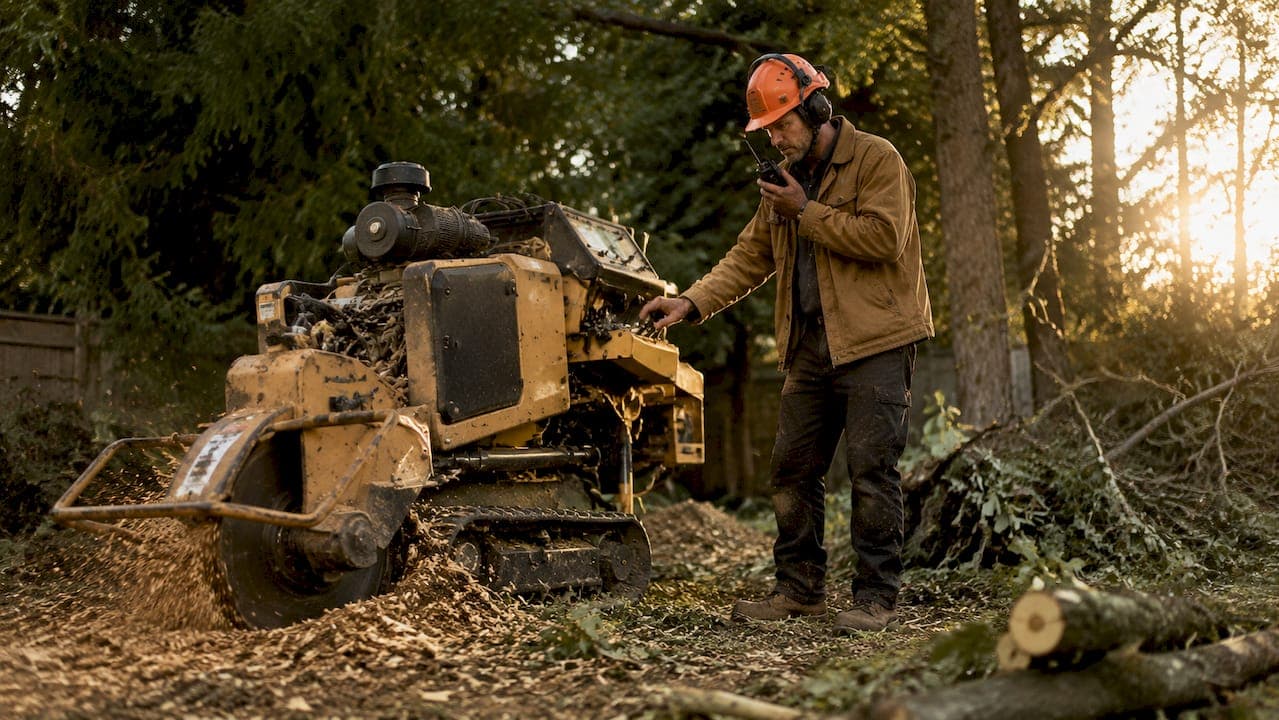
Stump removal is defined as the process of eliminating a tree stump from your yard, either by grinding it down below soil level or by fully excavating it along with its root system. Professional stump removal services cover equipment, labor, and site cleanup, though what is included in stump removal varies depending on the method chosen. The two primary approaches are stump grinding and full excavation. Each uses different equipment, creates different site conditions, and carries different costs. Knowing what each method includes helps you hire the right service and avoid unexpected charges.
What is included in professional stump grinding?
Stump grinding is the most common residential stump removal method. A technician uses a specialized grinding machine to chip the stump into wood chips, working the machine back and forth across the stump until it is reduced to mulch. The process is fast, typically completed within a few hours, and causes minimal disruption to the surrounding lawn.
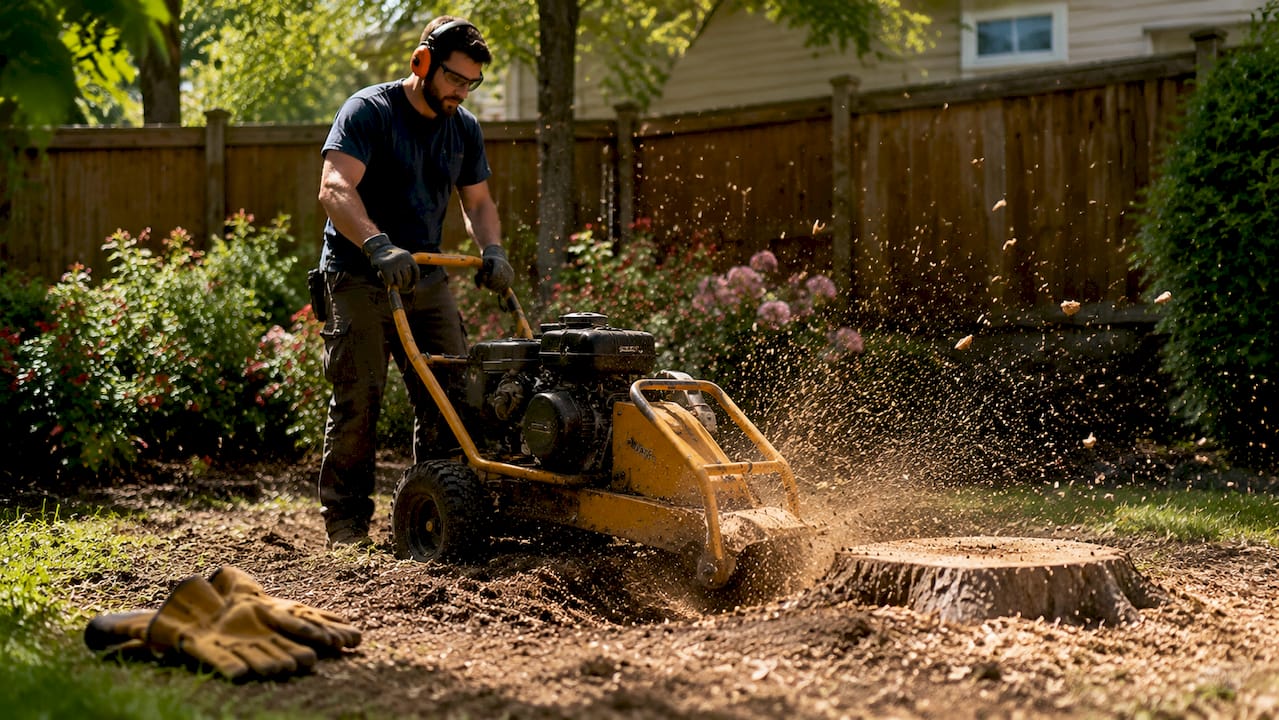
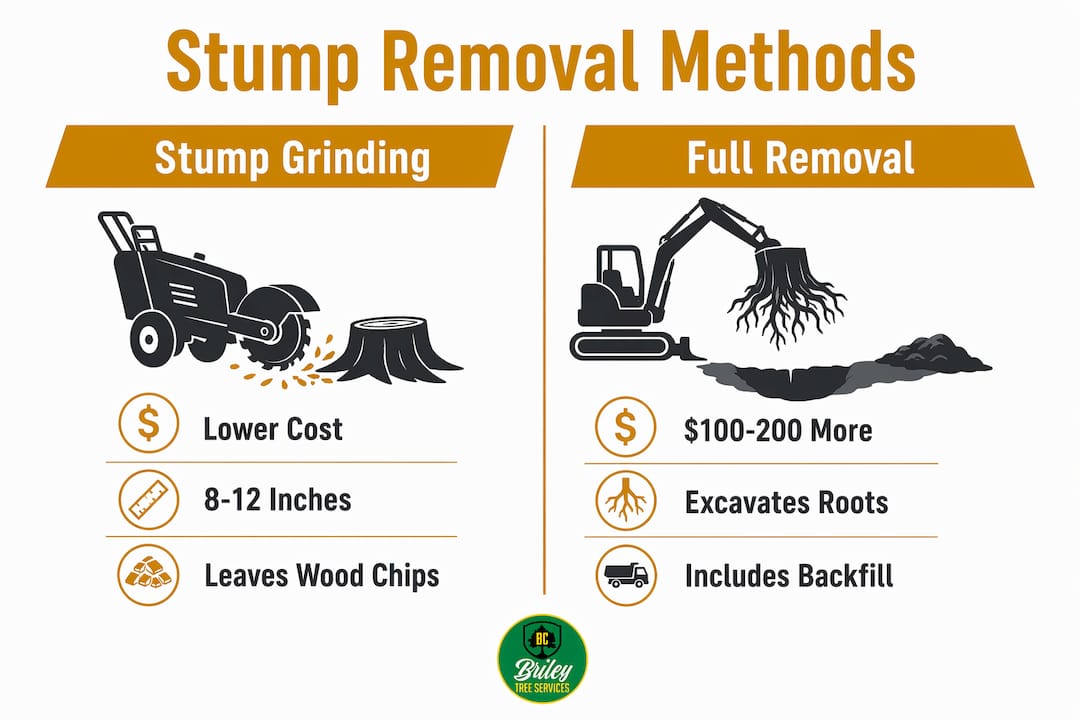
Grinding machines chip the stump to 8–12 inches below ground level. That depth prevents regrowth and leaves enough room for grass seed or sod to be laid over the area. Most homeowners find this depth sufficient for standard lawn restoration.
Here is what a standard stump grinding service typically includes:
- Site assessment to measure stump diameter and check equipment access
- Grinding the stump to 8–12 inches below grade
- Wood chip production left on site as fill or mulch
- Surface raking to level the immediate area
- Basic cleanup of large debris around the work zone
One detail many homeowners miss: stump grinding is almost never included in the base price of tree removal. It is priced separately based on stump diameter and site accessibility. Always confirm this with your contractor before signing any agreement.
Regarding debris, many basic quotes leave grindings on site as fill material. Hauling the wood chips away is often listed as an add-on service at extra cost. If you want a clean yard after the job, ask specifically whether mulch removal is included.
Pro Tip: Ask your contractor to confirm in writing whether wood chip haul-away is included. A pile of wood chips left behind can be several cubic yards in volume, and removing it yourself is more work than most homeowners expect.
Cost factors for grinding include stump diameter, root spread, soil conditions, and how accessible the stump is to the machine. A stump in a tight backyard with a narrow gate will cost more than one in an open front yard.
When is full stump removal the right choice?
Full stump removal is a major excavation project. A crew uses heavy equipment such as an excavator or backhoe to dig out the entire stump along with its root ball. Full removal uses excavators, creates 3–5 foot deep pits, and requires backfilling and grading to restore the site. That scale of work is significantly more involved than grinding.
Here is what full stump removal typically includes:
- Pre-job utility marking to avoid underground lines
- Excavation of the stump and root ball with heavy equipment
- Root mass extraction and debris loading
- Backfilling the pit with fill dirt
- Soil compaction to prevent settling
- Rough grading to level the surface
The excavated root mass and stump can weigh as much as the tree that stood above ground. Full stump removal is a major excavation requiring significant debris disposal and soil compaction to prevent settling over time. That weight translates directly into hauling costs and labor time.
| Scenario | Why Full Removal Is Recommended |
|---|---|
| New construction or addition | Roots and stump must be cleared for footings |
| Replanting a tree in the same spot | Root ball space must be fully cleared |
| Underground utility work nearby | Roots can interfere with pipe or line installation |
| Driveway or patio installation | Decomposing roots cause surface settling |
Pro Tip: Before scheduling full removal, call 811 to have underground utilities marked. Excavators can sever gas, water, or electrical lines if the crew does not know where they run.
Full removal costs $100 to $200 more than grinding due to the additional labor and equipment required. For most standard residential lawns, grinding delivers the same visual result at a lower price. Full removal makes sense when you have specific construction or replanting plans for that exact spot.
Stump grinding vs. full removal: which one fits your yard?
Choosing between grinding and full removal comes down to what you plan to do with the site afterward. Grinding is preferred for fast site reuse, clearing stumps within hours and allowing replanting or hardscaping soon after. Full removal takes longer but leaves the ground completely clear of root material.
| Factor | Stump Grinding | Full Removal |
|---|---|---|
| Cost | Lower | $100–$200 more |
| Time to complete | A few hours | 2–4 hours or more |
| Site disruption | Minimal | Significant excavation |
| Roots left behind | Yes | No |
| Best for | Lawn restoration, landscaping | Construction, replanting |
| Equipment used | Grinding machine | Excavator or backhoe |
Grinding is suitable for lawns and landscaping; full removal is the right call for footings, utilities, and heavy construction. That distinction is the most practical guide for any homeowner making this decision.
A few additional factors worth considering:
- Noise and vibration: Grinding machines are loud but localized. Excavators create more ground vibration and can affect nearby structures or landscaping.
- Replanting: Grinding leaves roots and wood chips underground, which can complicate replanting directly in that spot. Full removal clears the way completely.
- Lawn recovery time: A ground-down stump area can be seeded within days. An excavated pit needs backfill, compaction, and settling time before it is ready for use.
Stump grinding reduces the stump below grade but leaves roots and wood chips behind, which can complicate replanting or construction at that exact location. If your plans are flexible, grinding is the faster and more affordable path. If you need a clean slate, full removal is worth the added cost.
What cleanup and site restoration should you expect?
Cleanup is one of the most misunderstood parts of the stump removal process. Many homeowners assume the crew will leave the yard looking exactly as it did before. The reality depends on the method used and what your service contract specifies.
For grinding jobs, standard cleanup typically includes:
- Raking the immediate work area
- Piling or spreading wood chips in the stump cavity
- Removing large surface debris
For full removal jobs, site restoration is more involved and should include:
- Hauling away the excavated stump and root mass
- Backfilling the pit with clean fill dirt
- Compacting the soil in layers to prevent future settling
- Rough grading to match surrounding grade
Detailed cleanup and backfill after full removal are critical. Poor follow-up leads to uneven settling and site hazards over time. A pit that is filled but not compacted properly will sink months later, creating a depression or tripping hazard in your yard.
One common surprise: homeowners often underestimate debris volume and cleanup time for full stump removal. A large root ball can fill a pickup truck or more. Confirm with your contractor how debris disposal is handled and whether it is included in the quoted price.
For guidance on what professional cleanup looks like after any tree work, the tree service cleanup process covers what homeowners should expect from start to finish.
Pro Tip: Request that your service contract specify whether backfill, compaction, and grading are included. "Site cleanup" is vague. Get the specific tasks listed so there are no disputes after the job is done.
Soil settling is also worth planning for. Even well-compacted backfill can drop slightly over the first few months as the soil adjusts. Many contractors will return to top off the fill, but only if that follow-up is written into the agreement.
Key takeaways
Professional stump removal includes either grinding to 8–12 inches below grade or full excavation with backfill and compaction, and the right choice depends entirely on your plans for that section of your yard.
| Point | Details |
|---|---|
| Grinding depth and scope | Grinding chips the stump to 8–12 inches below grade, leaving roots and wood chips behind. |
| Full removal scale | Full excavation creates 3–5 foot pits requiring backfill, compaction, and grading. |
| Cost difference | Full removal costs $100–$200 more than grinding due to labor and equipment. |
| Cleanup is not automatic | Mulch haul-away and backfill are often add-ons; confirm what is included before signing. |
| Method matches site plans | Use grinding for lawn restoration; choose full removal for construction or replanting. |
What i've learned after watching hundreds of stump jobs
The single biggest mistake homeowners make is assuming all stump removal services are the same. They get a quote, approve the work, and then discover the wood chips are still sitting in a pile or the backfill was never compacted. The frustration is real, and it is entirely preventable.
My honest advice: treat the service contract like a checklist. Before any crew shows up, confirm whether wood chip haul-away is included, whether backfill and compaction are part of the scope, and who is responsible for follow-up if the soil settles. These are not unreasonable questions. Any reputable contractor will answer them directly.
I also see homeowners choose full removal when grinding would have served them just fine. Full removal is the right call for construction sites and utility work. For a standard backyard where you just want the stump gone and the lawn looking normal, grinding is faster, less disruptive, and more affordable. Understanding cost factors for tree services in your area helps you evaluate quotes more accurately.
One thing I will say plainly: the cheapest quote is rarely the complete quote. A low price often means debris stays on site, backfill is not included, or the crew is not licensed. Paying a bit more for a contractor who spells out every task in writing is worth it every time.
— Tatum
Get a clear stump removal estimate from Brileytreeservice

Brileytreeservice provides professional stump grinding and full stump removal services for homeowners throughout Shreveport, Bossier City, and Northwest Louisiana. Every job includes a clear scope of work before the crew arrives, so you know exactly what is covered. Brileytreeservice uses licensed professionals and proper equipment for both grinding and excavation projects. Whether you need a single stump cleared or a full site prepared for construction, the team delivers reliable results and thorough cleanup. Contact Brileytreeservice today for a free stump removal estimate and get a straight answer on what your job includes.
FAQ
What does a standard stump grinding service include?
A standard stump grinding service includes grinding the stump to 8–12 inches below grade, surface raking, and leaving wood chips on site as fill. Mulch haul-away is typically an add-on service at extra cost.
Is stump removal included in tree removal pricing?
Stump grinding is almost never included in the base price of tree removal. It is priced separately based on stump size and site accessibility, so always confirm this before hiring.
How deep does stump grinding go?
Stump grinding machines chip the stump to 8–12 inches below ground level. That depth prevents regrowth and is sufficient for most lawn restoration and landscaping projects.
When should i choose full removal over grinding?
Choose full stump removal when you plan to build a structure, install a driveway or patio, or replant a tree in the same spot. Grinding leaves roots behind, which can interfere with construction or new plantings.
Will the contractor backfill the hole after full stump removal?
Backfilling and soil compaction should be included in a full removal service, but confirm this in writing before the job starts. Poor compaction leads to settling and uneven ground over time.