
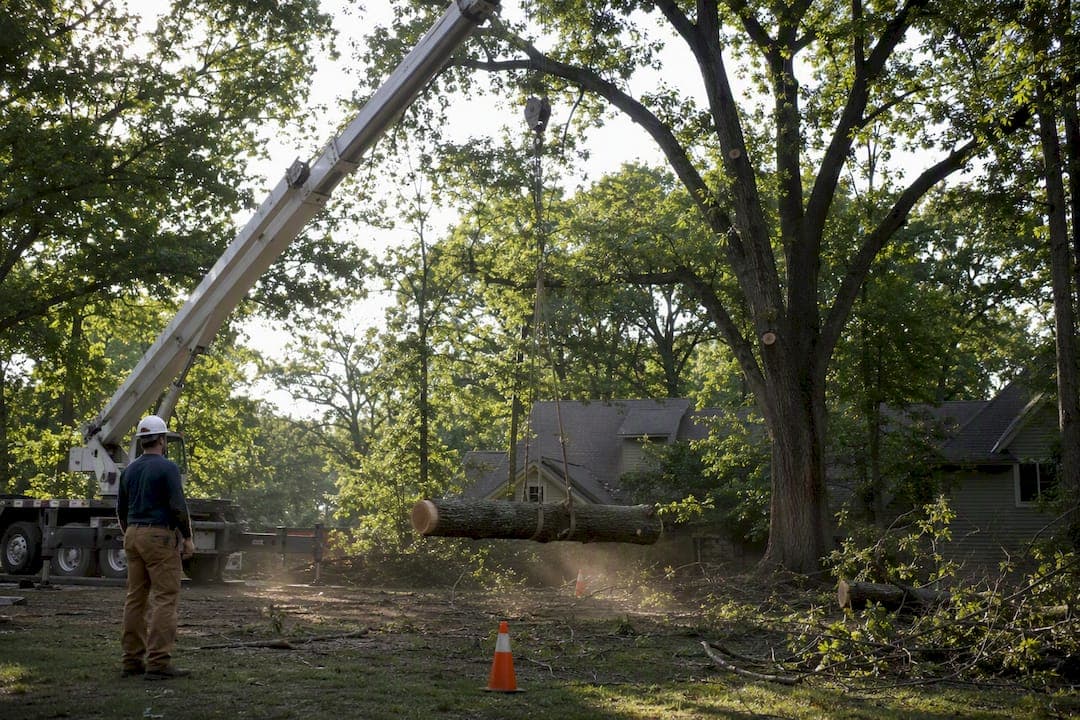
A crane is the right call when a tree is dead, leaning over a structure, or growing where there's no safe place to drop cut sections. Expect most residential crane jobs to run $1,500 to $3,500, with straightforward jobs lower and complex, oversized removals climbing past $8,000. The trade-off is simple: higher equipment cost now for a faster job and far less risk to your roof, driveway, or pool. If your tree fits that description, schedule an on-site estimate before storm season decides the timeline for you.
TL;DR:
- Crane tree removal costs typically range between $1,500 and $3,500 for standard jobs, but complex or oversized trees can exceed $8,000.
- Critical conditions that justify crane use include dead, storm-damaged, or tall trees near structures, utilities, or with no safe drop zone.
- Proper site conditions such as stable, level ground, and calm weather are essential, as wind, soft soil, or overhead obstructions can delay or limit crane operations.
- Coordinated rigging, experienced operators, and clear communication are more important for a safe crane lift than crane size or horsepower alone.
- Homeowners should verify insurance, credentials, and detailed lift plans before hiring, and prepare yards by removing obstacles and securing utilities prior to work.
Table of Contents
- What Is Crane Tree Removal, and How Is It Different From Rope Rigging?
- When Do You Actually Need a Crane for Tree Removal?
- How Does a Crane Tree Removal Actually Work?
- What Does Crane Tree Removal Cost, and What Drives the Price?
- What Should You Check Before Hiring a Crane Tree Removal Crew?
- How Should You Prepare for a Crane Job, and How Long Will It Take?
- What Permits, Utility Rules, and Weather Limits Apply to Crane Jobs?
- Where Does Crane Tree Removal Struggle: Terrain and Weather Limits
- Why We Treat Crane Jobs as a Coordination Problem, Not an Equipment Problem
- Ready to Find Out If Your Tree Needs a Crane?
- Sources
What Is Crane Tree Removal, and How Is It Different From Rope Rigging?
Crane tree removal means a crane lifts each cut section of the tree away, rather than a climber lowering it by rope. Instead of controlled drops through the canopy, the crane takes the full weight the moment a cut is made and swings the piece directly to a landing zone. That distinction changes almost everything about how the job runs.
A crane job typically involves three roles working in sync:
- A certified crane operator running the rigging from the cab
- A climber or bucket truck operator making the cuts and attaching rigging at height
- Ground crew managing the landing zone, processing wood, and coordinating traffic or foot access
Compared to standard rigging or a bucket truck, the crane's biggest advantage is control. A climber lowering a 400-pound limb by rope still has to manage swing, friction, and the tree's own structural give. A crane removes that guesswork by taking full tension before the cut ever separates the wood. On tall or hazardous trees, that difference usually translates to a faster job with less exposure for the crew and less risk to whatever sits underneath.
When Do You Actually Need a Crane for Tree Removal?
Not every large tree needs a crane. But certain conditions push a job from "climber can handle it" to "crane is the safer and often cheaper choice once you factor in risk." Here's what to look for:
- The trunk is dead, hollow, or storm-damaged. Climbing a tree with compromised wood is one of the most dangerous tasks in the trade, and OSHA and industry safety analyses point to certified equipment and coordinated rigging as key controls for exactly this scenario.
- The tree sits directly over a roof, pool, garage, or fence. If a section has to land somewhere precise instead of dropping into open yard, a crane gives you that placement control.
- There's no usable drop zone. Narrow side yards, tight urban lots, or properties boxed in by other structures often rule out rope rigging entirely, making tree services in Tucson a useful example of handling constrained yards and utility coordination.
- The tree is very tall or has an oversized trunk diameter. Trees pushing past 60 feet, or with sections too heavy to lower safely by hand line, usually call for mechanical lifting.
- Power lines or utility easements are close by. A crane can often reach a tree from the street when climbing rigging can't safely clear the lines.
If two or more of these apply, a crane conversation with a licensed crew is worth having before you get quotes based on standard removal pricing alone. Our guide on when large trees need removal walks through the hazard signs in more detail.
How Does a Crane Tree Removal Actually Work?
A crane takedown looks less like demolition and more like a rehearsed sequence. Every step depends on the one before it, which is why an experienced crew moves methodically instead of rushing.
Assessment and crane sizing. Before anything gets scheduled, the crew calculates the tree's height, lean, and estimated section weights against the crane's lifting capacity at different working radii. A crane that can lift 10,000 pounds at 20 feet might only handle a fraction of that at 60 feet, so this step decides which machine actually shows up.
Setup. Outriggers extend to stabilize the crane, ground protection mats go down to prevent lawn and driveway damage, and the crew stakes out a landing zone. If the crane needs to sit in the street or block a sidewalk, this is also when road coordination happens.
Rigging and cutting. The climber or bucket operator attaches rigging to the section being removed. The crane takes tension on the line before the saw ever finishes the cut, so the wood is under full mechanical control the instant it separates.
- Top sections come off first, working down the trunk
- Each piece swings in a controlled arc to the landing zone
- Ground crew immediately processes the wood to clear space for the next lift
Demobilization and cleanup. Once the trunk is down, the crew chips brush, cuts logs for haul-away or firewood, and can move into stump grinding if that's part of the scope.
Pro Tip: Ask your crew whether the same person operating the crane has worked tree-specific lifts before. General construction crane experience isn't the same as tree rigging, where load weight shifts mid-cut in ways a building material never does.
What Does Crane Tree Removal Cost, and What Drives the Price?
Most homeowners land somewhere between $1,500 and $3,500 for a standard crane-assisted removal, according to industry cost data. Smaller, closer-to-the-street trees fall toward the low end. Very tall, heavy, or hard-to-access removals can push past $8,000.
Statistic callout: Crane rental day rates commonly run $800 to $1,800 for typical residential crane classes, before mobilization fees or crew labor get added on. That single line item often makes up the biggest chunk of your quote.
The rest of the price comes down to a handful of variables:
- Crane rental and operator time — billed hourly or by half/full day, with larger cranes costing more per hour
- Mobilization and travel — getting a crane to your property, especially in tight neighborhoods, isn't free
- Crew labor — the climber, ground crew, and cleanup hours
- Ground protection — mats to protect your lawn or driveway from outrigger weight
- Permits — required in some municipalities for street closures or crane setup near rights-of-way
- Disposal and stump work — hauling debris and, if wanted, grinding the stump
Tree size, crane capacity, and site access are the biggest swing factors in any quote, sometimes moving the total by hundreds or thousands of dollars. You can keep costs reasonable without cutting corners on safety: get a fixed bid instead of hourly billing where possible, ask whether scheduling outside storm season saves on crane availability, and be upfront about access constraints so the estimate doesn't change once the crew arrives. Our tree removal cost factors guide breaks down these line items further.
What Should You Check Before Hiring a Crane Tree Removal Crew?
The gap between a competent crane crew and a risky one usually shows up in the paperwork, not the pitch. Before you sign anything, confirm the basics.
A legitimate crew should carry general liability insurance and workers' compensation, and the crane operator should hold a recognized credential like NCCCO certification. Ask to see proof of both, not just a verbal assurance.
Beyond credentials, ask for specifics:
- Equipment specs, including the crane's lifting capacity and reach
- A written lift plan or load calculation for your specific tree
- References or job photos from comparable crane removals
- A written quote that spells out who handles mobilization fees and permit applications
Pro Tip: If a contractor hesitates when you ask about their lift plan or dodges questions about who's coordinating utility shutoffs, treat that as a warning sign, not a formality. Coordination failures, not equipment failures, cause most crane-related incidents in tree work.
Watch for red flags: crews without documented crane-specific experience, reluctance to discuss permits, or vague answers about weather policies and rescheduling. A crew confident in their process will answer these questions without prompting.
How Should You Prepare for a Crane Job, and How Long Will It Take?
Most residential crane removals wrap up in a single day. Setup and teardown typically add 30 to 60 minutes each on top of 3 to 8 hours of actual lift work, though very large or multi-tree jobs can stretch into a second day.
Here's how to prepare before the crew arrives:
- Move vehicles away from the driveway, street frontage, and any planned landing zone.
- Clear yard furniture, planters, and anything breakable from the work area.
- Mark or flag any underground sprinkler lines, septic components, or utilities you know about.
- Secure pets indoors for the day, since the noise and crew movement can spook them.
- Confirm the landing zone with your contractor ahead of time, especially if it affects a neighbor's property line.
On the day of the job, expect engine noise, possible temporary street or sidewalk use, and crew members moving through your yard for hours at a stretch. Cleanup usually includes chipping brush, hauling logs, and optionally grinding the stump before the crew leaves. Our yard prep checklist covers additional steps if your property has tighter access constraints.
What Permits, Utility Rules, and Weather Limits Apply to Crane Jobs?
Some municipalities require permits when crane setup or removal work affects a public right-of-way, like blocking a sidewalk or partially closing a lane. Your contractor should tell you upfront whether that applies and who's responsible for filing.
Utility coordination matters most near power lines. If a tree is close enough that rigging or the crane boom could contact a line, the utility company may need to de-energize it before work starts, which adds lead time to scheduling.
Weather sets hard limits too. Most cranes have posted wind thresholds, and a responsible crew won't lift in conditions that exceed them, regardless of how tight your timeline is.
- Confirm who pulls any required permits before work begins
- Ask whether utility coordination is included in the quote or billed separately
- Get written proof of insurance, since accident analyses in tree care consistently point to certified operators and clear task coordination as the difference between a safe job and a costly one
Where Does Crane Tree Removal Struggle: Terrain and Weather Limits
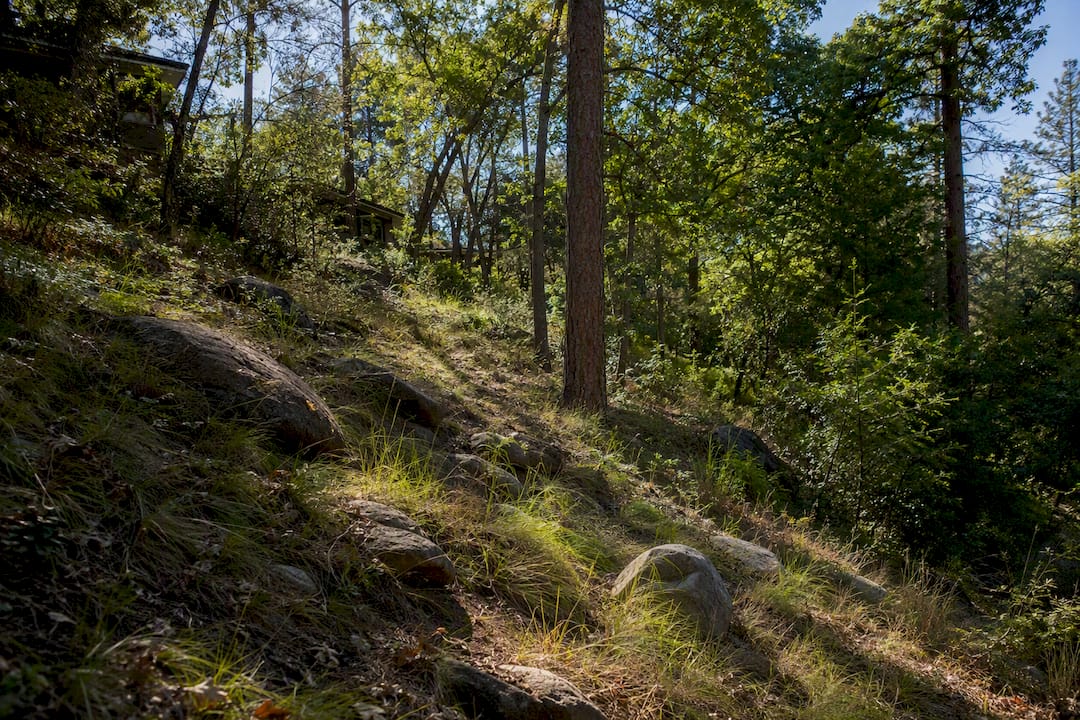
Cranes need stable, relatively level ground to set outriggers safely, which makes steep slopes, soft or saturated soil, and heavily wooded backyards with no crane access genuinely difficult terrain. If a crane truck can't physically reach within working distance of the tree, or there's nowhere flat enough to set up, rope rigging or a bucket truck may end up being the only realistic option, even on a tree that would otherwise be a clear crane candidate.
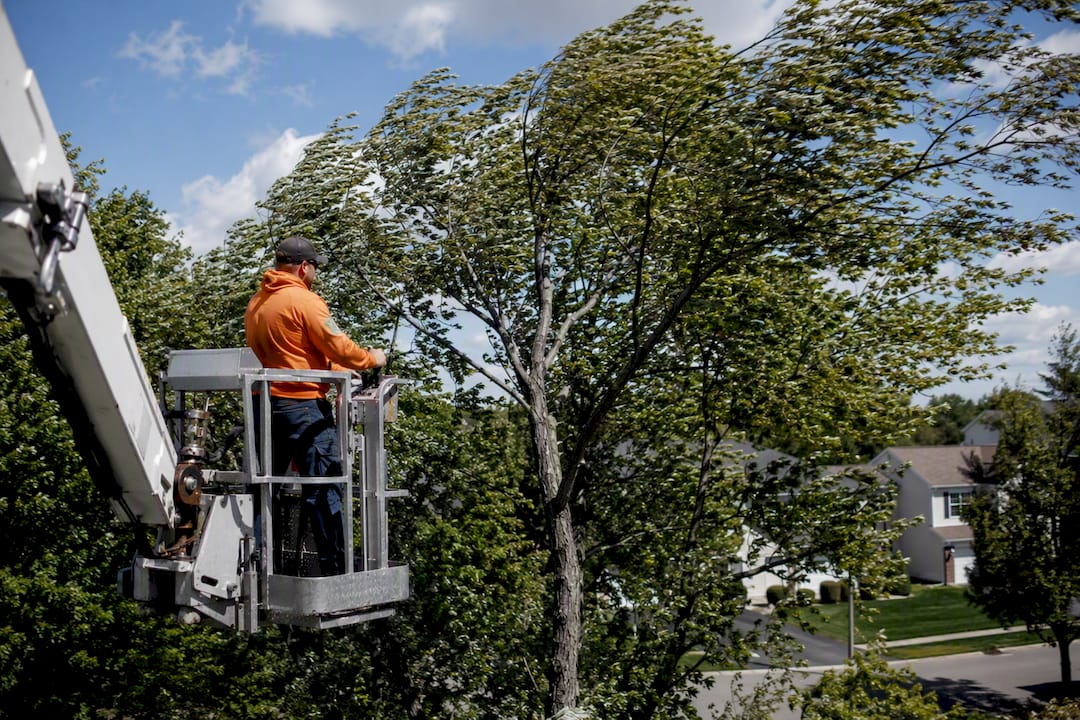
Wind is the biggest weather constraint. Every crane has a rated wind limit, and crews that ignore it are gambling with a suspended load over your property. That means crane jobs sometimes get rescheduled on short notice, which can be frustrating if you've cleared your calendar for the day.
Wet ground presents a quieter problem: outrigger pads can sink into saturated soil, throwing off the crane's stability calculations. Ground protection mats help, but severe rain in the days before a job can push a scheduled removal back regardless of mats.
Overhead obstructions like power lines, narrow gaps between houses, or mature trees blocking the swing path can also limit how a crane operator positions the load, sometimes requiring a smaller crane with less capacity than the tree's weight would otherwise call for. None of these challenges make crane removal impossible. They just mean the right contractor evaluates your specific yard, not a generic version of "big tree, call a crane."
Why We Treat Crane Jobs as a Coordination Problem, Not an Equipment Problem
Most homeowners assume a bigger crane solves harder jobs. It doesn't. What actually determines whether a crane removal goes smoothly is whether the operator, climber, and ground crew have worked crane lifts together before, because miscommunication during rigging and cutting is where things go wrong. Briley Tree Service builds crews around that reality: an NCCCO-certified operator, load calculations run before the first cut, and clear exclusion zones enforced on-site for every lift in Shreveport, Bossier City, and the surrounding North Louisiana area. Trust in a crane job comes from process, not horsepower.
— Tatum
Ready to Find Out If Your Tree Needs a Crane?
Briley Tree Service gives Shreveport and North Louisiana homeowners something most quotes skip: a fixed, honest estimate that accounts for crane mobilization and permit coordination before work starts, not after. When you contact us, expect a straightforward on-site visit where we assess the tree, confirm whether a crane is actually necessary, and walk you through the scope and realistic timeline before you commit to anything.
If your tree is dead, leaning over your roof, or sitting somewhere a climber simply can't reach safely, don't wait for the next storm to force the decision. Request your free estimate and get a straight answer on whether a crane is the right call for your property.
Sources
- Crane Tree Removal: How It Works, Cost & When You Need It
- Tree Removal Crane Cost Guide: Pricing in the United States 2026 – Current Cost
- Tree Removal Crane Cost: Rent or Buy? (ArboStar)
- Insights into accidents in tree care (TCI / TCImag)