
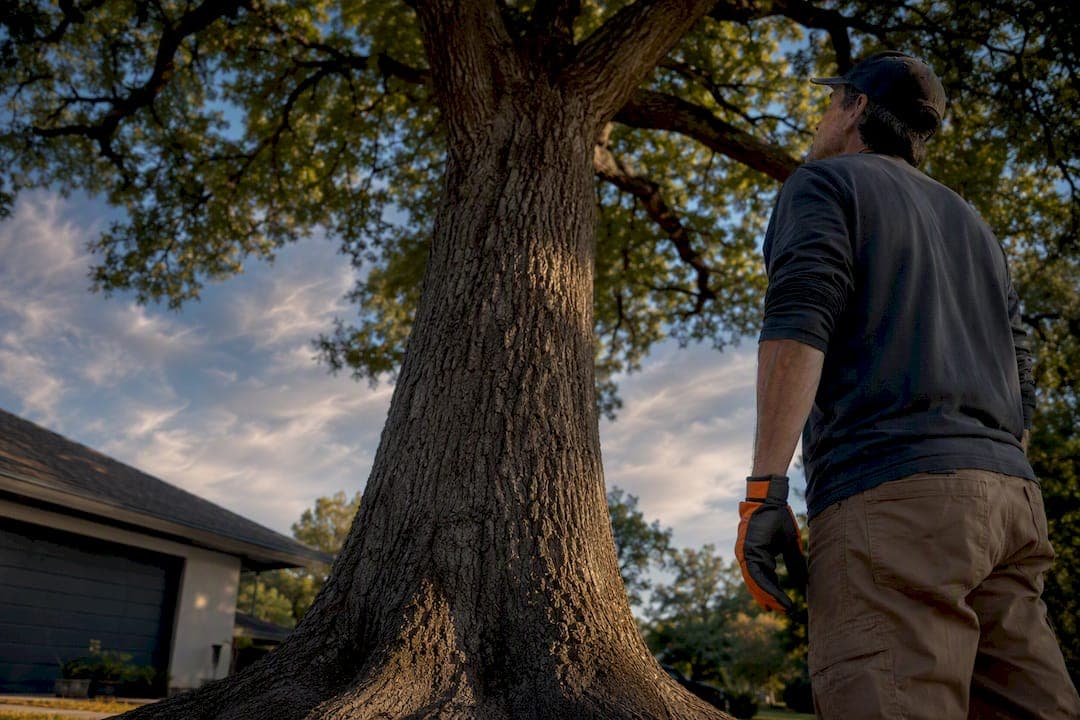
A dangerous tree assessment measures three things together: the target (what could get hit), the defect (what's structurally wrong), and the probability of failure. If a tree shows cracked bark, a sudden lean, or hanging dead limbs over a house or driveway, keep people and cars away from that zone now and call a professional before doing anything else. Assessment comes after safety, never before it.
TL;DR:
- Immediate action is required for trees with large dead branches, deep trunk cracks, or soil heave that endanger targets within striking distance.
- Visual inspection should always include the root collar, trunk, and crown, with photographs and records taken to monitor changes over time.
- Level 2 assessments, involving a full 360-degree walk-around and mallet sounding, are suitable for most homeowners, while Level 3 tools are reserved for high-value targets or ambiguous cases.
- The best mitigation options include relocating targets first, followed by pruning, cabling, or removal as necessary, with removal being the last resort.
- A professional Tree Risk Assessment is recommended in North Louisiana for comprehensive evaluation, especially when signs of failure or high-value targets are involved.
Table of Contents
- What a Dangerous Tree Assessment Actually Measures
- How to Inspect a Tree in Three Zones
- Which Tree Defects Demand Immediate Action
- Level 1, Level 2, and Level 3 Assessments Explained
- What to Do About a Hazardous Tree: Four Options in Order
- Documenting Risk and Knowing When to Call a Certified Arborist
- Why Removal Should Be the Last Resort, Not the First Instinct
- Request a Professional Tree Risk Assessment in North Louisiana
- Sources
What a Dangerous Tree Assessment Actually Measures
A hazard exists only when a target sits close enough to get hurt if the tree or a limb comes down. That's the core of the three-component model used across professional tree risk work: target, defect, and probability of failure.
- Target: a person, car, structure, or gathering spot within striking distance
- Defect: a structural weakness such as decay, a crack, or a weak branch union
- Probability of failure: how likely that defect is to actually give way, based on its size, location, and progression
A cracked trunk over an open field carries far less risk than the same crack over a swing set. The USDA Forest Service's hazard-evaluation approach reflects this by combining a target rating with a defect rating into a single score, rather than treating any one flaw as an automatic removal order. That's why a single dead branch on a tree in the back forty can wait, while the same branch over a driveway can't.
How to Inspect a Tree in Three Zones
Break the inspection into root collar, trunk, and crown. Each zone hides different warning signs, and skipping one means missing the defect that actually matters.
- Root collar and base. Walk the full circle around the trunk's base. Look for soil heaving, exposed or severed roots, mushroom-like conks, and any lean that looks new compared to older photos of the property.
- Trunk (bole). Scan the bark from ground to first branches for vertical cracks, seams, oozing sap, or cavities. A soft, muffled sound instead of a solid knock when you tap the trunk with a rubber mallet often signals internal decay.
- Crown and branches. Use binoculars rather than craning your neck from directly underneath. Note dead branches, hangers caught in the canopy, and any branch unions that form a tight V shape with bark pinched inside instead of wrapped around it.
Photograph each concern with something for scale, like a hand or a rake, and jot the date, compass direction, and rough distance to the nearest structure or path. That record becomes useful the moment you call in a professional, and it lets you track whether a crack or lean is worsening over a few months.
Pro Tip: Walk the property after every major storm, not just once a year. Root failure and hidden trunk cracks often show up only after wind stress, long after the visible damage from the storm itself has been cleaned up.
Which Tree Defects Demand Immediate Action
Not every flaw needs a chainsaw this week. Some need one today.
- Dead trees and large dead branches (hangers): these fail without warning and belong at the top of every priority list.
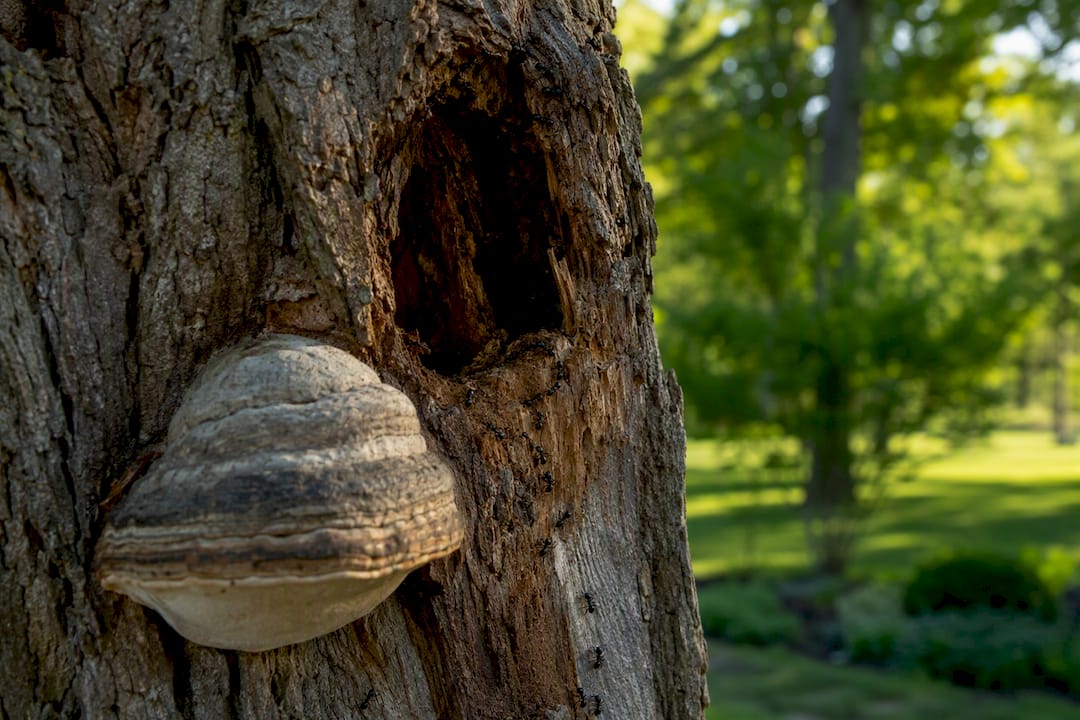
- Deep trunk cracks and cavities: especially when paired with fungal conks, which signal decay has already advanced past the point of a quick fix.
- Weak branch unions and codominant stems: narrow V-shaped unions with included bark are structurally weaker than a wide U-shaped attachment, even when the tree looks healthy from a distance.
- Root collar decay and soil heave: a tree lifting soil on one side, or showing fresh cracking at ground level, may already be losing its anchor.
Extension research names seven main hazardous defect categories: dead wood, cracks, weak unions, decay, cankers, root problems, and poor architecture. Dead trees and large dead limbs get called out specifically as items that require immediate action, not scheduled monitoring.
Decay is the trickiest of these because it works from the inside out. A conk, a cavity, or a trail of carpenter ants tells you decay is present, but none of them tells you how much solid wood is actually left holding the tree up. That gap between what you can see and what you actually need to know is exactly why visual inspection has limits.
Level 1, Level 2, and Level 3 Assessments Explained
Professional tree risk work breaks into three levels, and knowing which one you need saves both money and guesswork.
- Level 1 (limited visual screening): a quick drive-by or walk-through scan across many trees at once, mainly used to flag which ones need a closer look. Fine for a first pass across a large property.
- Level 2 (full visual assessment): a 360-degree ground-based walk around each tree, combined with mallet sounding and a close look at all three inspection zones. This is the level most homeowner inspections should aim for.
- Level 3 (advanced diagnostics): tools like increment borings, resistance drills, sonic tomography, and pull tests measure what's happening inside the wood or how the root system actually holds under load.
ANSI A300 guidance reserves Level 3 for cases where visual inspection can't resolve the question, and for good reason: this equipment is expensive to bring in and usually only worth it when the target value is high or the findings from a Level 2 walk-through are genuinely ambiguous. A shade tree near a shed rarely justifies a resistance drill. A century-old oak twelve feet from a nursing home window usually does.
What to Do About a Hazardous Tree: Four Options in Order
Once you've identified a defect, four responses cover almost every situation, and they follow a rough order of preference.
- Move the target. Relocating a picnic table, parking spot, or play area out of the potential impact zone is often the fastest and cheapest fix.
- Prune or repair. Removing hangers, deadwood, or a single weak co-dominant stem can resolve the specific hazard without losing the tree.
- Cable or brace. Structural cabling supports a weak union or a leaning trunk section that would otherwise require removal.
- Remove. Reserved for cases where the defect, the target, and the probability of failure combine into a risk no other option can bring down enough.
| Situation | Typical action | Urgency |
|---|---|---|
| Dead hanger over walkway | Prune immediately | Same week |
| Codominant stem, no target nearby | Monitor or cable | Next season |
| Root collar decay near a home | Full assessment, likely removal | Immediate |
| Minor lean, healthy roots | Monitor annually | Low |
After a major storm, re-check any tree that already had a flagged defect before doing anything else on the property. Removal work often needs a local permit, and if a limb already damaged a roof or fence, your homeowner's insurance may cover removal costs tied to storm damage.
Documenting Risk and Knowing When to Call a Certified Arborist
A useful field record includes the date and time, a compass direction and rough distance from the defect to the nearest target, close-up and full-tree photos, and a plain description of what's wrong. That's the same information a professional written report builds on, usually finishing with a residual-risk statement explaining what risk remains even after mitigation.
Call a certified arborist when any of these apply:
- The tree shows signs of imminent failure: a fresh lean, a trunk crack that's visibly widening, or roots pulling out of the ground.
- The target is high-value: a home, a school, a busy walkway, or a parking area used daily.
- Your own findings are unclear or conflicting, such as a hollow sound in one spot but healthy bark everywhere else.
Extension guidance backs up an annual inspection cadence plus a check after any severe storm, with ISA-certified arborists called in whenever a defect or a target's importance pushes past what a homeowner can confidently judge alone.
Why Removal Should Be the Last Resort, Not the First Instinct
Most homeowners want a clean answer: is the tree dangerous or not. The honest answer is that risk isn't binary, and industry guidance has moved away from that old safe-versus-hazardous label for good reason. A defect that looks alarming, like a visible cavity or a cluster of dead limbs, might sit far enough from any target that mitigation, not removal, is the right call.
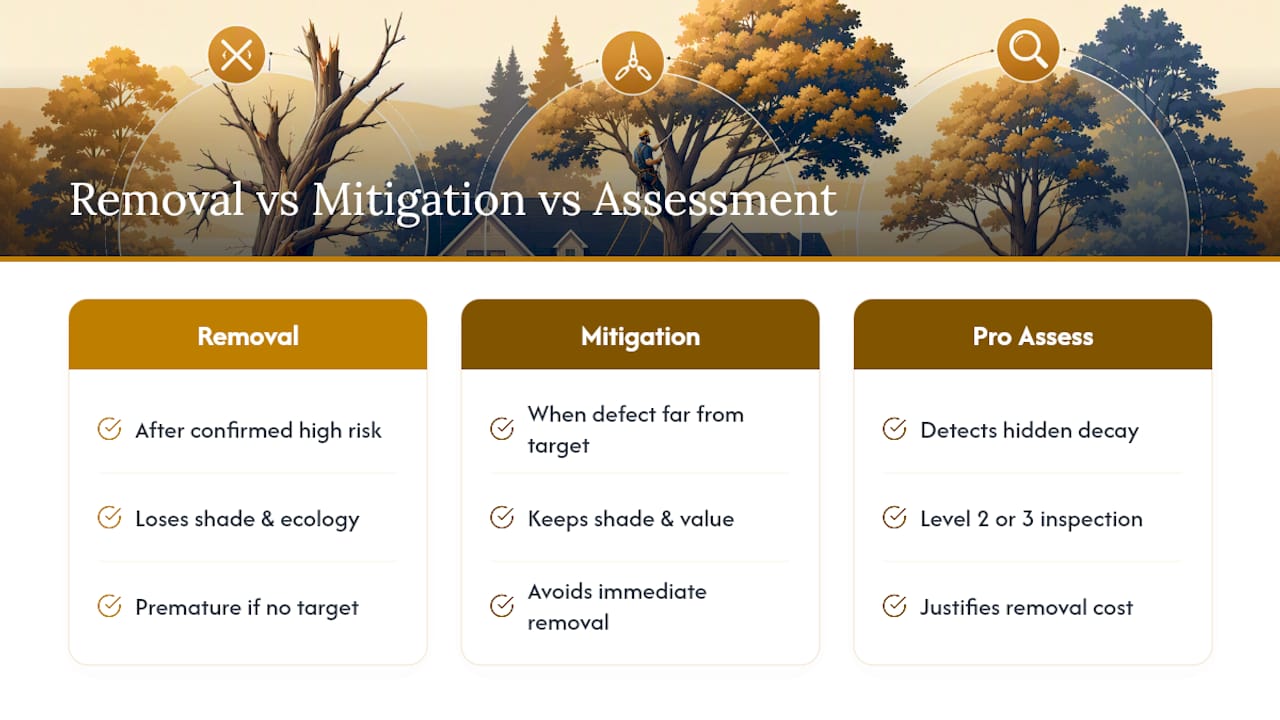
Where the Arbor Day Foundation's framework gets it right is in weighing a tree's shade, property value, and ecological benefit against the measured risk, rather than defaulting to the chainsaw at the first sign of trouble. That balance gets lost when someone panics over a single conk or a leaning trunk without checking whether a target is even in range.
The bigger blind spot, though, is decay. Homeowners consistently underestimate it because it is invisible until it isn't. A tree can look structurally sound from the outside while carrying a hollow core that a mallet tap or a resistance drill would catch in minutes. That gap between what's visible and what's actually holding the tree up is where a professional Level 2 or Level 3 assessment earns its cost, especially on a mature tree standing near a home.
— Tatum
Request a Professional Tree Risk Assessment in North Louisiana
A Level 2 assessment with mallet sounding and a full crown inspection catches what a homeowner's walk-around usually misses, and that's exactly what a professional tree inspection team brings to properties in North Louisiana.
Every visit starts with a safety-first walk of the root collar, trunk, and crown, the same three zones covered above, followed by a straightforward estimate and support with permits or insurance paperwork if storm damage is involved. If the tree needs to come down, the professional arborist team handles removal, pruning, cabling, or stump grinding without a second contractor to coordinate. If it doesn't, you'll know exactly what to monitor and when to check again.
If a tree on your property has a crack that's growing, a lean that's new, or deadwood hanging over anything you care about, schedule a free estimate with Brileytreeservice today and get a professional opinion before the next storm makes the decision for you.
Sources
- Spotting danger: How to identify & assess hazard trees | ACES
- USDA Forest Service hazard tree evaluation guidance
- How to recognize hazardous defects in trees (extension / federal brochure)