
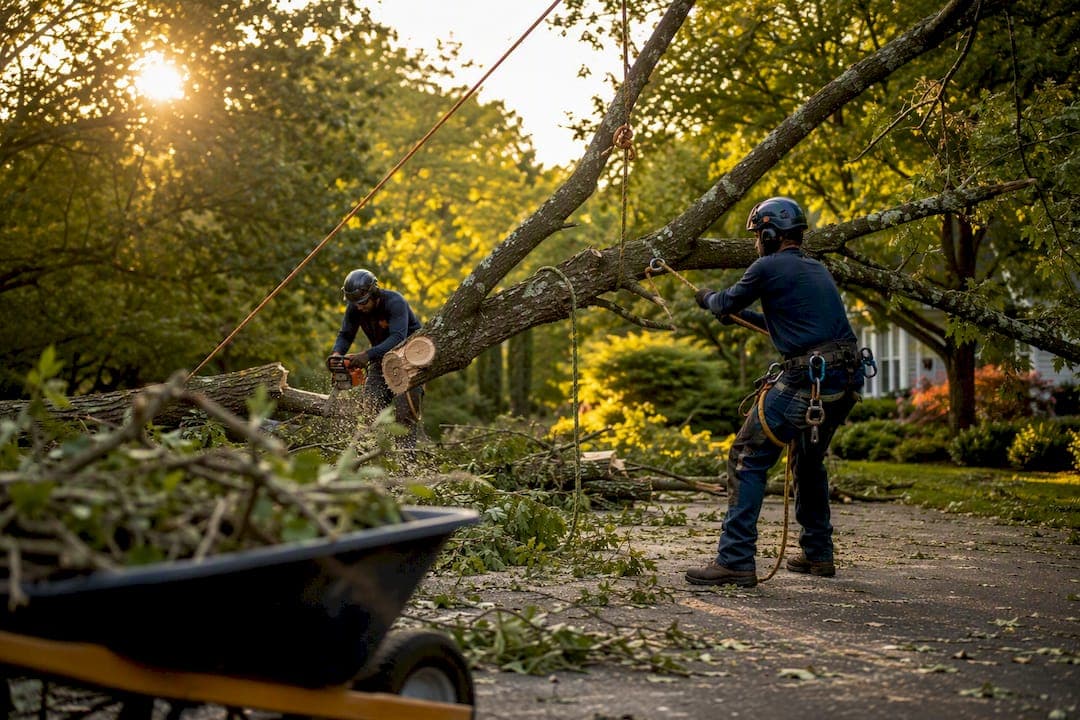
Homeowners insurance covers tree removal when a covered peril knocks the tree onto an insured structure or blocks essential access to your home. It does not cover removing a tree because it looks unstable or is simply old.
Three facts matter most here:
- Coverage kicks in when wind, hail, lightning, fire, or heavy snow/ice causes a tree to fall and damage your house, garage, or fence, or block a driveway or ramp.
- Debris-removal payouts typically top out between $500 and $1,000 total, and some policies cap payouts per tree on top of that.
- Removing a leaning or diseased tree before it falls counts as maintenance, not damage, so insurers generally won't pay for it, and ignoring a known hazard can lead to a later claim denial for negligence.
Everything below walks through exactly how those rules play out, what triggers coverage, what doesn't, and how to protect a claim from the moment a tree comes down.
Key Takeaways
Homeowners insurance pays for tree removal only when a covered peril damages an insured structure or blocks essential access, never for preventive removal of a healthy but risky-looking tree.
| Point | Details |
|---|---|
| Covered perils drive payment | Wind, hail, lightning, fire, and heavy snow/ice trigger coverage when they cause a tree to fall and cause damage. |
| Debris sublimits are capped | Most policies cap debris removal around $500 to $1,000 total, sometimes per tree. |
| Maintenance isn't covered | Removing a leaning, diseased, or aging tree before it falls is treated as homeowner upkeep, not damage. |
| Documentation protects claims | Dated photos, arborist notes, and written estimates give adjusters what they need to approve a claim quickly. |
| Run the math before filing | Compare your removal estimate against your deductible and sublimit, since small jobs often fall below the deductible anyway. |
Getting this right starts before a storm ever hits. Briley Tree Service provides free estimates, emergency storm cleanup, and permit and insurance-claim support for homeowners across Shreveport, Bossier City, Ruston, and the surrounding North Louisiana area. Whether a tree just came down or you want a professional assessment on file before it does, contact Briley Tree Service to get a licensed, insured arborist team on the job with the documentation your claim needs.
Table of Contents
- Homeowners Insurance Tree Removal: What Covered Perils Actually Trigger Payment
- When Tree Removal Isn't Covered: Maintenance, Rot, Age, and Excluded Disasters
- Debris Sublimits, Deductibles, and What Insurance Actually Pays
- What to Do Immediately After a Tree Falls
- Preventing Claim Denials Through Inspection and Records
- Should You File a Claim or Pay Out of Pocket?
- What a Reputable Tree Crew Documents for Your Claim
- An Editorial Take on Filing Insurance Claims for Fallen Trees
- Sources
Homeowners Insurance Tree Removal: What Covered Perils Actually Trigger Payment
Standard homeowners policies pay for tree removal when a listed peril causes the damage, not because a tree simply fell. The perils that typically qualify:
- Windstorms and hurricanes, including straight-line wind events common across Louisiana and the Gulf South
- Hail
- Lightning strikes that split or topple a trunk
- Fire
- Heavy snow or ice accumulation that snaps limbs or uproots a tree
A branch punching through a roof during a spring storm is a textbook covered claim. So is a lightning-struck oak that falls across a carport. In both cases, the structure sustained damage from a named peril, and the removal cost typically rides along with the repair claim.
Neighbor disputes come up constantly, and the rule is simpler than most homeowners expect. If a neighbor's tree falls onto your house during a wind event, your own insurer pays first under your policy, then may pursue subrogation against your neighbor's insurer if negligence on their end contributed to the fall. You are not left waiting on someone else's carrier to act.
One nuance trips up a lot of homeowners: even without structural damage, some carriers will pay to clear a tree blocking your driveway or a wheelchair ramp, since blocked access counts as a covered inconvenience under certain policy forms. That coverage varies significantly by insurer, so it's worth a quick call to your agent before assuming either way.
Pro Tip: Ask your agent directly whether your policy's debris-removal clause includes driveway or ramp obstruction. Many homeowners never find out this coverage exists until they need it.
When Tree Removal Isn't Covered: Maintenance, Rot, Age, and Excluded Disasters
Insurance exists to cover the unexpected. A tree that falls because it was already rotting, hollow, or dying doesn't qualify, because that decline was foreseeable and preventable. Insurers draw a hard line here: maintenance is the homeowner's job, and claims are for sudden, unavoidable losses.
Common exclusions include:
- Removal of a healthy-looking tree done purely as a precaution, with no storm or damage event involved
- Trees that fell due to documented rot, fungal disease, termite or beetle infestation, or advanced age
- Losses tied to flood, earthquake, or mudslide, none of which a standard homeowners policy covers regardless of what the tree did
That last point catches people off guard. If a hillside gives way and takes trees and a fence with it, that's an earth-movement exclusion, not a tree problem, and you'd need a separate policy or endorsement to be covered.
Insurers also dig into history. If an adjuster finds a prior arborist report noting decay, or neighbor complaints about a leaning tree, that evidence can sink an otherwise reasonable claim. Roughly $150 to $2,000 covers most standard removal jobs, so a denial over a known hazard often means paying that full cost yourself, after already losing the coverage argument.
Debris Sublimits, Deductibles, and What Insurance Actually Pays
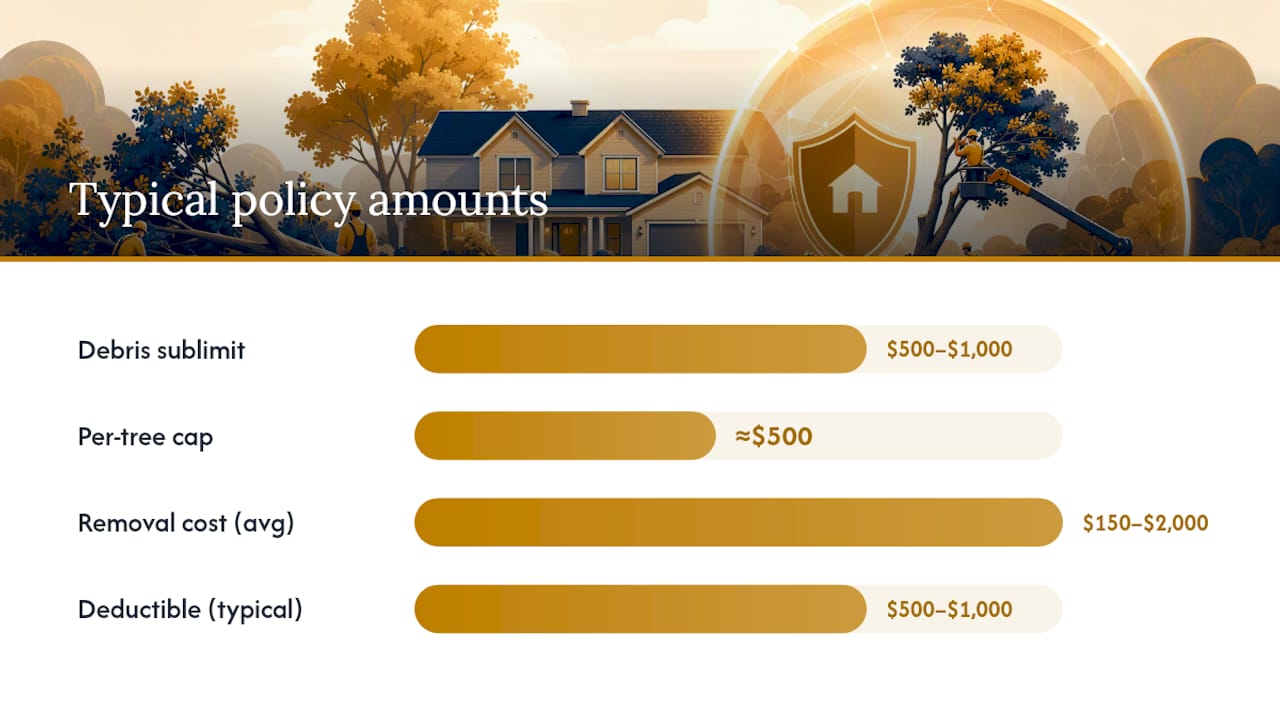
Debris removal almost always falls under a separate sublimit inside your policy, distinct from the dwelling or personal property limits. That sublimit typically runs $500 to $1,000 total, and some carriers apply a per-tree cap on top of the aggregate number.
Here's how the math plays out on a typical claim:
| Scenario Detail | Typical Figure |
|---|---|
| Standard debris-removal sublimit | $500–$1,000 total |
| Common per-tree cap (where it applies) | Around $500 |
| Average removal cost, straightforward job | $150–$2,000 |
| Typical homeowners deductible | $500 to $1,000 |
If your deductible is $1,500 and a contractor quotes $900 to remove a fallen limb, filing a claim gets you nothing. You'd pay the full $900 out of pocket regardless, since the loss falls under your deductible. But if a storm topples a large oak onto your roof and the total loss (structure repair plus removal) runs $8,000, the math flips: the deductible applies once, and everything above it, including debris removal up to the sublimit, gets paid.
- Always get a written quote before deciding whether to file
- Compare that quote directly against both your deductible and your sublimit, not just one or the other
- Ask your agent whether your specific policy applies the sublimit per occurrence or per tree
What to Do Immediately After a Tree Falls
The steps you take in the first hour shape whether your claim goes smoothly or gets questioned. Work through this order:
- Check for immediate danger first. If the tree hit a power line, stay away entirely and call 911. Downed lines can energize fences, gutters, and standing water nearby.
- Move people and pets clear of the area. Cracked limbs and unstable root systems can shift hours after the initial fall.
- Document everything before anything moves. Take photos from multiple angles, shoot video walking the damage perimeter, and note the date and time on your phone. If a neighbor witnessed it, get their name and number.
- Call an emergency tree service if the tree threatens further damage or blocks access. Get a signed scope of work and a written estimate before crews start cutting, and keep every receipt.
- Contact your insurer promptly, and expect an adjuster to review your photos, the contractor's estimate, and possibly the tree's condition history. Coordinate timing between your contractor and the adjuster so nothing gets removed before it's been inspected.
Pro Tip: Photograph the root ball and trunk cross-section if you can safely get close. Adjusters look at whether the wood shows healthy grain or hollow, rotted tissue, and that detail can make or break a disputed claim.
Preventing Claim Denials Through Inspection and Records
The homeowners who get paid without a fight are usually the ones who kept records before anything fell. An annual inspection, plus a walkthrough after any major storm, catches the warning signs insurers look for later: fungus at the base, missing or peeling bark, visible trunk cavities, or a lean that's gotten more pronounced since last season.
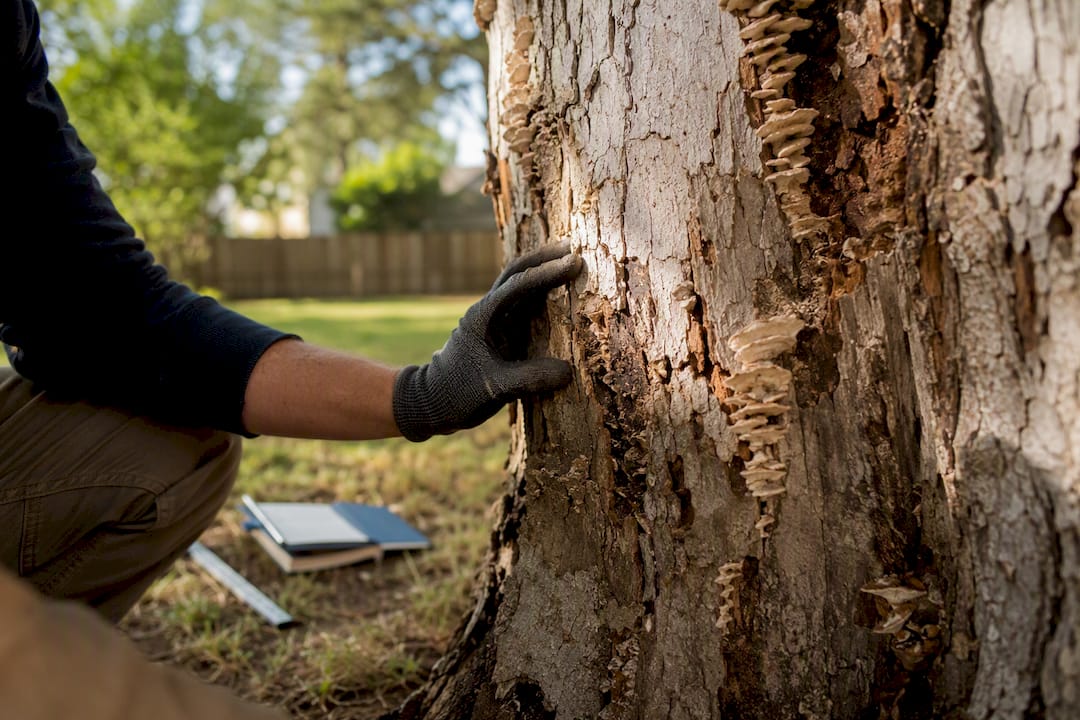
A professional assessment carries weight an insurer's own adjuster can't dispute as easily. A written arborist report on file stating a tree's condition, dated months or years before a storm, becomes strong evidence that the fall was unforeseeable rather than neglected.
Keep it simple: save dated photos of your trees each year, hold onto every invoice from pruning or removal work, and keep written communication with neighbors about shared trees somewhere you can find it fast. A tree damage insurance claim moves faster when that paperwork already exists instead of getting assembled under pressure after a storm.
Pro Tip: Store your inspection photos and arborist notes in the same folder as your homeowners policy. When an adjuster asks for history, you want it in one place, not scattered across old text messages.
Should You File a Claim or Pay Out of Pocket?
Run the numbers before you call your agent. Tree removal costs typically fall between $150 and $2,000, with height, proximity to power lines, and whether a crane is needed pushing jobs toward the higher end.
- Get a written estimate first. You can't make a smart decision without a real number.
- Compare that number to your deductible and your debris sublimit. If the estimate sits below your deductible, filing a claim accomplishes nothing.
- Weigh the premium impact. Even a paid claim under $1,000 can affect renewal pricing or a claim-free discount, so a small payout may not be worth the long-term cost.
- File when the total loss clearly exceeds your deductible, especially when structural damage is involved and removal is bundled into a larger repair claim.
For complex jobs, trees over structures, near power lines, or requiring crane access, costs can exceed standard sublimits fast. Get your written estimate to the insurer before work starts, so authorization and partial coverage are settled up front instead of disputed after the fact.
What a Reputable Tree Crew Documents for Your Claim
A contractor who understands insurance claims does more than cut and haul. On-site, that means safety steps like temporary bracing on partially fallen limbs and a clear removal sequence that protects whatever structure is still standing.
What you should walk away with:
- A signed, written scope of work before any cutting starts
- Time-stamped before-and-after photos
- A written assessment of whether the tree showed signs of prior decline
- A final invoice itemizing crew hours and equipment used
- Help navigating permit requirements where local code applies
A signed scope of work, dated photos, and an honest note on the tree's prior condition give an adjuster exactly what they need to approve a claim without back-and-forth. That paperwork is often the difference between a claim that clears in a week and one that drags for a month.
Briley Tree Service builds every emergency call and standard removal around that documentation, because a thorough cleanup process and a clear paper trail protect the homeowner just as much as they protect the crew doing the work.
An Editorial Take on Filing Insurance Claims for Fallen Trees
Most guidance on this topic treats coverage like a coin flip: either your policy pays or it doesn't, and homeowners are left guessing which side they landed on. That framing undersells how much control homeowners actually have. The insurers' own guidance, from the Insurance Information Institute to carrier explainers from Geico and Nationwide, is consistent on one point: documentation changes outcomes.
The conventional advice stops at "call your insurer after a storm." That's too late. The homeowners who get paid without friction are the ones with a dated arborist note already on file, proving the tree wasn't a known hazard left to rot. Waiting until damage happens to start building that record is the single biggest unforced error I see in how this topic gets discussed.
Prioritize the boring stuff first: annual inspections, dated photos, and a folder with your policy's debris-removal clause highlighted. That preparation, not the claim call itself, is what actually determines whether the story ends in a paid claim or a denial letter.
— Tatum
Sources
Verify the details above against your own policy and agent, since carrier terms vary. These sources back the claims made throughout this guide:
- Does Homeowners Insurance Cover Tree Removal? | NerdWallet
- Does Homeowners Insurance Cover Tree Removal? — GEICO