
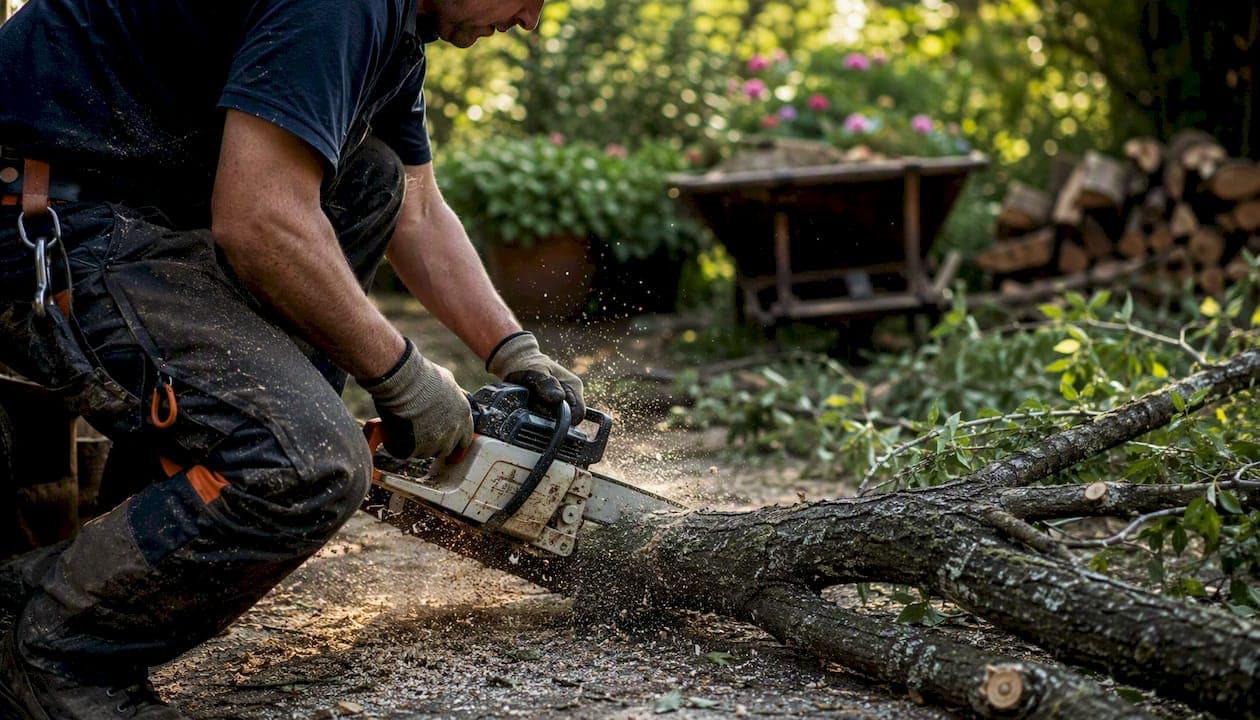
Professional tree removal almost always includes on-site cleanup. A standard job covers sectional cutting, chipping the brush, removing limbs and debris, and raking the work area before the crew leaves. What homeowners often pay extra for: stump grinding, hauling large trunk sections, and any landscape restoration beyond the immediate work zone.
Before signing anything, confirm these three things:
- Typically included: Branch and limb removal, chipping of brush, a site sweep, and basic raking around the work area.
- Commonly billed as extras: Stump grinding, hauling large logs, chip haul-off (vs. leaving chips on-site), and diseased-wood disposal.
- Trust signals to require: A licensed and insured crew, a written line-item estimate, and a confirmed scope of cleanup before work starts.
Brileytreeservice provides free written estimates and serves Shreveport, Bossier City, and surrounding North Louisiana communities with licensed, insured crews.
Key Takeaways
Professional tree removal cleanup covers cutting, chipping, hauling, and a final site sweep, but stump grinding and chip haul-off are almost always separate line items that must be confirmed in writing before work starts.
| Point | Details |
|---|---|
| Standard cleanup scope | Includes chipping, limb removal, site sweep, and raking; stump grinding is almost always a separate cost. |
| Written scope is non-negotiable | Get every cleanup task listed by name in the contract before signing, including chip disposal method. |
| Diseased wood requires off-site disposal | Never leave chips from a diseased tree on the property; reuse can spread infection to remaining plants. |
| Walk-through before final payment | Confirm the site meets the written scope with the crew present before releasing final payment. |
| Brileytreeservice | Provides line-itemized written estimates, licensed and insured crews, and a final walk-through on every job in North Louisiana. |
Table of Contents
- What does tree removal cleanup actually cover?
- How professionals clean up and what you can safely do yourself
- How cleanup affects the price of tree removal
- How long does cleanup take, and how should you prepare?
- Questions to ask contractors and red flags to watch for
- How Brileytreeservice handles cleanup on every job
- Why cleanup is the part of the job that actually matters
- Get a free cleanup quote from Brileytreeservice
- Sources
What does tree removal cleanup actually cover?
A standard cleanup scope includes the work needed to leave the site safe and reasonably clear. Professional crews typically chip branches, haul large logs or cut them to the owner's specification, and sweep or rake the work area. Homeowners usually choose whether to keep wood chips on-site as mulch or have them hauled away.
Standard inclusions in most contracts:
- Sectional lowering and controlled cutting of the tree
- Chipping of all brush and small-diameter branches
- Removal of limbs from the work area
- Raking and sweeping around the base and drop zone
- Chip management (spread on-site or hauled, per homeowner preference)
Commonly excluded or separately quoted:
- Stump grinding (almost always a separate line item)
- Hauling large trunk sections or heavy log rounds
- Landscape restoration, sod repair, or replanting
- Disposal of diseased or pest-infested wood off-site
- Permit-related debris handling
Full-service removal may also include site protection mats, controlled rigging, and a final walk-through with the customer. Not every company offers all of these by default, which is why the written estimate matters.
Pro Tip: Ask for a line-itemized estimate that lists every cleanup task explicitly. "Cleanup included" written as a single line is not a scope — it is a gap waiting to become a dispute.
How professionals clean up and what you can safely do yourself
The professional workflow
A well-run crew follows a clear sequence from setup to final sweep.
- Pre-job staging: Ground protection mats are placed to shield turf and hardscape. Equipment is positioned for safe access and debris flow.
- Sectional takedown and rigging: Limbs are removed in controlled sections using ropes and rigging to direct each piece away from structures and plantings. This is why protecting your garden during removal starts before the first cut.
- Chipping: Brush and small-diameter branches go directly into the chipper. Chippers reduce brush volume roughly 10:1, which is why on-site chipping is the standard method for managing small material efficiently.
- Log bucking and hauling: Trunk sections are cut to manageable lengths, then loaded for haul-off or stacked per the homeowner's request.
- Stump handling: If stump grinding is in the contract, it happens after the trunk is cleared. The grinder works the stump down below grade, leaving a pile of wood grindings that requires management or removal.
- Ground-level finishing: The crew rakes the area, clears sawdust from hard surfaces, and does a final sweep of the work zone.
After a storm or emergency removal, cleanup can be as labor-intensive as the removal itself, sometimes requiring heavy equipment and staged hauling to avoid additional property damage.
What you can safely handle yourself
If the crew leaves minor finishing debris, a few tasks are reasonable for homeowners. Avoid tensioned limbs, heavy logs, and anything requiring a chainsaw unless you have specific training. For a full breakdown of what not to attempt, see common DIY tree removal mistakes.
- Remove small brush with a wheelbarrow or garden cart
- Rake wood chips away from garden beds and seedbeds
- Blow or sweep sawdust off decks, patios, and walkways
- Bag and dispose of any diseased wood off-site — never reuse chips from a diseased tree on your property, as doing so can spread infection to remaining plants
How cleanup affects the price of tree removal
Cleanup is not a flat add-on. Several variables shift the cost, and knowing them helps you read a quote accurately.
Cost drivers to watch for:
- Tree size, height, and species (a large hardwood generates far more debris than a small ornamental)
- Site access and equipment requirements (tight yards may need a crane or aerial lift)
- Total volume of debris and number of truckloads for haul-off
- Stump grinding depth and diameter
- Whether chips are left on-site or hauled away
- Disposal rules for diseased or pest-infested material
- Emergency or storm-response scheduling, which typically carries a premium
Stump grinding is one of the most common surprise costs. After grinding, you are often left with a large pile of grindings that can be used as mulch, hauled away for an extra fee, or removed entirely. If you plan to reseed or plant in that spot, the grindings will need to be cleared and the soil amended. See what stump removal services include for a full breakdown of what to expect and budget for.
For most residential jobs, cleanup costs scale with debris volume and haul-off distance. A single moderate-sized tree with full haul-off will cost more than the same job where chips are left on-site. Get a quote that separates these line items so you can make an informed choice.
Pro Tip: Before signing, confirm in writing whether chips will be left or hauled, and get a separate line-item price for stump grinding. These two items alone account for most post-job billing disputes.
How long does cleanup take, and how should you prepare?
Typical timelines
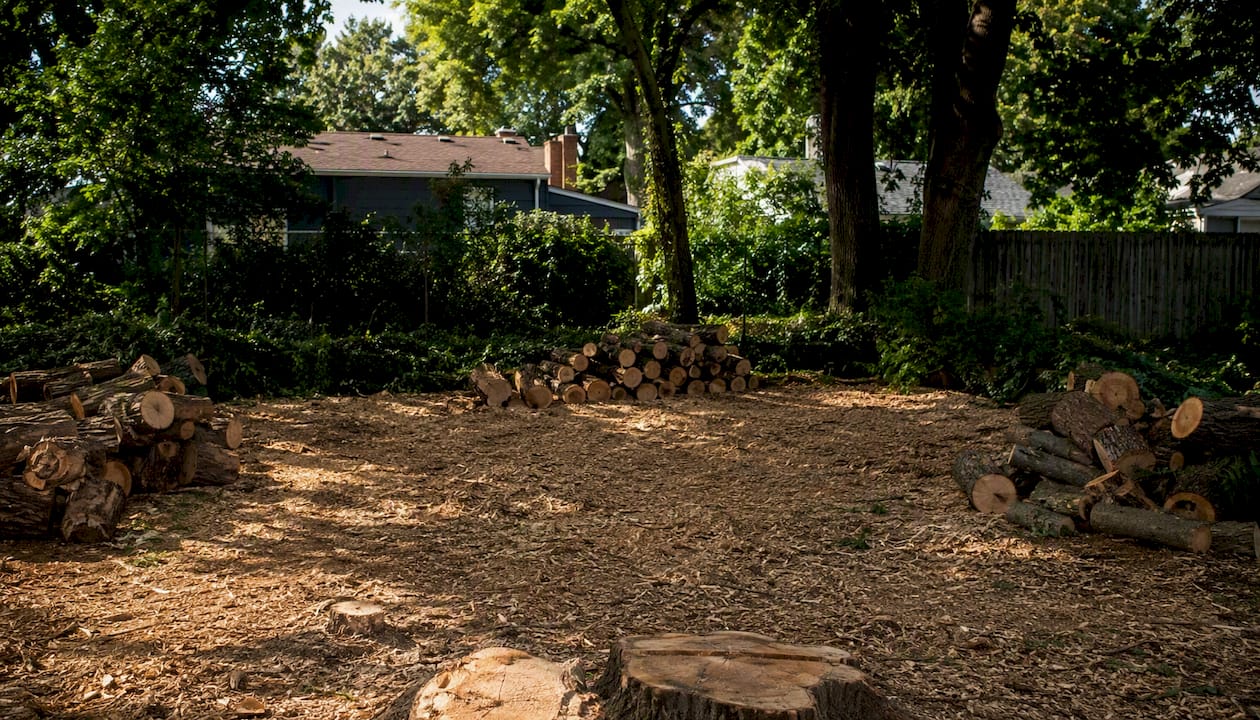
A single moderate residential tree, including full cleanup, usually takes half a day to a full day. Larger trees, multi-tree jobs, or anything requiring a crane may run two or more days, with cleanup staged across both. Emergency storm jobs often take longer because debris is scattered and access may be restricted.
Preparing your property
Getting the site ready before the crew arrives speeds cleanup and reduces the chance of accidental damage. For a full preparation checklist, the yard preparation guide covers each step in detail.
- Move vehicles, trailers, and outdoor furniture out of the work zone and access path.
- Mark irrigation lines, sprinkler heads, and any underground utilities near the tree.
- Identify fence lines, buried cables, and shallow roots that could be damaged by equipment.
- Move potted plants, decorative items, and anything fragile away from the drop zone.
- Notify neighbors if the work zone is near a shared fence or property line.
What "done" looks like
A properly finished job leaves no loose limb hazards on the ground, no large debris in the yard, and a raked or blown work area. Chips are either spread evenly or loaded for haul-off. The crew should walk the site with you before leaving so you can confirm the scope was met.
Questions to ask contractors and red flags to watch for
Choosing a crew based on price alone is one of the most common mistakes homeowners make. A low quote that excludes cleanup can cost more in the end when you are left handling debris yourself or hiring a second crew.
Ask every contractor these questions before signing:
- Is cleanup fully included in the quoted price, or are any tasks billed separately?
- Will stump grinding be included or quoted as a separate line item?
- Will chips be left on-site or hauled away, and is there an additional charge for haul-off?
- How will diseased or pest-infested wood be disposed of?
- Can you provide proof of liability insurance and workers' compensation coverage?
- Do you offer a written scope of work that lists cleanup tasks explicitly?
BBB business profiles let you verify licensing, complaint history, and business standing before hiring. Use them. A tree service hiring checklist can help you organize what to ask and what to collect before work begins.
Red flags that suggest cleanup will be inadequate:
- Verbal-only promises with no written scope
- A quote that lists "cleanup" as a single line with no detail
- Crew arrives without a chipper, ground mats, or proper rigging equipment
- Request to sign a blank or incomplete work order
- Refusal to show proof of insurance
- No local references or a pattern of complaints in online reviews
Pro Tip: Get the written scope of cleanup, itemized costs, and proof of insurance before any work starts. A reputable crew will provide all three without hesitation.
How Brileytreeservice handles cleanup on every job
Brileytreeservice builds cleanup into every job from the start. The crew begins with an on-site assessment to plan the takedown sequence and identify any site-specific concerns, then works through a consistent process: sectional lowering, chipping of all brush, log bucking and haul-off or stacking per your preference, optional stump grinding, and a final site sweep and rake.
Standard inclusions with every Brileytreeservice job:
- On-site assessment and written estimate before work begins
- Sectional takedown with controlled rigging to protect structures and plantings
- Chipping of all brush and small-diameter material
- Haul-off or on-site chip spreading, per homeowner preference
- Optional stump grinding with grindings management
- Site sweep, raking, and hard-surface blowdown
- Final walk-through with the customer before the crew leaves
Brileytreeservice crews are licensed and insured, and the company provides before-and-after photos on request. When a job involves storm damage or an insurance claim, the team can assist with documentation and permit support.
Pro Tip: Before the crew leaves, confirm in writing how diseased material was disposed of and whether stump grindings were hauled or left in place. Both affect what you can plant in that spot next.
Why cleanup is the part of the job that actually matters
The removal itself takes skill. Cleanup takes discipline. Any crew can drop a tree. Fewer crews leave the property in a condition where you can actually use the space the next day.
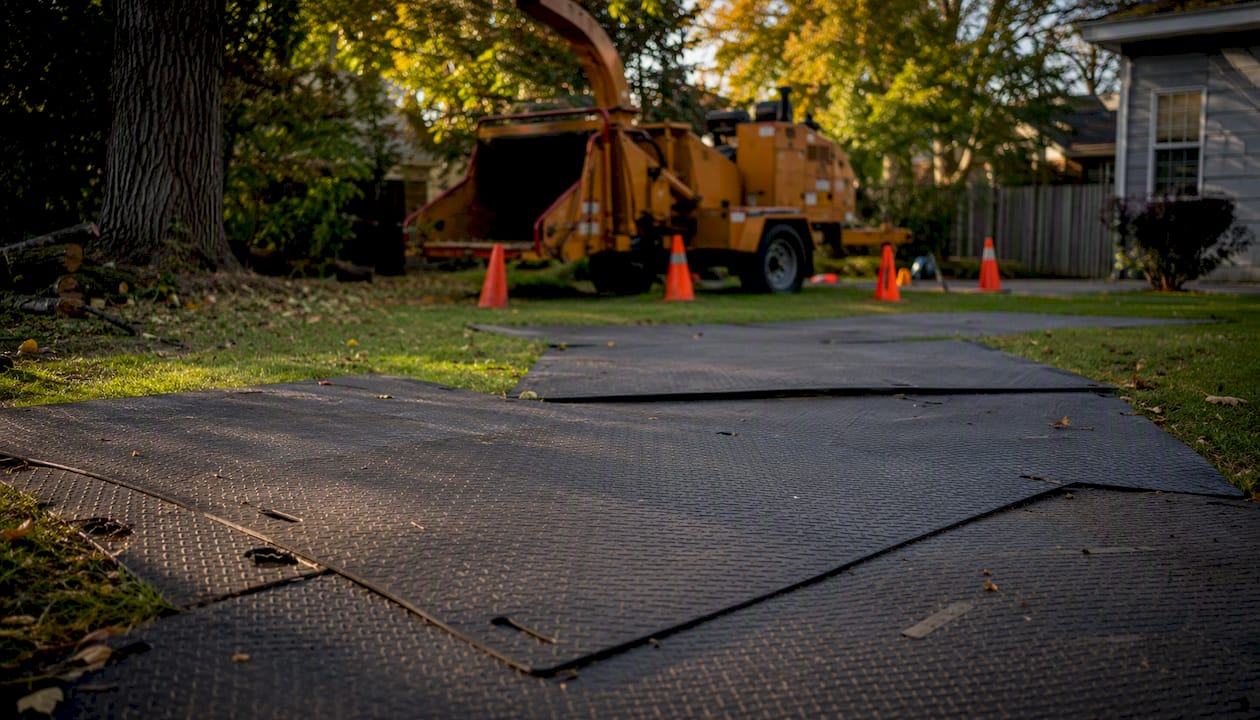
The habits that separate a thorough crew from a careless one are visible before the first cut: ground protection mats in place, a clear staging plan for debris, and a chipper positioned for efficient flow. Those same habits show up at the end in a raked site, a clean driveway, and a walk-through where the homeowner can see exactly what was done.
Homeowners who skip the walk-through or accept a verbal "we'll clean it up" without a written scope are the ones who end up with a pile of logs in the yard and a contractor who has moved on to the next job. The contract language is not a formality. It is the only thing that guarantees the cleanup you were promised.
Get a free cleanup quote from Brileytreeservice
Brileytreeservice serves Shreveport, Bossier City, Ruston, and surrounding North Louisiana communities with licensed, insured crews who include full cleanup in every written estimate.

Every quote from Brileytreeservice is line-itemized, so you see exactly what cleanup covers before work begins. Stump grinding, chip haul-off, and diseased-wood disposal are each listed separately so there are no surprises at the end of the job. Before-and-after photos are available on request. Contact Brileytreeservice today to schedule a free on-site estimate and ask for a written cleanup scope with your quote.
Sources
The sources below support the safety, cleanup, and contractor-vetting guidance in this article.
- 4 Easy Steps To Bring Your Yard Back To Life After Removing A Tree
- Cut and Chip Tree Service LLC | BBB profile