
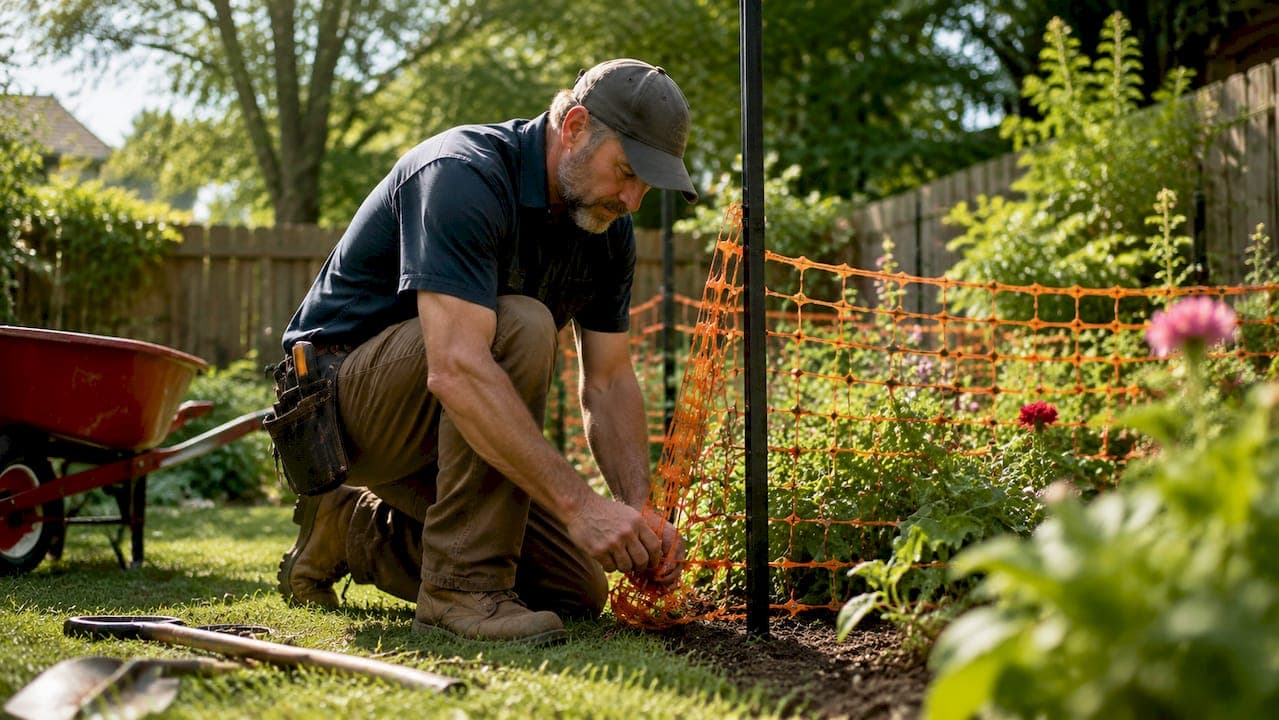
Protecting your garden during tree removal means using physical barriers, ground protection, and clear communication with your crew to prevent damage from falling debris and heavy equipment. Falling trees cause over $1 billion annually in property damage. That figure reflects the extreme forces involved, and it underscores why garden protection methods must be planned before any chainsaw starts. Brileytreeservice applies industry-standard techniques including rope rigging, composite ground mats, and designated drop zones to keep landscaping intact throughout every job in Shreveport and the surrounding areas.
What are the key risks to your garden during tree removal?
Tree removal creates several distinct threats to your garden, and each one requires a different protective response. Knowing what can go wrong helps you prepare the right defenses.
Falling debris and impact damage top the list. Branches do not always fall where crews expect. Deflection off other limbs, unexpected splits, and bounce on landing can send wood in unpredictable directions. Even a small branch dropped from 30 feet carries enough force to crush a raised bed or shatter a ceramic pot.
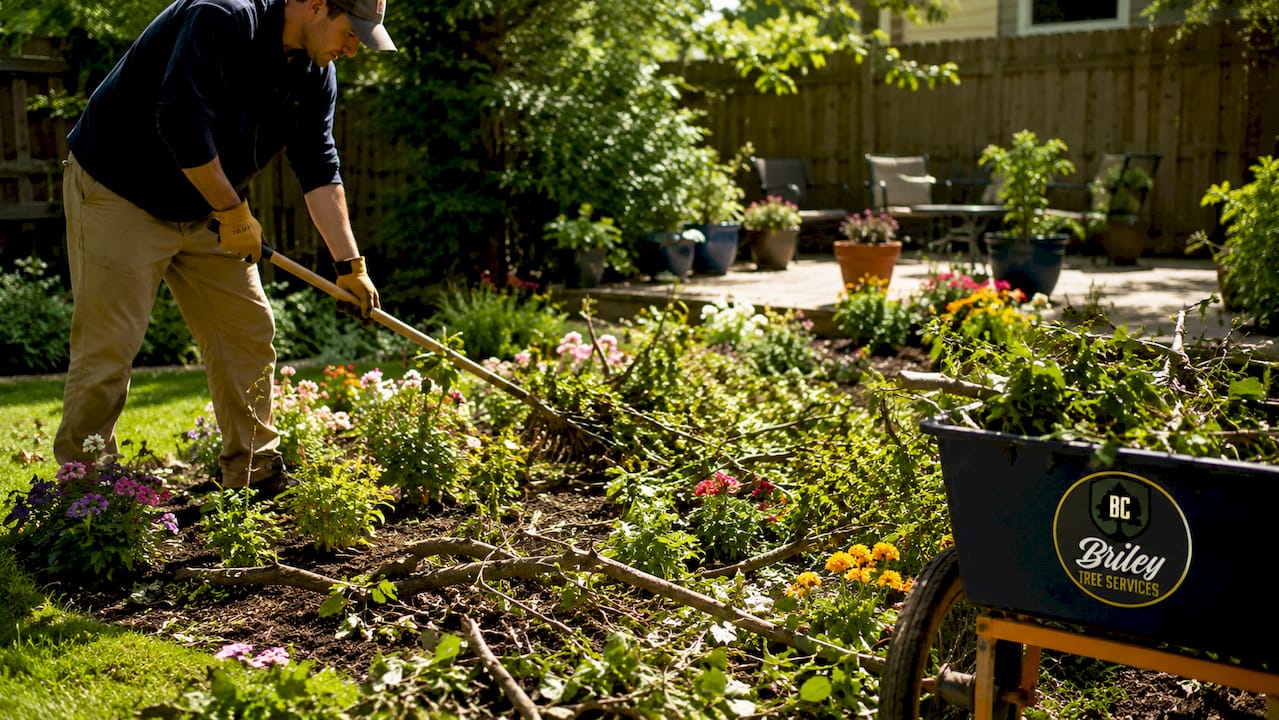
Soil compaction from equipment is the threat most homeowners overlook. Chippers, stump grinders, and skid steers weigh thousands of pounds. Heavy machinery on clay or wet soils causes soil compaction even when ground mats are in place. Compacted soil restricts root growth and water absorption for months after the job ends.
The most common garden damage points include:
- Flower beds and shrubs crushed by equipment tires or dragged branches
- Irrigation lines cut by shovels or ground equipment during debris cleanup
- Hardscapes such as pavers, edging, and retaining walls cracked by dropped timber
- Potted plants and garden hoses left in the work zone and struck by deflected debris
- Turf rutted by repeated equipment passes over the same path
Clearing the entire fall zone of small, low-value items like potted plants and garden hoses is a basic step that prevents a surprising amount of damage. Debris bounce is real, and anything left in the zone is at risk.
What preparatory steps should homeowners take before tree removal?
Preparation done the day before the crew arrives prevents most avoidable garden damage. These steps take a few hours and can save you significant repair costs.
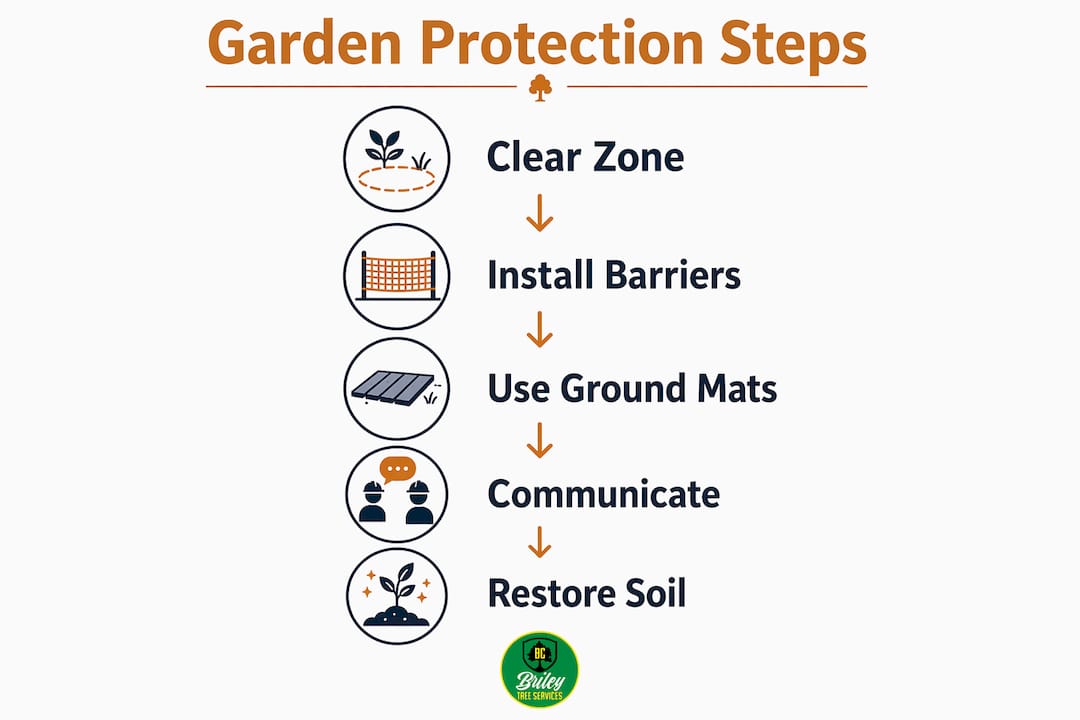
- Clear the full fall zone. Remove all movable items from the area surrounding the tree. This includes potted plants, garden ornaments, hoses, furniture, and any tools stored nearby. The two-tree safety rule requires a buffer equal to two tree lengths around the removal site to be free of people and objects.
- Mark sensitive garden beds and plantings. Use bright flags or stakes to identify areas you want crews to avoid. Failing to mark sensitive areas is a common homeowner error that causes crews to miss protecting vital garden features.
- Map equipment access routes with the crew. Walk the property with the lead arborist before work begins. Agree on which paths equipment will use and which areas are off-limits. This conversation is the single most effective step you can take.
- Install temporary barriers around garden beds. Use safety fencing, metal barricades, or plywood sheets to create a physical boundary. Physical barriers like plywood and safety fencing protect gardens especially when removing large trees near vulnerable landscaping.
- Lay ground protection on access paths. Place plywood sheets or composite mats along the route equipment will travel. This distributes weight and reduces turf stress.
- Photograph your garden before work starts. A timestamped photo record documents the pre-removal condition of your landscaping. This protects you if any dispute arises about damage.
Pro Tip: Talk to your arborist about preparing your yard at least 48 hours before the job. Last-minute conversations on removal day often get rushed, and key details about sensitive plants get missed.
How do professional tree removal crews protect gardens during removal?
Professional tree removal is a controlled process, not a free-fall operation. Rope rigging and crane-assisted lowering allow crews to remove trees safely without damaging nearby structures or gardens. These techniques place each section of the tree exactly where the crew intends, rather than letting gravity decide.
The core professional methods used to shield landscaping include:
- Rope rigging systems that lower cut sections vertically into a designated drop zone, bypassing garden beds entirely
- Crane-assisted removal for large or structurally compromised trees where rigging alone is insufficient
- Composite ground mats and plywood boards placed along all equipment travel paths to prevent deep ruts and reduce soil compaction
- Designated drop zones established away from sensitive plantings before the first cut is made
- Exclusion zones marked with cones or tape to keep equipment and personnel away from flagged garden areas
The table below shows how each professional method addresses a specific garden risk.
| Professional method | Garden risk addressed |
|---|---|
| Rope rigging and controlled lowering | Prevents debris from landing on beds and shrubs |
| Composite ground mats | Reduces soil compaction along equipment paths |
| Crane-assisted removal | Controls placement of large sections near structures |
| Designated drop zones | Keeps debris away from sensitive plantings |
| Exclusion zone marking | Prevents equipment from entering flagged garden areas |
Licensed, professional crews following industry standards greatly reduce property damage. Amateurs cause most accidents by skipping these controls. Hiring a certified arborist is not just about the tree. It is about everything around it.
For a deeper look at how rigging techniques protect gardens and structures during tree work, Brileytreeservice covers these methods in detail.
What steps should you take after tree removal to restore your garden?
Post-removal care determines how quickly your garden recovers. The work zone leaves behind debris, compacted soil, and disturbed turf that need prompt attention.
- Remove all debris within 24 hours. Branches and wood chips left on garden beds block sunlight and trap moisture, which smothers plants and invites fungal disease. Rake the area thoroughly and check under shrubs for hidden debris.
- Assess soil compaction on equipment paths. Walk the access routes and press a screwdriver into the soil. If it does not penetrate easily, the soil is compacted. Ground mats protect against deep ruts but cannot completely prevent turf stress, especially on heavy clay and saturated soils.
- Aerate compacted areas. A core aerator or garden fork breaks up compressed soil and restores drainage. Do this within two weeks of the job for best results.
- Reseed or resod disturbed lawn areas. Bare patches left by equipment traffic invite weeds. Apply grass seed appropriate for your region and keep the area moist until germination.
- Protect shrubs near the stump grinding zone. Stump grinders throw wood chips at high velocity. Cover nearby shrubs with burlap or plywood before grinding begins.
- Monitor plant health for four to six weeks. Watch for wilting, yellowing leaves, or stunted growth in plants near the work zone. These signs indicate root stress from compaction or debris impact.
Landscape restoration after major tree work sometimes requires professional help. Trenchless and low-impact repair methods used in landscaping preservation show how property repair services can minimize disruption to existing plantings, a principle that applies directly to post-removal recovery.
What common mistakes increase garden damage risk during tree removal?
Most garden damage during tree removal is preventable. The mistakes that cause it are predictable, and knowing them in advance puts you ahead of the problem.
- Leaving the fall zone partially cleared. Homeowners often remove large items but leave small ones. A garden hose or ceramic pot left in the zone can be destroyed by deflected debris or branch bounce.
- Not discussing drop zones with the crew. The most common homeowner mistake is not discussing access routes and drop zones before work starts. Crews then make assumptions, and sensitive areas get overlooked.
- Attempting DIY removal near garden areas. Without proper rigging equipment and training, controlling where a tree or branch falls is not possible. DIY removal near garden beds almost always results in damage.
- Allowing pets and children near the active work zone. Movement near the work area distracts crews and creates safety hazards. Keep everyone, including pets, inside or well away from the site.
- Ignoring soil conditions on the day of removal. Scheduling removal after heavy rain increases compaction risk significantly. If the ground is saturated, ask the crew to delay equipment movement or add extra ground protection.
Pro Tip: Ask your tree service provider for proof of license and insurance before signing any contract. Licensed professionals follow worksite safety standards that directly reduce the risk of garden and property damage.
Key Takeaways
Protecting your garden during tree removal requires physical barriers, clear crew communication, and prompt post-removal care to prevent debris damage, soil compaction, and plant loss.
| Point | Details |
|---|---|
| Clear the full fall zone | Remove all movable items, including small ones, before the crew arrives. |
| Mark and flag sensitive areas | Use bright stakes or flags so crews know exactly which beds to avoid. |
| Use ground mats on access paths | Composite mats reduce soil compaction but work best on firm, dry ground. |
| Hire licensed professionals | Certified crews use rigging and drop zones that prevent most garden damage. |
| Restore soil and turf promptly | Aerate compacted paths and reseed bare areas within two weeks of removal. |
What I've learned from watching homeowners skip the prep work
I have seen the same scenario play out more times than I can count. A homeowner schedules tree removal, the crew shows up, and nobody has talked about the rose bed three feet from the trunk. By noon, half of it is gone. Not because the crew was careless. Because nobody pointed it out.
The single biggest factor in garden protection during tree removal is the conversation that happens before the first cut. Walk the property with the arborist. Point at every plant you care about. Ask where the drop zone will be. Ask which path the chipper will take. These questions take ten minutes and prevent hours of repair work.
The other thing I have seen homeowners get wrong is expecting ground mats to solve everything. They help. They reduce compaction meaningfully on firm soil. But on saturated clay, even the best mat setup leaves some turf stress. The honest answer is to plan equipment routes on your driest, most accessible ground and accept that some minor turf recovery will be needed.
Hiring a licensed, insured crew is not optional if you care about your landscaping. The rigging systems, the controlled lowering, the exclusion zones. These are not extras. They are the standard practice that separates professional removal from a chainsaw and a prayer. Your garden is worth the investment in getting it right.
— Tatum
Brileytreeservice: safe tree removal that protects your property
Brileytreeservice is a licensed and insured tree care company serving Shreveport, Bossier City, and Northwest Louisiana. Every removal job uses composite ground mats, rope rigging, and designated drop zones to keep your garden and landscaping intact.
The Brileytreeservice team shows up on time, follows industry safety standards on every job, and cleans up completely before leaving your property. Whether you have a hazardous tree near a flower bed or a large removal close to a hardscape, the crew coordinates with you before the first cut. Contact Brileytreeservice for a free removal estimate and see why homeowners across the Shreveport area trust this team with their trees and their yards.
FAQ
How far should I clear around a tree before removal?
The two-tree safety rule requires a buffer equal to two tree lengths around the removal site. Clear all movable items, including small garden objects, from this entire zone.
Do ground mats fully prevent soil compaction?
Ground mats significantly reduce compaction but do not eliminate it entirely. On heavy clay or saturated soils, some turf stress is expected even with proper mat placement.
What is the most effective way to protect flower beds during tree removal?
Install physical barriers such as safety fencing or plywood around the beds and mark them with bright flags. Communicate their location clearly to the crew before work begins.
Should I be home during tree removal to protect my garden?
Being present allows you to answer questions and monitor sensitive areas, but stay well outside the work zone. Let the crew work without distraction while remaining available for communication.
How soon after tree removal should I aerate compacted soil?
Aerate compacted areas within two weeks of the job. Early aeration restores drainage and root access before soil structure hardens further.