

Landscaping is defined as the design, maintenance, and enhancement of outdoor spaces including lawns, garden beds, shrubs, and decorative features, while tree service is a specialized field focused on the care, removal, and health assessment of mature trees. Understanding what is landscaping vs tree service helps homeowners and property managers hire the right professional for the right job. The two fields overlap in appearance but differ sharply in training, equipment, and risk. Hiring the wrong provider for large tree work creates real safety and legal exposure. This guide breaks down each service clearly so you can make confident, informed decisions for your property.
What is landscaping vs tree service: core differences explained
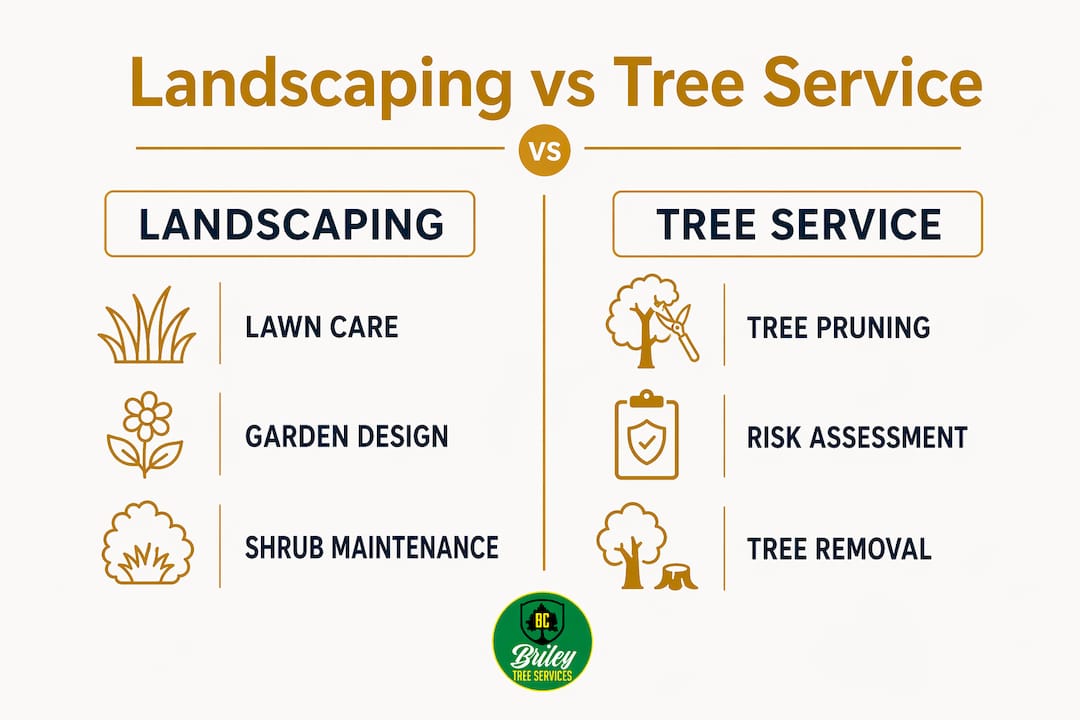
Landscaping covers the broad maintenance and design of outdoor spaces. A landscaping company handles lawn mowing, fertilization, garden bed planting, mulch application, irrigation installation, hardscaping such as patios and walkways, and the pruning of small ornamental plants. Arborists diagnose tree health and manage structural risk, while landscapers focus on the overall appearance and upkeep of the yard. These are two distinct professions with different tools, training, and liability profiles.
Tree service, also called arboriculture, is the professional care of individual trees. It includes large tree pruning, tree removal, stump grinding, storm damage cleanup, pest and disease treatment, and structural risk assessment. A certified arborist evaluates a tree's health the way a physician evaluates a patient, looking at root systems, canopy structure, and signs of decay. That level of diagnosis goes well beyond what a landscaping crew is trained or equipped to do.
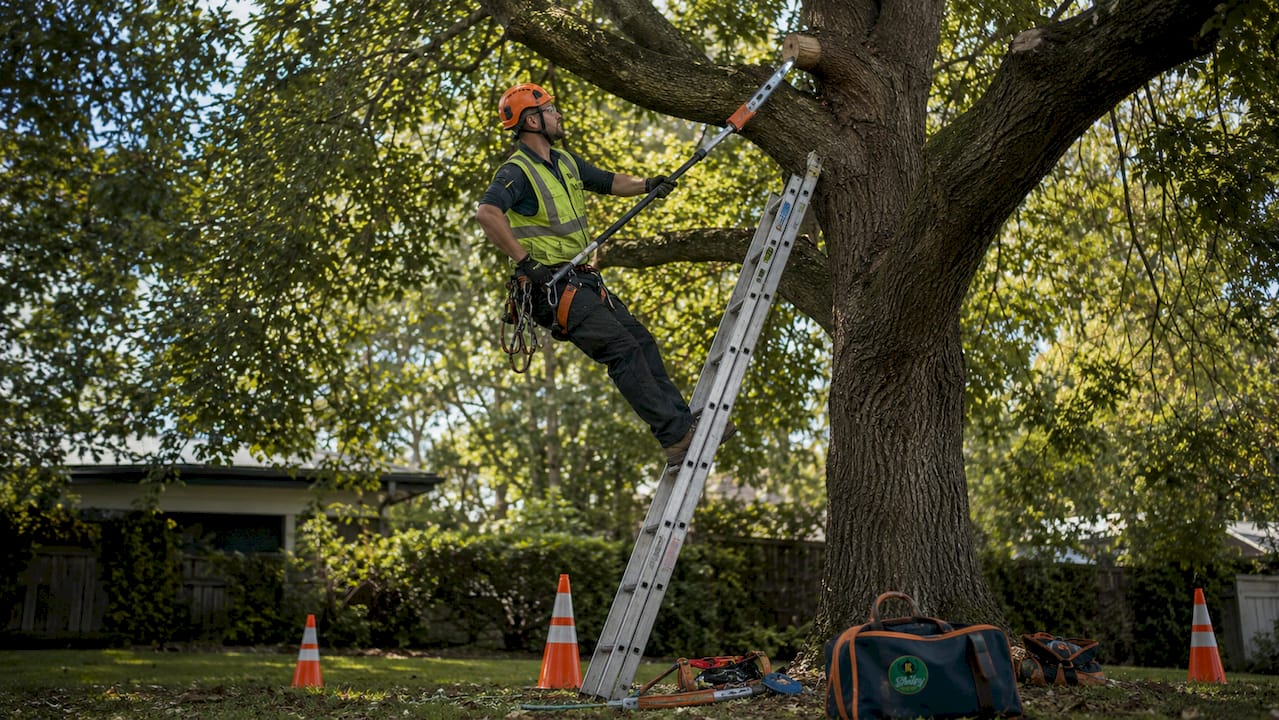
The simplest way to separate the two: landscaping maintains the yard, and tree service maintains the trees.
What services do landscapers and tree companies each provide?
Landscaping services
Landscaping companies handle recurring maintenance and design work across the full outdoor space. Common services include:
- Lawn mowing, edging, and fertilization
- Garden bed planting and seasonal color changes
- Mulch and soil amendment application
- Irrigation system installation and maintenance
- Hardscaping: patios, retaining walls, walkways
- Pruning of ornamental shrubs and small trees under 15 feet tall
The recurring nature of landscaping work is a key feature. Most homeowners schedule lawn care weekly or biweekly and garden maintenance monthly. Landscaping projects like patio installation or full yard redesigns are one-time investments, but the maintenance cycle never stops.
Tree service tasks
Tree service work is project-based and triggered by specific conditions. Common tasks include:
- Pruning large or mature trees above 15 feet
- Full tree removals, including hazardous or dead trees
- Stump grinding after removal
- Emergency storm damage cleanup
- Structural risk assessments for trees near buildings or power lines
- Pest and disease diagnosis and treatment
Industry best practices state that any tree over 15 feet tall, or any tree near power lines or structures, requires a certified tree service professional. That 15-foot threshold is the clearest practical dividing line between the two fields. A landscaper trimming a 30-foot oak creates real risk for the tree, the property, and the crew.
How do expertise, equipment, and certification differ?
Landscapers typically train in horticulture, landscape design, and general property maintenance. Many hold state landscape contractor licenses, which cover irrigation, planting, and hardscaping work. Their standard equipment includes riding mowers, trimmers, blowers, and small hand pruners. That toolkit works well for everything at ground level or within easy reach.
Tree service professionals operate in a fundamentally different category. ISA Certified Arborist credential confirms adherence to best practices and safety in tree work, distinguishing trained professionals from minimally qualified operators. The International Society of Arboriculture (ISA) certification requires passing a rigorous exam covering tree biology, pruning standards, soil science, and risk assessment. Not every tree company employs ISA Certified Arborists, so asking for proof of certification before hiring is a direct way to screen for quality.
The equipment gap between the two professions is significant. Tree work requires specialized gear including aerial lifts, climbing harnesses, rigging hardware, and industrial chippers. Improper pruning using the wrong techniques causes lasting structural damage to trees, a problem known as tree topping. Landscapers using basic tools on large trees risk both the tree's long-term health and the safety of everyone nearby.
Insurance requirements reflect the risk difference directly. Hiring a landscaper for large tree work exposes homeowners to liability because most landscaping companies lack the $1M–$2M specialized insurance policies that professional tree services carry. If a branch falls on a neighbor's fence or a crew member is injured, the homeowner may face the financial consequences when the contractor is underinsured.
Pro Tip: Before any tree work begins, ask the contractor for a certificate of insurance showing general liability and workers' compensation coverage. A reputable tree service provides this without hesitation.
Cost comparison: landscaping versus tree service pricing
Landscaping and tree service use different pricing models, which reflects how each type of work is structured. Landscaping maintenance charges typically run $50–$100 per hour. Larger design and construction projects, such as full yard redesigns or patio installations, commonly range from $5,000 to $50,000 or more depending on scope and materials.
Tree service pricing is project-based. The complexity, size, and location of the tree drive the cost. A tree near a house or power line costs more to remove than one in an open yard because the crew must use rigging techniques to lower branches in sections. Typical tree care interventions cost between $200 and $5,000, with large removals at the upper end of that range.
| Service | Typical price range | Pricing model |
|---|---|---|
| Lawn maintenance | $50–$100 per hour | Hourly, recurring |
| Small tree removal (under 30 ft) | $300–$800 per job | Per project |
| Large tree removal (over 30 ft) | $1,500–$5,000+ per job | Per project |
| Landscape design and construction | $5,000–$50,000+ | Per project |
| Stump grinding | $150–$500 per stump | Per project |
The price difference between a small and large tree removal is not arbitrary. It reflects crew size, equipment rental, time on site, and the level of risk involved. A 70-foot pine near a house requires a different operation than a 20-foot ornamental pear in an open yard.
When should you hire a landscaper versus a tree service?
Choosing the right professional comes down to the size of the tree, the nature of the work, and the risk involved. These situations call for a landscaper:
- Routine lawn care and fertilization on a weekly or monthly schedule
- Garden bed planting and seasonal color changes throughout the year
- Pruning ornamental shrubs and small trees under 15 feet tall
- Mulch application and soil work around garden beds
- Hardscaping projects like patios, walkways, or retaining walls
These situations require a certified tree service professional:
- Pruning or removing any tree over 15 feet tall, regardless of apparent difficulty
- Any tree near a power line, building, or fence, where a falling branch creates serious risk
- Storm-damaged trees with broken limbs or compromised root systems
- Dead or diseased trees that need removal before they fall on their own
- Structural risk assessments for trees that show signs of decay or leaning
Many homeowners mistakenly trust landscapers with large tree work without verifying certification or insurance, which creates safety and legal risk. The mistake is understandable because both types of companies work outdoors and use similar-looking trucks. The difference shows up in training, equipment, and what happens when something goes wrong.
For property managers overseeing multiple sites, coordinating both services under a planned schedule produces the best results. A multi-property tree service plan keeps large trees assessed and maintained on a cycle, while landscaping crews handle the weekly upkeep between visits.
Pro Tip: Schedule a tree risk assessment every two to three years, even when trees look healthy. Many structural problems develop internally and are not visible from the ground until a storm reveals them.
Preventative care also protects property value. Preventative landscaping combined with regular tree maintenance reduces the likelihood of costly emergency removals and keeps the property looking well-managed year-round.
Key Takeaways
Landscaping and tree service are distinct professions with different training, equipment, and risk profiles, and hiring the right one for each job protects both your property and your wallet.
| Point | Details |
|---|---|
| The 15-foot rule | Any tree over 15 feet tall requires a certified tree service, not a landscaper. |
| Certification matters | Ask for ISA Certified Arborist credentials before hiring any tree service company. |
| Insurance protects you | Tree service companies should carry $1M–$2M in liability and workers' compensation coverage. |
| Cost models differ | Landscaping charges hourly; tree service charges per project based on size and risk. |
| Coordinate both services | Pairing regular landscaping with scheduled tree care improves safety and property value. |
Why I think homeowners underestimate the tree service gap
Most homeowners I've spoken with assume that anyone with a chainsaw and a truck can handle a large tree. That assumption is where things go wrong. The difference between a landscaper and an ISA Certified Arborist is not just a piece of paper. It is the difference between someone who knows how a tree fails structurally and someone who does not.
Healthy, well-maintained trees are foundational to landscape aesthetics and property value. But a tree that looks fine from the street can have internal decay, root damage, or a compromised branch union that makes it a serious hazard. Only a trained arborist has the diagnostic skills to identify those problems before they become emergencies.
The other thing I've seen consistently: homeowners who coordinate landscaping and tree care together, rather than treating them as separate expenses, end up spending less over time. A landscaper who spots a problem tree and flags it for a certified arborist saves the homeowner from a much larger emergency removal bill later. These two services work better as a system than as isolated calls.
My honest recommendation is to stop thinking of tree work as a subset of yard maintenance. It is a separate profession with separate risks. Hire accordingly, verify credentials, and check insurance before anyone climbs a tree on your property.
— Tatum
Brileytreeservice: professional tree care in Shreveport
Brileytreeservice serves homeowners and property managers across Shreveport, Bossier City, and Northwest Louisiana with certified, insured tree care. The team handles tree removal, tree trimming, stump grinding, and emergency storm cleanup for both residential and commercial properties.
Every job includes proper cleanup and a crew that treats your property with care. Whether you have a hazardous tree that needs to come down or overgrown branches that need trimming, Brileytreeservice gets it done safely. Learn more about what tree service includes or visit Brileytreeservice to request a free estimate today.
FAQ
What is the main difference between landscaping and tree service?
Landscaping covers lawn care, garden maintenance, and small plant pruning, while tree service specializes in the care, removal, and health assessment of large or mature trees. The two fields differ in training, equipment, and insurance requirements.
Can a landscaper remove a large tree?
A landscaper can physically attempt a tree removal, but most lack the specialized equipment, training, and insurance required for safe large tree work. Hiring a landscaper for large tree work exposes homeowners to liability if something goes wrong.
What does an ISA Certified Arborist do?
An ISA Certified Arborist assesses tree health, identifies structural risks, and performs or supervises pruning and removal work according to industry safety standards. The ISA certification confirms training in tree biology, risk assessment, and proper pruning techniques.
How much does tree removal cost compared to landscaping?
Tree removal typically costs $300–$800 for small trees and $1,500–$5,000 or more for large trees, charged per project. Landscaping maintenance runs $50–$100 per hour on a recurring schedule.
When should I call a tree service instead of my landscaper?
Call a certified tree service for any tree over 15 feet tall, any tree near a power line or building, storm-damaged trees, or trees showing signs of disease or decay. A homeowner's safety guide to tree removal covers the specific situations that require professional intervention.