
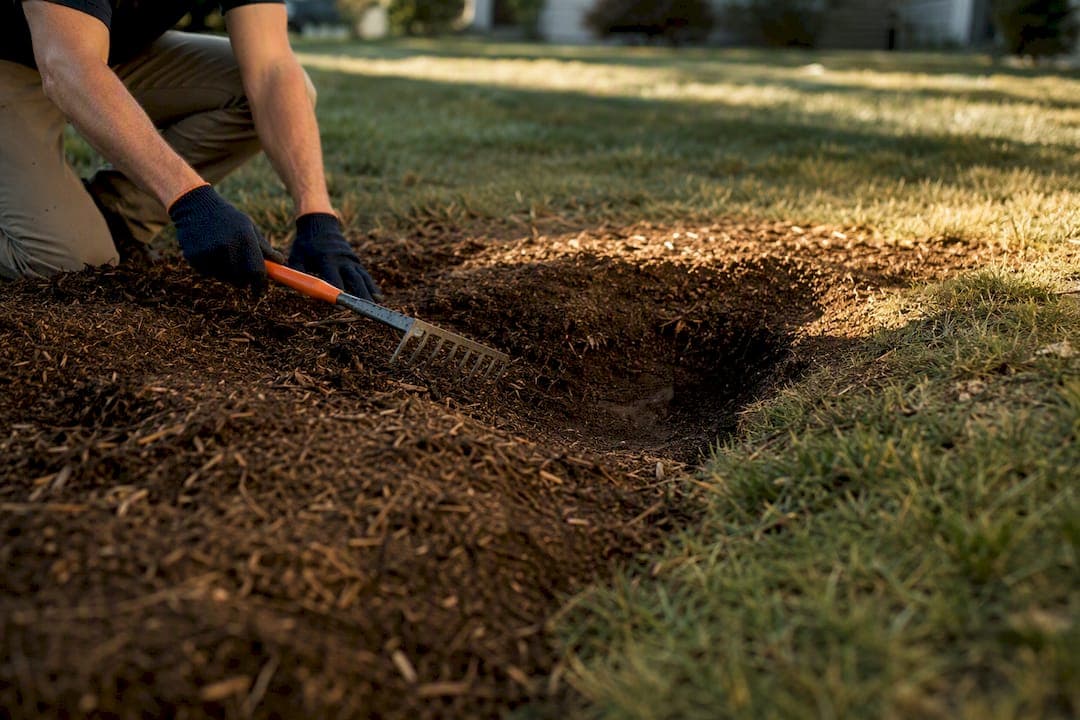
Grass can usually go down the same day, once chips are cleared and clean topsoil is backfilled. Small shrubs and flowers typically need only modest prep and a spot away from leftover roots. New trees are different: plant them 3 to 8 feet from the old stump, or wait about a year, or excavate the old root mass if you want the same exact spot.
TL;DR:
- Grass can be planted immediately after clearing grindings and adding 4 to 6 inches of screened topsoil, with no significant wait required.
- Small shrubs and flowers can be transplanted soon after grinding, provided large chips are removed and plantings avoid decomposing lateral roots.
- Replanting trees should occur 3 to 8 feet away from the old stump, or after waiting at least a year, to allow roots to decompose and soil to stabilize.
- Deep grinding or root excavation near the original spot accelerates soil recovery, reduces future settling, and shortens the wait for planting.
- Checking for pests and disease signs before planting, and removing buried chips rather than leaving them, improves the chance of successful replanting.
Table of Contents
- What Does Stump Grinding Leave Behind?
- When Can You Plant Grass, Shrubs, or Trees?
- How Do You Prepare the Area Before Planting?
- Replanting Trees: How Far Away and How Long to Wait?
- What Risks Should You Watch For?
- Quick Checklist: What to Do Right Now
- What Homeowners Get Wrong About Replanting
- Get Your Yard Ready for Planting the Right Way
- Sources
What Does Stump Grinding Leave Behind?
Grinding chews up the stump and the top of the root ball, but it doesn't touch the lateral roots running underground. Those roots stick around and decompose gradually over years, which is why a spot that looks solid this spring can dip a little by next fall.
What's left behind after a typical job:
- A pile or scattering of fresh wood chips and sawdust
- A shallow depression where the stump used to sit
- Lateral roots still decomposing below grade
- A soil profile temporarily out of balance
Statistic Callout: Fresh grindings carry a high carbon-to-nitrogen ratio, and that imbalance can tie up nitrogen that new roots need until the wood breaks down. Given enough time and decent topsoil, those same chips eventually turn into useful organic matter. If a contractor offers deep grinding or full root removal, that changes your options considerably, since it clears more of the material causing these problems in the first place.
When Can You Plant Grass, Shrubs, or Trees?
Timing depends entirely on what you're putting in the ground, and the good news is grass rarely requires a real wait.
Grass and sod: Once you rake out the loose grindings and bring in 4 to 6 inches of screened topsoil, you can seed or lay sod the same day. The old advice about waiting weeks for stumps to "settle" mostly applies to unprepped ground. Fix the soil first, and the calendar stops mattering as much.
Flowers and small shrubs: These generally do fine shortly after grinding, as long as you've cleared out the big chip chunks and aren't planting a deep-rooted shrub directly over decomposing lateral roots. Shallow-rooted annuals and perennials are the most forgiving choice for a freshly ground spot.
Trees: This is where patience pays off. Extension guidance recommends either:
- Planting 3 to 8 feet away from the old stump, where the soil hasn't been disturbed
- Waiting at least a year if you're set on the exact same spot, to let roots partially break down
- Excavating and replacing the root zone with fresh soil if you don't want to wait
How Do You Prepare the Area Before Planting?
Good prep is the difference between a lawn that thrives and one that sinks in three places by summer. Work through it in order:
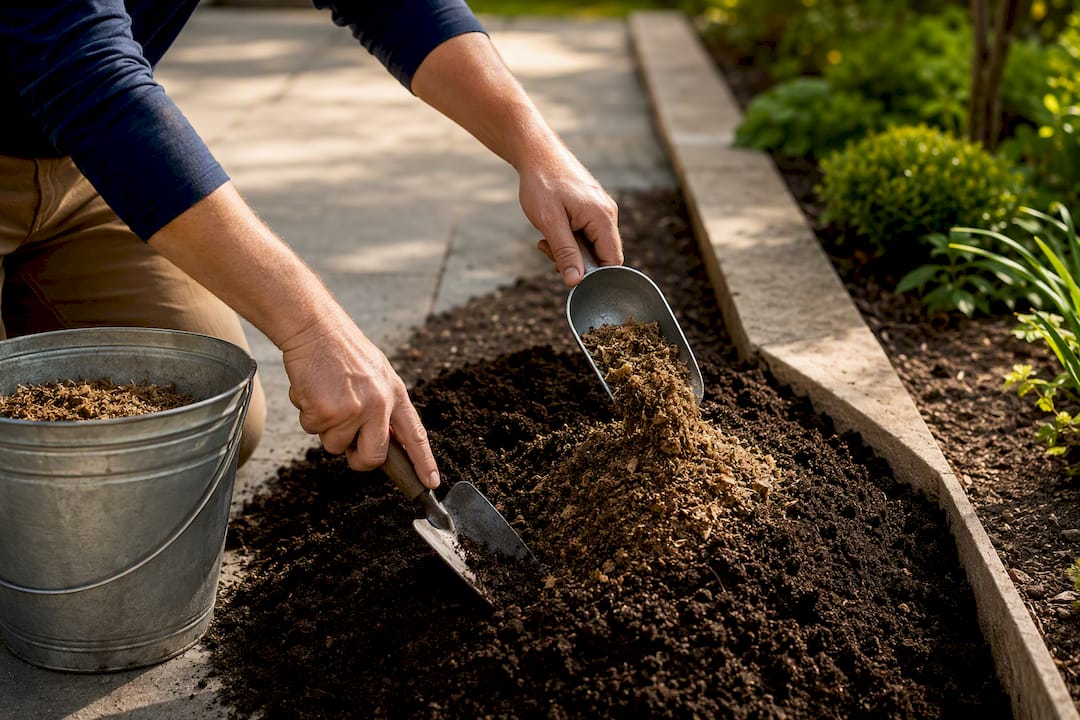
- Clear the grindings. Rake or haul off the bulk of the chips. Keep a portion aside for mulch elsewhere in the yard, since fresh wood chips work well as top-dressing away from new roots.
- Add screened topsoil. Bring in enough to reach 4 to 6 inches of clean soil for grass, mounding it 1 to 2 inches above grade so it settles level instead of leaving a dip.
- Test and amend the soil. A basic soil test tells you what you're working with. Compost or a starter fertilizer helps offset the nitrogen drag from any residual wood fragments.
- Ask about deep grinding. If you're planning to plant a tree in that exact spot, request deep grinding or root excavation up front rather than digging around old roots later.
Pro Tip: Mound the topsoil slightly higher than the surrounding grade right after backfilling. As the ground settles over the following months, it'll level out instead of leaving a sunken patch where the stump used to be.
Reusing chips correctly matters too. A 3:1 mix of soil to grindings keeps decomposition on track without starving nearby plants of nitrogen.
Replanting Trees: How Far Away and How Long to Wait?
Trees carry the strictest rules of anything on this list, and for good reason. Old root systems occupy soil space, alter drainage, and can still be actively decomposing when you're ready to plant.
- Offset distance: 3 to 8 feet gives new roots access to undisturbed, mineral soil with normal drainage, rather than a mix of sawdust and decomposing wood.
- Disease history matters. If the original tree came down because of disease or pests, replanting in the same spot raises reinfection risk. Choosing a resistant species, or offsetting the new tree entirely, is usually the safer call.
- Excavation vs. waiting it out: Digging out the old root mass and replacing it with fresh soil gets you back to the same spot immediately, but it costs more labor. Waiting a year is cheaper but means living with a bare patch a while longer.
- Realistic timeline: Lateral roots can take three to seven years to fully decompose, so even after a year's wait, some settling is still likely. Budget for a follow-up topping-off of soil.
What Risks Should You Watch For?
A few hazards aren't obvious until they've already caused a problem.
- Disease re-infection: If the tree died from a soil-borne pathogen, that pathogen doesn't disappear with the stump. Resistant species or a longer wait reduce the odds of a repeat.
- Termites: Grinding removes the stump, which was a food source, but it does nothing to an existing subterranean colony nearby. If you've seen termite activity, get a licensed pest control inspection before you replant, not after.
- Settling and voids: Decomposing lateral roots create pockets underground. That's a nuisance under a lawn, but it's a real concern under a patio, walkway, or anything else with weight on it.
- When to call in help: Any sign of pest activity, or plans to build something solid over the old root zone, is worth a professional look before you commit to planting.
Quick Checklist: What to Do Right Now
- Check for termite or disease signs around the stump area; treat first if you find any.
- Decide whether to haul off the grindings or reuse them as mulch elsewhere in the yard.
- Backfill with screened topsoil, mounding it slightly to allow for settling.
- Pick your planting plan: grass and shrubs can usually go in right away; trees go 3 to 8 feet off, or wait, or excavate.
That order matters. Skipping the pest check or planting before the soil's corrected is how homeowners end up redoing the work twice.
What Homeowners Get Wrong About Replanting
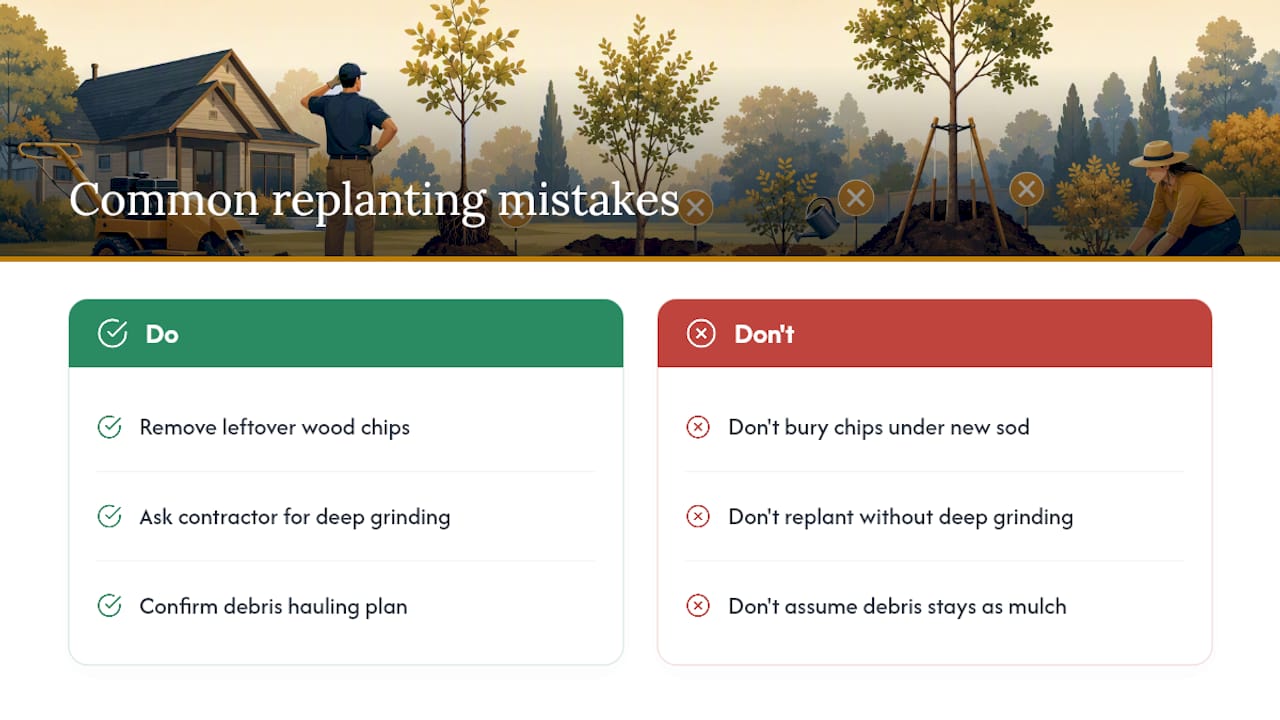
The mistake I see repeated most often is burying leftover chips instead of removing them, then wondering months later why the new grass came in patchy over that spot. Wood chips mixed into topsoil at the surface break down fine. Buried in a thick layer under new sod, they just rob nitrogen from the roots trying to grow through them.
The second mistake is planting a tree in the exact old spot without asking for deep grinding first. It's a five-minute conversation with your contractor that saves a year of waiting or a weekend of excavation later. Whether the crew hauls debris off-site or leaves it for mulch also shapes what you can plant and when, so it's worth asking before the job starts, not after.
— Tatum
Get Your Yard Ready for Planting the Right Way
Professional tree service companies handle the part of this process most homeowners can't do themselves: getting the stump and its root system out of the way cleanly enough to plant on schedule instead of months later.

Experienced crews provide stump grinding, deep grinding for full root clearing, and debris haul-off services in various areas, so you're not stuck reusing grindings you didn't want. When you request an estimate, ask specifically about grind depth, whether cleanup includes chip removal or just grinding, and how those choices may affect price. Getting those details up front means less guesswork about what you can plant and when. For a look at what's typically included in that scope of work, see our breakdown of stump removal service options. If you're ready to move from stump to something growing again, request a free estimate and we'll walk your property with you before any work starts.
Sources
- Can I replant a new tree in the same spot after an old tree is removed? | Yard and Garden
- Don't Plant New Tree atop Recently Ground Stump (Tree Planting)
- What to Do After Stump Grinding | SWVA Stump Co
- Planting a tree next to a stump — Gardening Know How