
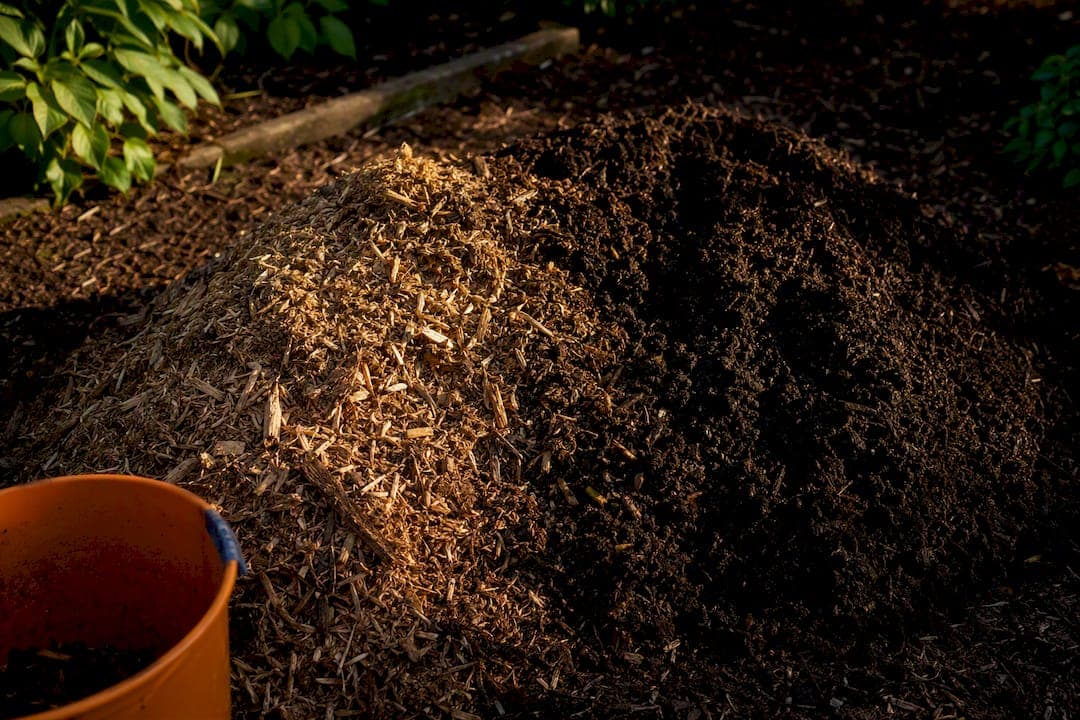
Stump grindings are valuable yard material. Use them as mulch, a compost carbon source, filler for low spots, or base material for paths, but manage them carefully to avoid nitrogen tie-up and lawn settling. Most homeowners can put every pound of grindings to work instead of hauling them off. The best-suited use below in "Top Practical Uses" is your fastest starting point.
TL;DR:
- Most of the roughly 15 to 20 cubic yards of grindings from a single 24-inch stump can be used effectively in your yard as mulch, compost, or fill material.
- Proper preparation, aging, and mixing of grindings with nitrogen-rich greens are essential steps for successful composting, taking at least 12 to 18 months or longer.
- Applying grindings as mulch requires a 2 to 4 inch layer kept 3 to 6 inches away from plant stems to prevent rot and pest issues, especially near foundations.
- When backfilling, avoid seeding immediately over fresh chips and add a topsoil layer, then monitor and top up after several weeks for best results.
- For paths and slopes, spread chips 3 to 4 inches deep, top up annually, or request removal if yard waste pickup services are available.
Table of Contents
- Stump Grindings Uses: The Top Practical Options
- Preparing and Aging Stump Grindings Before You Use Them
- Using Stump Grindings as Mulch the Right Way
- Backfilling the Stump Hole for a Lawn or New Planting
- Simple Path, Erosion, and Disposal Options
- What Briley Tree Service Sees on Every Job Site
- The Real Trade-Off Homeowners Need to Weigh
- Let Briley Tree Service Handle the Grinding and the Cleanup
- Sources
Stump Grindings Uses: The Top Practical Options
A typical 24-inch stump leaves behind roughly 1 to 2 cubic yards of chips, close to 15 to 20 garbage bags worth of material. That's more than most yards need for one project, so it helps to know your options before you commit the whole pile to one use.
- Mulch for established trees and shrub beds. Grindings work best around plants that already have deep root systems. They insulate soil, slow weed growth, and break down slowly enough to feed the soil over a season or two.
- Compost carbon source. Fresh grindings are almost pure carbon, so they need nitrogen-rich material mixed in. This route takes more effort but produces genuinely useful soil amendment.
- Garden paths and erosion control. Spread 3 to 4 inches deep over bare or sloped ground, grindings cut mud and slow water runoff on grades where grass struggles anyway.
- Filling low spots or backfilling the stump hole itself. Chips make decent filler, but they compress and decompose over time, so plan for a topsoil cap and expect the surface to drop as material breaks down.
- Lower-priority options. Some homeowners use grindings as rough animal bedding or a temporary weed barrier along fence lines. Skip wide distribution if the original tree showed signs of disease, since fungal material can spread wherever the chips go.
Preparing and Aging Stump Grindings Before You Use Them
Raw grindings usually come mixed with dirt, bark shreds, and root fragments. Raking out large soil clumps before you spread or store the material keeps your mulch looking cleaner and composts faster. If you plan to till chips directly into a garden bed, screen out rocks and root chunks first. They won't break down at the same rate as the fine material.
From there, you have two paths: passive aging or active composting.
- Passive aging: Pile grindings on a tarp or in a loose windrow and leave them alone. This takes far longer, often 12 to 18 months, but requires zero maintenance.
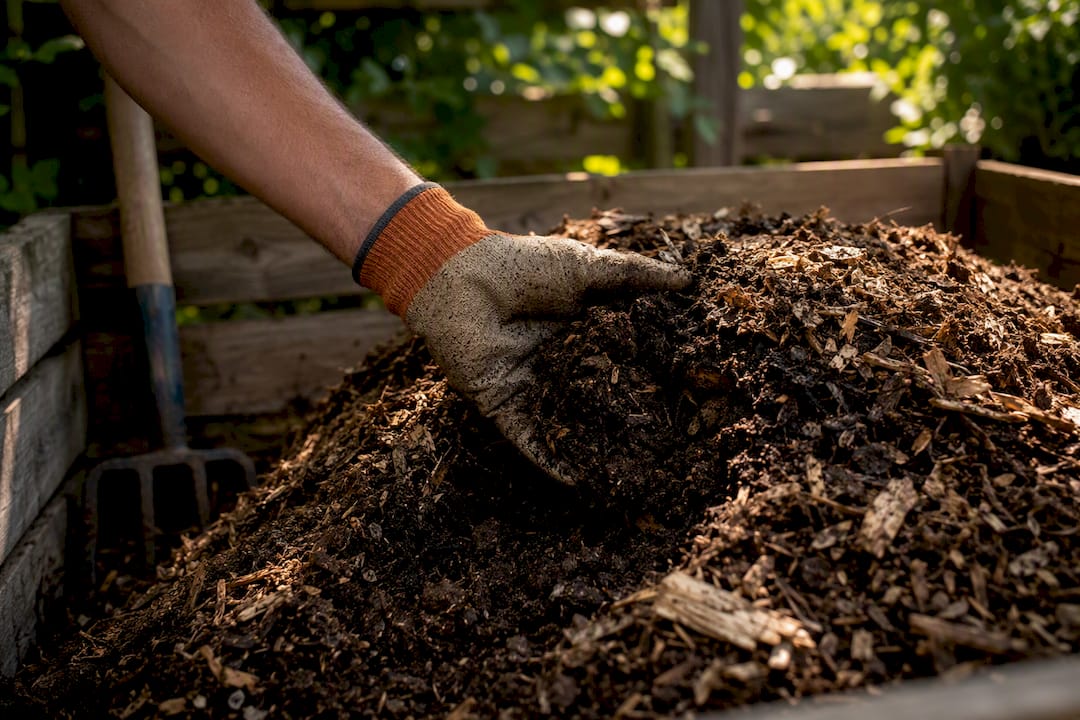
- Active composting: Mix roughly 3 parts grindings to 1 part green material (grass clippings, kitchen scraps, manure) by volume. Fresh wood chips carry an extremely high carbon-to-nitrogen ratio, and blending in nitrogen-rich greens pulls that ratio down toward a workable 30:1, which is what actually feeds the microbes doing the breakdown.
- Moisture: Keep the pile as damp as a wrung-out sponge. Too dry and decomposition stalls; too wet and it turns anaerobic and smells sour.
- Turning: Flip the pile every 2 to 3 weeks to introduce oxygen and speed things along.
Pro Tip: If you're short on grass clippings or manure, a scoop of blood meal or a bag of commercial nitrogen fertilizer mixed into the pile speeds decomposition without changing your ratio math much.
You'll know it's working when the pile's center feels noticeably warm to the touch, smells earthy rather than sour, and the chip texture starts crumbling instead of holding its shape. Full finished compost from a well managed pile usually takes several months rather than years.
Using Stump Grindings as Mulch the Right Way
Mulch is the easiest, lowest-effort use for stump grindings, but sloppy application causes real problems. Spread a layer 2 to 4 inches deep, no thicker. Piling it higher smothers roots and traps too much moisture against stems.
- Keep grindings pulled back 3 to 6 inches from tree trunks and plant stems. Mulch volcanoes trap moisture against bark and invite rot and pests.
- Stick to established trees, informal beds, and naturalized areas along fence lines or property borders.
- Avoid using fresh grindings in new planting holes or vegetable beds, where nitrogen drawdown can stunt young roots.
- Keep mulch beds away from your home's foundation, and inspect chips for termite activity before spreading them near structures; for more on protecting your home from water damage related to exterior conditions, see Clean Downspouts, Dry Home: A Florida Homeowner's Guide.
A 24-inch stump can produce enough material to mulch several average garden beds at proper depth, so measure your space before committing the whole pile in one spot. If chips came from a tree that showed visible disease or decline, compost them first rather than spreading them fresh, since sustained heat above 130 to 150 degrees Fahrenheit is what actually kills off pathogens. Refresh mulch beds once the top layer grays and thins, usually once a year, and move the older material to your compost pile instead of tossing it.
Backfilling the Stump Hole for a Lawn or New Planting
Don't seed directly over fresh grindings. The loose mix settles unevenly as chips decompose, and nitrogen tie-up in the soil starves young grass roots before they establish.
- Redistribute or remove the loose chip and soil mix left behind after grinding, since that material won't support turf on its own.
- Add quality topsoil in layers, tamping lightly as you go, and mound the surface slightly to account for future settling.
- Water thoroughly and monitor the area for a few weeks before seeding or laying sod.
- Top up with more soil after 6 to 8 weeks once the site has settled, since decomposing wood fiber mixed with loose soil rarely stays level on the first pass.
If you need a tree in that exact spot again or plan hardscaping over the site, skip backfilling and request full excavation instead.
Simple Path, Erosion, and Disposal Options
If composting sounds like too much upkeep, grindings still earn their keep as low-maintenance ground cover.
- Lay landscape fabric first if you want fewer weeds poking through, then spread chips 3 to 4 inches deep for a garden path.
- Plan to top up path material once a year as it compacts and breaks down.
- Use chips to build temporary berms or line drainage swales on slopes prone to washout.
- If none of this appeals to you, ask your tree service to haul the material away, or check whether your municipality offers yard-waste pickup for wood debris.
What Briley Tree Service Sees on Every Job Site
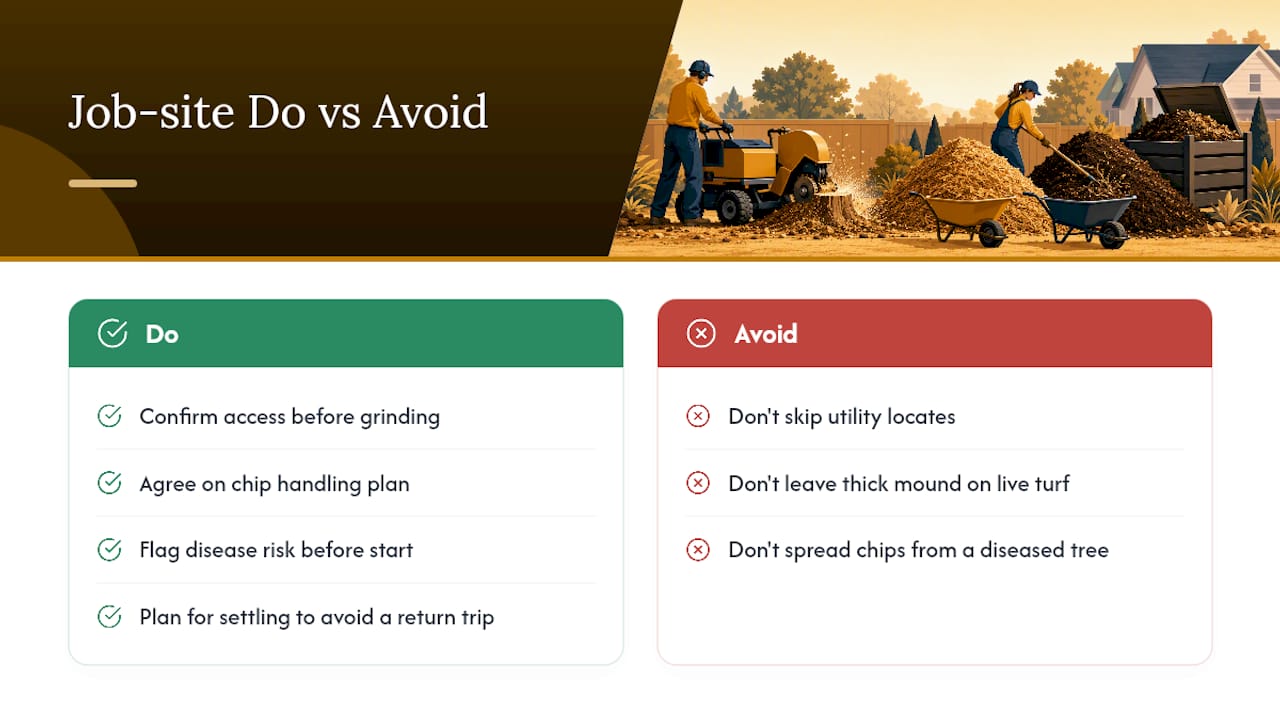
Years of grinding stumps across North Louisiana yards have shown a pattern in what goes wrong. Homeowners often skip utility locates before grinding, leave a thick mound sitting on live turf for weeks, or spread chips from a clearly diseased tree straight into flower beds. Our crews confirm access, agree on chip handling, and flag disease risk before the grinder starts. Planning for settling upfront, the way our stump grinding benefits guide outlines, saves a second trip later.
The Real Trade-Off Homeowners Need to Weigh
Most guides treat stump grindings like a minor afterthought, a byproduct to sweep away. That undersells the material. A 24-inch stump hands you enough usable mulch or compost feedstock to noticeably cut what you'd otherwise buy at a garden center, and it costs nothing but a little labor.
The conventional advice falls short in one specific way: it rarely gives homeowners a real number for pile size or mixing ratio, so people either skip composting entirely or build a pile too small to heat up. A 3 foot cube and a 3 to 1 chips to greens mix aren't arbitrary. They're the threshold between a pile that actually decomposes and one that just sits there looking untidy.
If you take one thing from this guide, prioritize the low-effort split: mulch what you can use now, compost a portion for later, and don't let disease-risk material sit spread across your yard indefinitely.
— Tatum
Let Briley Tree Service Handle the Grinding and the Cleanup
Briley Tree Service gives you a straightforward alternative to sorting through wood chips yourself: hire a crew that grinds the stump, manages the debris on your terms, and leaves the site ready for whatever comes next. Whether you want the grindings piled for mulch, backfilled for a future lawn, or hauled off entirely, our licensed and insured team handles it as part of the job, not an afterthought.

Booking starts with a free estimate. Our crews walk the site, confirm access and chip handling preferences before work begins, and clean up thoroughly when the job wraps, the same standard detailed in our tree service cleanup guide. If you're weighing grinding against full removal, our stump removal services page breaks down what each option covers. Ready to get a stump handled the right way? Contact Briley Tree Service today for your free estimate.
Sources
- Cornell Waste Management Institute — C:N guidance
- What to Do After Stump Grinding: A Week-by-Week Guide (Sys Tree Service)