
Most popular beliefs about stump grinding are wrong. Here are the real facts you need before you rent equipment or call a pro.
- Myth: Grinding removes all the roots. Reality: It grinds the visible stump and near-surface roots to below grade. Deep lateral roots stay in the ground and decompose slowly.
- Myth: It leaves a big hole. Reality: Grinding produces wood chips that fill the cavity. The area settles over time, not a crater.
- Myth: It's always too expensive. Reality: Grinding is typically more cost-effective than full root removal because it skips heavy excavation.
- Myth: A rental grinder does the same job as a pro. Reality: Consumer-grade rentals are smaller, slower, and harder to control safely than professional equipment.
- Myth: Grinding destroys the yard. Reality: Professional grinding is minimally invasive when done correctly.
- Myth: No utility checks are needed. Reality: Always call 811 before any grinding work begins.
TL;DR: For a single small stump away from structures and utilities, a rental can work if you follow all safety steps. For anything larger, near structures, or on a commercial property, hire a licensed pro.
Table of Contents
- What stump grinding actually is and how it differs from stump removal
- 9 common stump grinding misconceptions, corrected
- What affects price and how long grinding takes
- Safety risks, utility checks, and permit considerations
- What to expect after grinding: chips, backfill, and replanting
- When renting a grinder makes sense and when you should hire a pro
- How Brileytreeservice handles a stump grinding job
- Key Takeaways
- The case for getting this right the first time
- Brileytreeservice stump grinding services in Shreveport and North Louisiana
- Useful sources and further reading
What stump grinding actually is and how it differs from stump removal
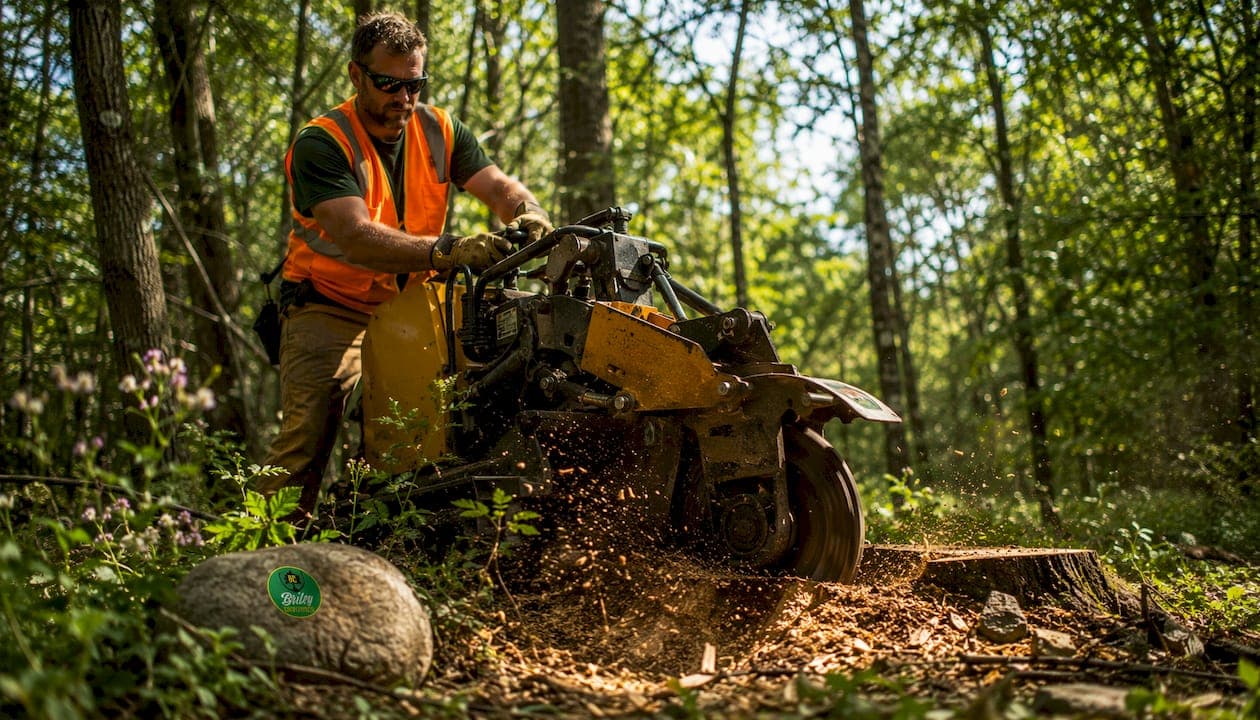
Stump grinding is the mechanical process of using a rotating cutting disc with carbide teeth to chip a tree stump down to below ground level. The machine works the cutter wheel laterally and vertically across the stump until the wood is reduced to chips. What remains underground are the deeper lateral roots, which are left to decompose naturally over time.
Full stump removal is a different operation entirely. It involves extracting the root ball from the soil, which requires significant excavation, more crew time, and hauling away a large volume of soil and root material. The result is a clean hole where the root system once was.
The practical difference matters for your landscaping plans. After grinding, the area can typically be replanted with grass or small plants once the chips are cleared and backfill is added. If you plan to pour a concrete pad, lay pavers, or plant a large tree in the exact same spot, full removal may be the better choice because residual roots can cause soil subsidence as they break down. For most residential situations, grinding is the right call. You can read a detailed breakdown in Brileytreeservice's guide on stump grinding vs. removal.
9 common stump grinding misconceptions, corrected
1. Grinding removes all the roots
Grinding reduces the visible stump and the roots closest to the surface. The deep lateral root system stays in the ground. Those roots decompose over months to years depending on species and soil conditions. For most homeowners, this is perfectly acceptable. The roots are no longer actively growing, and the surface area is clear for replanting or sod.
2. It will leave a large hole in your yard
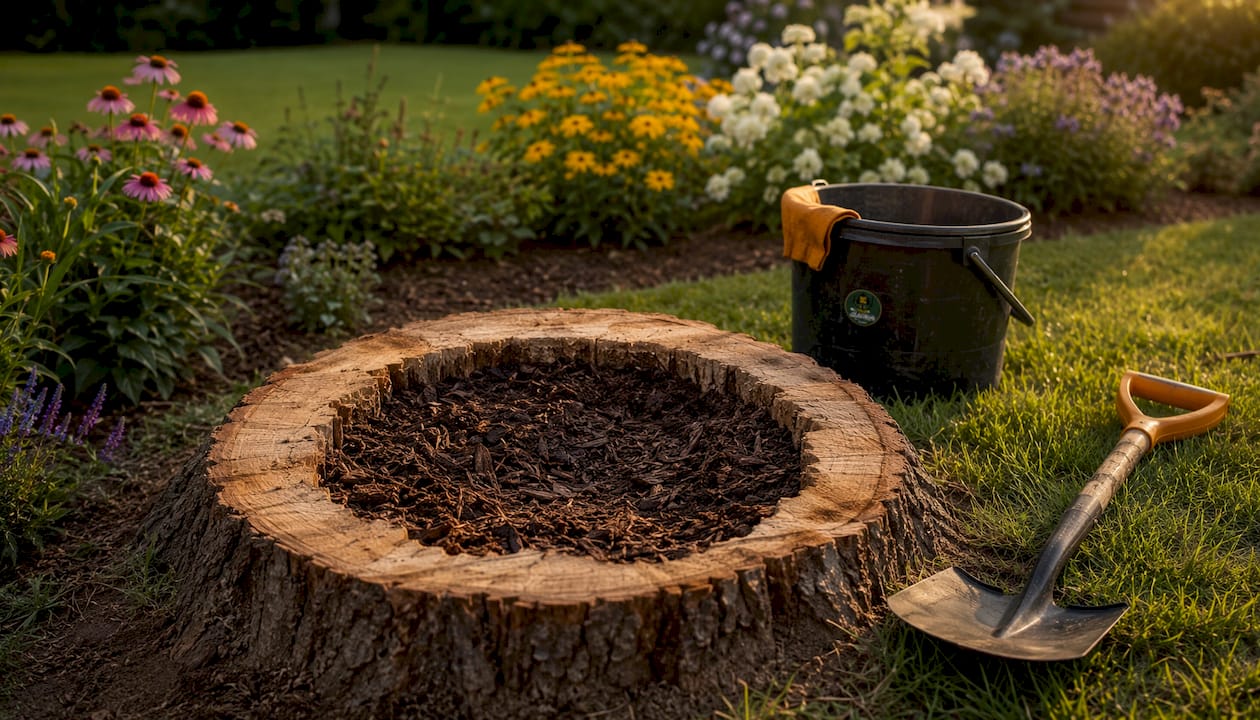
The grinder produces a substantial volume of wood chips, and those chips naturally fill the cavity left behind. You will see a shallow depression, not a pit. Once you add topsoil or a topsoil-and-compost blend and allow for settling, the area blends back into the surrounding lawn. No dramatic excavation, no crater.
3. Stump grinding is always prohibitively expensive
Grinding is generally the less invasive and more economical option compared to full root extraction. Full removal requires excavation equipment, more labor hours, and hauling away soil and root mass. Grinding skips all of that. Cost still varies by stump size, access, and number of stumps, but the process itself is designed to be efficient. Get two or three written estimates to understand the range for your specific job.
4. Consumer rental grinders are equivalent to professional equipment
A rental stump grinder from a home improvement store is typically a compact, walk-behind unit. Professional machines are larger, more powerful, and equipped with hydraulic controls that allow precise lateral and vertical movement. The difference shows up in grinding speed, depth capability, and the operator's ability to manage the machine safely near structures or on uneven ground. Rental units can work for a small, accessible stump. They are not a substitute for professional equipment on larger or more complex jobs.
5. Stump grinding destroys the surrounding yard
Professional operators focus the machine on the stump itself and maneuver carefully to avoid unnecessary disturbance to surrounding turf, beds, or hardscape. Skilled technique and proper equipment staging keep landscape disruption minimal. This is one of the most misunderstood benefits of hiring a trained crew rather than attempting a DIY job with unfamiliar equipment.
6. No utility checks or permits are needed
Underground utility lines, sprinkler systems, and irrigation pipes can run directly beneath or alongside a stump. Striking a gas line, electrical conduit, or water main during grinding is a serious hazard. Call 811 before any grinding work starts. The service is free, and a utility locator will mark underground lines at no charge. Some municipalities also require permits for work near curb cuts, driveways, or on commercial lots. Check with your local building department before scheduling.
7. Grinding alone protects sewer lines and underground utilities
Grinding removes the stump, but it does not address roots that have already grown into sewer lines or utility conduits. If you have a tree that was known to send roots toward drainage infrastructure, grinding the stump stops future growth but does not clear existing root intrusions. A plumber or utility contractor may need to inspect and clear those lines separately.
8. Stump grinding prevents all regrowth forever
Grinding prevents regrowth in most cases. However, certain species such as poplar and willow are prone to resprouting from remaining roots if the stump is not ground deep enough. If you notice new shoots emerging weeks after grinding, a follow-up treatment or deeper grinding pass may be needed. For species known to resprout aggressively, discuss grinding depth with your contractor before the job starts.
9. Leaving a stump to rot is a harmless alternative
A rotting stump can become a breeding ground for termites, carpenter ants, and other wood-boring insects. Those pests can migrate from the stump to nearby structures. The decaying wood also creates a tripping hazard and can produce unwanted root sprouts for years. Grinding is a cleaner, faster resolution than waiting for natural decomposition.
Pro Tip: Always ask your contractor which species the stump is from before the job. Knowing the species helps predict resprouting risk and informs the grinding depth recommendation.
What affects price and how long grinding takes
Cost and timeline both depend on several variables. Understanding them helps you evaluate estimates and avoid surprises.
| Factor | How it changes cost |
|---|---|
| Stump diameter | Larger stumps take more time and machine passes; cost rises with diameter |
| Number of stumps | Multiple stumps on one visit often reduce per-unit cost |
| Access and terrain | Tight access, slopes, or soft ground increases setup time and risk |
| Root complexity | Dense or shallow root systems near hardscape require more careful work |
| Grinding depth required | Deeper grinding for paving or large replanting adds time |
| Chip disposal | Hauling chips away is typically an add-on cost; keeping them on-site is cheaper |
| Travel and crew minimums | Most contractors have a minimum job charge regardless of stump size |
A single mid-sized stump in an open yard can often be ground in under an hour once the machine is set up. Setup, site prep, and cleanup add time on either side of that. Multiple stumps or difficult access will extend the day. For large stumps, say a trunk that was 30 inches in diameter, expect the grinding itself to take longer and produce a significant volume of chips. Confirm chip disposition in your written estimate because hauling costs for multiple large stumps can be substantial.
Grinding is generally more economical than full removal, but the final number depends on your specific site. Always get a written scope before work begins.
Safety risks, utility checks, and permit considerations
Stump grinding involves heavy, fast-moving machinery. The risks are real and manageable with the right preparation.
Before work starts:
- Call 811 to have underground utilities marked. This is free and required before any digging or grinding.
- Mark your sprinkler heads, irrigation lines, and any shallow conduit you know about.
- Confirm the contractor carries liability insurance and workers' compensation coverage. Ask for proof in writing.
- Check with your local building or zoning department if the stump is near a curb cut, driveway, or on a commercial property.
During the job:
- Keep children, pets, and bystanders well clear of the work area. Flying debris from the cutting disc can travel a significant distance.
- The operator should wear a hard hat, safety goggles, hearing protection, gloves, work boots, and long sleeves.
- Never stand directly behind or beside the machine while it is running.
- Inspect the area for rocks, metal, or other debris before grinding starts. These become projectiles.
Pro Tip: Request a written estimate that explicitly lists the grinding depth, chip disposal plan, and confirmation that utility marking has been completed. That document protects you if a dispute arises.
A professional arborist consultation before the job can also clarify whether permits apply to your specific situation. Brileytreeservice's post on arborist consultation covers what to expect from that process.
What to expect after grinding: chips, backfill, and replanting
Once the grinding is done, you will have a pile of wood chips where the stump stood. Those chips have practical uses and disposal options.
Chip options:
- Leave them on-site as mulch around nearby trees or beds. Wood chips decompose naturally and can improve soil as they break down.
- Mix them into the topsoil blend used to backfill the cavity.
- Pay for hauling. This is an add-on service; confirm it is in your estimate.
For the cavity itself, fill it with a topsoil and compost blend. Tamp it lightly and expect some settling over the following weeks as the remaining root material below continues to decompose. That gradual subsidence is normal.
Replanting and hardscaping timelines:
- Grass seed or sod: You can typically plant once the area is backfilled and level. Allow several weeks for the soil to stabilize before heavy foot traffic.
- Small shrubs or perennials: Similar timing to sod. Avoid planting directly over the old root zone until some decomposition has occurred.
- Concrete, pavers, or a deck: Wait longer. Residual roots decompose and cause soil movement, which can crack or shift hard surfaces. Full stump removal is often the better choice if you plan to pave the area soon.
The stump grinding benefits guide from Brileytreeservice covers cleanup and yard recovery in more detail.
When renting a grinder makes sense and when you should hire a pro
Rental may be reasonable if:
- The stump is small (roughly under 12 inches in diameter).
- It is in an open area with no nearby structures, fences, or utility lines.
- You have experience operating heavy equipment.
- You have time to follow all safety protocols carefully.
- You are comfortable with the physical demands of managing the machine.
Hire a professional when:
- The stump is large or there are multiple stumps on the property.
- The stump is near a structure, fence, retaining wall, or underground utility.
- The terrain is sloped, soft, or has limited access for equipment.
- You do not know the location of underground lines or irrigation.
- You need documentation of insurance and utility checks for a commercial property.
- The species is known to resprout and requires a specific grinding depth.
Questions to ask any contractor before hiring:
- Are you licensed and insured? Can I see proof?
- What depth will you grind to?
- Is chip disposal included, or is it an add-on?
- Do you confirm utility marking before starting?
- Will I receive a written estimate and scope of work?
- What happens if you encounter a problem mid-job?
Rental is a viable option for a straightforward, small job. For anything with complexity, the DIY safety considerations are significant enough that professional help is the lower-risk choice.
How Brileytreeservice handles a stump grinding job
A professional job follows a clear sequence. Here is what the process looks like when Brileytreeservice handles a stump grinding project in the Shreveport area.
- Pre-job assessment. The crew evaluates stump size, species, proximity to structures, and site access. This determines equipment selection and grinding depth.
- Utility check. 811 is called and utilities are marked before any equipment moves into position. Sprinkler heads and shallow lines are flagged by the homeowner or identified during the walkthrough.
- Site preparation. The work area is cleared of rocks, debris, and anything that could become a projectile. Bystanders are moved back.
- Grinding. The machine works the stump down to the agreed depth, typically enough to allow replanting or sod. The operator manages the cutter wheel in controlled passes.
- Cleanup. Chips are raked and either left for the homeowner to use as mulch or loaded for hauling, per the estimate.
- Backfill. The cavity is filled with topsoil or a topsoil blend. The area is left level and ready for the next step.
- Client walk-through. The crew reviews the finished area with the homeowner, confirms chip disposition, and answers questions about replanting or follow-up.
A licensed and insured crew, a written estimate before work starts, and a clean site when the job is done — those are the three things every homeowner should require from any stump grinding contractor, not just us.
Brileytreeservice serves residential and commercial properties across Shreveport, Bossier City, Ruston, and surrounding North Louisiana areas. Free estimates are available, and the team carries full liability insurance and workers' compensation coverage.
Key Takeaways
Stump grinding is effective, safe, and cost-efficient when done correctly by a qualified crew following proper utility and safety protocols.
| Point | Details |
|---|---|
| Grinding vs. removal | Grinding reduces the stump to below grade; full removal extracts the root ball and is more invasive. |
| Call 811 first | Utility marking is free and required before any grinding work begins to prevent strikes. |
| Hire a pro for complex jobs | Large stumps, multiple stumps, proximity to structures, or unknown utilities all warrant professional service. |
| Chips are useful | Wood chips can be kept as mulch, mixed into backfill, or hauled away; confirm chip disposal in your estimate. |
| Brileytreeservice | Licensed, insured crews serving Shreveport and North Louisiana; free written estimates available before any work starts. |
The case for getting this right the first time
Stump grinding is one of those jobs where the gap between "looks simple" and "is simple" is wider than most homeowners expect. The machine is powerful, the debris travels fast, and the underground variables are invisible until something goes wrong. Most of the stump grinding myths that circulate online underestimate those variables.
The real issue is not whether grinding works. It does. The issue is whether the job is set up correctly before the machine starts. Utility checks, written scope, confirmed depth, chip disposal plan — these are not bureaucratic details. They are the difference between a clean job and an expensive repair call. A contractor who skips any of those steps is not saving you time. They are transferring risk to you.
For property managers especially, documented proof of insurance and utility checks is not optional. It is the minimum standard. Require it in writing before any crew sets foot on the property.
Brileytreeservice stump grinding services in Shreveport and North Louisiana

Brileytreeservice handles stump grinding for residential and commercial properties across Shreveport, Bossier City, Ruston, and surrounding North Louisiana areas. Every job includes a free written estimate, a pre-job utility check, and full site cleanup. Licensed and insured crews handle the equipment, the debris, and the backfill so you do not have to.
Services included with every stump grinding job:
- Free on-site estimate with written scope
- Licensed and insured crew
- 811 utility marking confirmation before work starts
- Grinding to agreed depth for replanting or hardscaping
- Wood chip cleanup with hauling available as an add-on
- Residential and commercial properties served
To schedule a free estimate or ask about stump grinding for your property, contact Brileytreeservice at brileytreeservice.com. The team will assess your site, explain the options, and give you a clear price before any work begins.
Useful sources and further reading
- What Is Stump Grinding? A Homeowner's Clear Guide — Brileytreeservice
- How Stump Grinding Protects Commercial Lots — Brileytreeservice
- Stump Grinding Benefits for Your Yard — Brileytreeservice
- What Is Included in Stump Removal Services? — Brileytreeservice
- Stump Grinder — Wikipedia
- Common Misconceptions About Stump Grinding Debunked — Wade Brush Control
- Debunking Stump Grinding Myths — Halesworth Tree Surgeons
- The Top 5 Misconceptions About Tree Stump Grinding — EM Tree Surgery
- Stump Grinding 101 — Finch's Tree Service
- Contact Brileytreeservice for a free estimate