
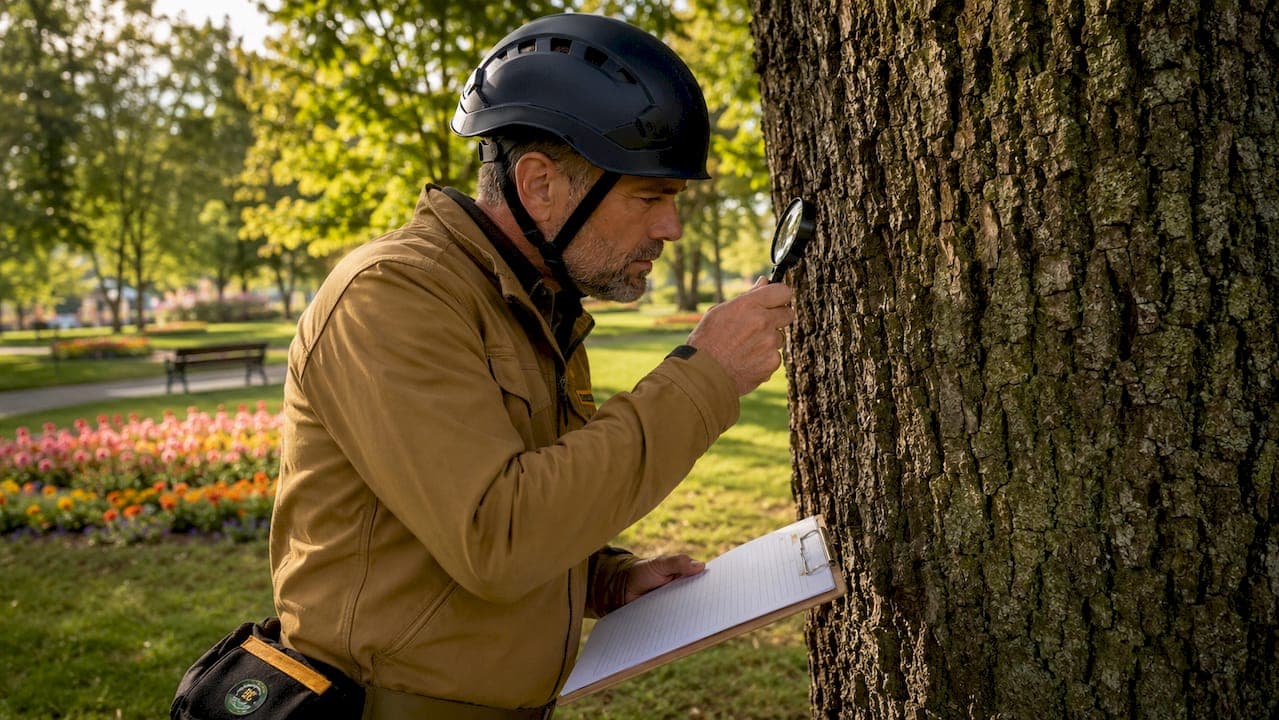
Professional arborist consultation is a specialized service that provides expert evaluation of tree health, structural integrity, and safety risks tailored to your specific property. The industry term for this practice is "arboricultural consulting," and it goes far beyond a neighbor's opinion or a quick visual check. Certified arborists bring credentials, diagnostic tools, and documented methodology that protect both your trees and your investment. The benefits of professional arborist consultation cover everything from early disease detection to legal documentation for insurance claims, making it one of the most practical services a homeowner or property manager can schedule.
1. What credentials do certified arborists bring to consultations?
Certified arborists hold credentials that verify real training, not just field experience. The two most recognized designations are the ISA Certified Arborist, issued by the International Society of Arboriculture, and the ASCA Registered Consulting Arborist, issued by the American Society of Consulting Arborists. Each requires passing exams, maintaining continuing education, and following a formal code of ethics.
That code of ethics matters more than most homeowners realize. Certified arborists adhere to a code of ethics and provide tailored care, avoiding pressure to sell predetermined treatment plans. This protects you from unnecessary removals or treatments that benefit the contractor more than the tree.
Credentials also signal up-to-date knowledge. Tree care science evolves, and certified professionals stay current with best practices in pruning, pest management, and soil health. For a deeper look at what these designations mean for your property, the arborist certification guide from Brileytreeservice explains the key differences clearly.
- ISA Certified Arborist: Demonstrates competency in general tree care, pruning, and safety.
- ASCA Registered Consulting Arborist: Focuses specifically on independent evaluation and written reporting.
- State licensing: Varies by state but often required for pesticide application and certain removal work.
Pro Tip: Always ask to see a current credential card before work begins. ISA certification can be verified instantly at the ISA website using the arborist's certification number.
2. How do arborists assess tree health and structural risk?
Tree health assessment is the core of any professional consultation. Professional arborists possess training to make expert tree care decisions rather than relying on ad-hoc visual guesses. A trained arborist evaluates crown density, bark condition, root zone health, signs of fungal infection, pest activity, and branch attachment angles.
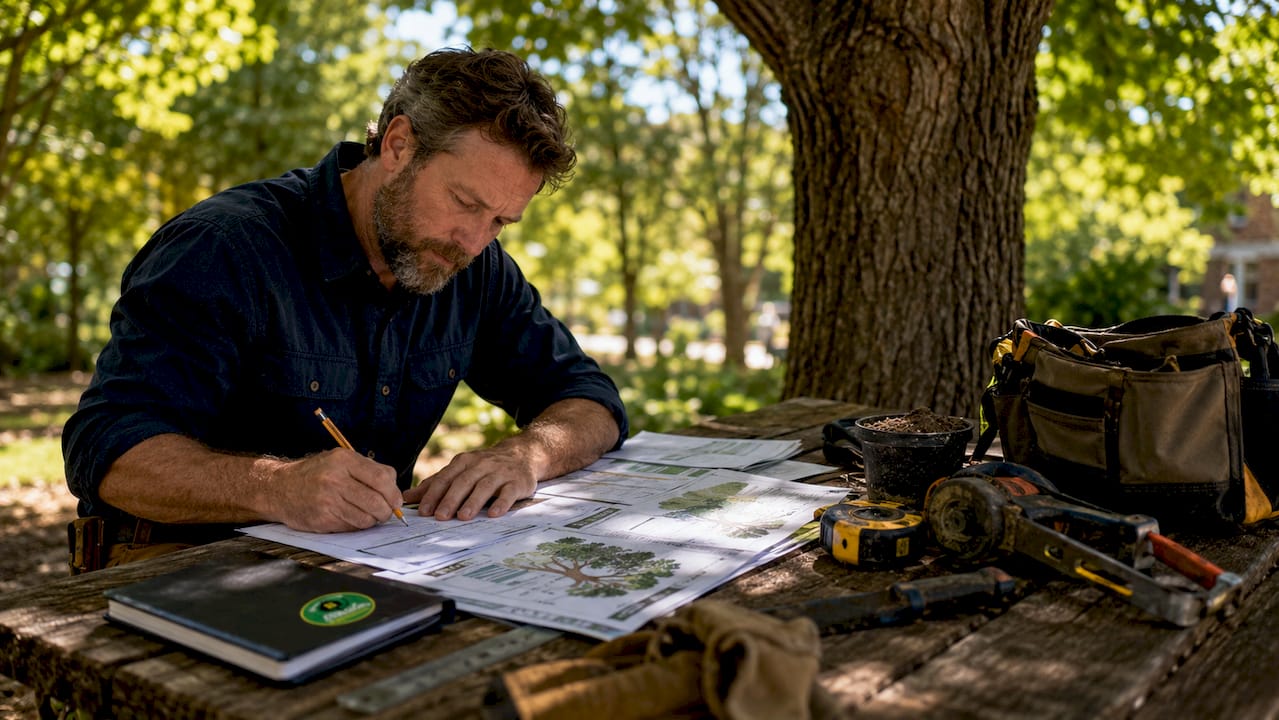
Structural risk assessment goes deeper. The ISA Tree Risk Assessment Qualification (TRAQ) methodology guides formal evaluations by combining three factors: the likelihood of failure, the likelihood of impact, and the consequences if failure occurs. Visible defects alone don't fully measure risk. Proper analysis integrates all three factors to guide the right intervention.
The result is a documented risk rating, not a yes-or-no judgment. That rating tells you whether a tree needs immediate action, monitoring, or no intervention at all. Most homeowner evaluations require a Level 2 basic 360° ground inspection, reserving advanced methods like resistograph drilling or sonic tomography for suspected internal decay.
| Assessment Level | Method Used | Best For |
|---|---|---|
| Level 1 | Limited visual scan | Large properties, routine screening |
| Level 2 | Full 360° ground inspection | Standard residential consultations |
| Level 3 | Advanced tools (resistograph, sonic) | Suspected internal decay or root failure |
Pro Tip: If an arborist recommends Level 3 assessment without first completing a Level 2 inspection, ask why. Most residential trees do not require advanced testing unless specific defects are found at ground level.
3. What customized care plans come from a tree consultation?
Generic tree care plans waste money and can harm trees. Homeowners often mistakenly accept one-size-fits-all tree care plans. Reputable arborists customize according to specific tree species, age, soil conditions, and site constraints. A live oak in Shreveport, Louisiana has different needs than a water oak growing in compacted clay near a foundation.
A proper consultation produces a written plan covering pruning schedules, fertilization timing, pest prevention, and any structural support needs. Year-round professional arborist services include preventative care, seasonal treatment, expert pruning, and pest control. Regular monitoring catches early stress signs, which directly extends tree longevity.
Customized plans also address timing. Pruning a crape myrtle in late summer produces different results than pruning it in late winter. Frost protection treatments for young trees in Northwest Louisiana need to be scheduled before the first cold snap, not after. For guidance on how often to prune, Brileytreeservice outlines schedules based on species and growth stage.
Key elements of a customized arborist care plan include:
- Species-specific pruning: Timing and technique matched to the tree's growth cycle.
- Soil and fertilization analysis: Nutrient deficiencies identified and corrected before they cause visible decline.
- Integrated pest management: Targeted treatments rather than blanket chemical applications.
- Preventive structural support: Cabling or bracing for trees with co-dominant stems before failure occurs.
4. How do arborist consultations support legal and insurance decisions?
Consulting arborists serve a distinct role from practicing arborists. A practicing arborist performs the physical work. A consulting arborist provides independent, written expert evaluations critical in insurance, legal, real estate, and construction permit situations. Their objectivity is what gives their reports weight in official settings.
Property managers especially benefit from written documentation. Written arborist reports create legal records proving due diligence, which is crucial for handling insurance claims, permits, and liability disputes. If a tree falls and damages a neighbor's property, a documented prior assessment showing the tree was evaluated and found sound is a significant legal protection.
Common situations where a consulting arborist's written report carries direct value:
- Neighbor disputes: Documented condition reports establish the tree's health status before a conflict escalates.
- Real estate transactions: Buyers and sellers use arborist reports to negotiate tree-related repairs or removals.
- Construction impact assessments: Permits often require proof that nearby trees were evaluated before ground disturbance.
- Insurance claims: Carriers may require an independent arborist report before approving storm damage payouts.
A written arborist report is not just paperwork. It is a defensible record that demonstrates you acted responsibly as a property owner.
5. Why are proactive and post-storm consultations worth scheduling?
Proactive tree assessments prevent the most expensive tree problems. Proactive pre-storm inspections reduce emergency repairs, insurance claims, and property damage while improving budget stability. Identifying a structurally weak tree before a storm costs far less than emergency removal after it falls on a roof.
Clients who receive regular, proactive arborist assessments show 80–90% acceptance rates of recommended treatments. That number reflects trust built through clear communication and thorough inspections. When homeowners understand the specific risk, they act on it.
Post-storm consultations serve a different but equally important purpose. After a severe weather event, trees may appear intact while carrying hidden structural damage, split root plates, or compromised branch unions. An arborist can identify which trees need immediate removal, which need corrective pruning, and which are safe to leave alone. For homeowners in Shreveport and Bossier City, where Gulf-influenced storms can arrive quickly, knowing the difference matters. Brileytreeservice covers tree emergency response in detail for property owners who want to prepare before the next storm season.
Benefits of scheduling proactive consultations include:
- Risk prioritization: Arborists rank trees by urgency so you address the highest threats first.
- Budget predictability: Planned work costs less than emergency callouts.
- Reduced power outages: Identifying trees near utility lines before storms prevents outages.
- Property value protection: Well-maintained trees reduce liability risks and enhance curb appeal.
Key takeaways
Professional arborist consultation delivers measurable protection for your trees, your property, and your legal standing through certified expertise, documented risk ratings, and customized care plans.
| Point | Details |
|---|---|
| Credentials matter | ISA and ASCA certifications verify training, ethics, and current best practices. |
| Risk ratings beat guesswork | ISA TRAQ methodology produces documented, defensible risk ratings for every tree. |
| Custom plans outperform generic care | Tailored pruning, fertilization, and pest plans extend tree life and reduce costs. |
| Written reports protect owners | Consulting arborist documentation supports insurance claims, permits, and legal disputes. |
| Proactive beats reactive | Pre-storm assessments reduce emergency costs and improve budget predictability. |
What I've learned from watching homeowners skip the consultation
Most homeowners call an arborist after something goes wrong. A branch falls, a tree starts leaning, or a neighbor complains. By that point, the options are usually more expensive and more limited than they would have been six months earlier.
The pattern I see most often is this: a homeowner hires whoever shows up with a truck and a chainsaw, accepts a flat removal quote, and never gets a second opinion. The tree comes down. Later, they find out the tree was structurally sound and could have been saved with targeted pruning and cabling. That is not a rare outcome. It is common.
Certification changes that dynamic. An ISA Certified Arborist or ASCA Registered Consulting Arborist is bound by an ethics code that prohibits recommending unnecessary work. That single fact is worth more than any sales pitch. When you hire a certified professional, you get an honest assessment, not a sales call disguised as a consultation.
My practical advice: schedule a consultation before you see a problem. Trees in Northwest Louisiana deal with heavy storms, clay soils, and aggressive pest pressure. A proactive assessment every two to three years catches issues early, when treatment is still affordable. The trimming benefits alone justify the cost of a regular professional relationship with a certified arborist.
— Tatum
Brileytreeservice: professional tree care for Shreveport homeowners
Brileytreeservice serves homeowners and property managers throughout Shreveport, Bossier City, and Northwest Louisiana with professional tree care backed by real expertise.
Whether you need a full tree health assessment, a pre-storm risk evaluation, or a written report for an insurance or legal matter, Brileytreeservice provides the certified tree care your property requires. The team handles tree removal, trimming, stump grinding, and emergency storm cleanup with a straightforward process: show up on time, do the work right, and leave the property clean. Contact Brileytreeservice today for a free estimate and get a clear picture of what your trees actually need.
FAQ
What does a professional arborist consultation include?
A professional arborist consultation includes a full evaluation of tree health, structural condition, and site-specific risks, followed by written recommendations for pruning, treatment, or removal. Most residential consultations use a Level 2 ground-based inspection covering all sides of each tree.
Why hire an arborist instead of a general tree service?
Certified arborists hold ISA or ASCA credentials that require passing exams and following a code of ethics, which prevents unnecessary treatments. General tree services may lack the training to diagnose disease, assess structural risk, or produce legally defensible written reports.
How do arborist consultations help with insurance claims?
Consulting arborists produce independent written reports that document a tree's condition before and after a storm or incident. Insurance carriers often require this documentation before approving claims for storm damage or liability disputes.
How often should homeowners schedule arborist consultations?
Most homeowners benefit from a professional tree assessment every two to three years, with additional consultations after major storms or before significant construction near tree root zones.
What is the difference between a consulting arborist and a practicing arborist?
A practicing arborist performs physical tree work such as pruning and removal. A consulting arborist provides independent written evaluations used for legal, insurance, and real estate purposes, without a financial interest in the physical work that follows.