

The best time to schedule tree trimming in spring is late winter through early spring, before buds begin to swell. Trees are still dormant at this point, which means pruning causes less stress, wounds close faster, and you get a clear view of the branch structure before leaves hide potential problems. Getting ahead of this window also means you avoid the backlog that follows spring storm season, when every tree service in your area is fielding emergency calls.
Here is what the timing delivers for your trees:
- Faster wound closure. Dormant-season pruning allows callus tissue to form early, sealing cuts before new growth surges.
- Reduced pest and disease risk. Insects and fungal pathogens are still inactive when temperatures are low, so fresh cuts are less vulnerable.
- Better structural visibility. Leafless branches expose crossing limbs, dead wood, and weak attachments that disappear once foliage fills in.
- Storm preparation. Removing weak or overextended branches before severe weather season reduces the chance of storm damage to your property.
- Scheduling flexibility. Booking in late winter or early spring means you get a timely appointment before demand spikes.
Why spring pruning matters for tree health
Spring pruning, specifically the late dormant window before bud break, is the most productive time to address tree structure, safety, and long-term health. It is not just about aesthetics. Pruning at this stage directs the tree's energy toward strong new growth rather than feeding dead or poorly placed branches.
Pruning before leaf-out gives arborists full visibility into the canopy. Crossing limbs, co-dominant stems, and structurally weak crotch angles are all visible when branches are bare. Once leaves emerge in may, those problems become much harder to spot and address precisely.
Spring pruning also reduces fungal and pest risk by removing dead and damaged wood before active growing season begins. Dead limbs harbor pathogens and create entry points for insects. Clearing them early supports airflow through the canopy and limits the conditions that allow disease to spread. The common pruning objectives at this time include:
- Removing dead, broken, or diseased branches
- Correcting crossing or rubbing limbs
- Establishing or restoring a sound branch structure
- Improving clearance from structures, rooflines, and utility lines
- Thinning the canopy to improve light penetration and airflow
Which trees to prune in spring and which to wait on
Not every tree follows the same spring pruning schedule. Getting the timing right for your specific species protects both the tree and your investment in its care.
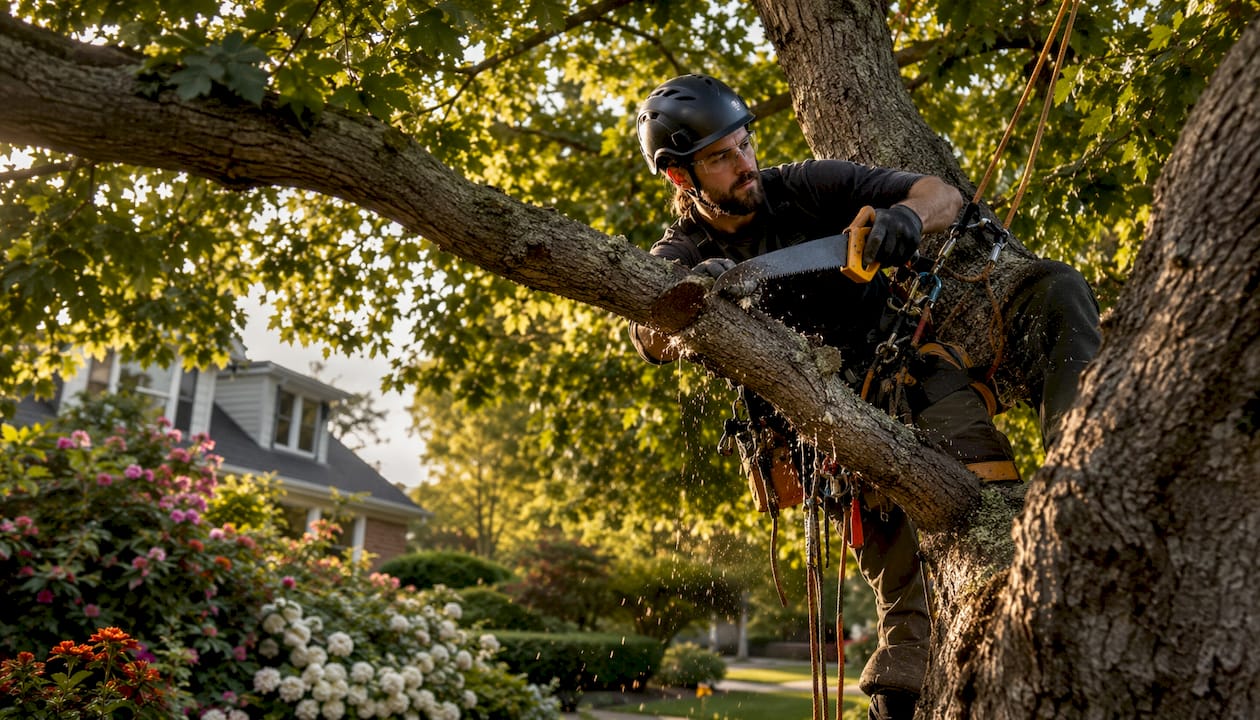
Most deciduous trees respond well to pruning in late winter through early spring, roughly late winter through early spring, before buds swell. The USDA Forest Service recommends pruning within recommended limits of live branches on mature and young trees in a single season to avoid stress to avoid stress.
Spring-flowering trees such as dogwoods, magnolias, and redbuds set their flower buds the previous fall. Pruning them before they bloom removes those buds and eliminates the spring flower display. Plants that flower before the typical start of summer should be pruned immediately after blooming, not before.
Maples, birches, elms, and walnuts may bleed sap visibly when pruned in late winter or early spring. This is a common concern among homeowners, but the Colorado State Forest Service confirms that sap flow does not harm the tree. If the appearance bothers you, pruning can wait until foliage is fully emerged in early summer.
Oak trees require special attention. Avoid pruning oaks during the spring and early summer when sap beetles are active to reduce the risk of oak wilt, a fungal disease carried by sap beetles that peak in activity during that window. Prune oaks in late winter before beetle activity begins, or wait until late summer after the risk period passes.
Pro Tip: Local climate and pest activity shift these windows. In the Shreveport area, spring arrives earlier than in northern states, so the optimal pruning window often opens in late january or february. Check with a local certified arborist to confirm the right timing for your specific trees and region.
How to plan and prepare for your spring tree trimming
Getting the most out of a spring pruning visit starts before the arborist arrives. A little preparation on your end makes the job faster, safer, and more thorough.
Evaluate your trees first. Walk your property and note any of the following:
- Branches that are dead, broken, or hanging
- Limbs crossing or rubbing against each other
- Growth that is too close to your roofline, windows, or power lines
- Trees that look unbalanced or have one-sided canopies
- Any signs of disease, decay, or pest damage on bark or wood
Contact a professional arborist early. Scheduling in late winter or early spring prevents the delays that follow storm season. Once spring storms hit, tree service companies fill up fast with emergency removal work. Booking ahead gives you a better appointment window and more time for a thorough job.
Prepare the site before the crew arrives:
- Clear vehicles, furniture, and equipment from under the tree canopy
- Mark any underground irrigation lines or utilities near the work area
- Confirm access for equipment, including trucks or lifts, if large trees are involved
- Discuss your goals with the arborist before work begins so priorities are clear
Pro Tip: Ask your arborist for a written assessment after the visit. A documented baseline of your trees' condition makes future pruning visits more efficient and helps you track changes in tree health year over year.
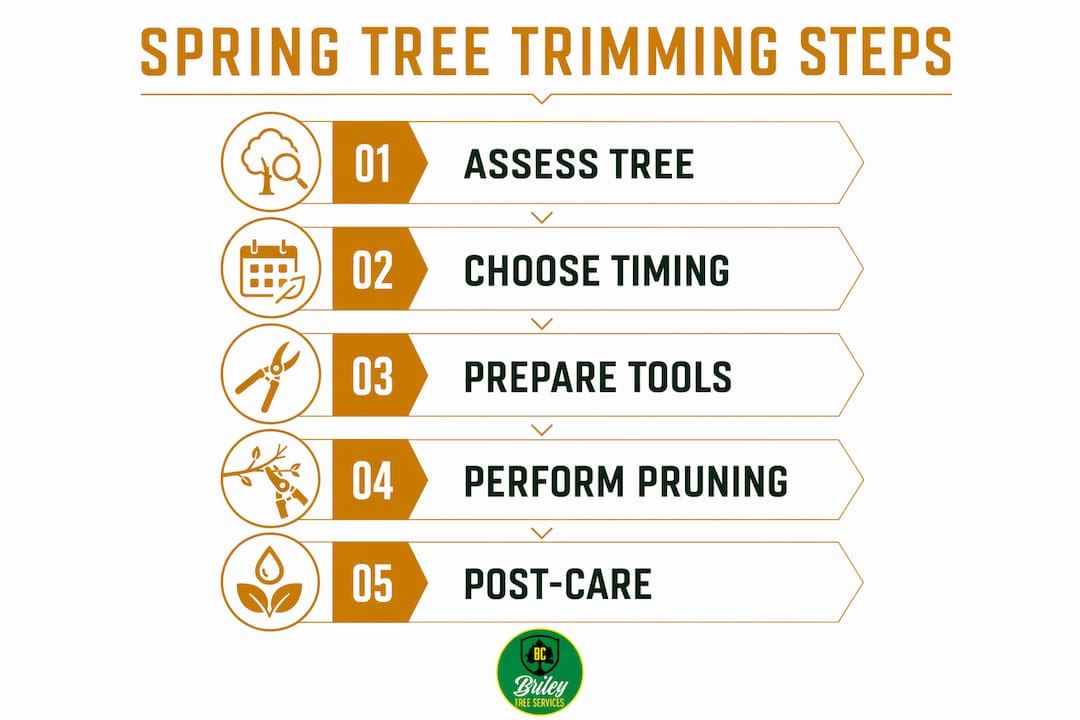
For a full spring tree care schedule covering everything from pruning to soil care, Brileytreeservice has a detailed seasonal checklist built specifically for homeowners.

Common mistakes that can harm your trees during spring trimming
Spring pruning done wrong can set a tree back significantly. These are the errors that show up most often, and the ones that are easiest to avoid with a little knowledge.
- Pruning at the wrong time for the species. Cutting spring-flowering trees before they bloom, or pruning oaks during the beetle-active window, causes avoidable damage. Species timing matters as much as seasonal timing.
- Removing too much live wood at once. Taking off more than the recommended annual limit stresses the tree and can trigger weak, fast-growing shoots called water sprouts that are structurally poor.
- Using dull or dirty tools. Dull blades crush tissue instead of cutting cleanly, slowing wound closure. Dirty tools spread disease between trees. Clean and sharpen tools before each use.
- Ignoring crossing and rubbing branches. Two branches in constant contact create wounds that never fully heal and become entry points for decay. Addressing them early prevents a larger structural problem later.
- Cutting flush to the trunk or leaving long stubs. Both are wrong. The correct cut removes the branch just outside the branch collar, the slightly raised ring of tissue where the branch meets the trunk. That collar contains the cells that seal the wound.
- Pruning in summer heat. Summer pruning stresses trees that are already working hard in hot, dry conditions. Cuts heal slowly and attract insects. If summer pruning is unavoidable, water the tree consistently afterward.
- Skipping a structural assessment on mature trees. Older trees develop hidden decay, weak unions, and imbalanced weight distribution. A visual inspection before pruning identifies risks that are not obvious from the ground.
What professional arborists recommend for spring tree care
Certified arborists consistently advocate for proactive spring pruning rather than reactive care after a problem forces the issue. The reasoning is straightforward: a planned pruning visit costs a fraction of emergency storm damage removal, and it produces better long-term results for the tree.
"Pruning trees during the late dormant season maximizes growth and allows the tree owner to spot problem areas and build strong structure for the long term." — Kamie Long, Supervisory Forester, Colorado State Forest Service
Key recommendations from arborists working with residential and commercial properties:
- Schedule a March or April assessment. Structural evaluation before leaf-out gives arborists the clearest picture of what the tree needs. Waiting until summer means working with less information.
- Do not fear sap bleeding on maples or birches. It looks alarming but causes no harm. If it is a concern, delay pruning until foliage is fully out in early summer.
- Hire an ISA-certified arborist for complex work. Jobs involving large branches, mature trees, or anything near structures or power lines require training and proper equipment. The International Society of Arboriculture maintains a searchable directory at isa-arbor.com.
- Treat pruning as an annual investment, not a one-time fix. Trees that receive consistent, properly timed care develop stronger structure over time and require less corrective work as they mature.
- Align your pruning schedule with local pest and disease windows. In Louisiana and the broader Gulf South, spring arrives early and pest activity follows quickly. A local arborist familiar with regional conditions will time cuts to stay ahead of those risks.
For more detail on species-specific pruning guidance, Brileytreeservice has published a full seasonal pruning guide covering the most common tree types in the Shreveport area.
Brileytreeservice serves homeowners and commercial properties throughout Shreveport, Bossier City, and Northwest Louisiana. The team specializes in tree trimming, tree removal, stump grinding, and emergency storm cleanup. If your trees are due for a spring assessment, contact Brileytreeservice today for a free estimate.

Key Takeaways
Late winter to early spring is the most effective window to schedule tree trimming, because dormant-season cuts heal faster, expose structural problems clearly, and reduce pest and disease risk before active growth begins.
| Point | Details |
|---|---|
| Optimal pruning window | Late winter through early spring, before buds swell, gives the best results for most deciduous trees. |
| Pruning limits for tree health | The USDA Forest Service advises removing no more than 10–15% of live branches on mature trees per season. |
| Spring-flowering tree timing | Trees that bloom before June 1, such as dogwoods and magnolias, should be pruned after blooming, not before. |
| Oak wilt risk window | Avoid pruning oaks during the spring and early summer when sap beetles are active when sap beetles that spread oak wilt are most active. |
| Book early to avoid backlogs | Scheduling in late winter prevents delays caused by storm-season emergency call volume in spring and summer. |