
A recurring tree trimming service is a scheduled maintenance plan that keeps your trees healthy, structurally sound, and safe throughout the year. The industry term for this approach is a tree maintenance contract or preventive pruning plan. Setting one up correctly protects your property from storm damage, reduces liability, and eliminates the high cost of emergency tree work. Brileytreeservice works with homeowners and property managers across Shreveport, Bossier City, and Northwest Louisiana to build these plans around each property's specific needs.
How do you set up a recurring tree trimming service?
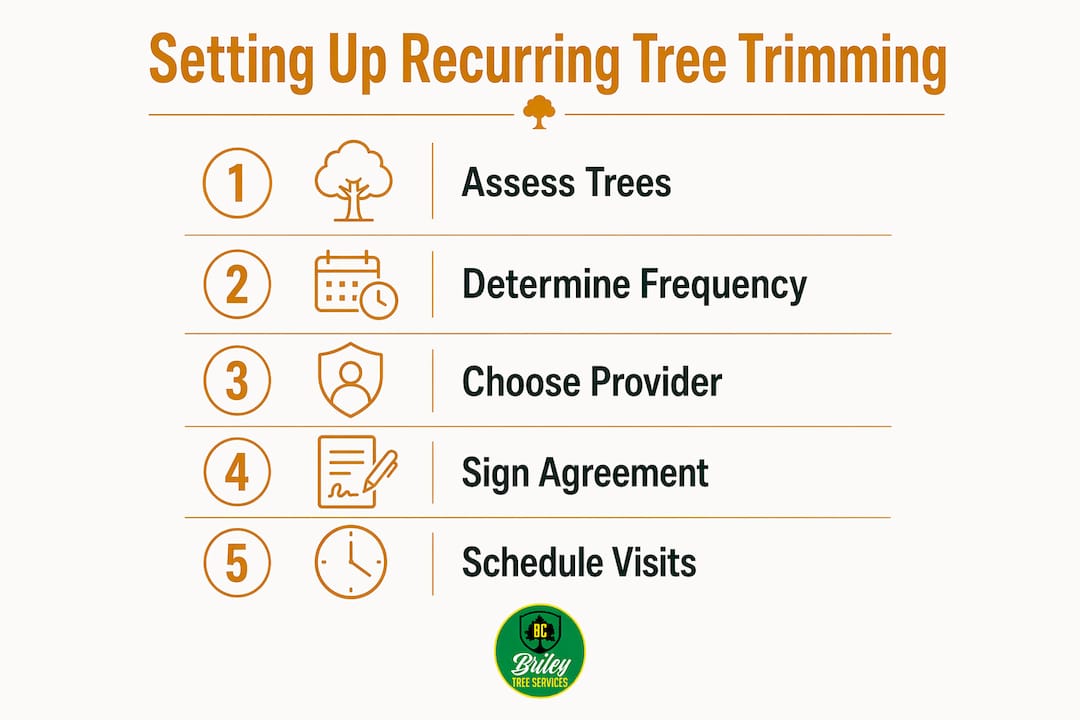
Setting up a recurring trimming plan starts with knowing how often your trees actually need attention. Trimming frequency is not arbitrary. It follows the biological stage of each tree on your property.
Maintenance frequency varies by tree age: young trees between 1 and 5 years old need pruning every 1–2 years, mature trees between 5 and 20-plus years need attention every 3–5 years, and elderly trees require annual inspections regardless of visible condition. That range matters because over-pruning is just as damaging as neglect. Removing more than 25% of a tree's canopy in a single year weakens the tree's structure and shortens its lifespan.
Species and local environment also shape your schedule. Trees in Northwest Louisiana face a long growing season, high humidity, and periodic storm activity. Those conditions accelerate growth and increase the risk of weak branch attachment. A live oak and a crepe myrtle on the same lot may need trimming on completely different timelines.
- Young trees (1–5 years): Prune every 1–2 years to establish strong branch structure early.
- Mature trees (5–20+ years): Schedule trimming every 3–5 years for canopy management and hazard reduction.
- Elderly trees: Annual inspections are non-negotiable. Structural decline can accelerate quickly.
- Fast-growing species: Trees like Bradford pears or silver maples may need attention more frequently than the age-based standard.
- Post-storm assessment: Always schedule an inspection after a major weather event, regardless of your regular cycle.
Pro Tip: Walk your property in late winter before new growth starts. Note any crossing branches, dead wood, or limbs hanging over structures. That list becomes the starting point for your first service conversation.
What should a tree trimming service agreement include?

A service agreement is the document that turns a one-time job into a reliable maintenance relationship. Homeowners and property managers who skip this step often end up with inconsistent service, surprise charges, and no recourse when work falls short.
A well-written contract covers four core areas:
- Scope of work: Exactly which trees are included, what type of trimming applies (crown thinning, deadwood removal, clearance pruning), and what is excluded.
- Visit frequency: The number of scheduled visits per year and the approximate timing of each.
- Pricing structure: Whether the contract uses a fixed annual fee or per-visit billing. Annual residential packages typically run $500–$1,500 depending on property size and tree count.
- Provider credentials: Confirmation that the crew includes a certified arborist. Arborist certification from the International Society of Arboriculture (ISA) is the recognized industry standard for professional tree care.
Beyond trimming, a thorough contract also addresses soil health, pest monitoring, and hazard assessments. Comprehensive maintenance plans that include these elements produce better long-term outcomes than trimming-only agreements. Always verify that the provider carries general liability insurance and workers' compensation before signing.
Fixed-price quotes prevent the most common source of disputes. Photo-documented, scoped work orders submitted before work begins give both parties a clear record of what was agreed. If a provider cannot supply a written scope before starting, that is a red flag.
How to schedule and coordinate recurring trimming visits
Scheduling recurring visits efficiently requires a clear process from the first contact through each completed appointment. The steps below apply whether you manage one residential lot or a portfolio of commercial properties.
- Request an on-site estimate. Most professional providers complete on-site assessments within 48 hours of contact. Use this visit to walk the property and identify every tree that needs attention, not just the obvious ones.
- Define your preferred visit windows. Align major pruning with the dormant season. Pruning during late winter or early spring promotes faster wound closure and reduces the risk of fungal disease. Minor cleanups can happen year-round.
- Document the baseline condition. Photograph every tree before the first visit. Note existing damage, previous cuts, and any structural concerns. This record protects you if disputes arise later.
- Confirm each visit in writing. Email or text confirmation with the scheduled date, crew size, and scope of work prevents miscommunication. Keep a folder with all confirmations and invoices.
- Conduct a post-visit walkthrough. After each appointment, inspect the work against the agreed scope. Note any new concerns for the next visit cycle.
Pro Tip: Property managers handling multiple sites benefit from a shared calendar or simple spreadsheet that tracks each property's last service date, next scheduled visit, and any open issues. This prevents sites from falling behind without anyone noticing.
Pairing your tree care schedule with other seasonal property maintenance tasks keeps the workload predictable. Seasonal home maintenance planning follows the same logic: group tasks by season to reduce the number of vendor coordination calls and keep your property looking its best year-round.
How do you handle problems with a recurring tree service plan?
Even well-designed plans run into complications. Knowing how to handle them keeps your maintenance on track without costly gaps.
Scheduling conflicts are the most common issue. If a provider needs to reschedule, get a new confirmed date in writing within 24 hours. A contract that specifies a maximum rescheduling window (typically 14 days) prevents indefinite delays.
Unexpected tree needs arise after storms or when an inspection reveals a problem outside the normal scope. Recurring contracts that shift spending from reactive emergency jobs to preventive care save money over time, but they should also include a clear process for adding emergency work at a pre-agreed rate. Ask about this before signing.
Seasonal growth surges can push trees past their scheduled trim window. In Louisiana, spring growth can be aggressive. Build flexibility into your contract by including a provision for one additional visit per year if growth warrants it.
- For property managers with multiple sites: Stagger visit schedules so no more than two properties are serviced in the same week. This reduces the chance of crew availability conflicts.
- For homeowners with large trees: Schedule hazard assessments separately from routine trimming. Large trees near structures deserve their own inspection cycle.
- For properties with pest history: Confirm that your contract includes pest monitoring alongside trimming so problems are caught before they spread.
- After a major storm: Contact your provider immediately. Most contracts include a priority response clause for storm damage. If yours does not, negotiate one at renewal.
The preventive benefits of planned tree care are clearest when you compare the cost of a routine trim against the cost of emergency removal after a branch failure. The math consistently favors the scheduled approach.
Key Takeaways
A recurring tree trimming service built around tree age, dormant-season timing, and a written service agreement delivers the most reliable results at the lowest long-term cost.
| Point | Details |
|---|---|
| Match frequency to tree age | Young trees need pruning every 1–2 years; mature trees every 3–5 years; elderly trees annually. |
| Prune during dormancy | Late winter and early spring pruning reduces disease risk and speeds wound healing. |
| Get a written, scoped contract | Fixed-price agreements with photo documentation prevent surprise charges and disputes. |
| Verify provider credentials | Confirm ISA-certified arborists and active insurance before signing any service agreement. |
| Build in emergency flexibility | Contracts should include a pre-agreed rate for storm response or unexpected tree needs. |
Why proactive tree care changes the math on property maintenance
The homeowners and property managers I see get the most value from their tree care are the ones who stopped treating trimming as a cosmetic task. They treat it as a structural maintenance item, the same way they think about roof inspections or HVAC service.
The shift matters because reactive tree work is expensive. A branch that falls on a fence or a roof costs far more to address than the trimming visit that would have prevented it. I have watched clients spend three to five times their annual maintenance budget on a single emergency removal that a routine inspection would have caught early.
The other thing most articles do not say clearly enough: the quality of your provider relationship determines whether a recurring plan actually works. A contract is only as good as the communication behind it. Providers who send confirmation before each visit, document their work with photos, and flag new concerns proactively are worth paying a premium for. Those who show up without notice and leave without a summary are not a good fit for a long-term plan, regardless of price.
My honest recommendation is to start with a seasonal tree care checklist before your first provider conversation. Knowing what you have on your property and what condition it is in puts you in a much stronger position to evaluate quotes and negotiate a contract that actually fits your needs.
— Tatum
Recurring tree care with Brileytreeservice
Brileytreeservice serves homeowners and property managers throughout Shreveport, Bossier City, and Northwest Louisiana with professional trimming, removal, and ongoing maintenance plans.
Brileytreeservice provides free on-site estimates and builds service agreements around each property's specific tree inventory, growth patterns, and budget. The team shows up on time, cleans up after every visit, and documents work so you always know what was done. For homeowners and property managers ready to move from one-off jobs to a reliable maintenance schedule, contact Brileytreeservice to request your free estimate and discuss a recurring plan that fits your property.
FAQ
How often should I schedule tree trimming?
Trimming frequency depends on tree age: young trees need attention every 1–2 years, mature trees every 3–5 years, and elderly trees require annual inspections. Local climate and species also affect the schedule.
What does a tree trimming subscription service typically cost?
Residential annual contracts generally range from $500 to $1,500 depending on property size, tree count, and scope of services included.
When is the best time of year to prune trees?
Major pruning is best done in late winter or early spring during the dormant season. This timing reduces disease exposure and allows wounds to close faster once growth resumes.
What credentials should I look for in a tree care provider?
Look for ISA-certified arborists and confirm the provider carries both general liability insurance and workers' compensation coverage before agreeing to any service plan.
Can a recurring contract cover emergency storm cleanup?
A well-written contract should include a pre-agreed rate for emergency work outside the normal scope. Ask about this clause before signing, especially in storm-prone areas like Northwest Louisiana.