
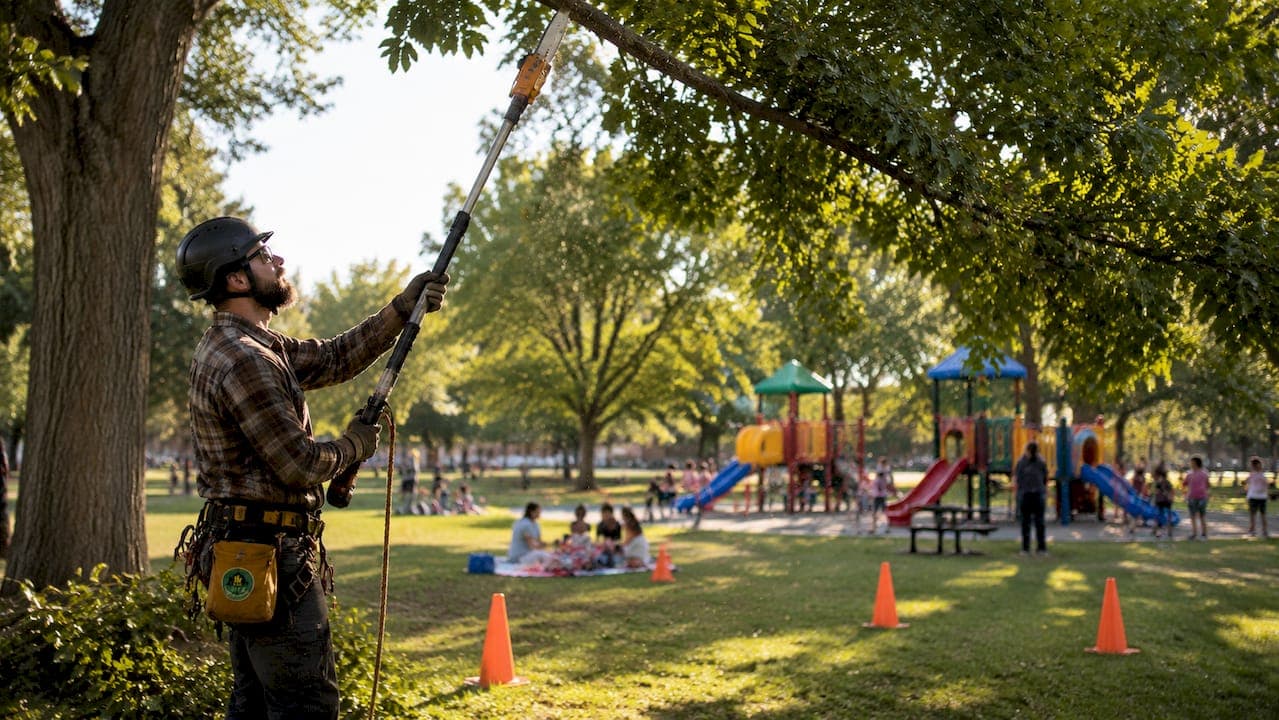
Regular tree trimming on retail commercial properties is defined as the scheduled removal of dead, overgrown, or structurally compromised branches to protect public safety, preserve property value, and meet legal liability standards. Understanding why retail property trees need trimming goes beyond aesthetics. Untrimmed trees create measurable hazards for pedestrians, vehicles, and infrastructure while exposing property managers to significant legal and financial risk. This guide covers the safety case, health benefits, optimal timing, and the professional standards that separate proactive property stewardship from costly reactive repairs.
Why retail property trees need trimming for safety and liability
Tree trimming on commercial retail sites directly reduces the risk of injury, property damage, and legal claims. Overgrown branches obstruct signage and lighting, reducing visibility for drivers and pedestrians. Falling limbs cause pedestrian and vehicle injuries, and trees cause infrastructure damage during storms when clearance around signage and lighting is inadequate. Root growth that lifts sidewalks creates trip hazards, which are among the most common sources of slip-and-fall claims on retail sites.
The liability exposure is specific and quantifiable. Commercial properties must maintain overhead clearance of 14 or more feet to accommodate delivery trucks and emergency vehicles. Branches hanging below that threshold regularly cause vehicle contact damage and generate insurance claims. Property managers who overlook this standard face both repair costs and legal exposure that far exceed the cost of routine trimming.
Documentation is as important as the physical work. Routine inspections document reasonable care, which is the legal standard courts apply when evaluating negligence claims from tree-related incidents. Without that paper trail, a single falling branch can become a six-figure liability.
Key safety hazards untrimmed retail trees create:
- Branches blocking storefront signage, reducing customer visibility from the street
- Limbs over parking lots that fail during wind events and damage vehicles
- Root systems lifting concrete sidewalks and creating trip hazards
- Canopy growth interfering with security lighting and CCTV coverage
- Low-hanging branches below the 14-foot clearance standard for commercial vehicles
Pro Tip: Request written inspection reports after every service visit. Those records are your primary defense if a tree-related incident leads to a liability claim.
How pruning improves tree health and curb appeal
The industry term for the practice behind trimming is crown management, and its benefits extend well beyond appearance. Removing dead and diseased wood prevents decay from spreading into healthy tissue, which directly extends the lifespan of mature trees. Trees are valuable long-term commercial assets, and pruning decisions should prioritize biological health over cosmetic results alone.
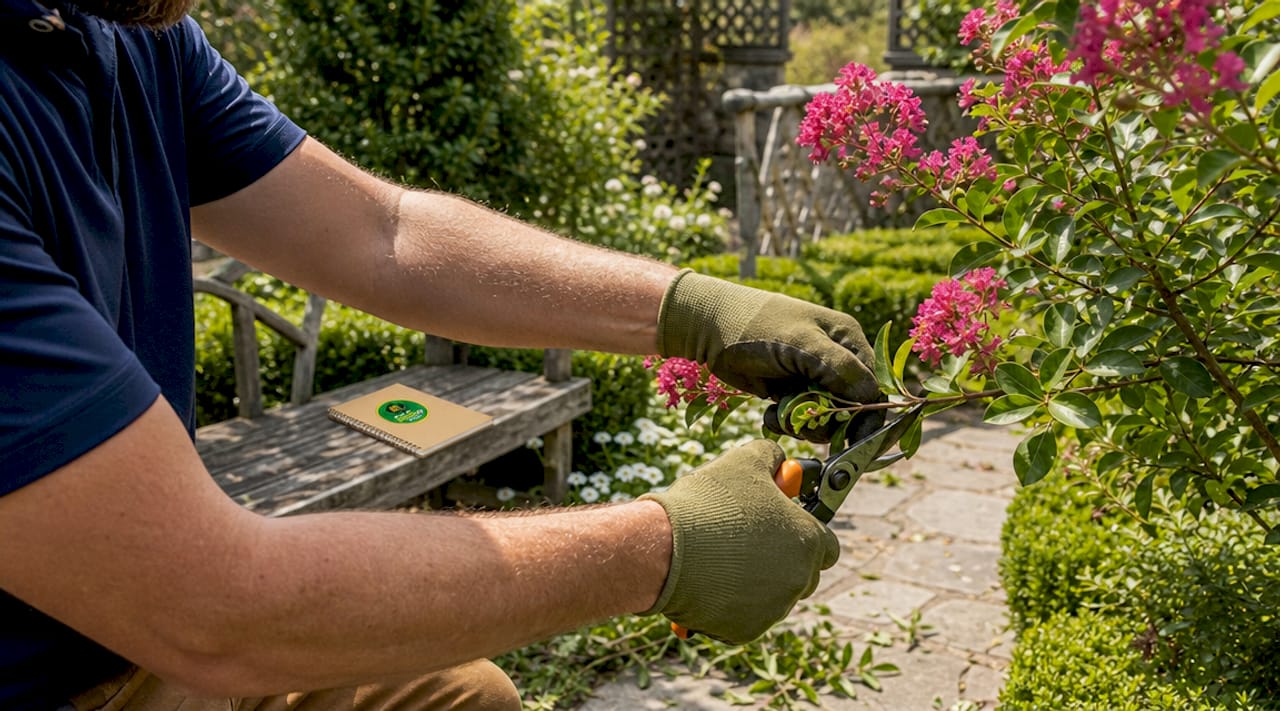
Well-maintained trees also support tenant satisfaction and sustainability goals. Retail tenants consistently cite exterior appearance as a factor in lease renewal decisions. A property with dense, healthy tree canopy signals professional management. Sparse, neglected, or visibly damaged trees signal the opposite.
The aesthetic benefits of pruning trees on retail sites compound over time:
- Improved storefront visibility. Thinning the canopy opens sightlines to signage, entrances, and window displays from the street and parking areas.
- Better air circulation. Proper crown spacing reduces moisture retention, which lowers the risk of fungal disease in humid climates like Northwest Louisiana.
- Enhanced surrounding landscaping. Trimmed trees allow more sunlight to reach ground-level plantings, improving the overall appearance of the property perimeter.
- Stronger branch structure. Removing competing or crossing branches directs growth energy into the primary structure, producing trees that are more wind-resistant over time.
- Consistent seasonal appearance. Scheduled pruning prevents the irregular, overgrown look that develops when trees are left unmanaged for multiple seasons.
The importance of tree trimming for curb appeal is not cosmetic vanity. It directly affects foot traffic, tenant retention, and the perceived value of the property to prospective tenants and buyers.
When to trim retail trees: timing and frequency
Timing tree maintenance correctly determines whether pruning strengthens or stresses a tree. The ideal pruning window is spring, immediately after the winter thaw and before peak foot traffic season. Post-winter pruning targets branches weakened by freeze-thaw cycles before they fail during the high-traffic spring and summer months. In the Shreveport and Bossier City area, that window typically falls between late February and early April.
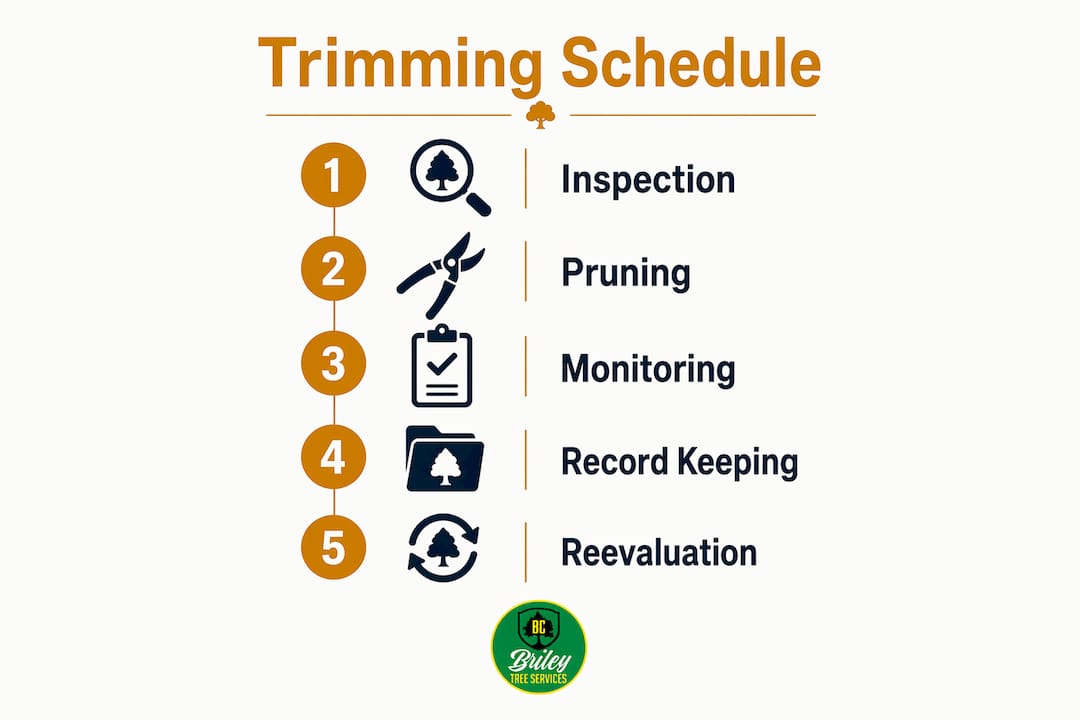
Standard commercial trimming cycles run every two to three years, with annual or biannual inspections in high-traffic retail zones like parking lots and pedestrian corridors. Inspections and full pruning cycles are not the same thing. Inspections identify emerging hazards; pruning cycles address structural and health needs. Both are required for a complete tree maintenance program.
| Maintenance type | Recommended frequency | Primary purpose |
|---|---|---|
| Visual inspection | Twice yearly | Identify hazards and document condition |
| Post-storm assessment | After every major storm | Remove storm-weakened or failed branches |
| Full pruning cycle | Every 2 to 3 years | Structural correction and crown management |
| Clearance trimming | Annually in high-traffic zones | Maintain 14-foot vehicle clearance standard |
| Species-specific pruning | Per growth rate and site conditions | Manage fast-growing species on a tighter cycle |
Scheduled trimming cycles and formal tree inventories allow property managers to prioritize maintenance resources and respond rapidly to potential hazards. A tree inventory assigns each tree a condition rating and maintenance priority, turning reactive emergency calls into planned budget line items.
Professional vs. DIY tree trimming for commercial properties
Certified arborists and unskilled labor produce fundamentally different outcomes on commercial trees. The difference is not just technique. It is the understanding of tree biology that determines whether a cut heals cleanly or becomes a permanent wound. Improper cuts become permanent wounds that invite decay, increase pest vulnerability, and shorten the lifespan of mature trees. On a retail property where a single large tree may represent decades of growth and thousands of dollars in landscape value, that risk is not acceptable.
Specific practices cause the most damage:
- Topping. Removing the central leader or large upper branches causes structural weakness, accelerates decay, and increases storm damage vulnerability. Topping and indiscriminate large branch removal is the most common mistake made by unlicensed crews.
- Flush cuts. Cutting branches flush with the trunk removes the branch collar, which is the tissue responsible for wound closure.
- Over-pruning. Removing more than 25 percent of a tree's canopy in a single season stresses the tree and triggers weak, rapid regrowth.
Insurance compliance adds another layer of complexity. Many commercial property insurance policies require that tree work be performed by licensed and insured contractors. Work performed by unlicensed crews may void coverage for subsequent tree-related claims. Verify your policy terms before scheduling any tree work on a retail site.
Low-cost pruning options consistently lead to higher long-term costs through improper cuts that result in decay and emergency removals. The math is straightforward: a proper pruning cycle costs a fraction of emergency removal and liability settlement. Commercial tree maintenance best practices require certified professionals, documented work orders, and adherence to ANSI A300 pruning standards.
Pro Tip: Ask any tree service contractor for their ISA Certified Arborist credential number before signing a contract. The International Society of Arboriculture maintains a public directory you can verify in under two minutes.
Key takeaways
Retail property trees require scheduled trimming to protect public safety, maintain legal compliance, and preserve long-term landscape value through certified professional care.
| Point | Details |
|---|---|
| Safety and liability | Untrimmed trees create trip hazards, vehicle damage, and legal exposure that documented trimming programs directly reduce. |
| Clearance standards | Commercial sites require 14-foot overhead clearance for delivery and emergency vehicles, enforced through annual trimming. |
| Optimal timing | Spring post-winter pruning removes freeze-weakened branches before peak foot traffic season begins. |
| Professional requirement | Certified arborists prevent irreversible damage; improper cuts shorten tree lifespan and may void insurance coverage. |
| Inspection records | Documented inspections and service records are the primary legal defense against tree-related liability claims. |
What I've learned managing trees on commercial properties
My experience working with retail property managers in the Shreveport area has shown me one consistent pattern: the properties with the most expensive tree problems are almost always the ones that deferred maintenance for three or more years. The logic behind deferral usually sounds reasonable. Trees look fine, budget is tight, nothing has fallen yet. The problem is that tree failure does not announce itself in advance.
The misconception I encounter most often is that trimming is primarily cosmetic. Property managers treat it as a landscaping expense rather than a risk management expense. That framing leads to the wrong budget decisions. When you understand that a single liability claim from a falling branch or a trip hazard created by root damage can cost more than five years of scheduled maintenance, the math changes completely.
Moving away from reactive maintenance to scheduled pruning is the single most effective shift a property manager can make in their tree care program. I also think the environmental argument deserves more weight than it typically gets. Properly maintained trees live longer, sequester more carbon, and provide more shade value over time. Neglected trees get removed. Removal is expensive, and replacement trees take decades to reach the same functional value.
The practical advice I give every property manager is this: build a tree inventory, assign a certified arborist to your account, and treat the annual inspection as non-negotiable. Everything else follows from that foundation.
— Tatum
How Brileytreeservice supports retail property tree care
Brileytreeservice provides commercial tree trimming, inspection, and documentation services for retail properties throughout Shreveport, Bossier City, and Northwest Louisiana. The team works around retail operating hours to minimize disruption, delivers written inspection reports after every visit, and maintains the clearance and pruning standards that commercial insurance policies require. Every job includes full site cleanup. Property managers working with Brileytreeservice get the documented maintenance record that protects them in the event of a liability claim. For retail properties in the Springhill area, commercial trimming services are available with free estimates. Contact Brileytreeservice today to schedule an inspection and get a written quote.
FAQ
Why do retail property trees need trimming more often than residential?
Retail properties carry higher foot traffic, vehicle clearance requirements, and liability exposure than residential sites, requiring at least annual inspections and more frequent clearance trimming to meet commercial safety standards.
What is the 14-foot clearance rule for commercial trees?
Commercial properties must maintain at least 14 feet of overhead clearance to accommodate delivery trucks and emergency vehicles. Branches below that height create vehicle contact damage and generate insurance claims.
When is the best time to trim trees on a retail property?
The best window is spring, immediately after the winter thaw and before peak customer traffic. Post-winter pruning removes branches weakened by freeze-thaw cycles before they fail during the busy season.
Can improper tree trimming void commercial property insurance?
Many commercial insurance policies require tree work to be performed by licensed and insured contractors. Work done by unlicensed crews may void coverage for subsequent tree-related claims, so verifying policy terms before scheduling work is necessary.
How does tree trimming affect retail property value?
Well-maintained trees improve storefront visibility, support tenant satisfaction, and signal professional property management. Neglected trees reduce curb appeal and create liabilities that directly lower the functional and assessed value of the property.