
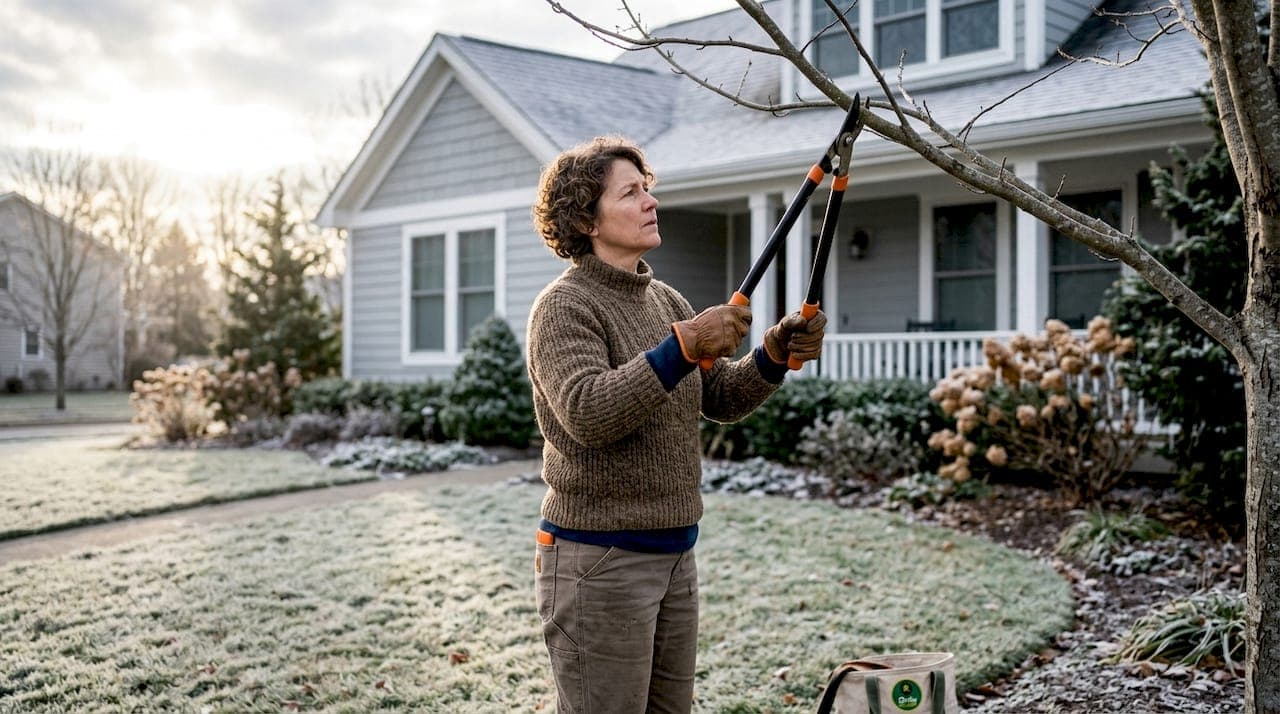
Seasonal tree pruning is the practice of trimming trees at specific times of the year to match their natural growth cycles, promoting health, structure, and appearance. Unlike random trimming, this approach aligns cuts with dormant and active phases so trees heal faster and resist disease. Homeowners who follow a seasonal pruning schedule see stronger branch structure, better flowering, and fewer hazards over time. Trees do not require pruning to survive in natural environments, which means every cut you make serves a specific purpose: safety, aesthetics, or long-term health. Getting the timing right is what separates effective tree care from costly mistakes.
What is seasonal tree pruning and why does timing matter?
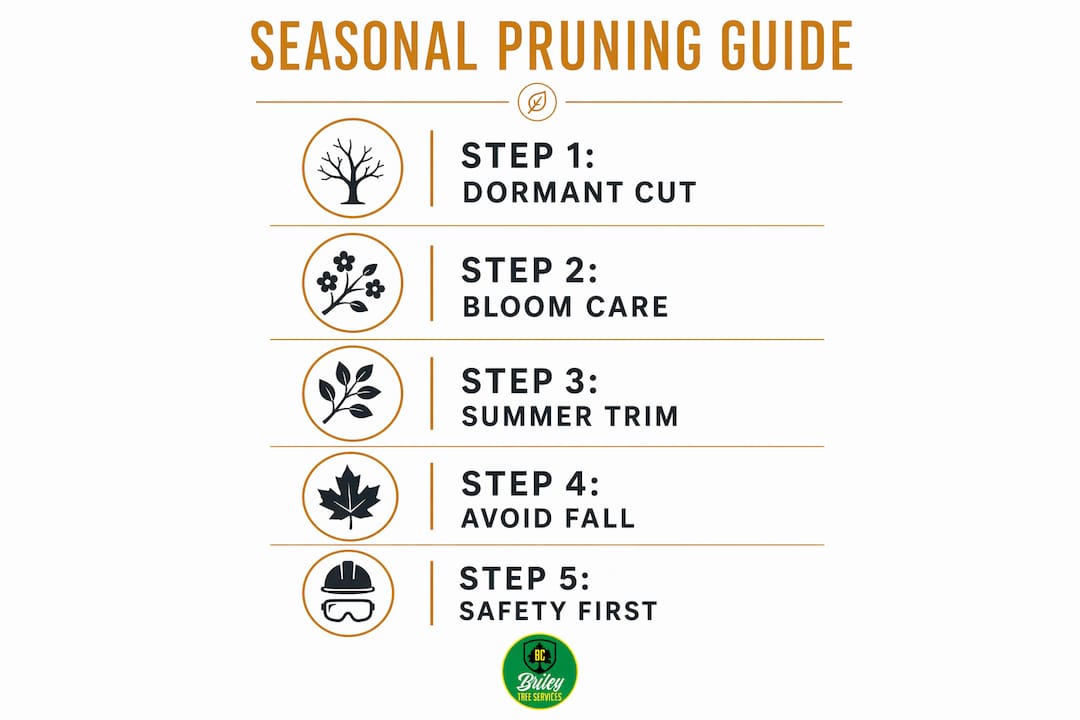
Timing is the single most important factor in pruning. Trees cycle through dormant and active growth phases, and cutting at the wrong phase forces the tree to spend energy it does not have on wound recovery.
General pruning of most deciduous trees works best during winter dormancy, from november through february. During this period, leaves are gone, the tree's structure is fully visible, and pest and disease activity is at its lowest. Wounds sealed during dormancy are less likely to attract insects or fungal pathogens.
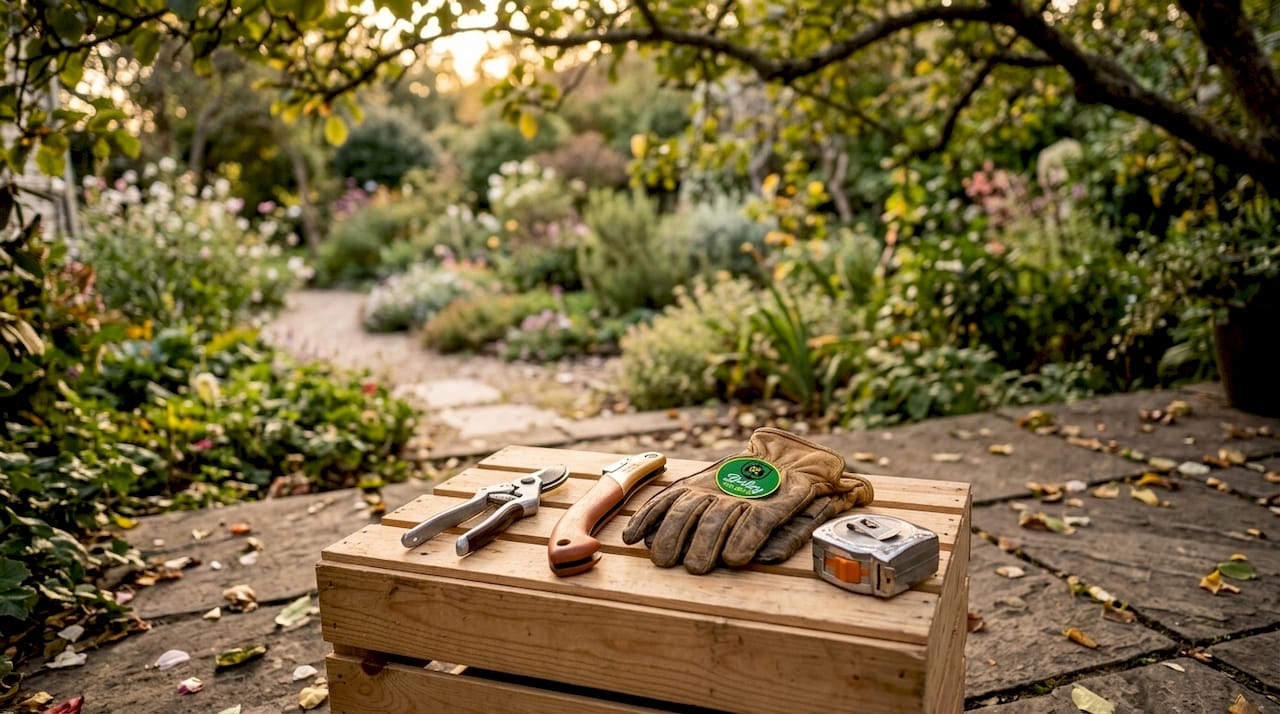
Spring pruning serves a specific purpose: preserving blooms on trees that flower on old wood. If you prune a dogwood or lilac before it flowers, you remove the buds set the previous season. Pruning right after flowering lets the tree set new buds for next year without interruption.
Summer pruning is best kept light. Removing deadwood, crossing branches, or minor shaping during summer does not stress a healthy tree significantly. Heavy cuts in summer, however, reduce the leaf area the tree needs to build energy reserves before winter.
Fall pruning carries the highest risk of all seasons. Fungal spores are most abundant in fall, and wounds made during this period heal slowly. That combination creates an open window for infection that can persist through winter.
- Winter: Best for structural pruning of most deciduous trees
- Spring: Prune spring bloomers immediately after flowering
- Summer: Light shaping and deadwood removal only
- Fall: Avoid heavy pruning; remove only hazardous limbs if necessary
Pro Tip: Schedule your winter pruning on a mild, dry day. Pruning on dry days prevents waterborne disease from spreading through fresh cuts and protects wounds from freezing overnight.
How to prune different tree types throughout the year
Not all trees follow the same schedule. Species type, bloom cycle, and age all determine when and how much to cut. Understanding these differences is the foundation of a reliable seasonal tree care routine.
Deciduous trees
Deciduous trees such as oaks, maples, and elms are best pruned in late winter while fully dormant. The bare canopy makes it easy to spot structural problems, dead limbs, and crossing branches. One critical exception: spring bloomers like redbuds and ornamental cherries should be pruned right after their flowers fade, not in winter.
Evergreen trees
Evergreens including pines, hollies, and junipers hold their foliage year-round and follow a different rhythm. Late winter to early spring, just before new growth begins, is the best window. Pruning too late into spring removes the new growth flush and leaves the tree looking sparse for the rest of the season.
Flowering trees
Flowering trees split into two categories based on their bud cycle. Spring bloomers set buds on old wood from the previous season, so pruning them in winter removes next year's flowers entirely. Summer bloomers like crape myrtles set buds on new wood, so pruning them in late winter dormancy causes no bloom loss at all.
| Tree type | Best pruning window | Key reason |
|---|---|---|
| Deciduous (non-blooming) | Late winter (dormant) | Reduces disease risk, improves visibility |
| Spring bloomers (old wood) | Right after flowering | Protects next season's buds |
| Summer bloomers (new wood) | Late winter | No bud loss; promotes strong new growth |
| Evergreens | Late winter to early spring | Avoids removing new growth flush |
Young trees vs. mature trees
Young trees need early attention. Structural pruning should begin in the second year after planting and repeat every 2–3 years. Early pruning guides the tree's form before problems become structural defects. Mature trees need less frequent intervention but benefit from regular inspections to catch dead or damaged limbs before they become hazards.
Key pruning techniques and safety tips for homeowners
Good pruning technique protects both the tree and the person holding the saw. A clean cut on the right branch at the right time produces a wound that heals quickly. A ragged cut in the wrong spot creates a decay entry point that can compromise the entire limb.
Trees naturally compartmentalize wounds, meaning they wall off damaged tissue to prevent decay from spreading. Cuts on smaller branches seal faster and carry far less decay risk than cuts on large limbs. This is why removing a branch when it is young and small is always preferable to waiting until it becomes a structural problem.
Follow these steps for safe, effective pruning at home:
- Use sharp, clean tools. Dull blades crush bark instead of cutting it cleanly. Wipe blades with a disinfectant between trees to avoid spreading disease.
- Make the cut at the branch collar. The branch collar is the slightly swollen area where a branch meets the trunk. Cutting here preserves the tree's natural wound-sealing tissue.
- Limit removal to 25% of the live canopy per year. Removing more than 25% of live canopy in a single season causes excessive stress and triggers weak water sprout growth that weakens the tree long-term.
- Remove dead, diseased, or damaged branches any time. Dead or damaged wood can come out regardless of season. Waiting for the "right" season on a hazardous limb creates unnecessary risk.
- Avoid pruning during extreme weather. Do not prune during drought, flooding, or freezing temperatures. Stressed trees recover poorly from cuts made under those conditions.
- Call a certified arborist for large limbs or high work. Any branch over your head or larger than 4 inches in diameter warrants professional equipment and training. Learn more about when to hire an arborist before attempting complex cuts yourself.
Pro Tip: Avoid pruning during drought or flooding. Pruning stressed trees during these periods adds physical injury on top of environmental stress, slowing recovery significantly.
Common mistakes in seasonal tree pruning and how to avoid them
Most tree damage from pruning comes from a handful of repeatable errors. Recognizing them before you pick up a saw saves you years of recovery time and, in some cases, the tree itself.
- Topping the tree. Cutting the main leader or removing large portions of the upper canopy, called topping, is one of the most damaging practices in residential tree care. It creates massive wounds, triggers weak water sprout growth, and shortens the tree's lifespan significantly.
- Pruning at the wrong season. Cutting spring bloomers in winter removes buds. Cutting any tree heavily in fall opens wounds during the highest-risk period for fungal infection.
- Ignoring species requirements. A pruning schedule that works for a maple will damage a dogwood. Every species has a specific window, and skipping that research leads to bloom loss or disease.
- Failing to sanitize tools. Moving from a diseased branch to a healthy one with the same unclean blade spreads pathogens directly into fresh cuts.
- Skipping formative pruning on young trees. Waiting until a tree is mature to address structural problems means larger wounds, slower healing, and higher costs. Early structural pruning on young trees is far more effective because smaller wounds seal faster.
Pruning is a blend of art and science. Clean cuts matter, but so does understanding when the tree is biologically ready to heal. Combining precise technique with knowledge of bloom cycles and energy reserves produces the best long-term results for any tree species.
Pairing good pruning habits with broader yard maintenance, including seasonal leaf removal, keeps your landscape healthy from the ground up. Leaves left to decompose around the base of trees can harbor fungal pathogens that affect the same wounds you are trying to protect.
Key Takeaways
Seasonal tree pruning works because matching cuts to a tree's growth cycle reduces stress, prevents disease, and produces faster wound healing across all species.
| Point | Details |
|---|---|
| Winter is the best default window | Most deciduous trees heal fastest and resist disease best when pruned during dormancy. |
| Flowering trees need a bud-cycle approach | Prune old-wood bloomers right after flowering; prune new-wood bloomers in late winter. |
| Never remove more than 25% of live canopy | Exceeding this limit causes stress, weak regrowth, and long-term structural damage. |
| Start structural pruning early on young trees | Begin in year two and repeat every 2–3 years so wounds stay small and heal quickly. |
| Fall pruning carries the highest infection risk | Abundant fungal spores and slow healing make fall the worst time for heavy cuts. |
What I've learned after years of watching homeowners prune at the wrong time
Most homeowners prune when they notice a problem, not when the tree is ready. That instinct is understandable, but it causes more damage than the original issue in many cases. A dead branch spotted in october feels urgent. Removing it is fine. Deciding to reshape the whole canopy while you have the ladder out is where things go wrong.
The species-specific timing rules are not arbitrary. They reflect how trees allocate energy and seal wounds. A crape myrtle pruned in late winter will push vigorous new growth and bloom heavily. The same tree pruned in late summer loses energy reserves it needs for winter. The difference shows up the following spring in a way that is hard to miss.
I also think homeowners underestimate how much formative pruning on young trees pays off. A 10-minute cut on a 2-inch branch in year three prevents a $500 removal job on a 10-inch structural defect in year fifteen. The math is simple, but the urgency is invisible until it is too late.
For complex work, including anything above shoulder height or involving large limbs, the right call is always professional help. A certified arborist brings both the equipment and the biological knowledge to make cuts that heal correctly. The tree trimming benefits of getting it right the first time far outweigh the cost of a professional visit.
— Tatum
Tree care from Brileytreeservice: professional pruning done right
Brileytreeservice serves homeowners across Shreveport, Bossier City, and Northwest Louisiana with professional tree trimming, removal, stump grinding, and emergency storm cleanup.
Seasonal pruning done correctly requires the right tools, the right timing, and a clear understanding of each tree's biology. Brileytreeservice brings all three to every job. Whether you need a full canopy assessment, targeted branch removal, or a recurring tree trimming schedule built around your specific trees, the Brileytreeservice team handles it safely and efficiently. Contact Brileytreeservice today for a free estimate and get your trees on the right seasonal schedule.
FAQ
What is the best time of year to prune most trees?
Late winter, from january through february, is the best time to prune most deciduous trees. The dormant season reduces disease risk, improves structural visibility, and allows wounds to seal before spring growth begins.
Can I prune trees in the fall?
Heavy pruning in fall is not recommended. Fungal spores peak in fall, and pruning wounds heal slowly during this period, creating a high infection risk that persists through winter.
How much of a tree can I safely prune at once?
Remove no more than 25% of a tree's live canopy in a single year. Exceeding this limit causes stress, promotes weak water sprout growth, and reduces the tree's long-term lifespan.
When should I prune flowering trees?
Spring bloomers should be pruned immediately after their flowers fade to protect next season's buds. Summer bloomers that flower on new wood can be pruned in late winter without any loss of blooms.
When should I call a professional instead of pruning myself?
Call a certified arborist for any branch larger than 4 inches in diameter, any work above shoulder height, or any tree showing signs of disease or structural failure. DIY pruning on large or compromised limbs creates serious safety risks.