
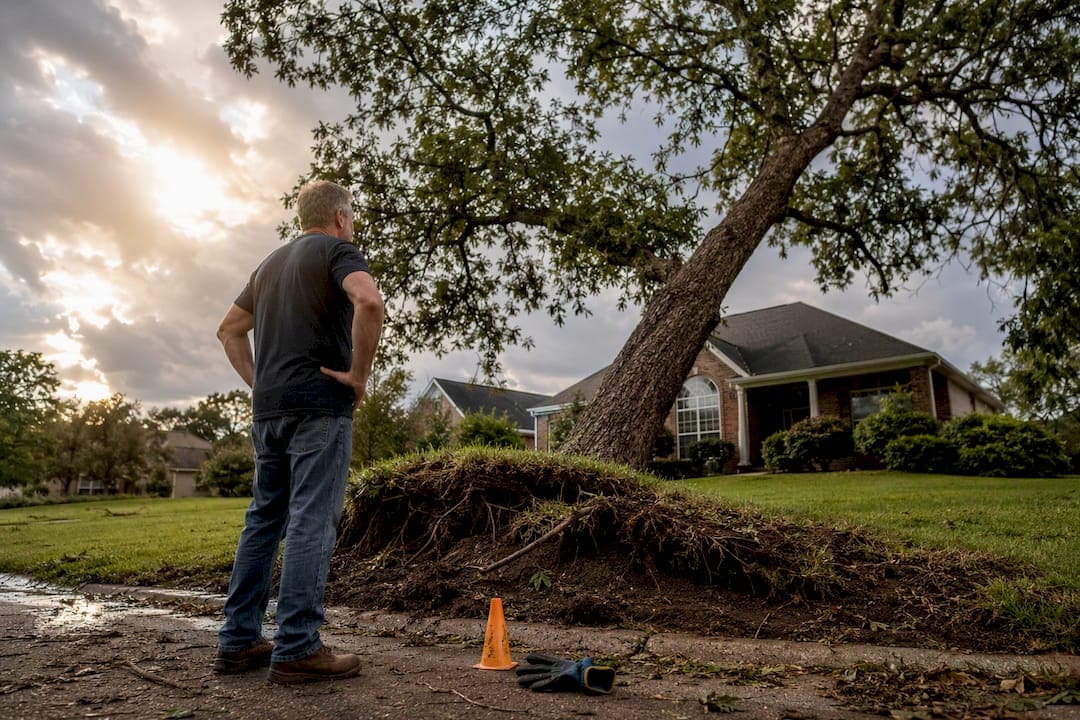
A tree leaning dangerously is an emergency if the lean is new, the soil is heaving, roots are torn or exposed, or the trunk shows fresh cracks, especially if it's tilting toward your house, driveway, or a spot where people gather. If any of that applies, the move is simple: clear everyone and everything out of the drop zone and call a licensed arborist or emergency tree service now. A licensed arborist or emergency tree service handles exactly this kind of call in areas like Shreveport and Bossier City.
TL;DR:
- A new, sudden lean or signs of soil upheaval, root tearing, or trunk cracking indicate an immediate hazard requiring professional removal or mitigation.
- Size and target proximity influence risk levels, with urgent action needed if the lean threatens structures or people, especially after recent storms.
- Quick safety steps include clearing the drop zone, removing vehicles and gear, documenting the condition, and calling a licensed arborist or emergency service immediately.
- Risk assessment by a certified arborist examines root stability, trunk integrity, crown balance, lean history, and proximity to hazards to determine if removal or preservation is necessary.
- Preventative measures involve proper planting depth, species-site matching, loose staking, and balance pruning, while emergency removal is critical if a sudden or severe lean appears.
Table of Contents
- Is a Leaning Tree Dangerous? How to Tell Fast
- Quick Risk Checklist Homeowners Can Use on-Site
- What a Professional Inspection Looks for
- What to Do Right Now if a Tree Is Leaning
- Can You Straighten a Leaning Tree? Your Options Explained
- How to Prevent a Tree From Leaning in the Future
- When to Call for Emergency Tree Removal
- How Briley Tree Service Triages a Leaning Tree Call
- Get a Free Estimate for a Leaning or Hazardous Tree
- Where to Read More on Leaning Tree Risk
- Sources
Is a Leaning Tree Dangerous? How to Tell Fast
A leaning tree isn't automatically a hazard. Trees develop a natural curve over decades as they grow toward light, called a "sweep," and that kind of gradual, long-standing lean is usually structurally sound. What turns a leaning tree dangerous is speed and cause: a straight lean that showed up suddenly, tied to a discrete event like a windstorm or saturated soil, is a different risk category entirely than a slow, decades-old curve.
The standard industry term for this evaluation is a tree risk assessment, the process an ISA-certified arborist uses to weigh the lean against the tree's condition, size, and what's underneath it. You don't need a credential to do a first pass yourself. You need to know what to look for and how fast to act once you see it.
Quick Risk Checklist Homeowners Can Use on-Site
Walk out and look at the base of the tree, not just the trunk. That's where the real warning signs live.
- New angle: Compare against old photos. A lean that wasn't there last month is far more urgent than one that's always been there.
- Soil heave: Look for raised or cracked ground on the side opposite the lean. That's the root plate starting to lift.
- Exposed or torn roots: Roots pulling up out of the soil mean the anchor system is failing.
- Trunk cracks or splitting: Any vertical crack, especially near the base, signals structural failure in progress.
- Decay or mushrooms at the base: Fungal growth often means internal rot has already compromised the wood.
Size and location act as risk multipliers. A small leaning tree over an empty side yard is a lower priority than the same lean on a mature oak tilting toward your bedroom window. The prioritization rule is straightforward: new movement plus a target underneath equals an emergency. No target, no urgency, but the tree still needs a professional look before storm season.
What a Professional Inspection Looks for
When an arborist shows up to evaluate a leaning tree, the process follows a fairly consistent sequence, and understanding it helps you interpret whatever they tell you afterward.
- Root plate and soil check. They'll look for heaving, cracking, or gaps around the root collar that indicate the anchor system is compromised.
- Trunk integrity. Cracks, included bark (where two branches fuse at a narrow angle), and cavities all weaken the trunk's ability to resist further movement.
- Crown balance. A heavy, lopsided canopy puts uneven weight on one side of the root system, which can accelerate a lean.
- Lean history. Was this sudden or gradual? Dated photos are the single best evidence an arborist can use to answer this.
- Overall risk rating. This weighs the angle of the lean, what's within striking distance, the species' wood strength, and any recent storm activity.
That angle measurement matters more than most homeowners realize. Extension guidance commonly flags a tree leaning significantly from the vertical as a strong candidate for removal, particularly when the lean developed suddenly rather than over years.
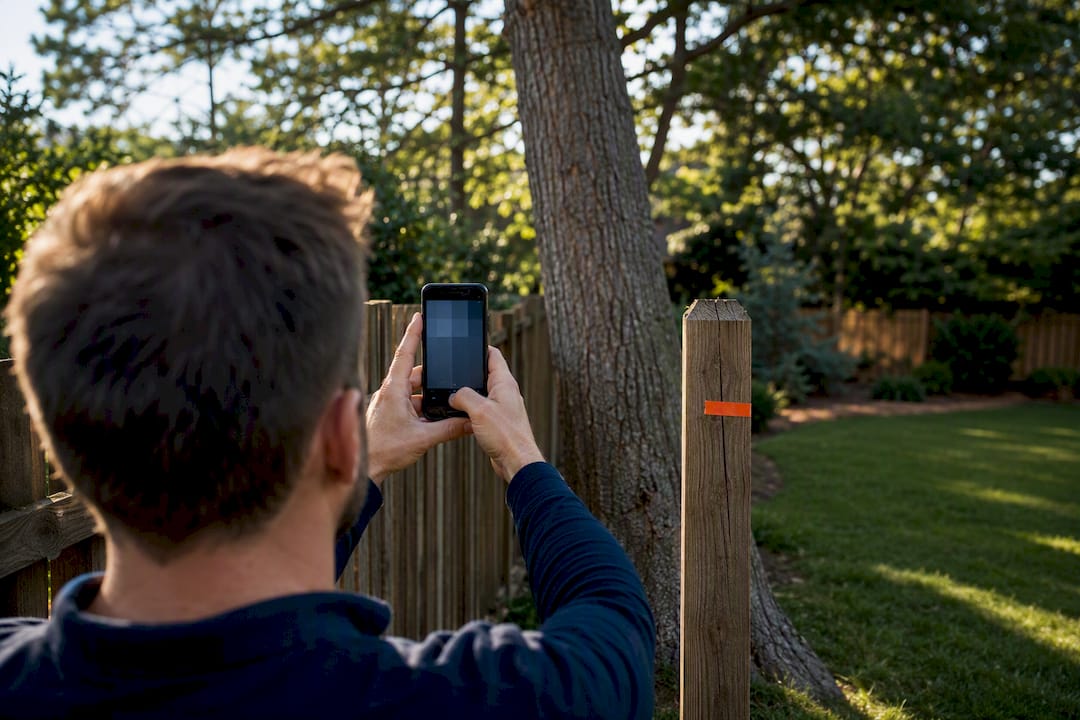
Pro Tip: Take your comparison photos from the exact same spot each time, ideally a fixed reference point like a fence post or driveway edge. It makes the angle change obvious even to an untrained eye.
What to Do Right Now if a Tree Is Leaning
Once you've spotted a warning sign, your job is damage control, not diagnosis. Here's the order of operations.
- Clear the drop zone. Rope it off or mark it clearly so kids, pets, and visitors stay out.
- Move vehicles and gear. Get cars, grills, patio furniture, and anything else out of the potential fall path.
- Document it. Take date stamped photos from at least three angles before you do anything else.
- Call a professional. Don't wait for a scheduled appointment slot if the signs point to imminent failure.
A few things you should never do on your own:
- Don't climb the tree or attempt to cut branches to "relieve pressure."
- Don't try to fell a large leaning tree yourself, even with a chainsaw and rope. The physics of a compromised root plate are unpredictable.
- Don't touch a tree that's in contact with power lines under any circumstances. Call the utility company first, and see our guide on trimming trees near power lines for more on why that contact point is non-negotiable.
Young trees are the exception where DIY staking can help. If the roots are intact and the trunk is thin enough to flex, soft ties that allow some movement work better than rigid bracing, and they should come off after about a year once the roots reestablish.
Can You Straighten a Leaning Tree? Your Options Explained
Whether a leaning tree can be saved comes down almost entirely to root condition, not how bad the lean looks.
- Staking or guying: Works for small, recently tipped trees with roots still mostly intact. Soft ties, some allowed movement, temporary duration of roughly a year.
- Pruning: Reducing canopy weight on the leaning side takes pressure off a compromised root system without removing the tree.
- Professional bracing: Best left to a pro. Rigid, poorly installed bracing can create new failure points instead of solving the problem.
- Removal: Necessary when the root plate has failed, the trunk is cracked, or the lean toward a structure appeared suddenly. This typically includes stump grinding and debris cleanup.
Most jobs follow the same workflow: inspection, risk rating, emergency mitigation if there's an active hazard, then either a planned removal or a preservation plan. Trees with torn roots or full root plate failure rarely respond to staking no matter how carefully it's done, so an honest inspection saves you from paying for a fix that won't hold.
How to Prevent a Tree From Leaning in the Future
Most dangerous leans trace back to decisions made at planting time. Fixing that starts before the tree ever goes in the ground.
- Plant at the correct depth and loosen root bound stock so roots spread outward instead of circling.
- Match the species to the site. A tree with mature height and heavy wind exposure needs a location with room and drainage to match.
- Stake young trees loosely with soft material, and remove the stakes after about a year once roots anchor on their own.
- Keep up a regular pruning routine so the canopy stays balanced and doesn't develop a lopsided weight distribution.
When to Call for Emergency Tree Removal
Some situations don't leave room for a scheduled appointment. Call immediately if you see a sudden lean that wasn't there before, root plate uplift, a split trunk, or any contact between the tree and a structure or power line.
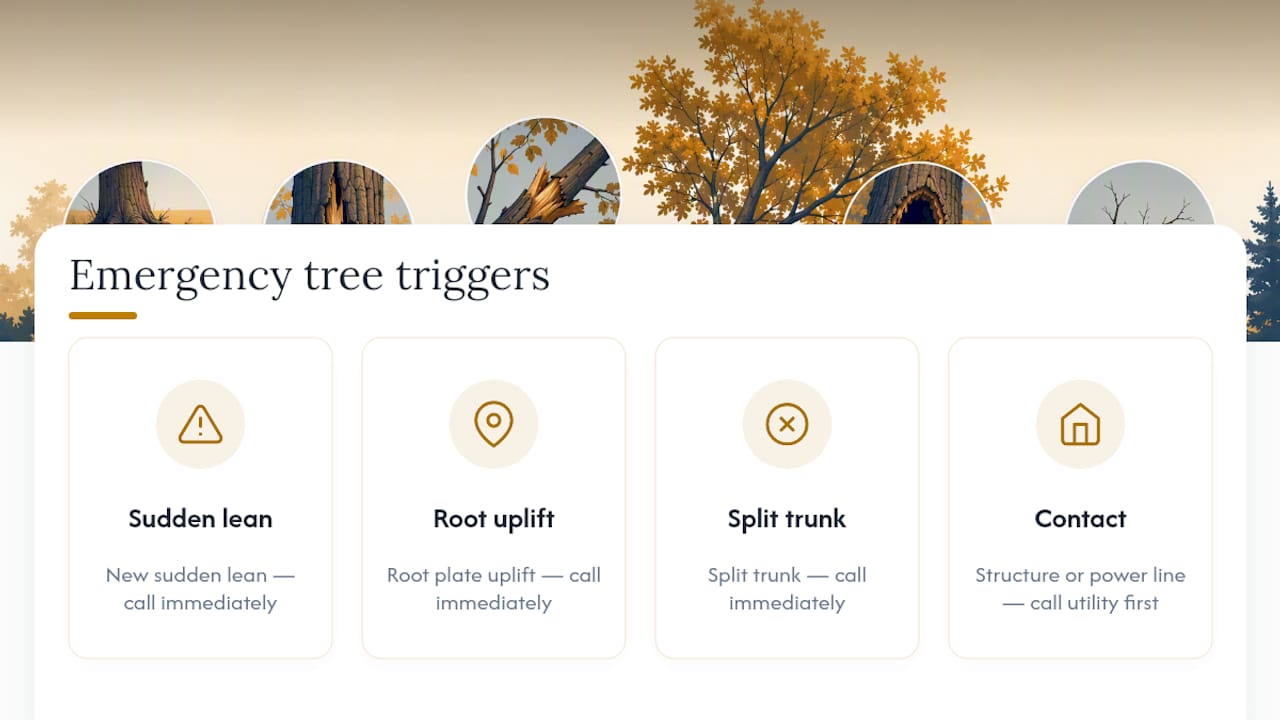
If power lines are involved, call the utility company first and stay well clear until they confirm the line is de-energized. Then bring in an emergency tree service or certified arborist. Our guide to emergency tree situations walks through what typically happens next: crews secure the hazard first, then assess whether the tree needs immediate removal or can wait for scheduled work.
For insurance purposes, collect date stamped photos, a brief written timeline of what happened (storm, sudden shift, discovery date), and any prior arborist notes before you file a claim.
How Briley Tree Service Triages a Leaning Tree Call
We split every call into two lanes the moment it comes in: active hazard, or scheduled inspection. A tree leaning toward a bedroom window after a storm jumps the line ahead of a routine trim request, and that's by design.
Our first response steps stay consistent regardless of the job size. We assess the site, secure or mitigate the immediate hazard, and then coordinate removal or bracing if that's what the inspection calls for. You get a free estimate before any work starts, an insured crew on-site, full cleanup when the job wraps, and a straight answer about what we found and why we're recommending it. That's the same standard whether it's a Tuesday afternoon trim or a 2 a.m. call after a line of storms rolls through North Louisiana.
— Tatum
Get a Free Estimate for a Leaning or Hazardous Tree
Briley Tree Service is the direct line to call when a leaning tree turns from a question mark into a real hazard on your property, no waiting on a callback while a compromised root plate keeps failing.
Emergency tree services typically handle the full range this situation calls for: emergency tree removal, on-site risk inspection, staking and bracing for trees young enough to save, stump grinding once a removal is done, and storm cleanup when a lean is just one piece of a bigger mess. When you call, have your date stamped photos ready, a quick rundown of what changed and when, and your insurance information if the lean followed a storm. Crews are often licensed and insured, and permit and insurance claim support is commonly provided so you're not stuck sorting out documentation while a hazard sits in your yard.
Get a free estimate started, or reach out through our emergency line if the tree is an active threat right now. If you're still weighing whether a tree qualifies as a removal case, our guide on how to determine if a tree needs removal is a solid next read before you call.
Where to Read More on Leaning Tree Risk
For homeowners who want the source material behind extension guidance, a few pages are worth bookmarking. Penn State Extension's tree risk assessment overview covers inspection criteria in depth, while its companion piece on leaning trees breaks down staking versus removal decisions. The University of Maryland Extension's removal decision guide explains the 15% lean threshold and power line protocol in more detail, and UF/IFAS's leaning trees page adds useful context on how target proximity factors into risk. For utility specific guidance, check with your local power provider before any work near lines.
Sources
- What to do about leaning trees | Penn State Extension
- How do you decide when to remove a tree? | University of Maryland Extension