
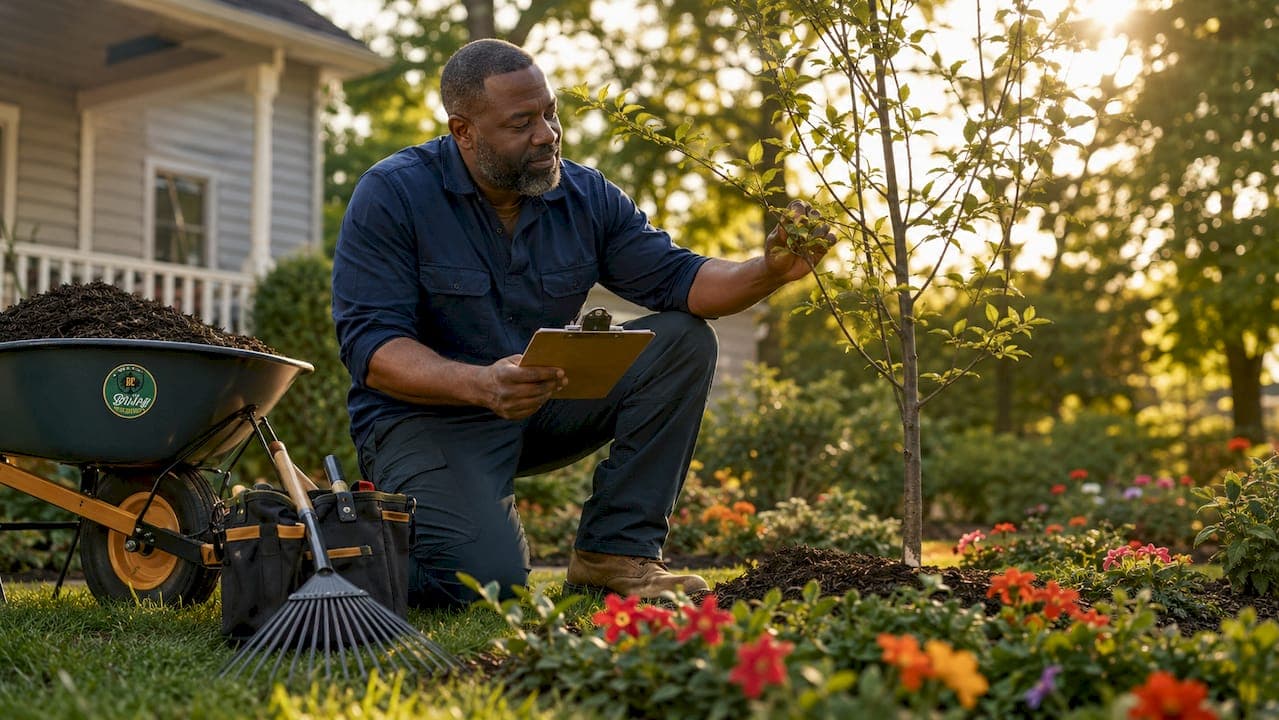
Tree service frequency recommendation is defined as the advised interval at which homeowners should schedule professional tree maintenance, including pruning, inspection, and hazard assessment, to preserve tree health and property safety. Annual professional inspection is the industry standard, recommended by certified arborists to catch disease, structural weakness, and pest problems before they become costly emergencies. The right tree maintenance schedule depends on three primary variables: tree age, species, and local climate. Getting this right protects your property, reduces long-term costs, and keeps your trees growing strong for decades.
What is tree service frequency recommendation by age and species?
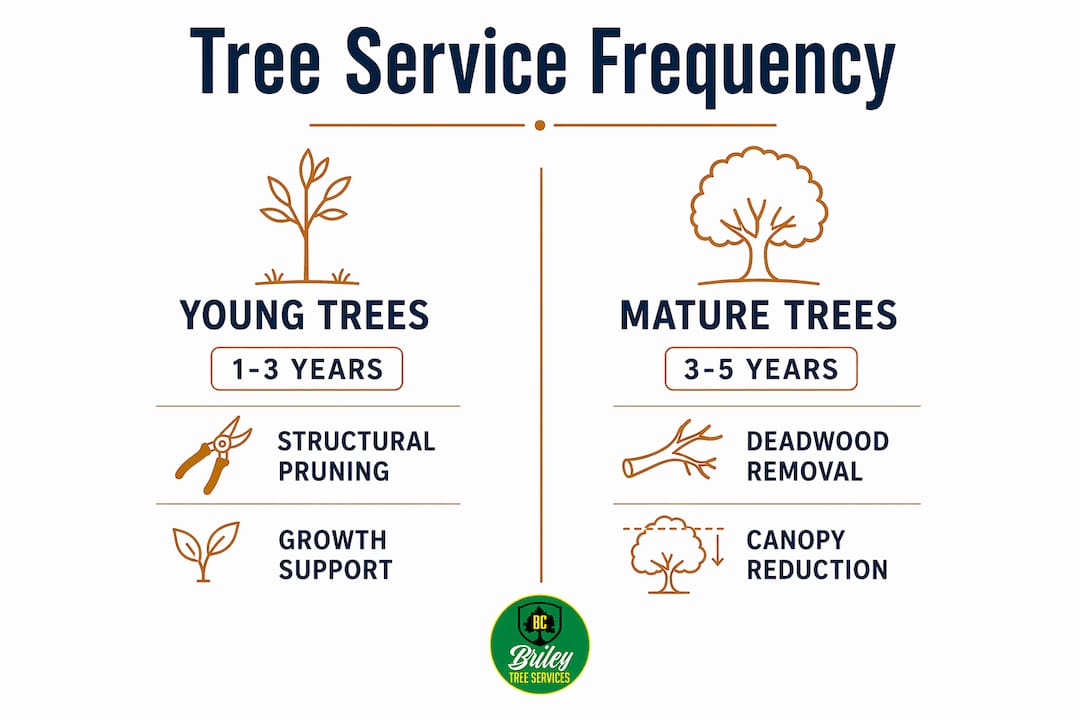
Tree age is the single most reliable starting point for setting a maintenance schedule. Young trees need structural pruning every 1–3 years to establish a strong branch framework before bad habits become permanent. Skipping this window forces corrective work later, which costs more and stresses the tree.
Mature trees follow a different rhythm. Selective pruning every 3–5 years removes dead wood, reduces canopy weight, and manages growth without over-stressing established root systems. The goal shifts from shaping to preserving.
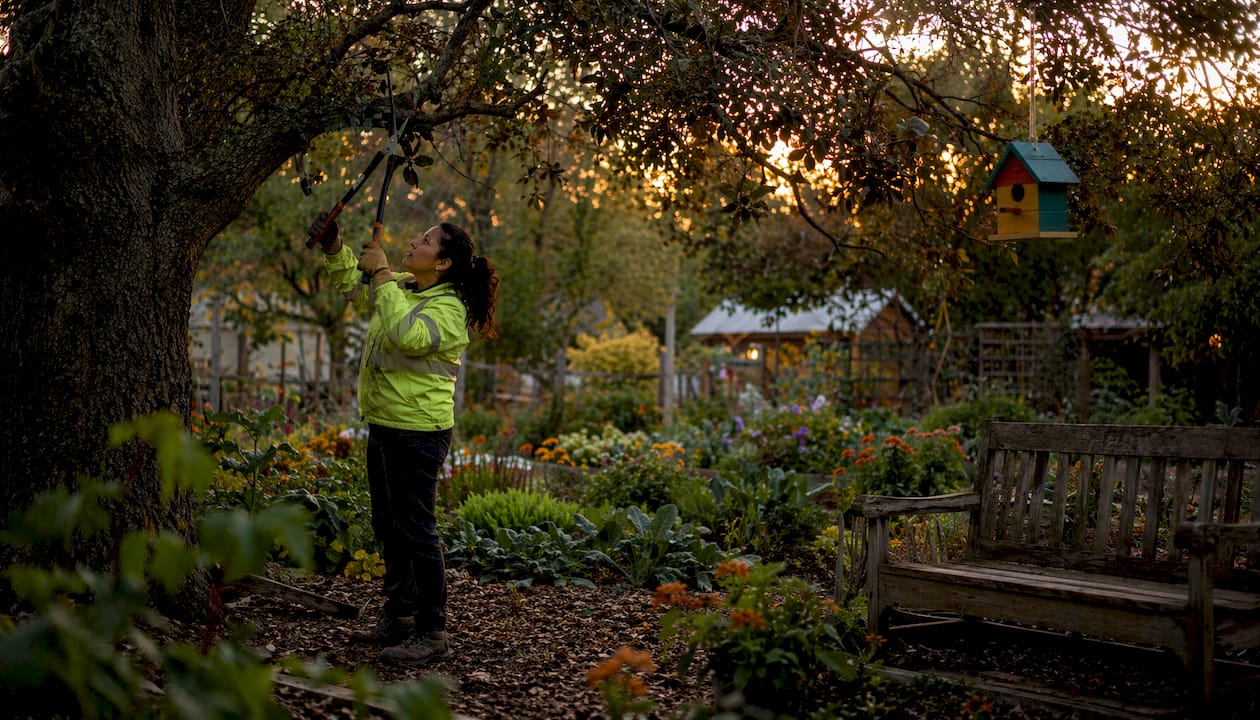
Species adds another layer to the schedule. Fruit trees require annual pruning to maximize yield and prevent structural failure under heavy fruit loads. Fast-growing species like silver maple or Bradford pear also need more frequent attention because they add significant canopy mass each season.
| Tree category | Typical service frequency |
|---|---|
| Young trees (under 10 years) | Every 1–3 years for structural pruning |
| Mature trees (10+ years) | Every 3–5 years for selective pruning |
| Fruit trees (all ages) | Annually for yield and structure |
| Fast-growing species | Every 1–2 years for canopy control |
| Slow-growing species | Every 5–7 years for light maintenance |
Slow-growing species like live oak or dogwood need far less frequent intervention. Their growth rate naturally limits how quickly structural problems develop. That said, annual visual inspections still apply to every tree on your property, regardless of species.
Pro Tip: Check your tree trimming frequency guide to match your specific species to the right pruning interval before scheduling any work.
What types of maintenance are included in a tree care schedule?
A complete tree maintenance schedule covers more than just pruning. Each service type carries its own recommended frequency, and understanding the difference helps you budget and plan accurately.
The core services in any tree care frequency plan include:
- Structural pruning: Shapes young trees and removes crossing or competing branches. Done every 1–3 years for young trees.
- Crown thinning: Reduces canopy density on mature trees to improve air circulation and light penetration. Done every 3–5 years.
- Deadwood removal: Eliminates dead, dying, or diseased branches that pose a fall risk. Recommended annually or after major storms.
- Health inspections: A certified arborist checks for disease, pest infestation, root problems, and structural hazards. Recommended every year.
- Root zone care: Includes mulching and soil aeration to support root health. Done annually or as needed.
Timing matters as much as frequency. Dormant season pruning, typically late fall through winter, reduces the risk of pathogen entry and sap loss. Pruning oaks and elms in spring or early summer spreads oak wilt and Dutch elm disease, two fatal conditions that kill trees within a single season. Winter is the safest window for structural work on these species.
Evergreens, deciduous trees, palms, and fruit trees each follow different timing rules. Palms in warm climates like Northwest Louisiana benefit from late spring trimming after new frond growth appears. Deciduous trees are best pruned in late winter before bud break.
Pro Tip: Never remove more than 25% of a tree's live canopy in a single year. Removing more permanently weakens the tree's structure and triggers weak, fast-growing regrowth that breaks easily in storms.
How do seasonal and environmental factors affect how often to service trees?
Seasonal timing and local environment directly shape how often your trees need professional attention. A tree growing in a drought-prone yard or near a storm corridor needs more frequent care than the same species in a sheltered, well-watered location.
The best time for tree service follows a seasonal logic:
- Winter (dormancy): Best time for structural pruning on most deciduous trees. Pathogens are less active, and the tree's energy is stored in roots rather than canopy.
- Spring: Ideal for a post-winter inspection. Look for winter damage, new pest activity, and early signs of disease before the growing season accelerates problems.
- Summer: Monitor for drought stress, pest outbreaks, and fungal issues. Avoid heavy pruning during peak heat.
- Fall: Schedule a pre-winter inspection to identify weak branches before ice and wind loads arrive.
Quarterly or biannual professional visits combined with your own monthly visual checks give you the best balance of cost control and early detection. This approach works especially well for properties with high-value trees or trees near structures.
| Season | Primary task | Frequency |
|---|---|---|
| Winter | Structural pruning, dormant care | Annual or as scheduled |
| Spring | Inspection, pest and disease check | Annual |
| Summer | Monitoring, drought response | As needed |
| Fall | Pre-storm inspection, deadwood removal | Annual |
Environmental stressors like drought, flooding, or severe storms can push your schedule forward. A tree that survives a major storm needs an inspection within days, not months. Regular thinning and deadwood removal reduce wind resistance and lower the risk of branch failure during the next storm event. That single maintenance step prevents the most common type of storm damage on residential properties.
Regional climate also matters. In Northwest Louisiana, the combination of heat, humidity, and frequent storm activity means trees face more stress than in drier climates. Brileytreeservice works with homeowners across Shreveport and Bossier City to account for these local conditions when building a tree care frequency plan. You can also use a seasonal tree care checklist to stay on track between professional visits.
How should homeowners set and maintain a tree service schedule?
Setting a practical tree maintenance schedule starts with a property-wide assessment. Walk your yard and note each tree's approximate age, species, and visible condition. Flag any trees near your home, power lines, or high-traffic areas as high-priority.
Use these steps to build your schedule:
- Identify your trees by species and age. This determines your baseline pruning interval. A young red oak needs different care than a 40-year-old water oak.
- Schedule an annual professional inspection. A certified arborist gives you a written assessment of each tree's health, hazards, and recommended service intervals.
- Watch for warning signs between visits. Cracked bark, leaning trunks, dead branches, fungal growth at the base, or sudden leaf drop all signal a need for immediate attention.
- Book preventive maintenance before problems escalate. Preventive tree care costs a fraction of emergency removal. A single tree removal in a tight yard can run several times the cost of years of routine pruning.
- Use a calendar or checklist. Mark your annual inspection, seasonal checks, and any species-specific pruning windows. Consistency matters more than perfection.
Planned, preventive maintenance shifts homeowners from reactive emergency spending to a predictable budget. That shift protects both your trees and your wallet. Property managers with multiple trees benefit most from this approach because the cost savings multiply across a larger inventory.
Pro Tip: Prioritize trees within striking distance of your home, driveway, or utility lines. A falling limb from a neglected tree causes far more damage than the cost of annual care. Start your schedule with the highest-risk trees first.
Key Takeaways
Tree service frequency recommendations are not one-size-fits-all. They depend on tree age, species, local climate, and property risk, and following a structured schedule is the most cost-effective way to protect your trees and property.
| Point | Details |
|---|---|
| Annual inspection is the baseline | Every tree on your property benefits from a yearly professional health and hazard check. |
| Age drives pruning intervals | Young trees need pruning every 1–3 years; mature trees every 3–5 years. |
| Species determines timing | Fruit trees need annual pruning; oaks and elms should only be pruned in winter. |
| Seasons shape your schedule | Winter is best for structural work; spring and fall are ideal for inspections. |
| Prevention beats emergency response | Planned maintenance costs far less than reactive removal or storm damage repair. |
Why I think most homeowners wait too long between tree services
Most homeowners I talk to assume their trees are fine until something breaks. That assumption is the most expensive mistake you can make in property maintenance. A tree does not show obvious distress until the problem is already advanced. By the time you see a crack in the bark or a leaning trunk, the structural failure may be months away, not years.
The misconception I hear most often is that pruning harms trees. The opposite is true when done correctly and on schedule. Consistent, well-timed pruning extends a tree's life, reduces storm damage risk, and maintains the property value that mature trees add to a home. The trees that fail spectacularly in storms are almost always the ones that went years without any professional attention.
Homeowners also underestimate how much species and location change the math. A fast-growing tree near your roofline on a storm-prone property in Shreveport needs a completely different schedule than a slow-growing ornamental in a sheltered backyard. There is no universal answer, which is exactly why a certified arborist's assessment is worth every dollar.
The homeowners who get this right treat their tree maintenance schedule the same way they treat their HVAC service or roof inspection: as a non-negotiable annual line item. That mindset shift, from reactive to planned, is what separates properties that stay safe and beautiful from those that face costly surprises.
— Tatum
Brileytreeservice: professional tree care for Shreveport homeowners
Brileytreeservice serves homeowners and property managers across Shreveport, Bossier City, and Northwest Louisiana with expert tree care built around your property's specific needs.
Whether your trees need a routine annual inspection, structural pruning, or deadwood removal before storm season, Brileytreeservice delivers reliable, professional service on every job. The team assesses each tree's age, species, and condition to build a maintenance plan that fits your schedule and budget. From tree trimming to emergency storm cleanup, Brileytreeservice handles the full range of residential and commercial tree care. Contact Brileytreeservice today for a free estimate and get your tree maintenance schedule started the right way.
FAQ
How often should trees be professionally inspected?
Annual professional inspection is the industry standard for all trees. High-risk trees near structures or power lines may warrant a second check after major storms.
How often do young trees need pruning?
Young trees need structural pruning every 1–3 years to build a strong branch framework. Skipping this stage leads to costly corrective work as the tree matures.
What is the best time of year for tree pruning?
Late fall through winter is the preferred window for structural pruning on most species. Dormant season pruning reduces disease risk and minimizes sap loss.
Can you prune a tree too often?
Yes. Removing more than 25% of a tree's live canopy in a single year damages its structure and reduces its lifespan. Stick to the recommended intervals for your tree's age and species.
How do I know if my tree needs service sooner than scheduled?
Dead branches, cracked bark, leaning trunks, fungal growth at the base, or sudden leaf loss all signal an immediate need for professional assessment, regardless of your regular schedule.