
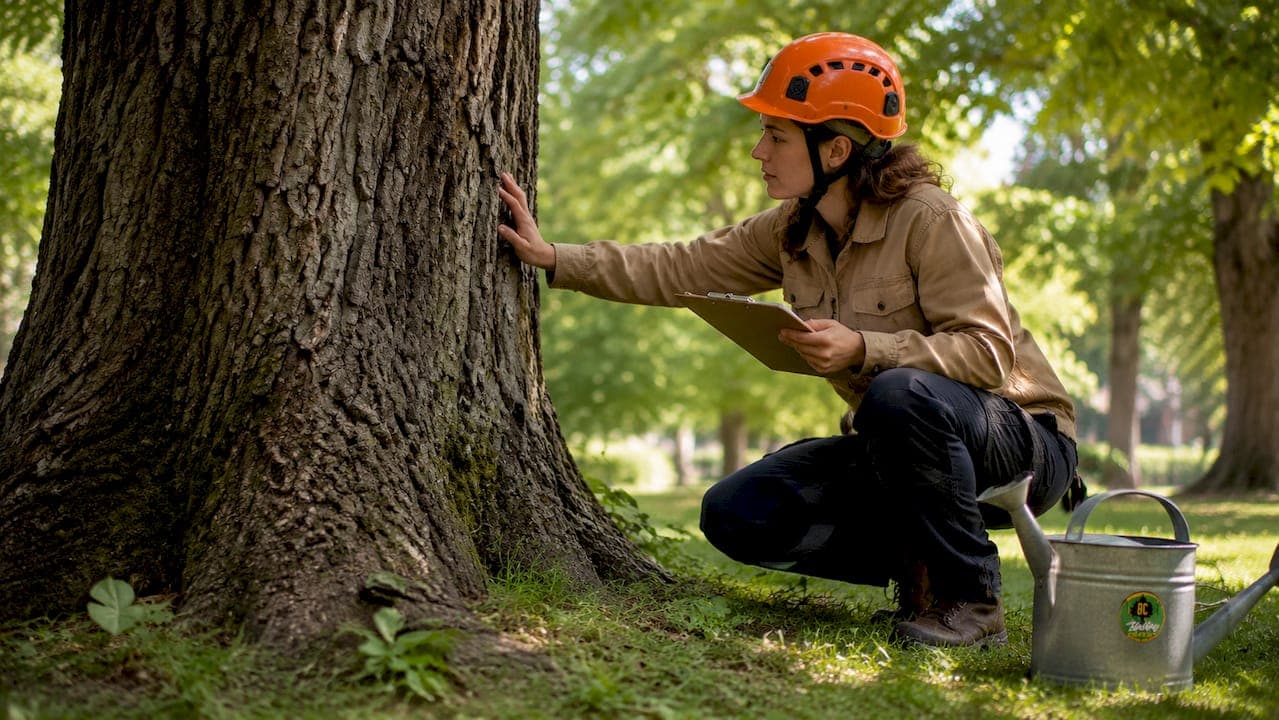
Preventive tree care is a proactive, whole-tree maintenance program designed to keep trees healthy, safe, and structurally sound before problems become visible or costly. Known in the industry as Plant Health Care (PHC), this approach covers every life stage of a tree using regular inspection, proper watering, pruning, mulching, and timely interventions. The goal is not to react to damage but to prevent it. For homeowners and property managers in Northwest Louisiana, where heat stress, storm exposure, and clay-heavy soils put trees under constant pressure, a structured preventive program protects your landscape investment and reduces the risk of hazardous failures.
What is preventive tree care and why does it matter?
Preventive tree care is defined by Texas A&M Forest Service and Clemson University Extension as a proactive program that addresses tree needs across all life stages, focusing on early detection rather than emergency fixes. This matters because most tree health problems start without any visible symptoms. By the time you notice discolored leaves, dead branches, or a leaning trunk, the underlying issue has often been developing for months or years.
The core practices in any solid preventive program include pruning for structure and safety, proper watering based on soil moisture, mulching to regulate temperature and moisture, and regular monitoring for pests and disease. Each practice targets a specific vulnerability. Pruning removes weak or crossing branches before they fail. Mulching protects roots from compaction and temperature extremes. Monitoring catches insect activity or fungal infections while they are still treatable.
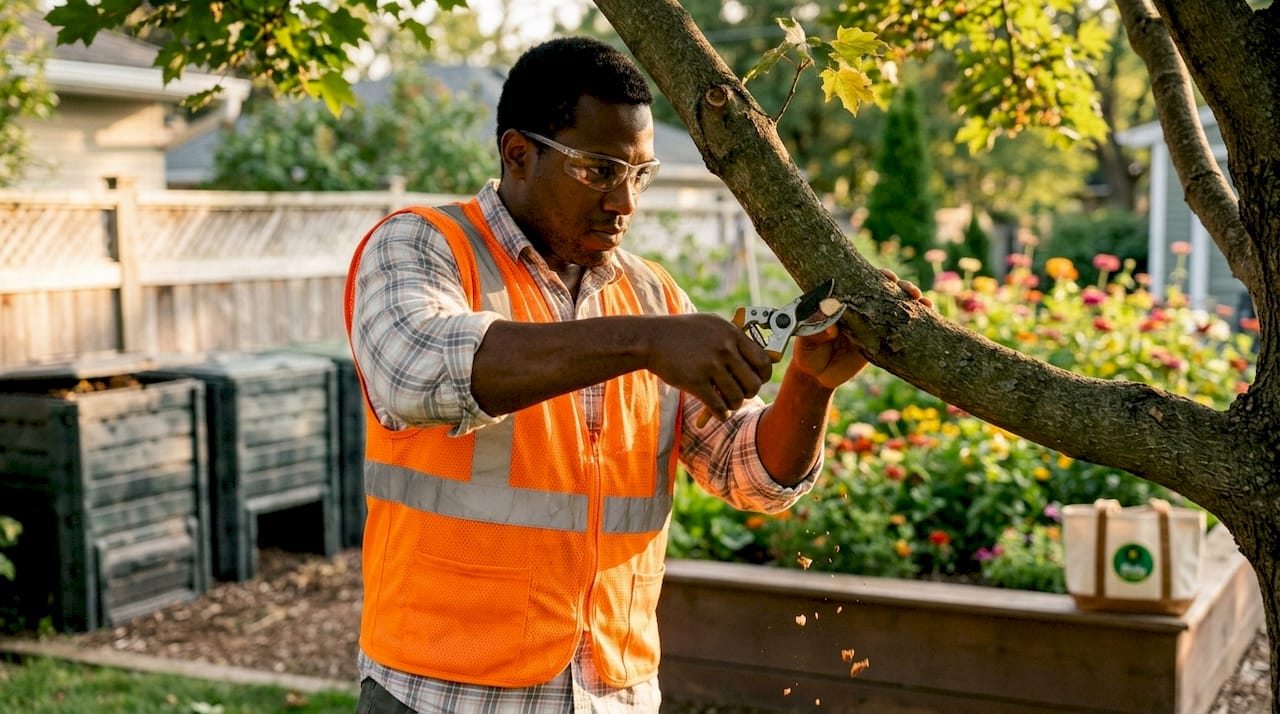
The financial case for prevention is straightforward. Emergency tree removal, storm damage cleanup, and late-stage disease treatment cost significantly more than routine maintenance. Preventive care also protects surrounding structures, neighboring trees, and the people who use your property every day. The importance of tree care is not just aesthetic. It is a safety and liability issue for any property owner.
What are the essential preventive tree care practices?
The foundation of tree health maintenance rests on five core practices. Each one addresses a different system within the tree and the soil environment it depends on.
- Pruning for structure and safety. Properly timed pruning every few years in young trees promotes structural strength and reduces the need for corrective work at maturity. The goal is to remove dead, diseased, or structurally weak branches before they become hazards. Pruning windows vary by species, but late winter before bud break is generally the best time for most trees in Louisiana.
- Watering based on soil moisture. Newly planted trees need thorough watering during dry spells. Weekly watering with approximately two gallons per application during dry conditions supports root establishment. Established trees need less frequent irrigation but benefit from deep watering during extended dry periods.
- Mulching with correct depth and placement. Apply a 2 to 4 inch layer of organic mulch extended to the drip line of the tree. Keep mulch pulled back from the trunk. This placement regulates soil temperature, retains moisture, and suppresses competing weeds.
- Regular inspections. Walk your property and examine trees at least twice per year, once in spring and once in late summer. Look for bark damage, unusual leaf color, fungal growth, or signs of insect activity. Treat inspection results as a checklist that triggers cultural actions like watering or soil treatment before scheduling any intensive intervention.
- Integrated Pest Management (IPM). IPM principles prioritize monitoring and accurate pest identification first, then non-chemical controls, with chemical treatments applied only as a last resort. This protects tree health while minimizing environmental impact.
Pro Tip: Before pruning any mature tree on your property, review the difference between pruning and trimming to confirm you are targeting the right branches for the right reasons.
How does preventive care differ from reactive tree care?
Reactive tree care means responding after a problem has already caused damage. Preventive care means managing conditions so that damage is far less likely to occur. The difference in outcomes and cost is significant.
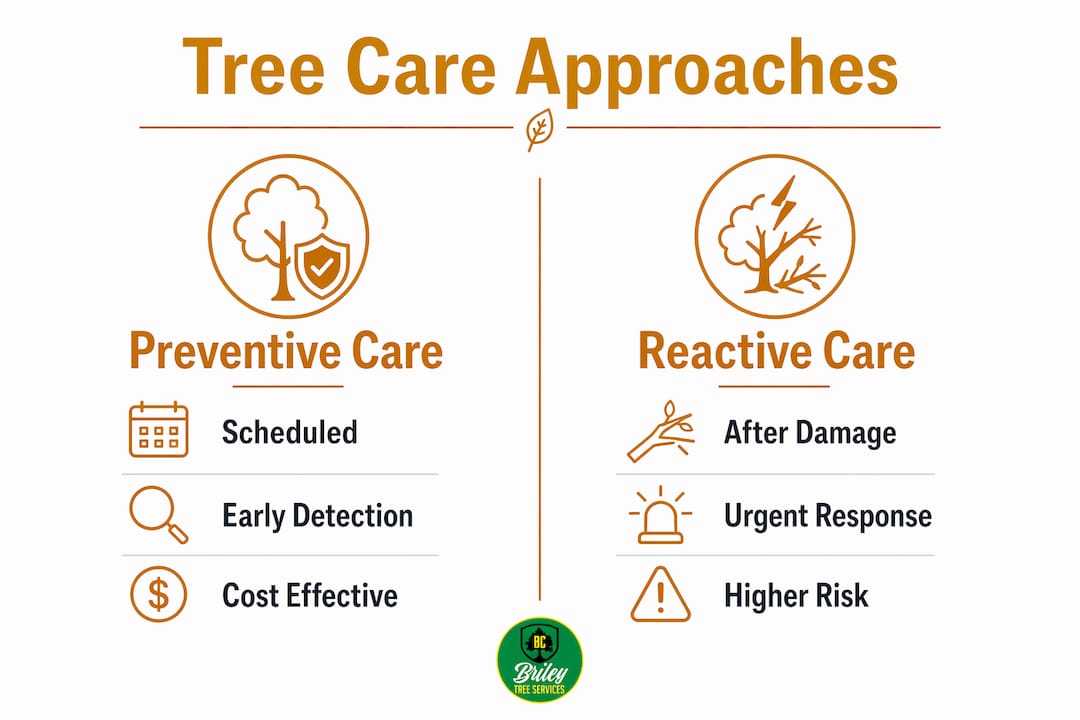
| Factor | Preventive care | Reactive care |
|---|---|---|
| Timing | Scheduled, ongoing | After damage or decline appears |
| Cost | Lower, predictable | Higher, often urgent |
| Tree outcome | Preserved structure and health | Often partial or full removal |
| Safety risk | Managed proactively | Elevated during emergency response |
| Property impact | Minimal disruption | Potential damage to structures or lawn |
Ignoring preventive care leads to emergency interventions that are more costly, riskier, and less effective than ongoing maintenance. A tree that receives annual inspections and corrective pruning rarely becomes an emergency. A tree that is ignored for a decade often ends up requiring full removal, which costs far more and eliminates a landscape asset that took decades to grow.
Many tree health issues start without visible symptoms, so preventive care detects stress early to avoid costly damage later. This symptom delay is one of the most misunderstood aspects of tree biology. A tree can look completely healthy while root rot, vascular disease, or structural decay progresses internally. Ongoing monitoring closes that gap. For property managers overseeing multiple trees across large sites, the commercial maintenance approach of scheduled programmatic visits is the most reliable way to stay ahead of problems.
What role does tree risk assessment play in preventive care?
Tree risk assessment is a formal evaluation process that identifies structural defects, hazard potential, and the likelihood of failure. Certified arborists use the ISA (International Society of Arboriculture) methodology to produce written reports with risk ratings and specific mitigation recommendations.
Here is how a structured risk assessment works in practice:
- Site evaluation. The arborist examines the tree's location relative to targets such as buildings, power lines, walkways, and parked vehicles. A tree over an empty field carries far less risk than the same tree over a driveway.
- Structural inspection. The arborist checks for root damage, trunk decay, included bark, dead wood, and crown imbalance. Each defect is rated by severity and likelihood of failure.
- Risk classification. Trees are assigned a risk level from low to extreme. This classification directly guides the recommended action, whether that is routine monitoring, corrective pruning, cabling, or removal.
- Written mitigation plan. Formal risk assessments using ISA methodology provide prioritized mitigation plans with categorized urgency, which helps property managers budget for tree work and schedule it in order of safety priority.
For homeowners, a risk assessment answers the question you are probably already asking: "Is this tree safe?" For property managers, it creates a documented record that supports liability management and capital planning. Understanding when large trees need removal starts with a risk assessment, not a guess.
Pro Tip: Request a written risk assessment report, not just a verbal opinion. The written report gives you a baseline to compare against future inspections and documents your due diligence as a property owner.
How to build a year-round preventive tree care program
A year-round program structures your tree care tasks by season so nothing gets missed and no single visit becomes overwhelming. The goal is consistent, low-intensity attention rather than occasional intensive intervention.
- Winter (December through February). This is the best window for structural pruning on most deciduous trees. With leaves off, branch structure is fully visible. Schedule an arborist inspection to identify any winter storm damage and plan spring treatments.
- Spring (March through May). Apply fresh mulch before summer heat arrives. Check soil moisture and begin watering schedules for newly planted trees. Watch for early signs of insect emergence or fungal activity following wet weather.
- Summer (June through August). Water deeply during dry spells, particularly for trees planted within the last three years. Monitor for stress symptoms like early leaf drop, wilting, or unusual discoloration. Avoid heavy pruning during peak heat.
- Fall (September through November). Conduct a full property inspection before dormancy. Identify any branches that could fail under winter ice or wind load. This is also the right time to address soil conditions through aeration or amendments based on soil test results.
Preventive care programs are most effective when they involve scheduled visits and ongoing monitoring rather than one-time treatments. Hiring a certified arborist for at least two visits per year, one in spring and one in fall, gives you professional eyes on your trees at the moments when problems are most likely to emerge or worsen.
Common mistakes that undermine preventive tree care
Even well-intentioned homeowners make errors that cancel out the benefits of their preventive efforts. These are the most damaging and most common.
- Mulch volcanoes. Piling mulch against the trunk creates a moisture trap that promotes rot, disease, and pest activity at the root collar. Over-thick or improperly placed mulch negates the preventive benefits of mulching entirely. Keep mulch pulled back two to three inches from the trunk.
- Fertilizing without a soil test. Fertilization is not a cure-all and must be based on soil tests combined with other maintenance for effective results. Applying nitrogen to a tree that is already stressed from root damage or disease can accelerate decline rather than support recovery.
- Skipping inspections. Treating symptoms without identifying the cause leads to repeated problems. A tree with recurring aphid infestations may have an underlying soil stress issue that makes it a constant target. Address the root cause, not just the visible symptom.
- Mis-timed pruning. Pruning oaks in spring and summer in Louisiana increases exposure to oak wilt, a lethal fungal disease spread by beetles attracted to fresh wounds. Timing matters as much as technique.
Pro Tip: Get a soil test through your local LSU AgCenter extension office before applying any fertilizer or soil amendment. The test costs very little and prevents expensive mistakes.
Key takeaways
Preventive tree care works because it addresses root causes and early stress signals before they become structural failures, safety hazards, or costly emergencies.
| Point | Details |
|---|---|
| Define the approach | Preventive care is a proactive PHC program covering inspection, pruning, watering, and mulching across all tree life stages. |
| Prevention beats reaction | Reactive emergency care costs more, risks more, and often results in tree loss compared to scheduled maintenance. |
| Risk assessment guides decisions | ISA-method assessments provide written, prioritized mitigation plans that support safety and budget planning. |
| Year-round structure matters | Seasonal scheduling of pruning, watering, mulching, and inspections prevents gaps that allow problems to develop. |
| Avoid common errors | Mulch volcanoes, untested fertilization, and mis-timed pruning undermine preventive efforts and can accelerate tree decline. |
Why I think most homeowners underestimate what their trees are telling them
Working alongside homeowners and property managers across Northwest Louisiana, I have seen the same pattern repeat itself. A tree looks fine in April. By August, it is dropping branches or showing signs of advanced decay. The assumption is that something sudden happened. In almost every case, the problem started two or three years earlier and was entirely detectable with a basic inspection.
The misconception I hear most often is that trees are self-sufficient once established. They are not. Landscape trees grow in conditions nothing like a natural forest. They deal with compacted soil, reflected heat from pavement, root competition from turf, and physical damage from lawn equipment. They need structured attention.
The other mistake I see is hiring someone for a one-time cleanup and calling it done. Preventive care is not a single event. It is a relationship between you, your trees, and a qualified arborist who knows your property. The tree trimming benefits you read about are real, but only when trimming is part of a consistent, informed program rather than a reaction to a branch that already fell.
Choose professionals who ask questions about your trees before they start cutting. A good arborist wants to know the species, the age, the soil conditions, and the history of the tree. That information changes every decision. Set realistic expectations: a neglected tree does not recover in one season. But with consistent care, most trees respond well within two to three years.
— Tatum
How Brileytreeservice supports your preventive care program
Brileytreeservice provides professional tree care for residential and commercial properties throughout Shreveport, Bossier City, and Northwest Louisiana. The team handles tree trimming, structural pruning, stump grinding, and emergency storm cleanup with a focus on safety and property protection. Whether you need a one-time inspection or an ongoing maintenance program tailored to your property, Brileytreeservice offers free estimates and works with homeowners and property managers to build a plan that fits the size and value of your trees. Property owners in Springhill, LA and Natchitoches, LA can contact Brileytreeservice today to schedule a free on-site estimate.
FAQ
What is preventive tree care in simple terms?
Preventive tree care is a scheduled maintenance program that keeps trees healthy through regular pruning, watering, mulching, and inspection before problems develop. It is the tree care equivalent of routine medical checkups rather than emergency room visits.
How often should trees be inspected for preventive care?
Trees should be inspected at least twice per year, once in spring and once in late summer or fall. Newly planted trees and trees near structures benefit from more frequent monitoring during their first three years.
What is an ISA tree risk assessment?
An ISA tree risk assessment is a formal evaluation by a certified arborist that rates a tree's structural integrity and hazard potential, then produces a written mitigation plan. It guides decisions on pruning, monitoring, or removal based on documented risk rather than visual guesswork.
Why is mulching considered a preventive measure for trees?
Mulch applied at a 2 to 4 inch depth extended to the drip line regulates soil temperature, retains moisture, and suppresses weeds that compete with tree roots. Correct placement away from the trunk prevents the rot and pest issues caused by mulch volcanoes.
When does preventive care shift to tree removal?
Preventive care shifts to removal when a tree's structural defects or disease progression make it an unacceptable safety risk that cannot be mitigated through pruning or treatment. A formal risk assessment from a certified arborist is the most reliable way to make that determination.