
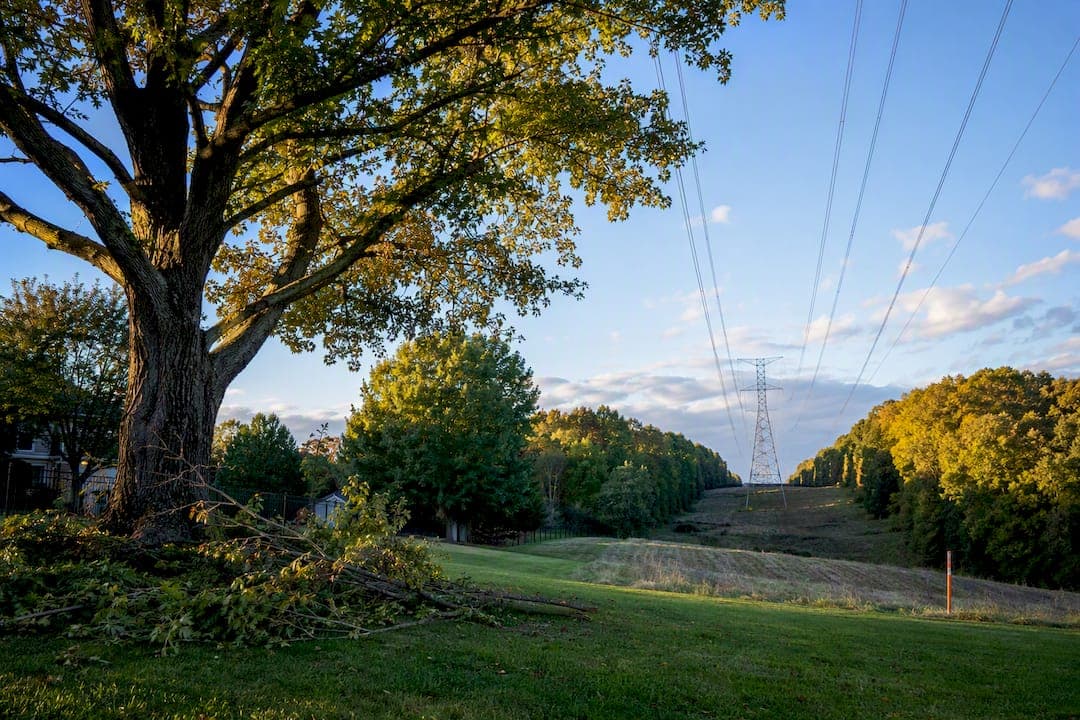
Yes, utilities can trim or remove trees inside a utility easement when the growth interferes with the easement's purpose. The recorded easement agreement and applicable federal and state rules set the exact scope, and emergencies may waive advance notice entirely. If a crew shows up on your property, find your recorded easement, call 811 before doing any digging yourself, and contact the utility directly before you act.
TL;DR:
- Vegetation trimming by utilities must stay within the recorded easement width and purpose, with excessive work or negligence giving homeowners grounds for a claim.
- Different easements, such as transmission, distribution, and underground, have varying clearance standards and restrictions based on federal, state, or utility policies.
- Utilities can remove or trim trees threatening power lines or blocking access without prior notice in emergencies, but routine work typically requires some form of notification.
- Homeowners should obtain written approval before planting near underground lines and avoid high or deep-rooted trees under transmission or distribution corridors to prevent future removal.
- Document all utility work, especially damage or removals outside the easement, by taking photos, requesting work orders, and filing claims promptly to protect property rights.
Table of Contents
- What are utility easement tree rules, and who owns the trees?
- How do transmission, distribution, and underground easements differ?
- What can utilities legally do, and when must they give notice?
- Can you plant trees in a utility easement safely?
- What should you do if a utility damages or removes your trees?
- How do you find and read your recorded easement?
- When should you hire a licensed tree service for easement work?
- A closing perspective on easement disputes
- Get Local Help With Easement Tree Work
- Sources
What are utility easement tree rules, and who owns the trees?
You own the trees on your land, even inside a utility easement. The easement only grants the utility a right to use that strip of property for a specific purpose, usually running lines, maintaining poles, or accessing equipment. It does not transfer title to the ground or anything growing on it.
That distinction shapes everything else. Because the utility holds a use right rather than ownership, its power to touch your trees is limited to what's reasonably necessary to operate and maintain its equipment.
- Utilities can remove or trim vegetation that blocks access, threatens lines, or violates clearance standards.
- They generally cannot clear land beyond the easement's recorded width or purpose.
- Reasonableness and the recorded corridor limits govern every action a crew takes.
- If a utility exceeds those bounds or works negligently, causing damage outside the easement, you may have grounds for a claim.
Utilities are granted this vegetation authority specifically to keep the system reliable, not to give crews unlimited discretion over your yard.
How do transmission, distribution, and underground easements differ?
Not every easement carries the same rules, and the type of line running through your property changes what's allowed above and below ground.
High-voltage transmission lines fall under NERC's FAC-003 vegetation management standard, enforced through FERC reliability rules. Transmission owners must maintain minimum clearance distances and inspect applicable lines at least once per calendar year, and the penalties for noncompliance push utilities to prune aggressively rather than risk a violation.
Distribution lines, the smaller poles running down most residential streets, follow state and individual utility policy instead of a single federal standard. Duke Energy, for example, cites distribution corridors typically at least 20 feet wide, with roughly 10 feet of clearance maintained from the primary conductor.
Underground easements bring a different risk entirely. Deep-rooted trees can crack buried pipes, split conduit, or damage cable lines years after planting, so most underground agreements restrict anything beyond shallow-rooted ground cover.
- Transmission corridors: widest clearance, federally enforced, least flexibility for planting.
- Distribution corridors: moderate clearance, governed by utility and state policy.
- Underground easements: narrower visible footprint, but strict root-depth restrictions.
- "Danger tree" clauses often let a utility remove trees just outside the corridor if they threaten to fall into it.
What can utilities legally do, and when must they give notice?
Routine vegetation management exists to keep lines clear and service reliable, and utilities choose the method, whether that's pruning, removal, or herbicide application, based on what meets clearance standards most efficiently. Notice requirements vary widely by state and by utility, and some companies send written notice ahead of scheduled trimming projects while others rely on standing easement rights and skip individual notification. Emergencies change the calculation entirely: a leaning tree threatening a live line during a storm can be removed with little or no advance warning.
Compensation is the part most owners get wrong. Utilities are typically not required to pay for trees removed within the scope of their easement rights, since the recorded agreement already accounts for that possibility. Work that goes beyond the easement's boundaries or shows clear negligence is a different matter and can support a claim.
- Ask the crew for the utility's work order before they begin.
- Request crew identification and the name of the vegetation management contractor.
- Ask whether the work falls under scheduled maintenance or an emergency response.
- Get any notice documentation in writing, even if it arrives after the fact.
Pro Tip: Take a photo of the work order or crew ID badge with your phone. If a dispute comes up later, that single image can settle who was on your property and under what authority.
Can you plant trees in a utility easement safely?
Planting inside a utility easement is not automatically off limits, but it carries real risk if you skip the paperwork first. Many older easements say nothing specific about vegetation, and when that happens, courts apply a standard of no unreasonable interference with the easement holder's rights. Plant first and ask questions later, and you risk losing the tree with no compensation.
Before you dig, pull the recorded easement and check the utility's planting guidelines. Xcel Energy's customer support page is a good example of how utilities often publish species recommendations specifically to head off future removals.
- Call 811 before any digging, even for a small shrub.
- Get planting approvals in writing, not a verbal okay from a field technician.
- Choose low-growing, shallow-rooted species near underground lines.
- Avoid tall or deep-rooted trees anywhere under a transmission or distribution corridor.
- Keep several feet of clearance around pad-mounted transformers and buried main lines.
Pro Tip: If you're landscaping near a transformer pad, measure the utility's minimum clearance distance first, then add a buffer. Guessing at "close enough" is how landscaping investments get removed a year later.
What should you do if a utility damages or removes your trees?
Documentation is your leverage. Take before-and-after photos, note the date and time, and record any crew identification numbers you can see. If a notice was posted or mailed, keep it, even if the work already happened by the time you found it.
- Photograph the damage immediately, from multiple angles.
- Request the utility's work order and vegetation management plan for your property.
- File a formal damage claim with the utility's customer service or claims department.
- Escalate to your state's public utility commission if the utility doesn't respond or denies a legitimate claim.
- Consult an attorney if the easement language is ambiguous or the clearing clearly exceeded the recorded corridor.
Timing matters, especially after emergency removals, since evidence disappears fast once debris is hauled away. Municipal ordinances can also add a layer of protection or obligation the recorded easement doesn't mention.
| Situation | Best next step |
|---|---|
| Routine trim within easement bounds | Document, but compensation is unlikely |
| Removal beyond corridor width | File a claim with the utility |
| No notice given for non-emergency work | Check state PUC notice requirements |
| Ambiguous or silent easement language | Consult an attorney before further action |
How do you find and read your recorded easement?
Your county recorder or assessor's office holds the recorded easement, usually attached to or referenced in your property deed. Many counties now post these records online, searchable by parcel number or owner name.
When you pull the document, look for a handful of specific phrases that control the utility's authority:
- "Ingress and egress" language defining how the utility can access the corridor.
- A stated corridor width, which tells you exactly how far the easement extends from the line.
- "Right to clear" or "clear obstructions" wording, which spells out vegetation authority directly.
- Any "danger tree" clause allowing removal of trees just outside the marked corridor.
- Explicit planting or vegetation restrictions, if the drafter included them.
If the easement says nothing about vegetation at all, don't assume that means anything goes. Courts default to a reasonableness standard tied to the easement's original purpose, and that's a judgment call best made with a lawyer, not a guess.
When should you hire a licensed tree service for easement work?
Hire a licensed crew any time a tree sits near power lines, shows signs of hazard, or you anticipate a dispute that will need documentation later. Cutting near live lines without training is dangerous, and homeowner-led removal near utility infrastructure often creates the exact liability question you were trying to avoid.
A qualified team brings more than a chainsaw to the job:
- Safety planning that accounts for line voltage and fall zones.
- Direct coordination with the utility before work begins.
- Permit assistance where municipal ordinances require it.
- Full cleanup and debris removal after the job.
- Written documentation, photos, and records you can use for an insurance or utility claim.
If you're unsure how close is too close, our guide on trimming trees near power lines walks through the safety margins professionals use.
A closing perspective on easement disputes
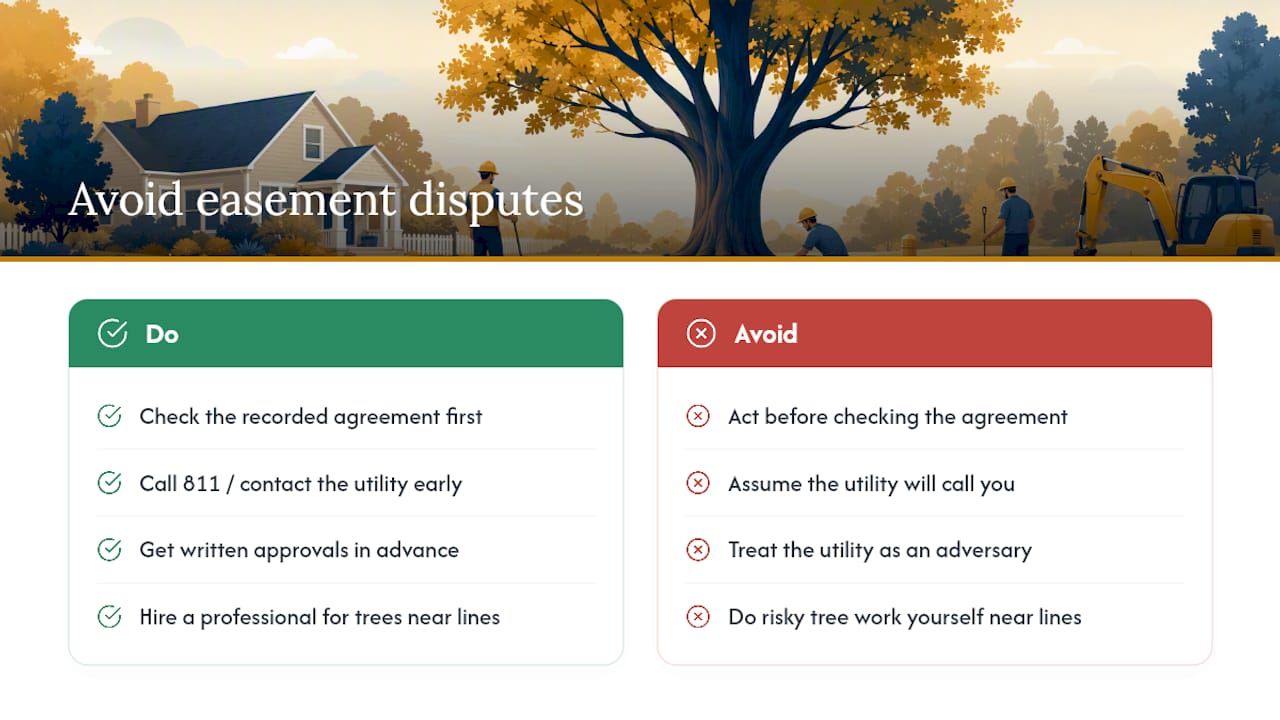
Most easement disputes I've studied don't start with a bad law. They start with a homeowner who acted before checking the recorded agreement, or a utility crew that skipped a phone call it didn't legally have to make. Early contact and written approvals prevent almost every dispute I've seen described in utility complaint records.
The homeowners who come out ahead treat the utility as a coordination problem, not an adversary, and bring in a professional the moment a tree sits anywhere near a line.
— Tatum
Get Local Help With Easement Tree Work
A local tree service can offer property owners a faster, safer path than handling easement disputes alone. Instead of guessing at clearance distances or arguing with a utility crew, you get a licensed and insured arborist team that documents the job, coordinates permits, and hands you the paperwork you'd otherwise have to chase down yourself.
Professional tree service crews handle safe trimming near power lines, full removals, stump grinding, land clearing, and emergency storm cleanup, with documentation support that can protect you if a claim arises. If you're dealing with a tree near a utility easement anywhere in North Louisiana, request a free estimate and get a professional assessment before anyone touches a chainsaw.
Sources
- Tree Trimming and Vegetation Management Landowners FAQ | Federal Energy Regulatory Commission
- FAC-003 Transmission Vegetation Management — NERC
- Rights of Way - Duke Energy
- Can You Plant Trees on an Easement? Rules and Risks - LegalClarity