
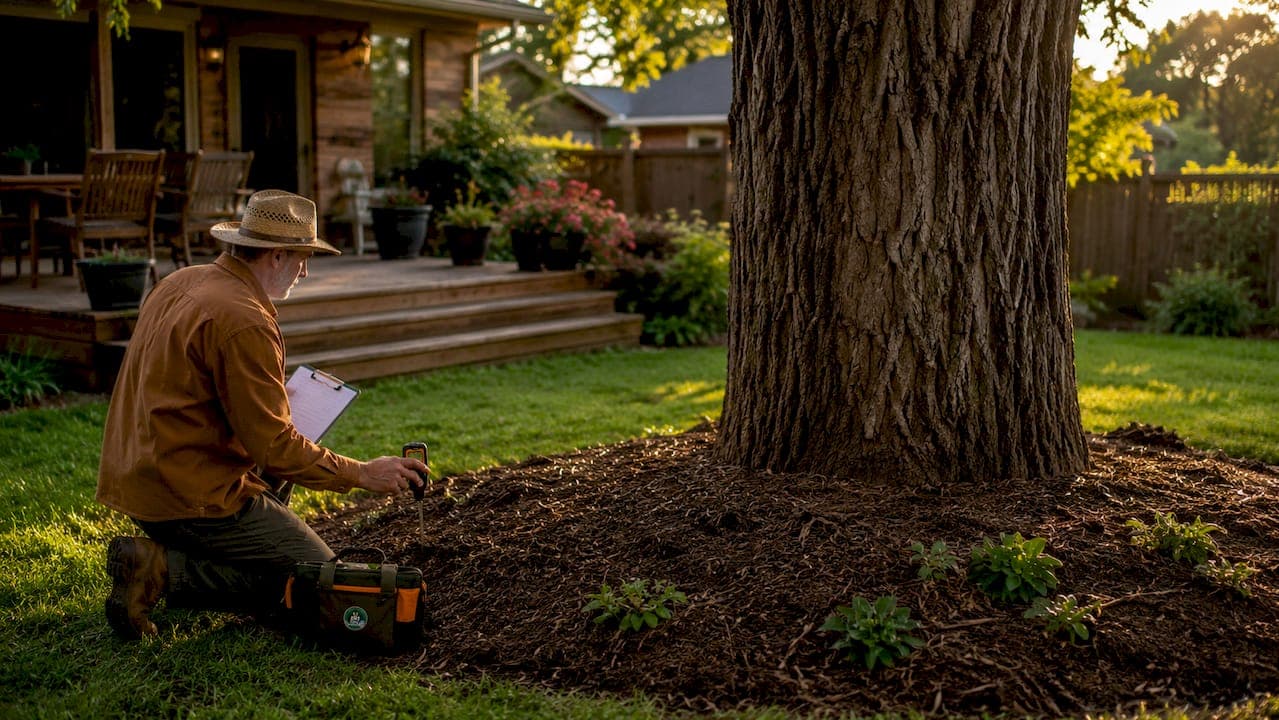
Tree care is defined as the proactive maintenance and health management of trees to preserve their safety, structure, and long-term value. For Bossier City homeowners and property managers, understanding why Bossier City properties need tree care is not optional. Bossier City's hot, humid climate and severe storm seasons create conditions that stress trees year-round. Neglected trees become liabilities. Well-maintained trees, by contrast, increase property value by 10–15% and deliver measurable environmental returns. Brileytreeservice serves this region with the expertise local properties demand.
Why does Bossier City's climate make tree care critical?
Bossier City sits in a climate zone defined by extremes. Summers are long, hot, and humid. Thunderstorms roll through with high winds and heavy rain. These conditions do not just inconvenience homeowners. They actively damage trees.
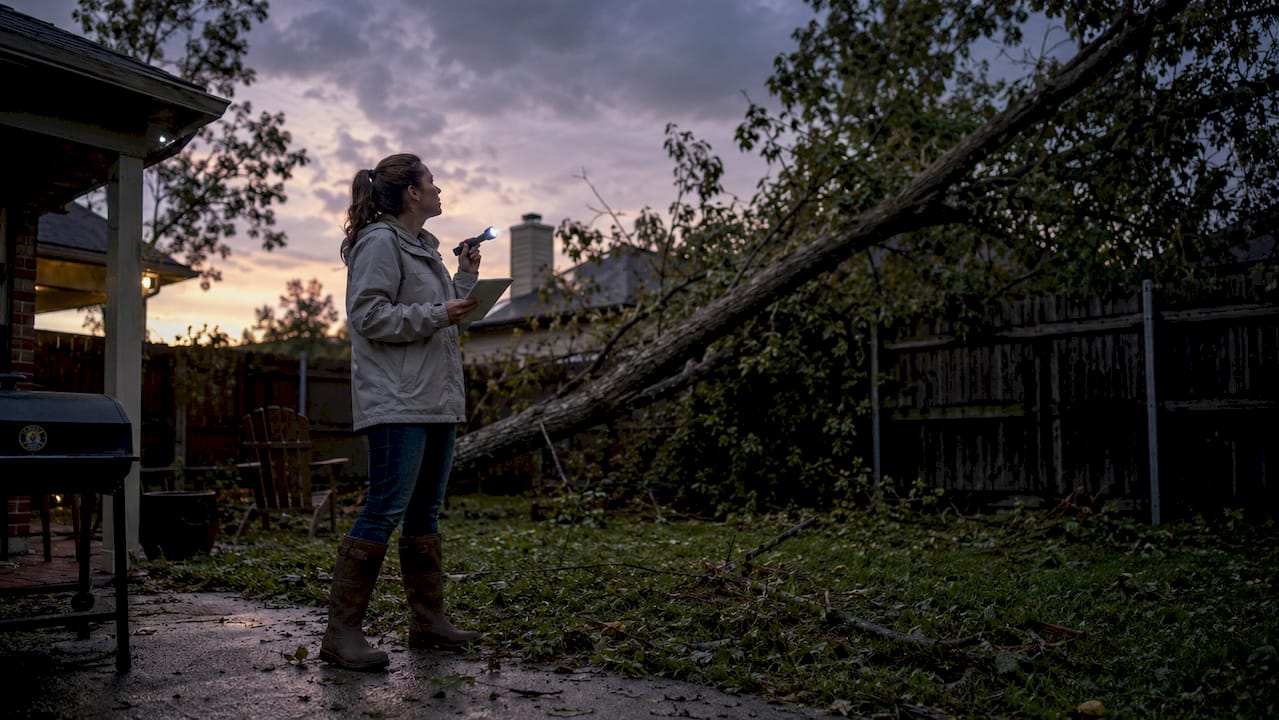
Hot, humid summers and severe weather accelerate disease spread, weaken limb attachments, and stress root systems. A tree that looks healthy in spring can develop fungal infections by july and drop a major limb by september. That cycle repeats every year without intervention.
The specific risks Bossier City trees face include:
- Limb failure during storms. High winds exploit weak branch unions, sending heavy limbs onto roofs, fences, and vehicles.
- Root rot from waterlogged soil. Heavy rainfall saturates clay-heavy soils common in Northwest Louisiana, cutting off oxygen to roots.
- Fungal disease. Humidity creates ideal conditions for oak wilt, hypoxylon canker, and other pathogens that spread fast in dense canopies.
- Pest pressure. Bark beetles and wood borers thrive in stressed trees. Heat stress opens the door for infestations that kill trees within a single season.
- Drought stress. Between rain events, Bossier City can experience dry stretches that dehydrate trees already weakened by storm damage.
Each of these risks compounds the others. A tree stressed by drought becomes more vulnerable to pests. A pest-damaged tree loses structural integrity. A structurally weak tree fails in the next storm. Regular Bossier City tree maintenance breaks that chain before it starts.
What are the primary benefits of proactive tree care for Bossier City properties?
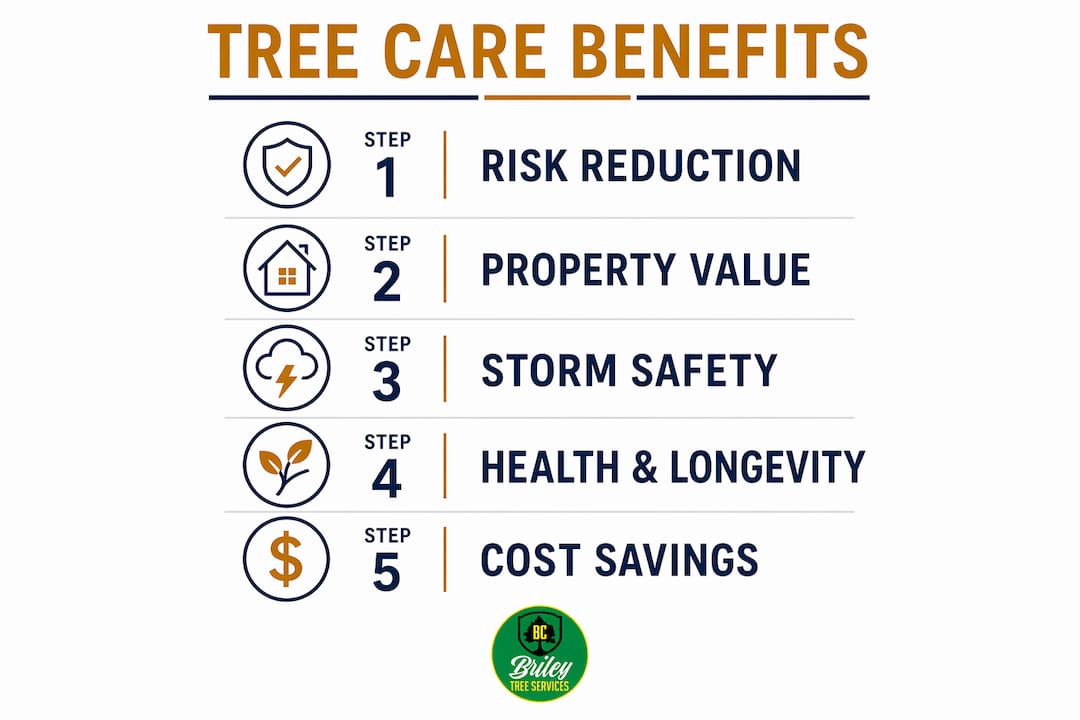
The benefits of tree care extend well beyond aesthetics. Proactive maintenance protects property, reduces liability, and delivers returns that passive neglect never can.
-
Property value. Mature trees increase property value by 10–15%. Those trees take 30–50 years to develop. That means every healthy tree on your property today represents decades of compounding value. Losing one to disease or storm damage is not just a landscape loss. It is a financial one.
-
Safety. Falling limbs are the most immediate risk of neglected trees. A single storm event can send a 200-pound branch through a roof or onto a parked car. Routine pruning and inspection eliminate that risk before it materializes.
-
Curb appeal. Healthy trees frame a property. They signal care and maintenance to buyers, tenants, and neighbors. A well-shaped oak or magnolia along a Bossier City driveway adds visual weight that no landscaping shortcut can replicate.
-
Environmental returns. Urban trees cool neighborhoods, improve air quality, and manage stormwater runoff. In a city where summer heat and flooding are real concerns, healthy trees function as infrastructure. They reduce cooling costs, filter pollutants, and slow runoff that would otherwise overwhelm drainage systems.
-
Economic efficiency. Every $1 invested in proactive tree management can yield up to $1.50 in societal returns over 30 years. That benefit-cost ratio reflects reduced emergency removal costs, lower storm damage claims, and the environmental services healthy trees provide.
The importance of tree care becomes clearest when you calculate what deferred maintenance costs. Emergency tree removal after storm damage runs significantly higher than scheduled pruning. Insurance claims, structural repairs, and liability exposure add up fast.
Pro Tip: Schedule a professional tree inspection each fall before storm season peaks. Catching structural weaknesses in october costs far less than emergency removal in january.
What are the best tree care practices for Bossier City properties?
Effective Bossier City tree maintenance follows a set of proven practices. Each one addresses a specific vulnerability created by the local climate.
Watering during dry stretches
Bossier City trees need deep, infrequent watering during dry periods, not shallow daily sprinkles. Deep watering encourages roots to grow downward, improving drought resistance. A slow trickle at the drip line for 30–45 minutes twice a week during dry months gives most established trees what they need.
Mulching correctly
Mulch conserves moisture, suppresses weeds, and protects soil health. However, volcano mulching, the practice of piling mulch against the trunk, causes decay and can kill a tree over time. Apply mulch in a flat ring, 2–4 inches deep, extending to the drip line. Keep it several inches away from the trunk.
Pro Tip: Use shredded hardwood mulch rather than dyed wood chips. It breaks down into organic matter that feeds soil biology, which directly supports root health.
Pruning with discipline
Removing more than 25% of the live canopy in a single year damages tree structure and shortens lifespan. Structural pruning, which removes crossing branches, dead wood, and weak unions, is the correct approach. Timing matters too. Prune most species in late winter before new growth begins. Avoid heavy pruning in summer when trees are already heat-stressed.
Regular inspections
Walk your property after every major storm. Look for cracked limbs, bark damage, leaning trunks, and fungal growth at the base. Early detection of disease or pest activity is the difference between a $300 treatment and a $3,000 removal. The seasonal checklist approach gives homeowners a structured way to stay ahead of problems throughout the year.
When should you call a professional arborist in Bossier City?
Some tree care tasks belong to professionals. Knowing when to call one is as important as knowing the basic maintenance steps.
ISA Certified Arborists are trained to diagnose tree health issues and safely manage structural risk. The ISA, or International Society of Arboriculture, sets the certification standard for the profession. A certified arborist does not just trim branches. They assess root health, identify disease, evaluate structural integrity, and recommend treatment or removal based on evidence.
Call a professional arborist when:
- A tree shows signs of disease: discolored leaves, bark cankers, or fungal growth at the base.
- Storm damage has cracked or split major limbs.
- A tree is leaning noticeably more than it did a season ago.
- Roots are lifting pavement or growing toward a foundation.
- You are unsure whether a tree is dead or dormant.
Tree healthcare functions as preventive medicine. Early identification and treatment prevent costly emergency interventions. A certified arborist can distinguish a treatable condition from one that requires removal, saving homeowners from unnecessary costs in both directions.
"Proactive tree management is not a luxury for Bossier City property owners. It is the most cost-effective way to protect structures, reduce liability, and preserve the landscape investment that mature trees represent."
Professional inspections also reduce liability exposure. If a neglected tree damages a neighbor's property, the property owner can face legal responsibility. Documented professional care creates a record that demonstrates due diligence. For property managers overseeing multiple units, that documentation is not optional. It is a business necessity.
For homeowners who want to understand what professional care involves before making a call, the guide on how to choose a tree service outlines what credentials and practices to look for. Pairing professional tree care with broader yard cleanup services keeps the full property in order after major maintenance work.
Key Takeaways
Bossier City properties require consistent, proactive tree care to protect property value, prevent storm damage, and sustain the environmental benefits that healthy mature trees provide.
| Point | Details |
|---|---|
| Climate creates real risk | Bossier City's heat, humidity, and storms stress trees year-round, making neglect costly. |
| Mature trees add measurable value | Healthy trees increase property value by 10–15%, representing decades of compounding investment. |
| Correct practices prevent damage | Avoid volcano mulching, limit canopy removal to 25%, and water deeply during dry periods. |
| Professionals catch what owners miss | ISA Certified Arborists diagnose disease and structural risk before problems become emergencies. |
| Proactive care pays for itself | Every $1 in proactive tree management returns up to $1.50 in long-term societal and property value. |
What I've learned watching Bossier City trees get neglected
Most homeowners treat trees like furniture. They assume trees take care of themselves and only notice them when something goes wrong. That assumption costs real money in this climate.
The pattern I see repeatedly is this: a homeowner skips inspections for three or four years, a storm hits, a limb fails, and suddenly they are dealing with a roof repair and an emergency removal at the same time. The tree was showing signs of stress long before that storm. Bark discoloration, early leaf drop, a slight lean that got worse each season. None of it got attention because it did not look urgent.
Bossier City's climate does not give trees much margin. The combination of heat, humidity, and storm frequency means a stressed tree deteriorates faster here than in more temperate regions. What looks like a minor issue in april can become a structural failure by august.
The homeowners who avoid that cycle treat tree care the way they treat HVAC maintenance. They schedule it, they document it, and they do not wait for a failure to act. That mindset is not overcautious. It is the only approach that makes financial sense in this region.
— Tatum
Brileytreeservice: professional tree care for Bossier City properties
Brileytreeservice provides tree removal, trimming, stump grinding, and emergency storm cleanup for residential and commercial properties throughout Bossier City and Northwest Louisiana. The team shows up on time, cleans up after every job, and treats each property with the same care they would give their own.
For Bossier City homeowners who want to protect their property and keep their trees healthy, Brileytreeservice offers free estimates with no obligation. Whether the need is a routine preventive trimming visit or emergency storm response, the team has the equipment and experience to handle it safely. Contact Brileytreeservice today to schedule a free estimate and get a professional assessment of your property's trees.
FAQ
How often should Bossier City homeowners schedule tree inspections?
Professional tree inspections should happen at least once a year, ideally in fall before storm season. Properties with older or larger trees benefit from twice-yearly assessments.
What is volcano mulching and why is it harmful?
Volcano mulching means piling mulch against a tree trunk, which traps moisture and causes decay. Correct mulching keeps material several inches away from the trunk in a flat ring.
Does tree trimming actually increase property value?
Yes. Well-maintained mature trees increase property value by 10–15%, making regular trimming one of the highest-return maintenance investments a homeowner can make.
When is a tree too damaged to save?
An ISA Certified Arborist can determine whether a tree is treatable or requires removal. Signs that often indicate removal include severe trunk decay, root failure, or more than 50% canopy loss from disease or storm damage.
What tree care services does Brileytreeservice offer in Bossier City?
Brileytreeservice provides tree trimming, tree removal, stump grinding, and emergency storm cleanup for residential and commercial properties across Bossier City and the surrounding Northwest Louisiana region.