
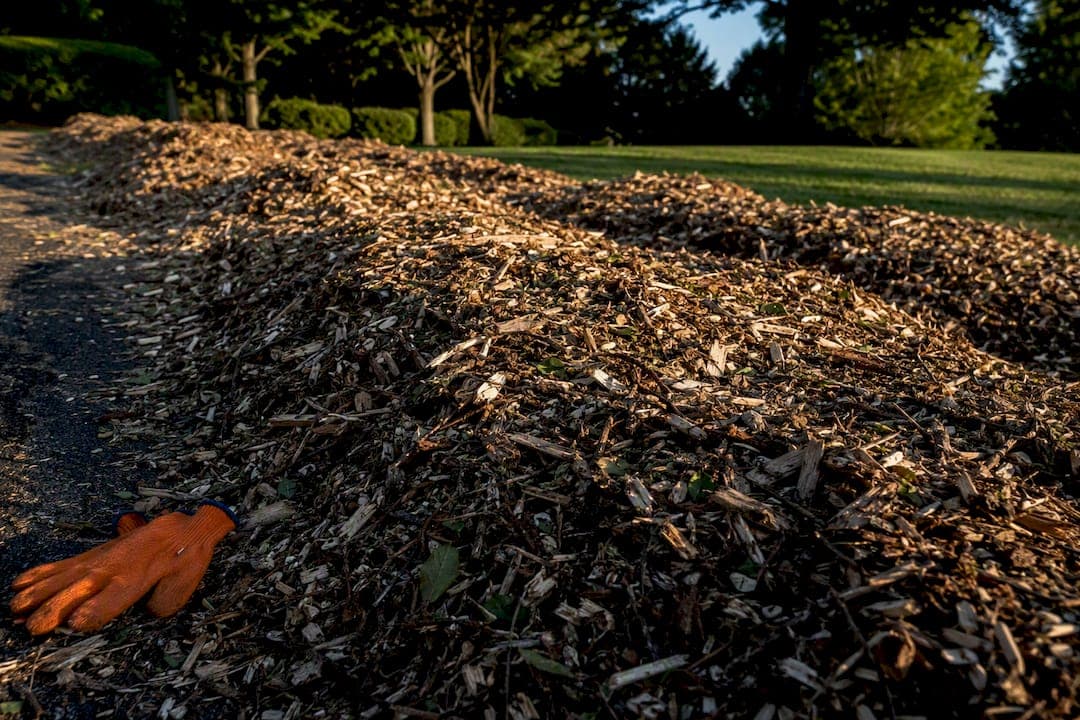
Use clean wood chips as mulch around trees and shrubs, age them for a few months before adding to garden beds, or remove them entirely from lawns before grass suffocates. Chips from a diseased tree are the exception. Skip reuse and dispose of those instead. The steps below cover application depths, aging timelines, lawn recovery, and disposal.
TL;DR:
- Use only aged or dried wood chips from healthy trees for mulch, and avoid reusing chips from diseased trees to prevent spreading pathogens.
- Apply mulch in 4 to 6 inch layers, ensuring a 3 to 6 inch gap around trunks, and extend the ring to the drip line for optimal root coverage.
- Wait 3 to 12 months for fresh chips to age and crumb into compost before incorporating them into soil, especially when used in vegetable beds.
- Reseed lawns within two weeks of removing chips, and avoid covering grass with more than a quarter inch of material to prevent suffocation.
- Reuse municipal yard waste programs or offer chips to neighbors, but do not burn or landfill untreated wood debris, especially if from a diseased tree.
Table of Contents
- Quick Ways to Use Wood Chips After Tree Removal
- How to Apply Wood Chips as Mulch the Right Way
- How Long Do Wood Chips Take to Age or Compost?
- Removing Wood Chips From Lawns and Fixing the Grass Underneath
- Disposal and Free Giveaway Options for Leftover Chips
- When Wood Chips Aren't Safe to Reuse
- Field Notes: How Briley Tree Service Stages and Handles Chips
- What I'd Do With a Fresh Pile of Chips
- Let Briley Tree Service Handle the Heavy Lifting
- Sources
Quick Ways to Use Wood Chips After Tree Removal
Not every pile of chips needs the same treatment. Location and volume decide the best move.
- Mulch around established trees and shrubs: chips retain moisture and block weeds better than almost any other yard material on hand.
- Garden paths: a 4 to 6 inch layer over landscape fabric handles foot traffic and breaks down slowly.
- Compost input: mix chips with grass clippings or kitchen scraps to balance the carbon load.
- Erosion control on slopes: chips slow runoff on bare soil, especially on freshly cleared ground where nothing else is holding the dirt in place. Erosion control mulching at the right depth cuts soil loss significantly on exposed slopes.
- Vegetable beds: hold off. Fresh chips belong on the surface around perennials, not tilled into soil where you're growing this year's tomatoes.
Chips should come off the property, not go into any of these uses, if they came from a tree that was diseased, or if you don't have anywhere flat and dry to stage them for more than a few days.
How to Apply Wood Chips as Mulch the Right Way
Depth is the detail most homeowners get wrong, and it's the one that determines whether mulch works or backfires.
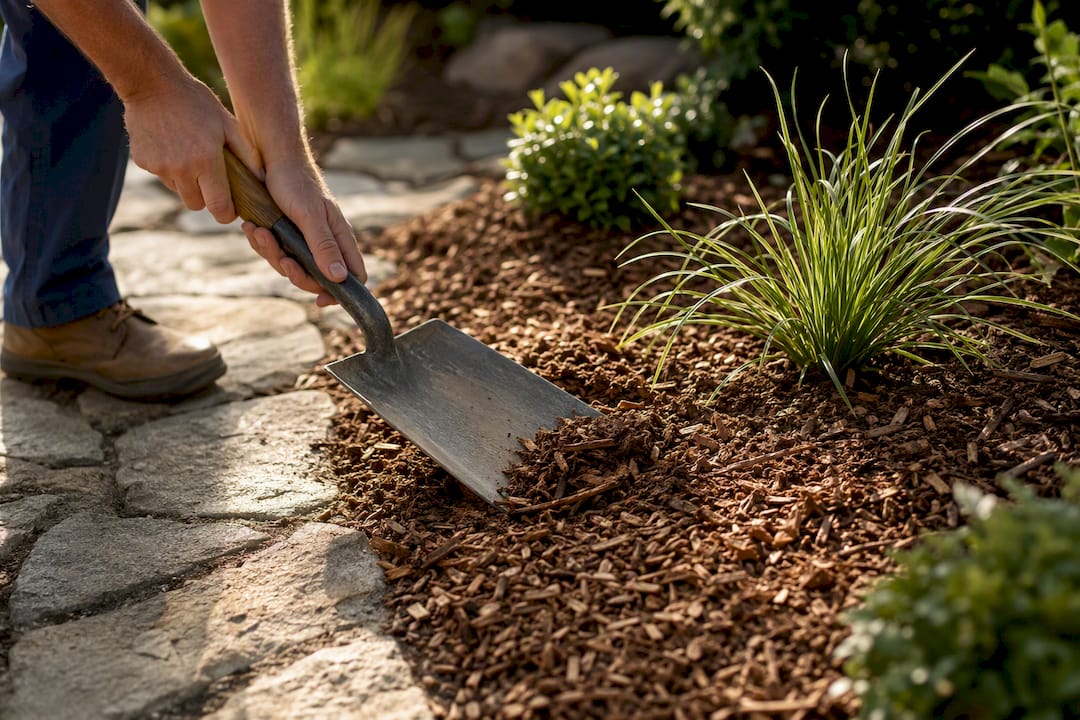
- Spread 3 to 6 inches around trees, shrubs, and perennial beds. SDSU Extension research found that anything under 2 inches often fails to suppress weeds at all.
- Leave a 3 to 6 inch gap at the trunk. Piling chips against bark, often called a "mulch volcano," traps moisture against the trunk flare and invites rot. UVM Extension calls this out as one of the most common landscaping mistakes homeowners make.
- Extend the ring out toward the drip line, not just a tight circle at the base. The wider ring is where roots actually feed.
- Use fresh chips on the surface right away for tree rings. Save aged chips for anywhere the material touches disturbed soil or new plantings.
- Top up once a year as the bottom layer breaks down and settles.
WSU Extension backs 4 to 6 inches specifically for weed control, and notes that homeowners see visible moisture and weed benefits within the first season when depth and trunk clearance are both handled correctly.
Pro Tip: A flat spade or garden fork spreads chips more evenly than a rake, which tends to pile material unevenly and leave thin spots where weeds punch through.
How Long Do Wood Chips Take to Age or Compost?
Fresh wood chips aren't ready for every job the day they land in your yard. Give raw chips 3 to 12 months before working them into soil, and expect a finished, crumbly, dark texture as the sign they're ready.
- **Stack chips in a loose pile, 3 to 4 feet high, rather than compacting them, so air can reach the material.
- Mix at roughly 3 parts brown material to 1 part green (grass clippings, food scraps) if you're building an actual compost pile instead of just aging a mulch stockpile.
- Turn the pile every few weeks to keep it aerated and speed decomposition.
- Shred larger chunks and keep the pile slightly moist, not soaked, to shave weeks off the timeline.
The reason for waiting comes down to nitrogen. Klickitat County's extension guidance explains that fresh chips trigger temporary nitrogen drawdown as microbes feed on the high carbon content, pulling nitrogen away from nearby plant roots in the process. That's a non issue for chips sitting on top of soil around an established tree. It's a real problem if you till them into an active vegetable bed. A thin layer of compost under fresh chips, sometimes called a mulch sandwich, eases that nitrogen competition in new beds without making you wait out the full aging period.
Removing Wood Chips From Lawns and Fixing the Grass Underneath
Grass doesn't tolerate a chip layer the way garden beds do. Even a thin covering, anything past a quarter inch, blocks enough light and oxygen to start killing turf within days.
- Rake or blow off loose chips as soon as you notice a layer forming, ideally before grass yellows underneath.
- Use a lawn sweeper for larger volumes. It clears more ground per pass than raking and causes less soil disturbance than a shovel.
- Aerate the affected area once chips are cleared, especially if the ground feels compacted where equipment or piles sat.
- Reseed bare patches within a week or two of aeration, timed to your grass type's normal growing window.
- Check soil pH or compaction if grass in that spot struggled even before the chips arrived. LawnHelpful's removal guidance treats aeration and reseeding as a package, not two separate optional steps.
Call in a professional if the smothered area is large, borders a slope prone to erosion, or sits somewhere heavy equipment can't easily reach.
Disposal and Free Giveaway Options for Leftover Chips
Reuse isn't always practical, especially after a large tree comes down and leaves more material than any yard can absorb.
- Check your municipal green-waste program first. Most cities and counties accept wood chips at curbside pickup or a yard-waste transfer station, often at no charge.
- Offer chips free to neighbors or local gardeners. Post the species and confirm the tree wasn't diseased before anyone hauls a load away. That disclosure protects their yard, not just yours.
- Hire a hauler for large volumes. Expect to pay by the load or by volume, and have chips staged in an accessible pile so the crew isn't shoveling from scattered debris across the yard.
- Skip burning or landfill dumping without checking local rules first. Many municipalities restrict yard-waste burning, and some landfills charge extra or refuse untreated wood debris outright.
When Wood Chips Aren't Safe to Reuse
Chips rarely create a termite problem when they're spread properly as surface mulch away from your home's foundation. That's a different situation from chips sourced from a tree that had a serious disease.
Chips from trees affected by oak wilt, sudden oak death, or similar pathogens need separate handling. WSU Extension advises against reusing that material as mulch and recommends disposal instead, since pathogens can spread through infected wood debris even after the tree itself is gone.
Beyond disease, keep piles away from siding and foundations. Large, damp mounds attract rodents and hold moisture against wood surfaces long enough to cause rot. Wear gloves and eye protection when handling chips, and a dust mask if the pile has started to mold or you're working a large volume on a windy day.
Field Notes: How Briley Tree Service Stages and Handles Chips
Crews typically leave a property with debris hauled off or staged in one accessible spot, never scattered across the lawn. That single decision saves homeowners the worst part of cleanup.
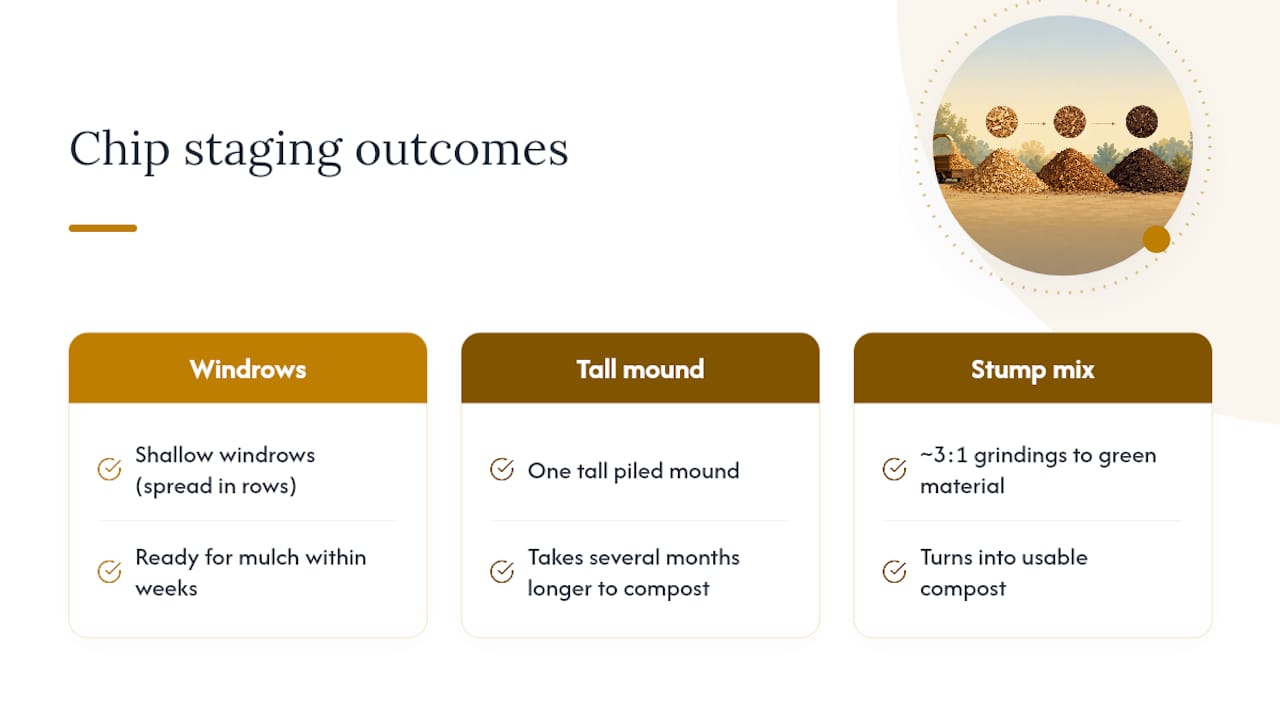
When chips stay on site, pros spread them in shallow windrows rather than one tall mound, which keeps the pile from overheating or turning anaerobic in the middle. Chips staged this way are usually ready for mulch use within weeks, while the same material takes several months longer to reach compost consistency. Stump grindings follow a similar path. A rough 3 to 1 mix of grindings to green material turns leftover material into usable compost instead of a stump-shaped eyesore sitting in the yard.
What I'd Do With a Fresh Pile of Chips
My default: spread clean chips as a donut around trees and shrubs immediately, and age anything headed for a new bed or vegetable garden. The two mistakes I see most are piling mulch against trunks and dumping chips straight onto lawns. Both are fixable in an afternoon if you catch them early.
— Tatum
Let Briley Tree Service Handle the Heavy Lifting
Not every homeowner has the equipment, time, or yard space to stage a full tree's worth of chips for months. Professional tree services are a practical alternative to DIY cleanup when volume, access, or safety makes hauling and staging more trouble than it's worth.

Beyond removal itself, professional crews handle stump grinding, full debris cleanup, and hauling so you're not left managing a pile that's too large for a backyard compost setup. That matters most with tight access lots, storm damage with mixed healthy and diseased wood, or any job where equipment rental and a weekend aren't realistic. If a tree on your property in Shreveport, Bossier City, Ruston, or the surrounding area needs to come down, request a free estimate and get a straight answer on removal, cleanup, and what happens to the wood chips before the crew ever starts cutting.
Sources
- Organic garden mulches conserve moisture and prevent weeds | SDSU Extension
- Wood-Chip Backyard Biology | Klickitat County
- Lawnhelpful
- Beware the mulch volcano | UVM Extension