
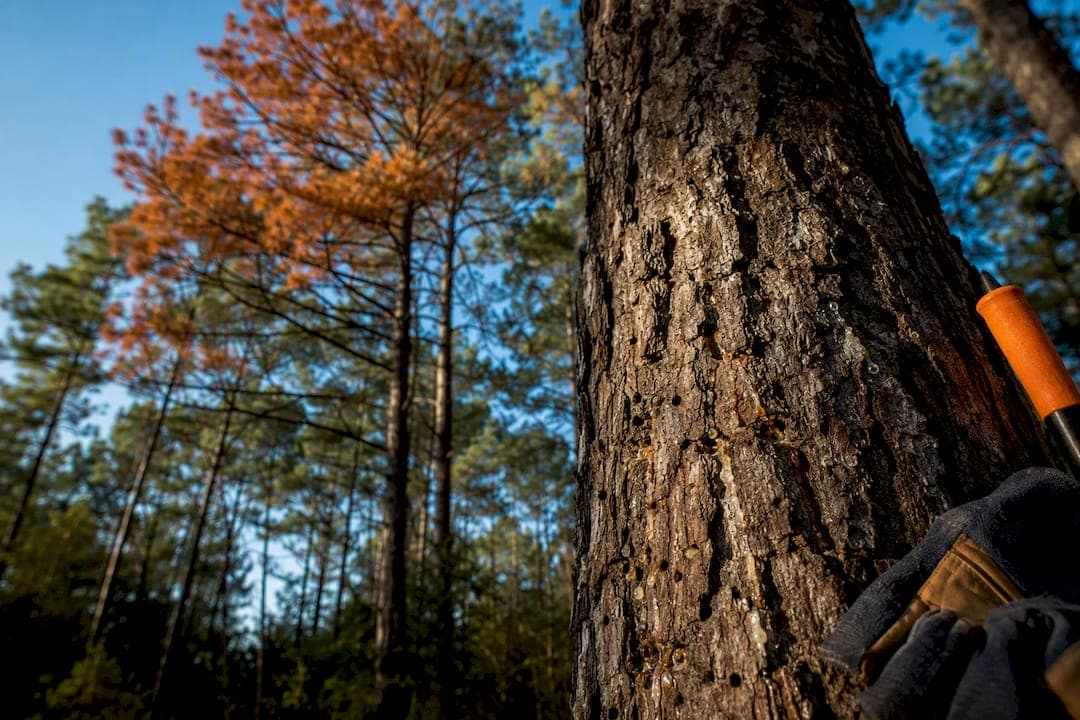
A likely pine beetle infestation shows up as a combination of signs, not just one. Pitch tubes, boring dust, woodpecker stripping, and crown color change together mean trouble. If you see two or more, photograph the tree with something for scale, flag it, and call a local extension office or a licensed arborist before it spreads.
TL;DR:
- Pitch tubes, boring dust, and woodpecker activity together strongly indicate a pine beetle infestation, especially if two or more signs are present.
- Whole-crown color change, especially to reddish-brown within weeks, signals advanced infestation and urgent removal.
- Gallery patterns like winding S-shapes confirm beetle species; blue-stained wood and live beetles indicate successful colonization.
- Healthy pines resist beetles better, so proper watering, thinning, and avoiding bark injuries are key prevention methods.
- Detecting signs early and consulting an arborist for confirmation can prevent an outbreak from spreading across your property.
Table of Contents
- Pine Beetle Signs You Can Spot From the Ground
- How Needle Color Reveals the Infestation Timeline
- Confirming the Infestation Under the Bark
- Matching Signs to the Right Beetle Species
- What to Do the Moment You Suspect an Infestation
- Reducing Your Risk Before Beetles Show Up
- How Brileytreeservice Reads a Suspected Infestation
- Get a Pine Beetle Inspection From Brileytreeservice
- Sources
Pine Beetle Signs You Can Spot From the Ground
Most pine beetle signs show up on the bark and around the base of the trunk, and you don't need tools to find them. Start with pitch tubes: small, popcorn-shaped clumps of resin that beetles push out as they bore in. Color varies from white to pink to dark red, and you'll usually find them wedged in bark crevices along the lower and mid-trunk.
Boring dust, also called frass, is the other giveaway. It looks like fine sawdust and collects in bark crevices or piles up at the base of the tree, especially after wind or rain settles it. Boring dust and pitch tubes are the two signs foresters check first, and woodpecker activity often follows within weeks as birds chase larvae under the bark.
- Pitch tubes clustered in bark crevices, ranging from white to reddish
- Fine boring dust in cracks or at the tree's base
- Patches of bark flaked or stripped away by woodpeckers
- Small, round exit holes where new adult beetles emerged
Pro Tip: Pitch tubes don't always show up, especially on a tree that's already stressed or drought weakened. If you see boring dust or woodpecker damage without pitch tubes, don't assume the tree is safe. Absence of pitch tubes doesn't guarantee absence of beetles.
How Needle Color Reveals the Infestation Timeline
Crown color tells you how far along the attack is. Healthy green needles fade to pale green, then yellow or bronze, then reddish-brown, and finally gray once the tree is dead. That sequence isn't quick with every species.
Foliage color change usually shows up months after the actual attack, because the beetles are working under the bark long before you see it in the needles. But the Southern Pine Beetle can kill a tree in two to four months once it takes hold, which is much faster than most homeowners expect.
- Isolated branch or top fading often points to Ips engraver beetles
- Whole-crown color change usually signals Southern Pine Beetle or Mountain Pine Beetle
- Gray, dead-looking crowns confirm the tree is already lost
A tree fading branch by branch can often wait for a professional opinion. A whole crown turning reddish-brown in a matter of weeks cannot.
Confirming the Infestation Under the Bark
Surface signs point to a probable infestation, but galleries and stained wood under the bark confirm it. This step carries risk, so treat it carefully.
- Only consider removing a patch of bark on a tree that already looks dead or in obvious decline, and ideally with an arborist present. Peeling bark on a living tree can add stress and isn't worth the risk to the tree or to you.
- Look at the tunnel pattern. Winding S-shaped galleries point to Southern Pine Beetle or Mountain Pine Beetle. H or Y-shaped galleries usually mean Ips engraver beetles, which tend to stay localized.
- Check the sapwood color. A blue-gray stain running through the wood means fungus the beetles carried in, and it's a strong sign of successful colonization.
- Look for live beetles, larvae, or pupae in the tunnels. That's the clearest confirmation you'll get without lab testing.
Pro Tip: Bring a flashlight and take photos of any galleries you find. An arborist can often identify the species from photos alone, which saves you a second inspection visit.
Matching Signs to the Right Beetle Species
Different pine bark beetles leave different fingerprints, and knowing which one you're dealing with changes how urgently you need to act.
- Southern Pine Beetle: Popcorn-shaped pitch tubes running up the trunk, S-shaped galleries, and outbreaks that can spread fast through a stand. Removal is usually urgent.
- Mountain Pine Beetle: Similar pitch tubes, heavy blue-stain in the sapwood, and a preference for ponderosa and lodgepole pines in western states.
- Ips engraver beetle: H or Y-shaped galleries, often limited to a single branch or the treetop. A healthy stand may only need monitoring.
- Black turpentine beetle: Larger pitch flows, often near existing wounds or scars low on the trunk, with different treatment options than the more aggressive species.
Extension guides stress that only the epidemic species like Southern Pine Beetle typically require urgent removal of neighboring trees, while Ips and black turpentine beetle activity often stays contained.
What to Do the Moment You Suspect an Infestation
Once you've spotted warning signs of pine beetles, the next moves matter. Acting fast on the wrong tree wastes money; waiting too long on the wrong tree risks the whole stand.
- Photograph the pitch tubes, frass, or galleries with a coin or ruler in frame for scale.
- Flag the tree with tape so you can track changes over the next week or two.
- Walk the property and check nearby pines for the same signs.
- Leave any cut wood on-site rather than hauling it elsewhere, since moving infested logs can spread beetles to new areas.
Remove the tree quickly if you see fresh pitch tubes combined with whole-crown fading, or if a bark check confirms active galleries. A single isolated branch with H or Y-shaped tunnels on an otherwise healthy tree usually just needs continued monitoring.
- Contact your state forest service or local extension office for species confirmation
- Call a licensed arborist for removal once infestation is confirmed
- Time removal and disposal around cooler months when beetle activity slows
Reducing Your Risk Before Beetles Show Up
Healthy pines resist beetle attacks better than stressed ones, and most prevention comes down to basic maintenance. Water established trees during drought, avoid nicking bark with mowers or trimmers, and schedule pruning at the right time of year rather than whenever it's convenient. A seasonal pruning schedule keeps cuts clean and reduces open wounds beetles can exploit.
On a larger property, thinning overcrowded pines and mixing in other species lowers outbreak risk stand-wide, since dense, stressed stands are where beetle populations explode fastest. Preventive insecticide sprays can make sense for a single high-value shade tree, but they don't stop an outbreak that's already active nearby.
- Water during drought and avoid mechanical injury to bark
- Thin crowded pines and diversify species where practical
- Check high-risk trees monthly during warm months
Pro Tip: Walk your pines every few weeks from late spring through early fall, when beetle activity peaks. A seasonal tree care checklist makes this easy to keep up with instead of forgetting about it until symptoms are obvious.
How Brileytreeservice Reads a Suspected Infestation
Most homeowners can spot the surface signs, but confirming galleries and species takes a trained eye. Brileytreeservice's licensed arborist team inspects suspect trees, confirms what's actually happening under the bark, and handles removal or stump grinding when a tree can't be saved. We never recommend peeling bark on a living tree yourself. That step is best left to someone who does it for a living, with the free estimate to match.
— Tatum
Get a Pine Beetle Inspection From Brileytreeservice
Spotting pitch tubes or a fading crown on your own property is stressful, especially when you're not sure how fast the tree is failing. Brileytreeservice gives Shreveport, Bossier City, and Ruston area homeowners a faster answer than guessing from photos online: a licensed arborist walks the property, checks the bark and galleries in person, and tells you plainly whether the tree needs to come down now or can be monitored.

Our team handles the full range of what a beetle problem calls for: inspection, emergency removal, stump grinding, and debris hauloff, plus support with permits and insurance claims when storm damage complicates things. We're available 24/7 for emergency situations, and every estimate is free. If you've spotted signs on a pine tree this week, schedule an inspection before the damage spreads to the trees next to it.
Sources
- Southern Pine Beetle - NYSDEC
- Signs and Symptoms | Colorado State Forest Service
- Bark beetles | UC IPM
- My pine is under attack—what should I do? | IFAS/UF