
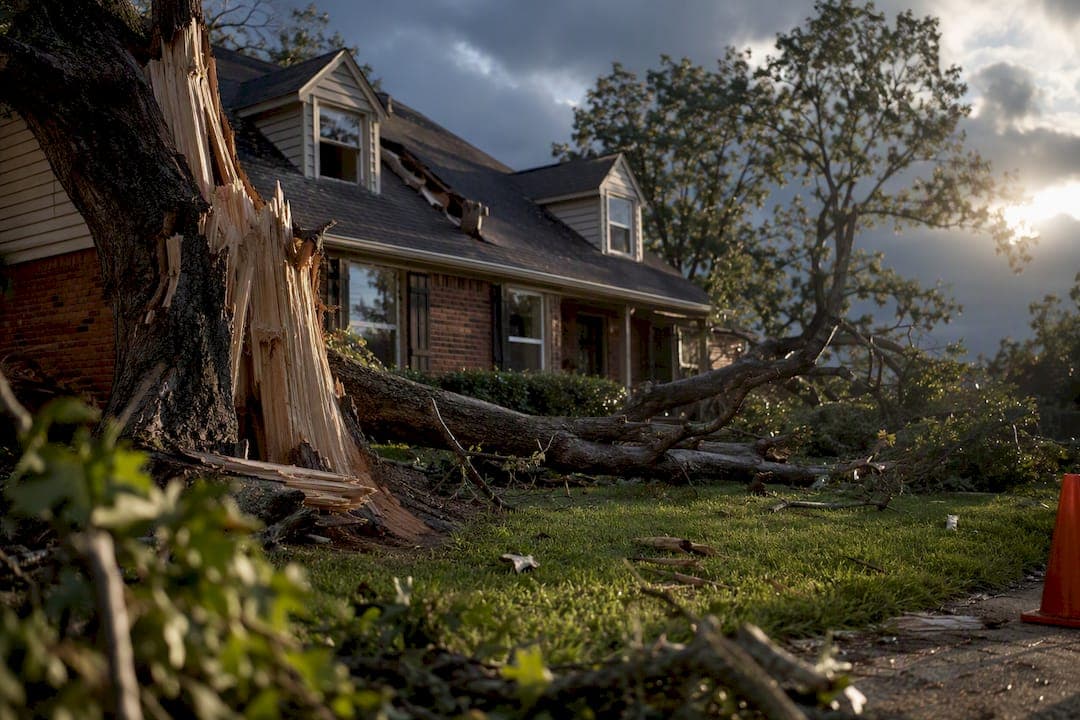
If a tornado has downed trees on your property, secure safety first: assume every wire is live, keep everyone clear of hanging limbs and uprooted trees, and photograph the damage before touching anything. Call 911 if anyone is hurt or a fire risk exists, call your utility for downed lines, then call an emergency tree service for triage. Expect prioritization by hazard level, not by who called first.
TL;DR:
- Immediate safety measures require staying at least 35 feet from downed wires and photographing damage before starting cleanup.
- Document damage with photos and receipts early, as debris removal costs and coverage caps vary widely and evidence can be lost.
- Call an emergency tree service for trees on structures, in contact with power lines, or blocking access, to prioritize hazards based on danger, not order of call.
- Full cleanup involves hazard removal, tree cutting, chipping, and hauling, with a licensed arborist assessing which trees to save or remove.
- Insurance coverage for storm damage depends on whether trees damage structures and the policy's debris removal limits.
Table of Contents
- What Are the Immediate Safety Steps for Tornado Tree Damage Cleanup?
- How Do You Document Tornado Damage for Insurance?
- When Do You Need a Professional Emergency Tree Service?
- What Is the Professional Cleanup Process After a Tornado?
- What Are the Municipal Rules for Storm Debris Pickup?
- How Long Does Tornado Tree Cleanup Take and What Does It Cost?
- What Does a Licensed Arborist Bring to Tornado Recovery?
- A Note From the Field
- How Briley Tree Service Handles Emergency Storm Cleanup
- Sources
- FAQ
What Are the Immediate Safety Steps for Tornado Tree Damage Cleanup?
The first hour after a tornado is the most dangerous part of the entire cleanup process, not the actual removal work. Trees that look stable can be holding tension nobody can see, and wires tangled in branches don't announce themselves as live.
Follow these steps in order before you do anything else:
- Check for injuries and call 911 immediately if anyone needs medical help or you smell gas or smoke.
- Treat every downed wire as energized. Stay at least 35 feet away and call your utility's emergency line, not a general customer service number.
- Identify hangers (broken limbs caught in the canopy), leaners (trees tilted against another structure or tree), and uprooted trees with exposed root plates. All three can shift or fall with no warning.
- Never cut into tensioned or bent wood with a chainsaw. A trunk under load can spring back or split violently the moment tension releases.
- Move family members and pets away from the damage zone and keep them away until a professional clears the area.
- From a safe distance, photograph what you see. Tarp only exposed roof sections or windows if you can do it without climbing on damaged structures or near unstable limbs.
Pro Tip: If you're not sure whether a tree is a leaner or just bent from wind, look at the base. A root plate that's lifted the soil or a trunk cracked at the base means the tree is compromised, even if it's still standing.
How Do You Document Tornado Damage for Insurance?
Photograph and video everything before any cleanup starts. Wide shots that show the whole property alongside close-ups of specific breaks, root damage, and structural contact give adjusters the context they need, and timestamps and contractor reports carry real weight when a claim gets reviewed.
Call your insurer's 24/7 claims line as soon as it's safe. Ask specifically about emergency mitigation authorization. Many policies allow reasonable temporary repairs (tarping a roof, removing a tree blocking a driveway) before an adjuster ever sets foot on the property, but you need that authorization on record first.
-
Photograph damage from multiple angles before any limbs or debris move.
-
Save every receipt: tarps, temporary lodging, emergency tree work, generator rental.
-
Request a photo-documented report from your contractor explaining what failed and why.
-
Ask your insurer directly whether your policy caps debris removal per tree or per occurrence; caps vary widely and catch homeowners off guard when a bill exceeds what they assumed was covered.
Skipping the "before" photos is the single most common mistake homeowners make, according to legal and insurance professionals who handle these claims regularly. Once debris is hauled off, that evidence is gone for good.
When Do You Need a Professional Emergency Tree Service?
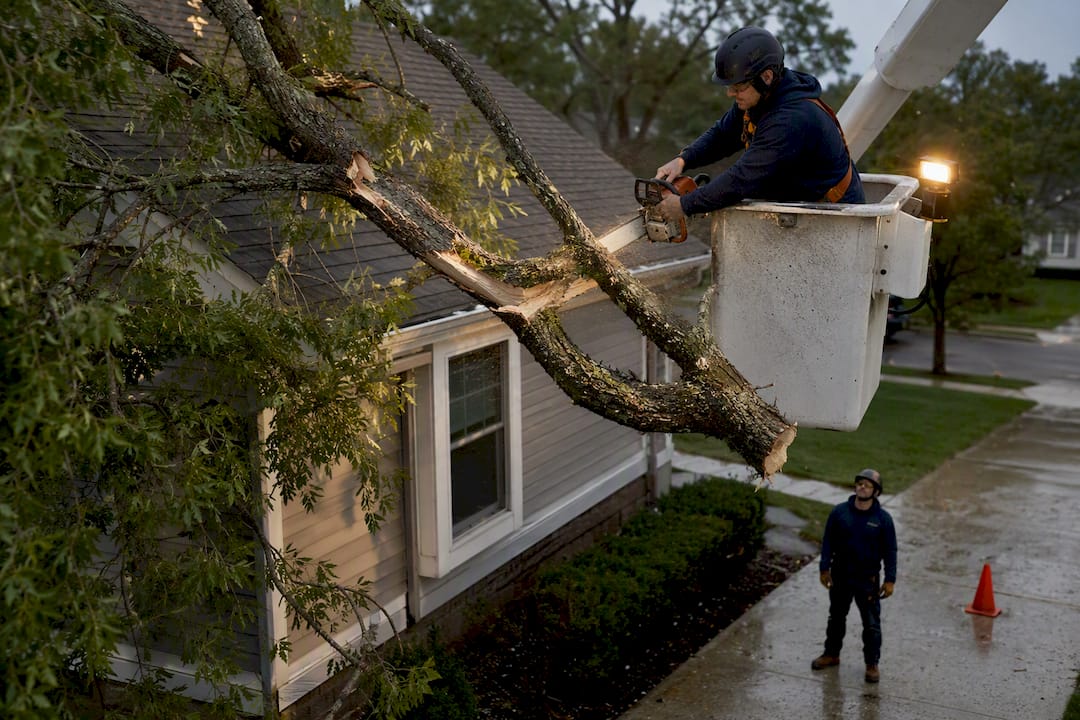
Some situations call for waiting a day. Others call for a phone call right now. Know the difference before you pick up a rake or a chainsaw.
Call an emergency tree service immediately if you're dealing with any of these:
- A tree resting on your home, garage, or a vehicle.
- Any tree or limb in contact with power lines, even if the lines look intact.
- A large tree with an uprooted root plate, which can shift or fully topple with light wind or foot traffic near the base.
- Hanging limbs suspended over a driveway, walkway, or anywhere people or pets pass.
- Debris blocking emergency vehicle access to your home or street.
Professionals triage these situations by risk, not by arrival order, which is why the tree blocking your neighbor's ambulance access gets handled before the one leaning on your fence. Avoid the common DIY mistakes: climbing a ladder to cut hangers, running a chainsaw at full extension overhead, or trying to "walk down" a leaning trunk with a saw. These are among the leading causes of storm-related injuries every single tornado season.
What Is the Professional Cleanup Process After a Tornado?
Licensed crews don't start with the tree closest to the street. They start with whatever poses the greatest immediate threat to life and property, then work outward in a predictable sequence.
- Hazard neutralization first. Crews stabilize or remove hangers, leaners, and anything threatening a structure or access route, often using rigging or crane support for trunks under tension.
- Fatally damaged trees come down next. Split trunks, snapped canopies, and trees with more than half their root system exposed rarely survive, and leaving them standing just delays the inevitable.
- Salvageable trees get pruned and stabilized. A licensed arborist can often save a tree with partial canopy loss through corrective pruning and cabling.
- Bucking and chipping. Downed wood gets cut into manageable sections and run through a chipper on site, which cuts hauling volume dramatically.
- Hauling and stump grinding close out the job, clearing the property down to grade.
Along the way, exposed roof sections get tarped to stop water intrusion while repairs are scheduled. A full cleanup workflow also includes documentation: before-and-after photos, an itemized invoice, and a written arborist assessment noting which trees were saved versus removed and why.
Pro Tip: Ask your contractor to separate the invoice into "emergency mitigation" and "full removal" line items. Insurers often process the emergency portion faster since it falls under loss prevention, while the full removal gets reviewed as property damage.
What Are the Municipal Rules for Storm Debris Pickup?
Most cities separate vegetative debris from construction and demolition debris for pickup, and mixing the two piles is a fast way to get your collection delayed or skipped entirely.
- Place vegetative debris curbside, clear of hydrants, meters, and mailboxes, without blocking the street.
- Many programs require pieces cut to a maximum length, commonly around 12 feet, and stacked within a set distance of the curb.
- Residential properties are typically eligible for city pickup; commercial properties and homes on private roads are often excluded or require a right-of-entry form.
- If your area isn't covered by municipal pickup, a private hauler can take debris to a staging site or landfill. Ask for a disposal receipt for your records.
How Long Does Tornado Tree Cleanup Take and What Does It Cost?
Emergency mitigation, like removing a tree off a roof or clearing a blocked driveway, typically happens the same day to within 72 hours when a crew can reach you. A single-property removal or pruning job usually wraps within a few days once scheduled.
Community-wide events change that math entirely. Municipal crews prioritize the hardest-hit zones first. Homeowners outside that initial sweep can wait several weeks or longer for both public pickup and private contractors.
- Cost depends heavily on tree size, whether it's on a structure, and whether crane or rigging equipment is needed.
- Access matters: a tree in a tight backyard costs more to remove than one with clear truck access.
- Disposal and staging fees add up separately from the removal cost itself.
- Document everything as you go, and push emergency mitigation to the front of your priority list. Every day water sits on an exposed roof is a day the damage gets worse.
What Does a Licensed Arborist Bring to Tornado Recovery?
A licensed arborist doesn't just cut trees down. They assess which ones can be saved, document the cause of failure for your insurer, and map out hazards a homeowner would likely miss.
- A hazard map identifying which remaining trees pose ongoing risk to the structure.
- Photo documentation and a written explanation of why each tree failed, useful for insurance review.
- A clear recommendation: prune and save, or remove. [brand_signal] [author_bio]
Hiring an insured, licensed crew isn't just about the work quality. If something goes wrong during a hazardous removal, an uninsured crew leaves the liability sitting on your property, not theirs.
A Note From the Field
Homeowners almost always underestimate how long full recovery takes and overestimate how safe a leaning tree looks. Stay clear, document everything, and let the crews work the priority list. The wait is normal, not a sign something's wrong.
— Tatum
How Briley Tree Service Handles Emergency Storm Cleanup
Professional emergency tree services are the option for homeowners who need someone on-site fast, not a callback three days into a backlog. Crews offering emergency response with hazard-first triage handle the most dangerous situations first, such as trees on roofs or blocking driveways.
When you call, a professional arborist may assess the property, prioritize hazards, and explain the difference between emergency mitigation and full removal to help with insurance documentation. Our storm damage cleanup service covers everything from downed limbs to full tree removal, and our emergency service line connects you directly to a dispatcher, not a voicemail. Professional jobs often provide photo documentation and itemized invoices to support insurance claims. If a tree needs to come down, we also handle stump grinding so you're not left with a hazard in the yard once the canopy is gone. Contact a tree service provider for an estimate and scheduling details.
Sources
- NW OKC: August storm debris to be collected on regular bulky-waste schedule
- Tornado damage documentation (Pandit Law)
- Tree care after a tornado: step-by-step recovery guide (Huntsville Tree Pros)
- How to clean up your debris after a tornado (KSAT)
FAQ
Will Insurance Pay for Tree Removal After a Storm?
Most homeowners policies cover tree removal when a tree damages a covered structure, though coverage for trees that fall without hitting anything is often limited or excluded. Check your policy's debris removal cap, and read how coverage typically works before assuming a full payout.
Who Is Responsible for Cleaning Up a Fallen Tree?
The property owner where the tree lands is typically responsible for cleanup, regardless of which property the tree originally stood on, though insurance may cover the cost depending on the cause and your policy terms. If the tree is blocking a shared right-of-way or street, a municipal crew may clear the immediate hazard first.
Do Trees Grow Back After a Tornado?
A tree with an intact root system and partial canopy loss can often recover with corrective pruning, but a tree with a snapped trunk or a majority of its roots exposed generally will not survive. A licensed arborist can assess whether a specific tree is salvageable or should be removed.
Can a Storm-Damaged Tree Be Saved?
It depends on the extent of the damage. Trees with less than half their canopy lost and a stable root plate often recover, while trees with split trunks, exposed major roots, or extensive bark stripping usually don't. An on-site arborist assessment is the only reliable way to know for sure.